
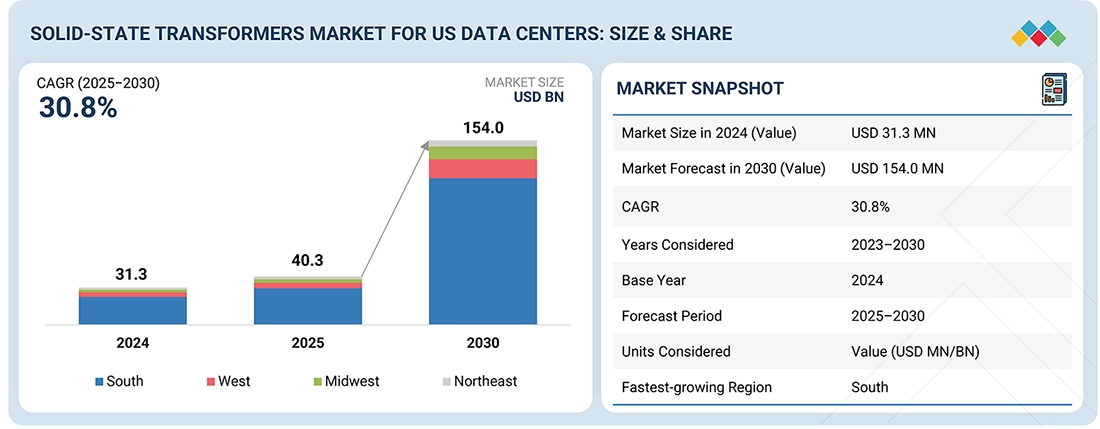
The US Data Center Solid-State Transformer Market is evolving rapidly as fully direct current (DC) power architectures gain attention as a future-ready approach to powering high-performance digital infrastructure. The exponential growth of artificial intelligence (AI), cloud computing, hyperscale facilities, edge computing, and high-performance computing has significantly increased the demand for highly efficient electrical systems capable of minimizing energy losses while supporting increasingly dense computing environments. Traditional alternating current (AC)-based power distribution has served data centers for decades, but the growing complexity of power conversion stages has encouraged operators to explore fully DC architectures that simplify energy flow and improve efficiency. Solid-State Transformers (SSTs), with their advanced power electronics and digital control capabilities, are becoming an important enabling technology for this transition by supporting intelligent AC-to-DC conversion and flexible DC power distribution.
Conventional data centers typically receive alternating current from utility grids before converting it multiple times as electricity flows through transformers, uninterruptible power supplies (UPS), power distribution units, and server power supplies. Each conversion stage introduces energy losses, generates heat, and increases infrastructure complexity. Fully DC power architectures seek to eliminate many of these conversion steps by distributing direct current throughout the facility, allowing computing equipment to operate more efficiently while reducing overall energy consumption. Solid-State Transformers provide the intelligent interface required to convert incoming medium-voltage AC power into stable DC power with significantly greater precision than traditional transformer systems.
One of the most important trends supporting fully DC architectures is the increasing deployment of AI infrastructure. Modern AI processors, graphics processing units (GPUs), tensor processing units (TPUs), and specialized accelerators consume extremely large amounts of electricity while operating continuously at high utilization levels. These processors ultimately operate internally using direct current, making DC distribution an attractive option for minimizing conversion losses. Solid-State Transformers enable efficient high-capacity AC-to-DC conversion that supports the growing electrical demands of AI data centers while improving overall energy efficiency.
Download PDF Brochure @ https://www.marketsandmarkets.com/pdfdownloadNew.asp?id=51807964
The pursuit of higher energy efficiency remains one of the strongest drivers behind DC power adoption. Even small improvements in power conversion efficiency can generate significant operational savings within hyperscale facilities consuming hundreds of megawatts of electricity. Solid-State Transformers utilize advanced semiconductor switching technologies to reduce conversion losses while maintaining precise voltage regulation. Their ability to produce stable DC output contributes directly to lower operating costs and improved facility efficiency, making them increasingly attractive for operators pursuing aggressive sustainability objectives.
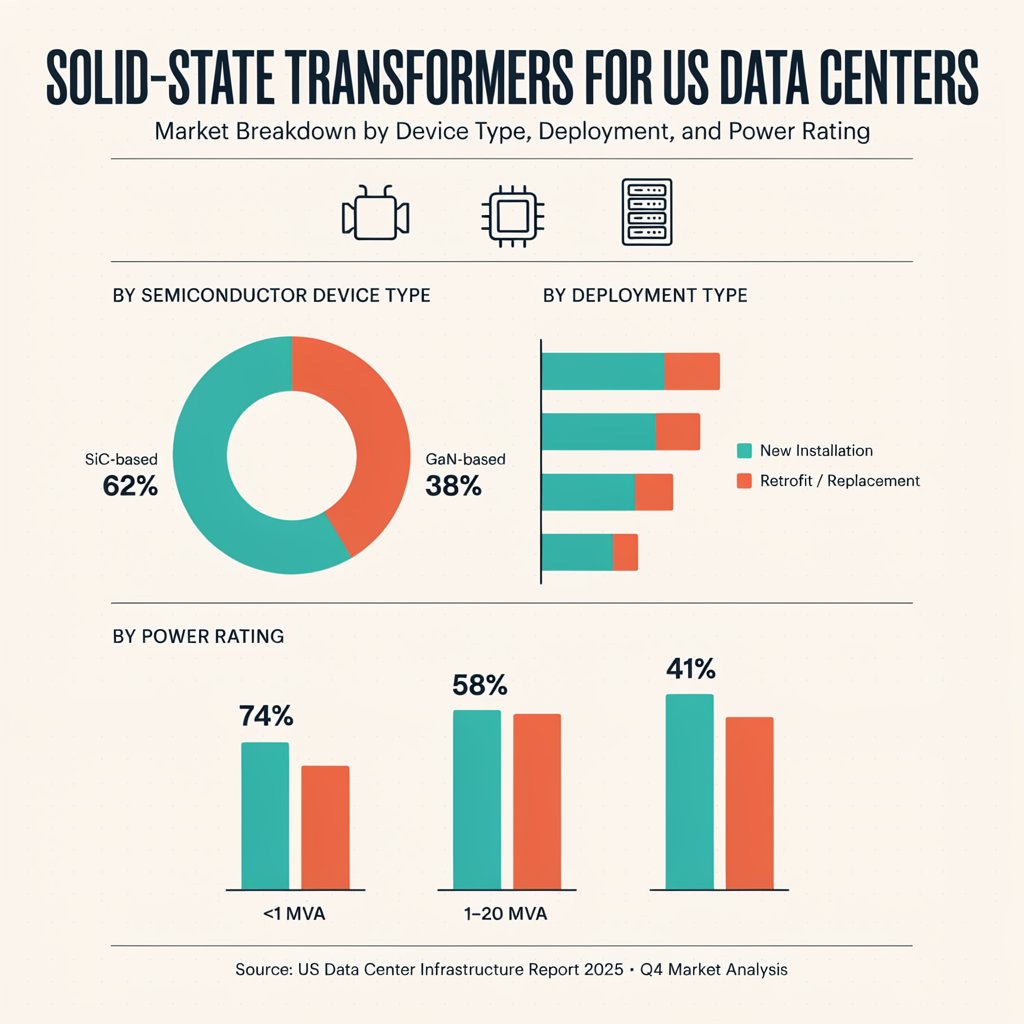
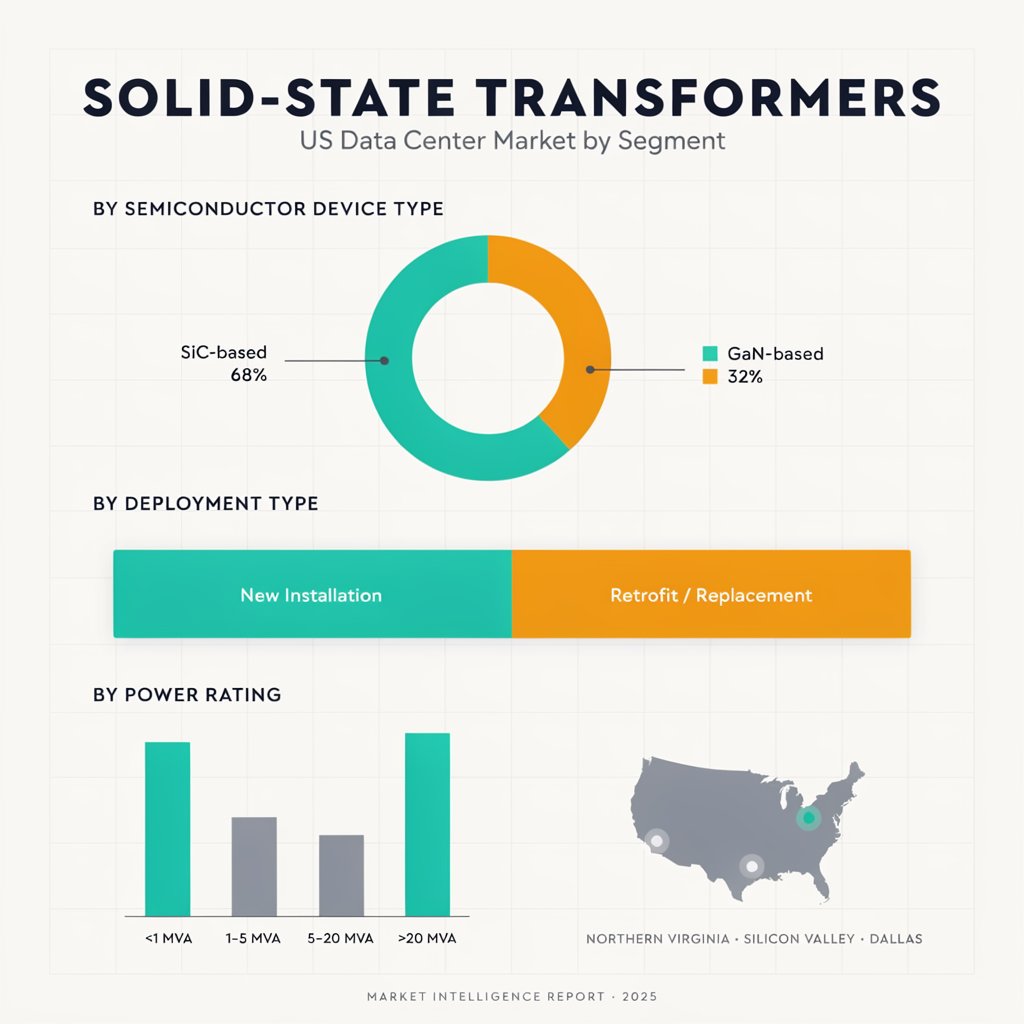
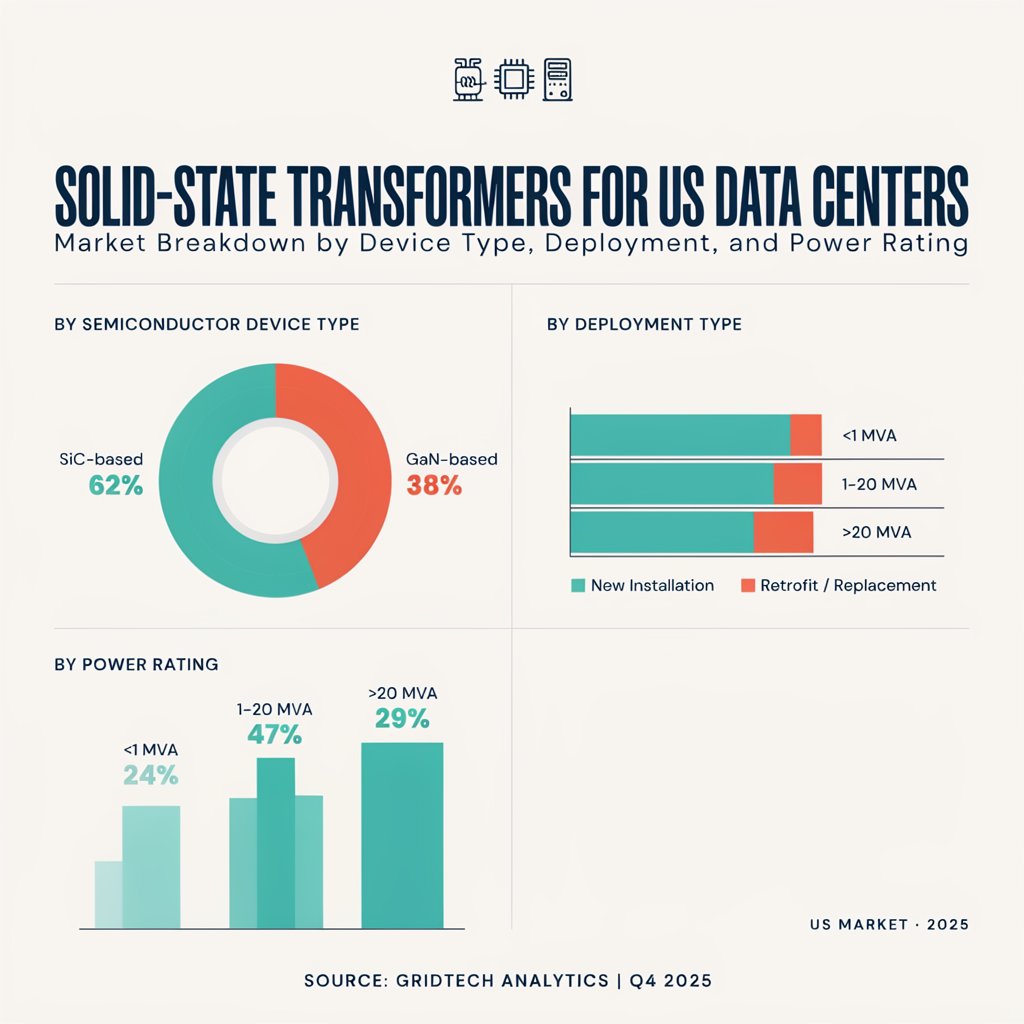
Wide-bandgap semiconductor technologies such as silicon carbide (SiC) and gallium nitride (GaN) are further accelerating this trend. These advanced semiconductor materials enable Solid-State Transformers to switch electricity at higher frequencies with lower losses than conventional silicon devices. Higher switching efficiency reduces heat generation, decreases cooling requirements, and improves the overall effectiveness of DC power distribution systems. As semiconductor technology continues advancing, the commercial viability of fully DC data center architectures becomes increasingly attractive.
Renewable energy integration represents another important trend supporting DC power infrastructure. Solar photovoltaic systems naturally generate direct current, while battery energy storage systems also store electricity in DC form. Conventional AC-based infrastructure requires multiple conversion stages before renewable electricity reaches computing equipment. Fully DC architectures simplify this process by allowing renewable generation and battery storage to integrate more directly with facility power systems. Solid-State Transformers serve as intelligent gateways that efficiently manage energy exchange between utility grids, renewable resources, batteries, and DC distribution networks.
Battery Energy Storage Systems (BESS) become even more effective within DC-based power environments. Since batteries inherently operate using direct current, integrating them into fully DC architectures reduces unnecessary conversion losses while improving charging and discharging efficiency. Solid-State Transformers coordinate intelligent energy flow between batteries, renewable generation, utility grids, and computing loads, enabling highly flexible energy management while maintaining electrical stability throughout the facility.
Inquiry Before Buying @ https://www.marketsandmarkets.com/Enquiry_Before_BuyingNew.asp?id=51807964
The increasing adoption of liquid-cooled AI facilities further strengthens interest in fully DC architectures. Liquid cooling enables higher server densities and significantly greater computational performance, resulting in increased electrical demand at the rack level. Combining liquid cooling with efficient DC power distribution creates an integrated approach to optimizing both thermal and electrical performance. Solid-State Transformers support this strategy by delivering stable DC power capable of meeting the high current requirements of densely packed AI computing systems.
Another notable trend involves modular power system design. Hyperscale data center operators increasingly favor modular electrical infrastructure that allows incremental expansion as computing capacity grows. Fully DC architectures supported by Solid-State Transformers simplify modular deployment because standardized DC distribution units can be integrated more efficiently across expanding campuses. This flexibility reduces infrastructure complexity while improving scalability for future growth.
Artificial intelligence is also enhancing the management of DC power systems. Modern Solid-State Transformers continuously collect operational data related to voltage, current, temperature, switching performance, and equipment health. AI-driven energy management platforms analyze this information to optimize DC power distribution, predict maintenance needs, improve efficiency, and identify electrical abnormalities before failures occur. Intelligent monitoring contributes to greater operational reliability while minimizing maintenance costs.
Power quality remains another significant advantage of Solid-State Transformer deployment within DC architectures. AI computing systems require exceptionally stable electrical conditions to maintain continuous operation and computational accuracy. Solid-State Transformers actively regulate output voltage, minimize electrical disturbances, suppress harmonics, and ensure consistent DC power delivery across the facility. These capabilities improve equipment reliability while supporting uninterrupted operation for mission-critical workloads.
View detailed Table of Content here – https://www.marketsandmarkets.com/Market-Reports/us-data-centers-solid-state-transformers-market-51807964.html
Grid modernization efforts across the United States are creating additional opportunities for fully DC power systems. Utilities increasingly invest in digital infrastructure capable of supporting distributed renewable generation, energy storage, and intelligent load management. Solid-State Transformers enable seamless communication between modern utility networks and DC-based data center infrastructure through digital controls and adaptive power conversion. Their intelligent operation supports broader smart grid objectives while improving facility resilience.
Sustainability continues influencing infrastructure planning throughout the data center industry. Operators increasingly evaluate every aspect of facility design to reduce greenhouse gas emissions, improve energy utilization, and achieve carbon neutrality targets. Fully DC power architectures supported by Solid-State Transformers contribute to these goals by reducing conversion losses, increasing renewable energy utilization, and lowering cooling requirements. These efficiency improvements align closely with long-term environmental strategies pursued by leading technology companies.
Government initiatives supporting semiconductor manufacturing, renewable energy deployment, and resilient digital infrastructure also strengthen long-term market prospects. Public investment in advanced electrical technologies encourages continued research into efficient power conversion systems capable of supporting the next generation of computing infrastructure.
Looking ahead, fully DC power architectures are expected to become increasingly important as AI workloads, renewable energy integration, and hyperscale computing continue reshaping the US data center landscape. Solid-State Transformers will play a central role in enabling this transition by providing intelligent, high-efficiency AC-to-DC conversion, seamless renewable integration, and advanced digital energy management. As operators continue seeking more sustainable, efficient, and resilient infrastructure, Solid-State Transformers will become an essential technology supporting the evolution of fully DC-powered data centers across the United States.