
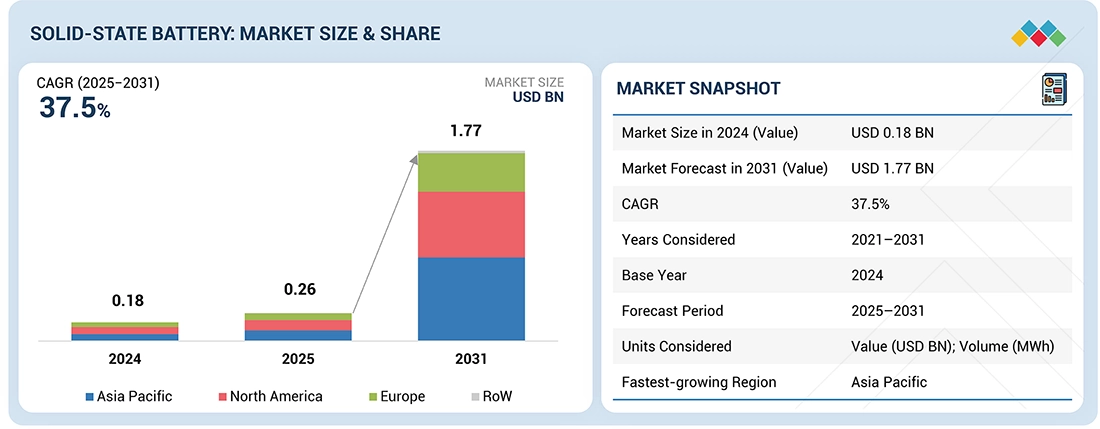
The Solid-State Battery Market is evolving rapidly as emerging energy storage technologies reshape the future of power management across industries. Growing demand for safer, more efficient, and higher-capacity energy storage solutions is driving significant innovation in battery technology, positioning solid-state batteries as one of the most promising developments in the global energy landscape. As sectors such as electric mobility, renewable energy, consumer electronics, industrial automation, telecommunications, and aerospace continue to expand, the need for advanced energy storage systems has become increasingly important. Emerging technologies are not only enhancing the capabilities of solid-state batteries but are also accelerating their commercialization and adoption across a wide range of applications.
One of the most influential developments within the energy storage sector is the advancement of solid electrolyte technologies. Unlike conventional lithium-ion batteries that rely on liquid electrolytes, solid-state batteries utilize solid materials to facilitate ion movement between electrodes. This innovation improves battery safety, reduces the risk of leakage and thermal runaway, and supports higher energy densities. Ongoing research into sulfide-based, oxide-based, and polymer-based electrolytes is enabling improved ionic conductivity and overall battery performance. These emerging electrolyte technologies are creating new opportunities for manufacturers to develop more efficient and reliable energy storage systems.
The integration of lithium metal anodes represents another significant advancement shaping the future of solid-state batteries. Traditional lithium-ion batteries typically use graphite anodes, which limit energy storage capacity. Emerging solid-state battery designs can accommodate lithium metal anodes more effectively due to the stability provided by solid electrolytes. Lithium metal offers substantially higher theoretical energy density, allowing batteries to store more energy while maintaining compact dimensions. This breakthrough is particularly important for electric vehicles and portable electronic devices, where extended operational range and reduced battery size are highly desirable.
Download PDF Brochure @ https://www.marketsandmarkets.com/pdfdownloadNew.asp?id=164577856
Fast-charging technologies are also emerging as a critical area of innovation within the energy storage market. As consumers and industries increasingly demand shorter charging times, researchers are developing battery systems capable of supporting rapid energy transfer without compromising safety or battery lifespan. Advanced solid-state battery architectures and electrolyte materials are helping enable faster charging cycles while maintaining stable performance. These developments are expected to play a vital role in accelerating the adoption of electric vehicles and other battery-powered technologies.
The growing convergence of energy storage and artificial intelligence is creating additional opportunities within the solid-state battery market. Intelligent energy management systems use machine learning algorithms and predictive analytics to optimize battery performance, monitor health conditions, and improve energy efficiency. Emerging battery technologies are being designed to integrate seamlessly with these digital platforms, enabling real-time monitoring and automated performance optimization. This combination of advanced energy storage and intelligent software is helping organizations maximize battery utilization while reducing maintenance costs and operational risks.
Renewable energy integration continues to be a major driver of innovation in energy storage technologies. As solar and wind energy installations expand globally, efficient storage solutions are required to address intermittency challenges and maintain grid stability. Solid-state batteries are increasingly being considered for renewable energy applications due to their long lifespan, high efficiency, and improved safety characteristics. Emerging grid-scale energy storage technologies are incorporating advanced battery chemistries and smart control systems that enable more effective management of renewable energy resources. These developments support the transition toward cleaner and more sustainable energy systems.
Inquiry Before Buying @ https://www.marketsandmarkets.com/Enquiry_Before_BuyingNew.asp?id=164577856
Another important trend involves the development of hybrid energy storage systems that combine multiple technologies to achieve enhanced performance. In some applications, solid-state batteries are being integrated with supercapacitors, advanced battery chemistries, or alternative storage solutions to optimize energy delivery and operational efficiency. Hybrid systems can provide rapid power response, extended energy storage duration, and improved system flexibility. These innovations are expanding the range of applications where advanced energy storage solutions can deliver significant value.
Emerging manufacturing technologies are also contributing to market growth by improving the scalability and affordability of solid-state batteries. Automated production systems, advanced material processing techniques, precision fabrication methods, and digital manufacturing platforms are helping reduce production costs while enhancing product quality. These manufacturing innovations are making solid-state batteries more commercially viable and accelerating their transition from research laboratories to large-scale industrial deployment.
The rise of decentralized energy systems is creating new opportunities for advanced energy storage technologies. Residential energy storage units, community microgrids, and distributed energy resources require reliable batteries that can operate efficiently under varying conditions. Solid-state batteries are increasingly being evaluated for these applications due to their durability, compact design, and enhanced safety profile. Their ability to support localized energy generation and storage aligns with the growing trend toward decentralized and resilient energy infrastructure.
View detailed Table of Content here – https://www.marketsandmarkets.com/Market-Reports/solid-state-battery-market-164577856.html
Sustainability is becoming a key consideration in the development of emerging energy storage technologies. Researchers and manufacturers are focusing on reducing the environmental impact of battery production through the use of recyclable materials, resource-efficient manufacturing processes, and environmentally responsible design strategies. Solid-state batteries offer potential sustainability advantages through longer operational lifespans and improved efficiency, reducing the need for frequent replacements and minimizing waste generation.
Strategic collaborations between battery manufacturers, automotive companies, technology firms, research institutions, and energy providers are accelerating innovation across the energy storage ecosystem. These partnerships are facilitating the development of next-generation materials, advanced battery architectures, and intelligent management systems that enhance the performance and scalability of solid-state batteries. Collaborative efforts are helping overcome technical challenges while creating pathways for widespread commercialization.
Looking ahead, emerging energy storage technologies will continue to shape the trajectory of the solid-state battery market. Advances in solid electrolytes, lithium metal anodes, fast-charging systems, artificial intelligence integration, hybrid storage architectures, and sustainable manufacturing processes are driving significant improvements in battery performance and commercial viability. As industries increasingly demand safe, efficient, and high-capacity energy storage solutions, solid-state batteries are positioned to play a central role in the future of global electrification and energy management. Their continued evolution will support innovation across transportation, renewable energy, industrial operations, telecommunications, and consumer electronics, making them a cornerstone of next-generation energy infrastructure.