
The development of humanoid robots is entering a new phase as manufacturers focus on creating intelligent, autonomous, and human-like machines capable of performing complex tasks across industrial, commercial, and service environments. While artificial intelligence (AI), advanced sensors, motion control, and robotic hardware receive significant attention, battery technology and operational runtime are becoming equally important factors in determining the commercial success of humanoid robots.
Unlike traditional industrial robots that often operate in fixed locations with continuous power supplies, humanoid robots are designed to move freely, walk, interact with objects, and perform tasks in dynamic environments. These activities require considerable energy to power electric actuators, onboard processors, cameras, sensors, communication systems, and cooling mechanisms. Consequently, battery capacity, charging speed, energy efficiency, and runtime are emerging as strategic priorities for humanoid robot developers.
The humanoid robot market size is estimated to be USD 5.41 billion in 2026 and is projected to reach USD 50.27 billion by 2035, expanding at a CAGR of 28.1% from 2026 to 2035.
As demand for humanoid robots increases across manufacturing, logistics, healthcare, retail, and other industries, companies are focusing on improving battery performance to enable longer operating hours, minimize downtime, and enhance productivity. Battery innovation is therefore becoming a critical component of the humanoid robot industry’s long-term growth strategy.
Growing Demand for Longer Operating Runtime in Humanoid Robots
Operational runtime directly influences the productivity and commercial viability of humanoid robots. Industrial facilities and logistics operations require robots that can perform repetitive activities for extended periods without frequent interruptions for charging or battery replacement.
Humanoid robots perform energy-intensive movements, including walking, climbing stairs, lifting objects, maintaining balance, and manipulating tools. These activities place continuous demands on battery systems. When battery capacity is limited, robots may need to return to charging stations frequently, reducing their overall operational availability.
Manufacturers are therefore prioritizing high-energy-density batteries that can deliver longer operating hours without significantly increasing the weight or physical dimensions of humanoid robots. This requirement is particularly important because excessive battery weight can affect balance, mobility, joint performance, and overall energy consumption.
Longer runtime also supports the deployment of humanoid robots in environments where continuous operation is essential. For example, manufacturing facilities can use robots for material handling, assembly support, and inspection, while warehouses can deploy them for picking, sorting, and transportation activities.
Download PDF Brochure @ https://www.marketsandmarkets.com/pdfdownloadNew.asp?id=99567653
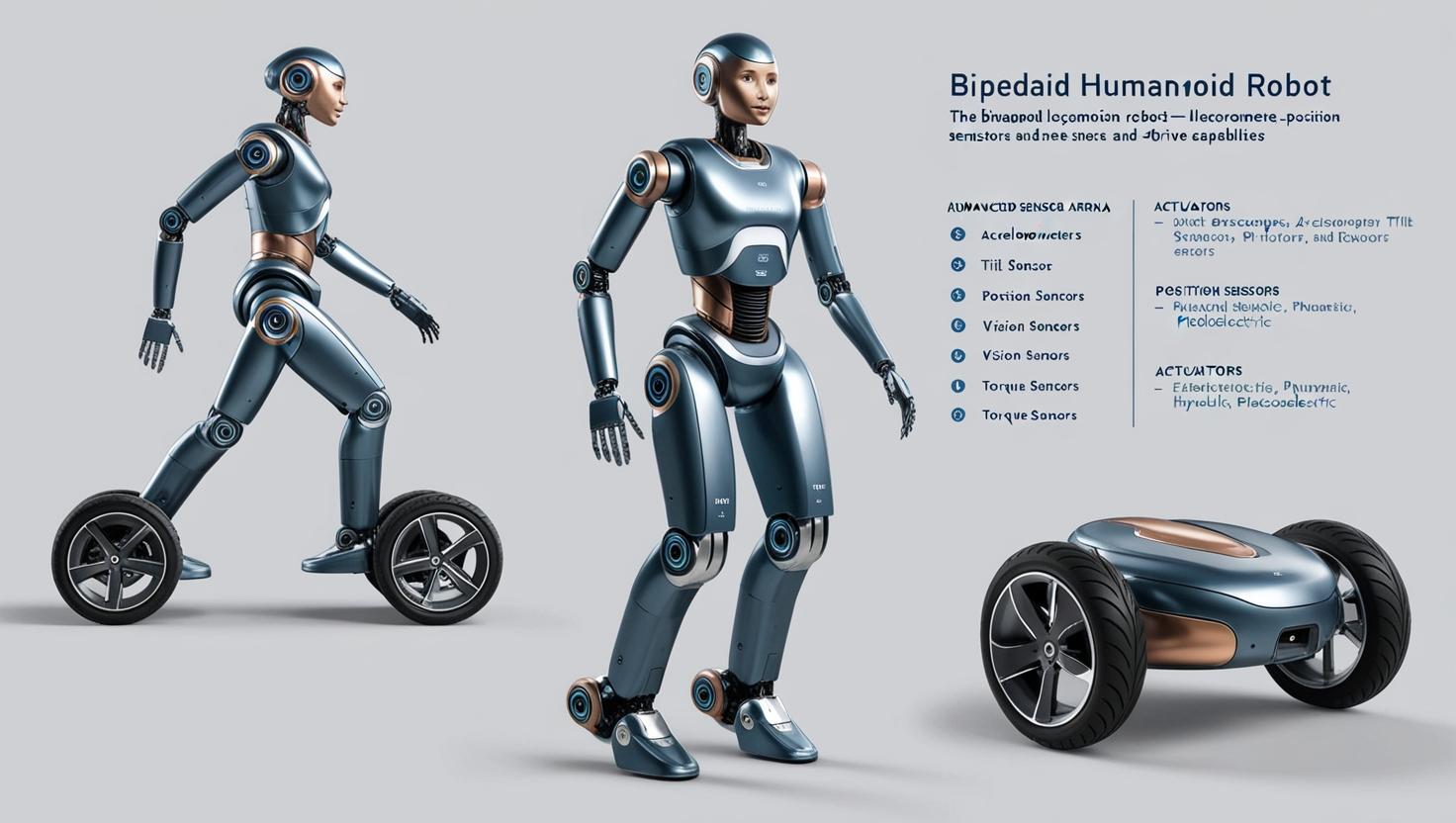
Advanced Battery Technologies Supporting Humanoid Robot Development
Battery technology is becoming a major differentiator in humanoid robot development. Manufacturers are exploring advanced battery chemistries and energy storage solutions to improve power density, safety, charging efficiency, and lifecycle performance.
Lithium-Ion Batteries Driving Energy Storage Innovation
Lithium-ion batteries remain an important technology for mobile robotic platforms because of their high energy density, rechargeable characteristics, and established manufacturing ecosystem. Their relatively lightweight design makes them suitable for humanoid robots that require compact energy storage systems.
Advancements in lithium-ion battery chemistry are helping manufacturers improve energy capacity, charging performance, and battery lifespan. Better battery management systems also support temperature monitoring, voltage regulation, and protection against overcharging and deep discharge.
Solid-State Batteries Creating New Opportunities
Solid-state batteries are attracting interest because of their potential to deliver higher energy density and improved safety compared with conventional lithium-ion technologies. By replacing liquid electrolytes with solid materials, these batteries could help reduce certain thermal and leakage risks.
For humanoid robots, solid-state battery development could create opportunities for lighter energy storage systems, longer runtime, and improved operational reliability. However, manufacturing scalability, material costs, and commercial readiness remain important considerations.
High-Power Battery Systems for Dynamic Movement
Humanoid robots require more than batteries with high energy capacity. They also need battery systems capable of delivering high power during demanding movements, such as lifting heavy objects, accelerating, climbing, and maintaining stability.
High-power battery architectures can help meet these energy demands while supporting consistent actuator performance. Manufacturers are increasingly focusing on balancing energy density and power density to achieve an effective combination of runtime and dynamic movement capabilities.
Battery Management Systems Improving Performance and Reliability
Battery Management Systems (BMS) are becoming essential for maintaining the safety, efficiency, and reliability of humanoid robots. These systems monitor battery conditions and regulate energy distribution to ensure that robots can perform demanding tasks without unexpected power interruptions.
Advanced BMS technologies provide real-time monitoring of battery voltage, current, temperature, and state of charge. They also help identify potential battery failures, prevent overheating, and optimize charging and discharging cycles.
For humanoid robots, intelligent battery management is particularly important because energy consumption changes according to movement patterns and workload requirements. Walking, lifting, running, and maintaining balance require different amounts of electrical power.
AI-enabled battery management solutions can analyze operating conditions and predict energy requirements. This allows robots to optimize power consumption by adjusting movement patterns, controlling actuator performance, and prioritizing essential functions.
Predictive battery monitoring can also help fleet operators schedule charging activities, identify battery degradation, and reduce unexpected maintenance requirements.
Fast Charging and Battery Swapping Redefining Robot Uptime
Battery runtime is only one part of the operational efficiency equation. Charging time also determines how effectively humanoid robots can be integrated into industrial and commercial workflows.
Frequent charging interruptions can reduce productivity, particularly in manufacturing plants, warehouses, and distribution centers where robots are expected to support continuous operations.
To address this challenge, manufacturers are exploring fast-charging technologies and automated battery-swapping systems.
Fast charging technology: Advanced charging systems can reduce the time required to recharge humanoid robot batteries. Intelligent charging infrastructure can also manage charging schedules according to workload requirements and battery conditions.
Automated battery swapping: Battery-swapping solutions allow robots to replace depleted battery packs with fully charged units. This approach can reduce downtime and support longer operating schedules without waiting for conventional charging cycles.
Autonomous charging infrastructure: Wireless charging stations and automated docking systems can enable humanoid robots to independently identify charging locations and recharge when battery levels become low.
These technologies are particularly relevant for industrial applications where operational continuity and equipment utilization directly influence productivity.
Energy Efficiency Becoming a Competitive Differentiator
Improving battery capacity alone cannot address every runtime challenge. Humanoid robot manufacturers must also reduce overall energy consumption through efficient hardware and software architectures.
Advanced actuators, lightweight materials, optimized mechanical structures, and intelligent motion-planning algorithms can help minimize power requirements.
For example, efficient joint motors can reduce energy losses during walking and object manipulation. Lightweight structural components can decrease the amount of energy required for movement, while AI-based motion optimization can help robots select less energy-intensive movements.
Another important development is the integration of energy-efficient processors and computing architectures. Humanoid robots rely on onboard computing for computer vision, environmental perception, navigation, and decision-making. These workloads can consume substantial energy, making processor efficiency an important consideration.
Manufacturers are increasingly looking at the complete energy architecture of humanoid robots rather than treating batteries as independent components.
Growing Industrial Applications Increasing Battery Requirements
The expansion of humanoid robots across different industries is creating diverse requirements for battery capacity, runtime, and charging infrastructure.
Manufacturing
Manufacturing is an important application area for humanoid robots. These machines can support assembly operations, material handling, machine tending, quality inspection, and repetitive production activities.
Industrial facilities require robots capable of operating for extended shifts with minimal interruptions. This is increasing demand for high-energy-density batteries, efficient power management, and rapid charging solutions.
Logistics and Warehousing
Warehouses and distribution centers involve continuous material movement, picking, sorting, packaging, and transportation activities. Humanoid robots operating in these environments require reliable batteries that support frequent movement and repetitive lifting operations.
Battery-swapping infrastructure and autonomous charging stations could help logistics operators improve robot availability and maintain consistent workflows.
Healthcare and Personal Assistance
Healthcare and personal assistance applications require humanoid robots to perform activities such as patient support, material transportation, and assistance with routine tasks.
In these environments, battery safety, predictable runtime, and operational reliability are particularly important. Manufacturers must develop battery systems that support extended operation while maintaining appropriate thermal and electrical safety.
Retail and Hospitality
Humanoid robots are increasingly being explored for customer assistance, inventory management, product handling, and service-related activities.
These applications require compact, lightweight battery systems that can support mobility and human interaction throughout operating hours.
As adoption expands, battery requirements will increasingly depend on the specific application, workload intensity, and expected operating schedule.
Challenges Limiting Battery and Runtime Improvements
Despite advancements in battery technologies, several challenges continue to affect the performance and commercialization of humanoid robots.
1. Battery Weight and Size: Humanoid robots have limited internal space for energy storage. Increasing battery capacity can add weight, affecting balance, movement efficiency, and mechanical performance.
2. Thermal Management: High-power battery systems generate heat during intensive operations and fast charging. Manufacturers must develop effective cooling solutions to maintain stable temperatures and prevent thermal-related failures.
3. Battery Safety: Humanoid robots are expected to operate alongside humans in factories, hospitals, warehouses, and public environments. Battery systems must withstand vibration, physical impact, and demanding operating conditions while maintaining safety.
4. High Battery Costs: Advanced battery chemistries, customized battery packs, and intelligent management systems can increase manufacturing costs. Reducing these costs will be important for large-scale humanoid robot commercialization.
5. Limited Charging Infrastructure: Industrial and commercial facilities may require dedicated charging stations, automated docking systems, or battery-swapping infrastructure to support large humanoid robot fleets.
Addressing these challenges will require collaboration between battery manufacturers, robotics developers, semiconductor companies, and industrial automation providers.
Future Outlook: Moving Toward Full-Shift Humanoid Robot Operation
The future of humanoid robotics will depend significantly on improvements in battery technology and energy management. As manufacturers transition from experimental prototypes to commercially deployable robots, operational runtime will become a key purchasing consideration.
Solid-state and semi-solid-state batteries could play an important role in this transition by offering opportunities for higher energy density, improved safety, and more compact battery architectures. High-nickel NMC and NCA batteries are also expected to remain important for applications requiring high energy density and demanding power delivery.
At the same time, AI-powered energy optimization, advanced battery management systems, wireless charging, and automated battery swapping will help improve operational availability.
Battery and runtime are becoming strategic priorities for the humanoid robot market because they directly influence productivity, mobility, operational efficiency, and commercialization potential. As humanoid robots move into real-world industrial and service environments, manufacturers must address the limitations of conventional battery systems.
Advancements in lithium-ion, solid-state, and high-power battery technologies, combined with intelligent battery management, fast charging, and automated battery swapping, will help overcome existing operational constraints.
Ultimately, the next phase of humanoid robot development will not depend solely on more advanced AI or sophisticated mechanical capabilities. It will also depend on how efficiently these machines store, manage, and utilize energy. Battery innovation will be a fundamental enabler of the transition toward autonomous humanoid robots capable of supporting longer and more productive working hours.
FAQ
Q1. Why is battery runtime important for humanoid robots?
A. Battery runtime determines how long humanoid robots can operate without recharging. Longer runtime improves productivity, reduces downtime, and supports continuous operations.
Q2. Which battery technologies are used in humanoid robots?
A. Lithium-ion batteries are widely used in humanoid robots, while solid-state and advanced battery technologies are being developed to improve energy density, safety, and operating efficiency.
Q3. How does AI improve battery performance in humanoid robots?
A. AI-powered battery management systems monitor energy consumption, predict charging requirements, optimize power distribution, and improve overall battery efficiency.
Q4. What are the major challenges affecting humanoid robot battery performance?
A. Key challenges include limited battery capacity, weight constraints, thermal management, charging time, battery safety, and high manufacturing costs.
Q5. What is the future of battery technology in the humanoid robot market?
A. The future will be driven by solid-state batteries, fast-charging solutions, automated battery swapping, and intelligent energy management systems that enable longer runtime and greater robot productivity.