
The Wearable Technology Market is evolving rapidly as connected devices become increasingly integrated into healthcare, fitness, consumer electronics, enterprise operations, and industrial environments. Wearable products are moving beyond basic activity tracking toward continuous monitoring, intelligent assistance, personalized insights, and connected digital experiences. Advances in sensors, artificial intelligence, flexible displays, wireless connectivity, and compact computing are expanding the capabilities of wearable devices. The industry includes products such as smartwatches, fitness trackers, smart rings, smart glasses, head mounted displays, wearable cameras, smart clothing, smart footwear, exoskeletons, and skin patches. These developments are creating a competitive environment where product innovation, software capabilities, ecosystem integration, user experience, and data management increasingly influence market positioning.
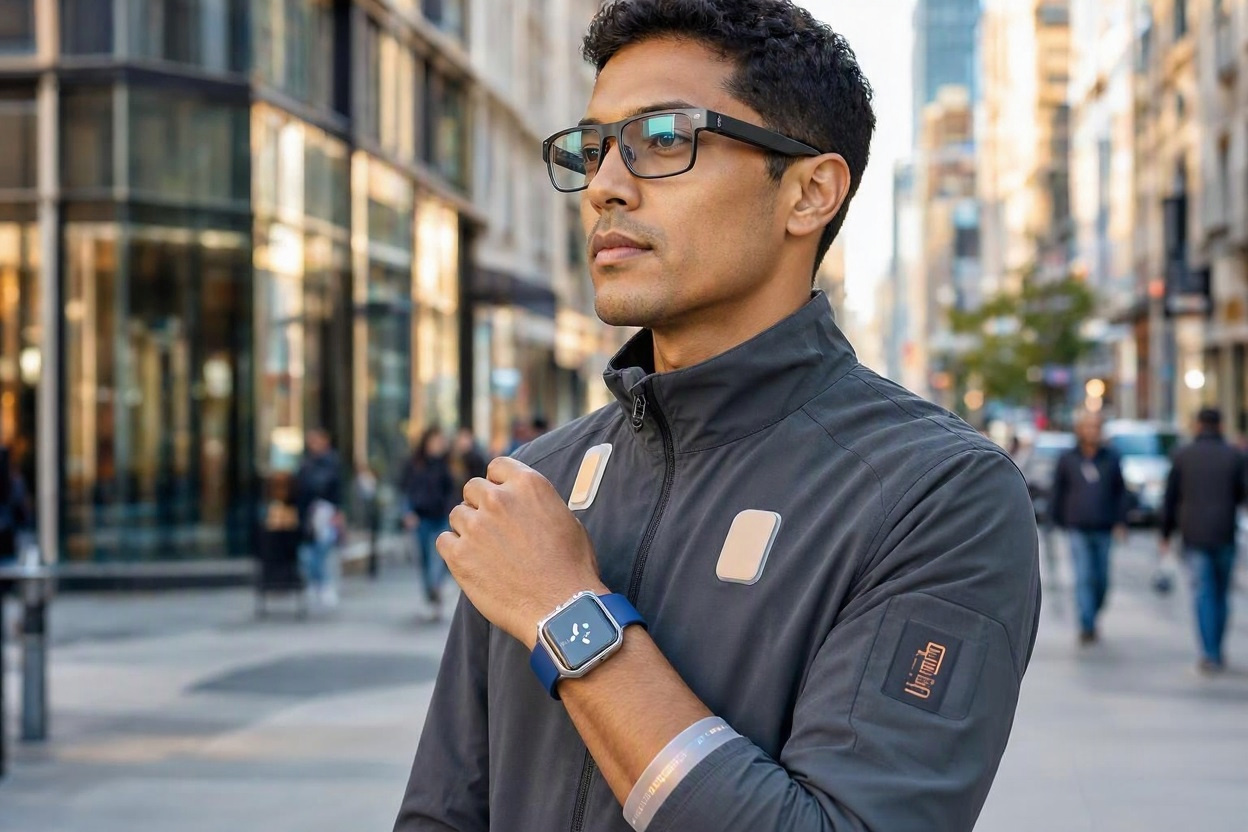
According to Marketsandmarkets, the global wearable technology market size is projected to grow from USD 104.95 Billion in 2026 to USD 238.71 billion by 2032, growing at a CAGR of 14.7% from 2026 to 2032.
Download PDF Brochure @ https://www.marketsandmarkets.com/pdfdownloadNew.asp?id=983
Competitive Landscape Is Shifting Toward Intelligent Wearables
The Wearable Technology Market competitive landscape is becoming more diversified as manufacturers compete across multiple product categories and applications. Earlier generations of wearable devices primarily focused on activity tracking, notifications, communication, and basic health measurements. Current products increasingly incorporate advanced sensors, artificial intelligence, cloud connectivity, personalized analytics, and improved interfaces. This shift is creating competition between established consumer electronics providers, specialized wearable manufacturers, healthcare technology businesses, software developers, and emerging technology companies. Competitive differentiation increasingly depends on the ability to combine hardware, software, connectivity, analytics, and services into a seamless user experience. As product categories converge, companies are also exploring new wearable formats that can provide continuous computing and monitoring without requiring users to interact constantly with smartphones.
The Wearable Technology Market is also experiencing stronger competition around specialized applications. Healthcare focused devices emphasize continuous monitoring, remote patient support, biometric measurement, and personalized health information. Fitness products concentrate on performance tracking, recovery insights, sleep monitoring, and wellness management. Enterprise and industrial wearables are designed to support workforce safety, productivity, communication, navigation, and operational efficiency. Smart glasses and head mounted displays are expanding opportunities across immersive visualization, training, field service, remote assistance, and industrial applications. This application diversity allows companies to pursue differentiated strategies rather than compete solely on consumer smartwatch sales.
Product Innovation Drives Competitive Differentiation
Product innovation remains one of the strongest factors influencing the Wearable Technology Market. Manufacturers are working to reduce device size while improving processing capabilities, sensor accuracy, battery efficiency, display quality, and connectivity. Flexible display technologies are supporting thinner and more adaptable product designs, while improvements in sensor technology are allowing wearable devices to capture a wider range of physical and environmental information. Miniaturization is particularly important because users expect wearable products to remain comfortable while offering increasingly sophisticated functionality. Product designers therefore need to balance performance, appearance, durability, battery life, and usability.
The expansion of product categories is also changing the competitive structure of the Wearable Technology Market. Wrist based devices remain important, but smart rings, smart glasses, earwear, smart clothing, wearable cameras, exoskeletons, and skin patches are creating additional avenues for innovation. Different product categories serve different consumer and enterprise requirements. Smart rings can provide discreet health and wellness monitoring, while smart glasses can support hands free information access and immersive experiences. Smart clothing can integrate sensors into garments, and exoskeletons can support workers performing physically demanding tasks. The growing diversity of form factors allows manufacturers to target specific use cases and develop differentiated value propositions.
Artificial Intelligence Is Reshaping Wearable Experiences
Artificial intelligence is becoming an important component of the Wearable Technology Market because it can transform raw sensor information into useful insights. Wearable devices generate continuous streams of information related to movement, activity, sleep, physiological conditions, environmental exposure, and user interactions. AI based processing can help identify patterns, personalize recommendations, support anomaly detection, and improve the relevance of information presented to users. The integration of AI is therefore moving wearable products from passive data collection toward more intelligent and interactive experiences.
AI integration is also influencing product development strategies. Manufacturers can use intelligent software to improve health insights, personalize fitness recommendations, support voice interaction, optimize device performance, and enable context aware functionality. In enterprise settings, AI enabled wearables can support workers by delivering relevant information based on operational conditions. Smart glasses and other head mounted products can potentially combine computer vision, voice interfaces, and real time information to support field activities. As AI capabilities become more efficient on devices, processing can increasingly occur closer to the user, potentially improving responsiveness and reducing dependence on constant cloud communication.
Healthcare Applications Create New Competitive Opportunities
Healthcare is becoming an important application area for the Wearable Technology Market as healthcare providers and consumers increasingly seek continuous access to health information. Wearable devices can support monitoring of activity, heart related measurements, sleep patterns, physical performance, and other health indicators. Remote patient monitoring is also creating opportunities for wearable technologies to contribute to connected healthcare workflows. These applications can help provide healthcare professionals with additional information between clinical interactions while allowing users to monitor selected aspects of their health.
Competition in healthcare wearables is different from competition in conventional consumer electronics. Accuracy, reliability, data security, regulatory compliance, comfort, and clinical relevance become particularly important. Healthcare focused wearable manufacturers therefore need to establish confidence in the quality of collected information while ensuring that devices remain convenient for long term use. Integration with healthcare platforms and digital services can also influence adoption. As remote healthcare continues to develop, wearable technologies may become increasingly connected with broader digital health ecosystems.
Mergers and Acquisitions Support Technology Expansion
Mergers and acquisitions are influencing the Wearable Technology Market by allowing businesses to obtain specialized capabilities more quickly than through internal development alone. Acquisition activity across the broader wearable and digital health ecosystem has included businesses focused on biosensors, health monitoring, connected devices, and specialized wearable applications. Industry transaction data shows that strategic buyers have pursued technologies that can strengthen sensing capabilities, connected health offerings, and specialized wearable solutions.
The strategic rationale behind acquisitions is increasingly connected to technology convergence. A company with strong hardware capabilities may seek specialized software, AI, sensing, analytics, or health technology capabilities. Similarly, a digital health business may seek wearable hardware expertise to improve continuous data collection. Mergers can also provide access to intellectual property, engineering talent, distribution capabilities, customer relationships, and established technology platforms. This makes M&A an important competitive tool in an industry where product development cycles are becoming more complex.
Several transaction trends demonstrate the broader interest in AI enabled and health oriented wearable technology. Recent activity has included acquisitions involving emerging wearable businesses and technologies designed around AI assisted personal computing and connected health. Such transactions indicate that strategic buyers are examining wearables not simply as standalone hardware but as part of broader software, data, healthcare, and artificial intelligence ecosystems.
Partnerships Complement Acquisition Strategies
Partnerships are another important element of the Wearable Technology Market competitive environment. Companies can use partnerships to combine capabilities without completing a full acquisition. Hardware manufacturers may collaborate with software providers, healthcare organizations, semiconductor businesses, connectivity providers, or specialized technology developers. These relationships can accelerate product development and help organizations access technologies that would otherwise require significant internal investment.
Partnership strategies are particularly relevant when wearable devices need to connect with wider ecosystems. A smartwatch may interact with smartphones, cloud platforms, healthcare applications, payment systems, fitness services, and smart home products. Smart glasses may connect with enterprise software, artificial intelligence platforms, remote assistance systems, and industrial databases. The ability to build an ecosystem around a wearable product can therefore become as important as the device itself. Companies that establish broad compatibility and strong software integration can create additional opportunities for recurring engagement.
Sensor Technology Strengthens Device Capabilities
Sensors remain a fundamental technology within the Wearable Technology Market because they provide the data required for monitoring, analytics, and intelligent functionality. Advances in miniaturized sensors are allowing wearable devices to collect more information without significantly increasing device size. Improvements in sensing technologies can support applications involving movement, heart activity, temperature, pressure, environmental conditions, location, and other parameters.
The growing importance of sensors is increasing competition throughout the wearable technology ecosystem. Device manufacturers need access to reliable and efficient sensing components, while component developers are working to improve accuracy, energy efficiency, integration, and manufacturing scalability. Sensor fusion is also becoming increasingly relevant because combining information from multiple sensors can provide a more comprehensive understanding of user activity and conditions. These capabilities can improve the usefulness of wearable products across healthcare, sports, industrial, and consumer applications.
Battery Life Remains a Major Product Challenge
Battery performance continues to influence the Wearable Technology Market because users expect devices to operate for extended periods without frequent charging. Continuous health monitoring, wireless connectivity, artificial intelligence processing, displays, location services, and other advanced functions can increase energy consumption. At the same time, users generally prefer smaller and lighter products, limiting the physical space available for batteries. Manufacturers therefore face a complex engineering challenge involving power consumption, device size, functionality, and user convenience.
Power efficiency is consequently becoming an important area of product differentiation. Improvements in processors, sensors, displays, communication technologies, and software can reduce energy requirements. Efficient device architectures can also distribute computing between the wearable device and connected systems. Manufacturers are increasingly examining how hardware and software can work together to maximize battery performance while preserving advanced functionality. Battery innovation will remain closely connected to the development of more intelligent and continuously connected wearables.
Smart Glasses and Head Mounted Devices Expand Competition
Head mounted devices are creating a new competitive dimension within the Wearable Technology Market. Smart glasses and related products can combine displays, cameras, microphones, sensors, connectivity, and artificial intelligence to provide hands free digital experiences. Their applications extend beyond entertainment into enterprise assistance, training, remote support, industrial visualization, navigation, and communication. Improvements in display technologies and AI are helping manufacturers explore more practical and lightweight designs.
The competitive landscape for head mounted devices is influenced by several factors. Comfort is critical because users may wear these products for extended periods. Display quality, field of view, battery life, weight, camera performance, privacy, and software compatibility also influence adoption. Enterprise applications may prioritize durability, security, remote assistance, and productivity, while consumer applications may emphasize entertainment, communication, and convenience. This creates opportunities for companies to specialize in different segments rather than follow a single product strategy.
Enterprise Adoption Is Broadening Market Competition
Enterprise and industrial applications are expanding the scope of the Wearable Technology Market. Organizations can use wearable devices to support employee safety, productivity, training, logistics, maintenance, communication, and operational visibility. Wearables can provide workers with hands free access to information, allowing them to interact with digital systems while performing physical tasks. This can be particularly valuable in environments where workers need to maintain attention on equipment, tools, or surroundings.
Industrial adoption also changes purchasing criteria. Enterprise buyers may prioritize reliability, device durability, cybersecurity, software integration, fleet management, and return on investment. Consumer design principles alone may not be sufficient for industrial applications. Manufacturers therefore need to develop products and services that address organizational requirements. The combination of hardware, software, analytics, support services, and integration capabilities can influence purchasing decisions and create opportunities for specialized suppliers.
Data Security Is Becoming a Competitive Factor
Data security and privacy are increasingly important in the Wearable Technology Market because wearable devices can collect highly personal information. Health measurements, location information, activity patterns, voice recordings, and other data may be transmitted through connected networks. Security vulnerabilities can therefore create risks for consumers, enterprises, and healthcare organizations. The industry faces increasing pressure to implement stronger authentication, encryption, secure data transmission, access controls, and privacy focused product design.
Privacy considerations can also influence consumer trust and product adoption. Users may expect clear information about what data is collected, how it is processed, where it is stored, and who can access it. Companies developing AI enabled wearable products face additional questions because AI systems may process large amounts of personal information. Transparent data practices and robust security architecture can become important elements of competitive differentiation as wearable technology becomes more deeply integrated into everyday life.
Regional Competition Reflects Different Adoption Patterns
The Wearable Technology Market has a broad geographic footprint spanning North America, Europe, Asia Pacific, and other regions. Adoption patterns differ according to consumer preferences, healthcare infrastructure, technology availability, income levels, enterprise digitization, and regulatory environments. North America has a strong ecosystem for connected devices, digital health, AI, and consumer technology. Asia Pacific benefits from extensive electronics manufacturing capabilities, large consumer populations, growing technology adoption, and strong interest in smart devices. Europe has opportunities linked to healthcare digitization, industrial applications, privacy requirements, and connected consumer technologies.
Regional competition is also influenced by local ecosystems. Manufacturing capabilities can affect product costs and supply chain flexibility, while software ecosystems can influence consumer engagement. Healthcare adoption depends on reimbursement structures, regulatory frameworks, healthcare provider acceptance, and data interoperability. Companies seeking international expansion therefore need to adapt products and commercialization strategies to regional requirements rather than relying on a uniform global approach.
Competitive Strategies Focus on Ecosystem Development
The Wearable Technology Market is increasingly moving toward ecosystem based competition. A wearable device can become more valuable when it works seamlessly with smartphones, cloud platforms, applications, digital health services, smart home systems, payment platforms, and other connected devices. Ecosystem integration can improve user convenience and encourage continued engagement. It can also create opportunities for software services, subscriptions, analytics, and complementary products.
Manufacturers are therefore investing in broader technology platforms rather than focusing exclusively on individual devices. Product ecosystems can strengthen customer relationships and create opportunities to introduce additional wearable categories. For example, users who already rely on one connected wearable may be more likely to consider another product that integrates naturally with their existing digital environment. This creates competitive advantages based on compatibility, software experience, data continuity, and service integration.
Future Competitive Landscape Will Emphasize Intelligence
The future direction of the Wearable Technology Market is likely to be shaped by the convergence of AI, sensors, connectivity, miniaturized computing, flexible electronics, and digital services. Wearable products are increasingly becoming intelligent interfaces between people and digital systems. Instead of simply displaying information, future devices can provide contextual insights, process information, support communication, and assist users during everyday activities.
The competitive environment will consequently extend beyond hardware specifications. Companies will need to differentiate through software intelligence, data management, ecosystem integration, privacy protection, battery efficiency, device comfort, and application specific functionality. Healthcare and enterprise applications can create additional opportunities as organizations seek continuous data and hands free digital interaction. Emerging formats such as smart rings, smart glasses, smart clothing, and advanced sensor based products can further diversify the competitive landscape. The ability to combine reliable hardware with intelligent software and useful services will remain central to competitive positioning.
Key Factors Shaping the Competitive Environment
The Wearable Technology Market is influenced by several interconnected factors that determine how companies develop products and compete for customers. These factors include technology capabilities, user expectations, application requirements, supply chain access, software ecosystems, regulatory conditions, and data security. Competitive strategies are increasingly centered on delivering differentiated experiences rather than simply adding more hardware features.
Key competitive factors include:
• Artificial intelligence integration for personalized insights and intelligent interaction
• Sensor accuracy and the ability to support continuous monitoring
• Battery efficiency and convenient device operation
• Integration with smartphones, cloud platforms, healthcare systems, and IoT ecosystems
• Product comfort, aesthetics, durability, and ease of use
• Data privacy, cybersecurity, and regulatory compliance
• Availability of specialized applications for healthcare, fitness, enterprise, and industrial use
Opportunities for Emerging Wearable Technology Companies
Emerging businesses have opportunities to compete by focusing on specialized applications rather than attempting to address every wearable category. Niche opportunities include health monitoring, smart rings, AI enabled accessories, industrial safety devices, smart clothing, augmented reality interfaces, and specialized sports technology. Smaller companies can differentiate through specialized intellectual property, innovative sensors, unique software platforms, or application specific expertise.
The Wearable Technology Market also offers opportunities for businesses that provide supporting technologies. Component suppliers, sensor developers, AI software providers, connectivity companies, analytics platforms, and healthcare technology businesses can participate in the expanding ecosystem. This broader value chain means that competitive opportunities are not limited to finished wearable products. Businesses that enable better sensing, processing, connectivity, security, and data interpretation can also influence the direction of the industry.
Conclusion
The Wearable Technology Market is transitioning from a device centered industry toward an interconnected ecosystem built around intelligent sensing, AI, health monitoring, connectivity, and personalized experiences. Competitive activity is expanding across consumer electronics, healthcare, enterprise, industrial, sports, and immersive technology applications. Mergers, acquisitions, partnerships, technology investments, and product innovation are helping businesses obtain capabilities required to compete in this rapidly changing environment. Industry transaction activity also shows increasing strategic interest in specialized wearable technologies and connected digital health capabilities.
The competitive landscape will continue to evolve as new form factors and intelligent capabilities become commercially viable. Smart rings, smart glasses, advanced head mounted devices, smart clothing, wearable cameras, and sensor based healthcare products are expanding the range of applications. At the same time, battery limitations, privacy concerns, cybersecurity requirements, product comfort, and changing customer expectations remain important challenges. Companies that can effectively combine hardware, software, AI, sensing, connectivity, security, and user experience will shape the next stage of wearable technology development.
FAQs
What is the Wearable Technology Market?
The Wearable Technology Market covers electronic devices designed to be worn on the body and used for monitoring, communication, computing, fitness, healthcare, productivity, entertainment, and other applications. Major product categories include wristwear, earwear, smart rings, smart glasses, head mounted displays, wearable cameras, smart clothing, exoskeletons, and skin patches.
What are the major products in the Wearable Technology Market?
Major products include smartwatches, fitness trackers, earwear, smart rings, smart glasses, head mounted displays, wearable cameras, smart clothing, smart footwear, exoskeletons, and skin patches. The growing range of products allows wearable technology to serve consumer, healthcare, enterprise, and industrial requirements.
How is AI influencing wearable technology?
AI is helping wearable devices convert sensor data into personalized insights and intelligent recommendations. AI can support health analytics, activity recognition, voice interaction, contextual assistance, and other intelligent functions. The integration of AI is expanding the role of wearable devices from simple tracking tools to more interactive digital platforms.
Why are mergers and acquisitions important in wearable technology?
Mergers and acquisitions can provide companies with access to specialized technologies, intellectual property, engineering expertise, software capabilities, sensing technologies, and established customer relationships. Recent transaction activity across wearables and related digital health sectors demonstrates continued strategic interest in specialized technologies.
What are the main challenges facing wearable technology?
Important challenges include limited battery life, data security, privacy concerns, changing customer expectations, device comfort, product durability, regulatory requirements, and the need for accurate sensing. These factors influence product development and adoption across consumer, healthcare, and enterprise applications.
How is healthcare influencing wearable technology?
Healthcare is increasing demand for continuous health monitoring, remote patient monitoring, wellness tracking, and connected healthcare applications. Wearable devices can provide continuous information that complements traditional healthcare interactions and supports more connected digital health workflows.
What role do smart glasses play in wearable technology?
Smart glasses and head mounted displays are expanding wearable technology into immersive visualization, hands free computing, communication, training, remote assistance, and industrial applications. Advances in displays, sensors, AI, and connectivity are supporting the development of more capable wearable interfaces.
Why is battery life important for wearable devices?
Wearable devices increasingly support continuous monitoring, wireless connectivity, AI functionality, displays, and location services. These functions consume energy, while users generally prefer lightweight and compact devices. Improving power efficiency is therefore essential for enhancing convenience and long term usability.
How is competition changing in the wearable technology industry?
Competition is shifting from standalone hardware toward integrated ecosystems that combine devices, software, AI, sensors, connectivity, analytics, and services. Companies are increasingly differentiating through user experience, specialized applications, data capabilities, ecosystem compatibility, and intelligent functionality.