
In the past, video surveillance meant grainy footage, cumbersome Digital Video Recorders (DVRs), and a security team spending hours scrutinizing tapes after an incident had already occurred. Today, the landscape is unrecognizable. The integration of cloud computing, Artificial Intelligence (AI), and the Internet of Things (IoT) has birthed Video Surveillance as a Service (VSaaS), a model that is fundamentally more accessible, powerful, and cost-effective.
VSaaS provides organizations with a subscription-based, cloud-hosted solution for managing their entire security ecosystem. It allows users to capture, store, analyze, and access video footage from anywhere in the world with an internet connection. This model eliminates the need for heavy upfront capital expenditures on servers and storage hardware, shifts the burden of maintenance to the service provider, and offers unparalleled scalability.
The surge in demand for these solutions is not a fleeting trend. It is a direct response to a world that demands greater security, operational efficiency, and real-time intelligence. As the data suggests, the trajectory is firmly upward. To understand this explosive growth, we must dissect the fundamental VSaaS market drivers that are making this technology an indispensable tool across all sectors.
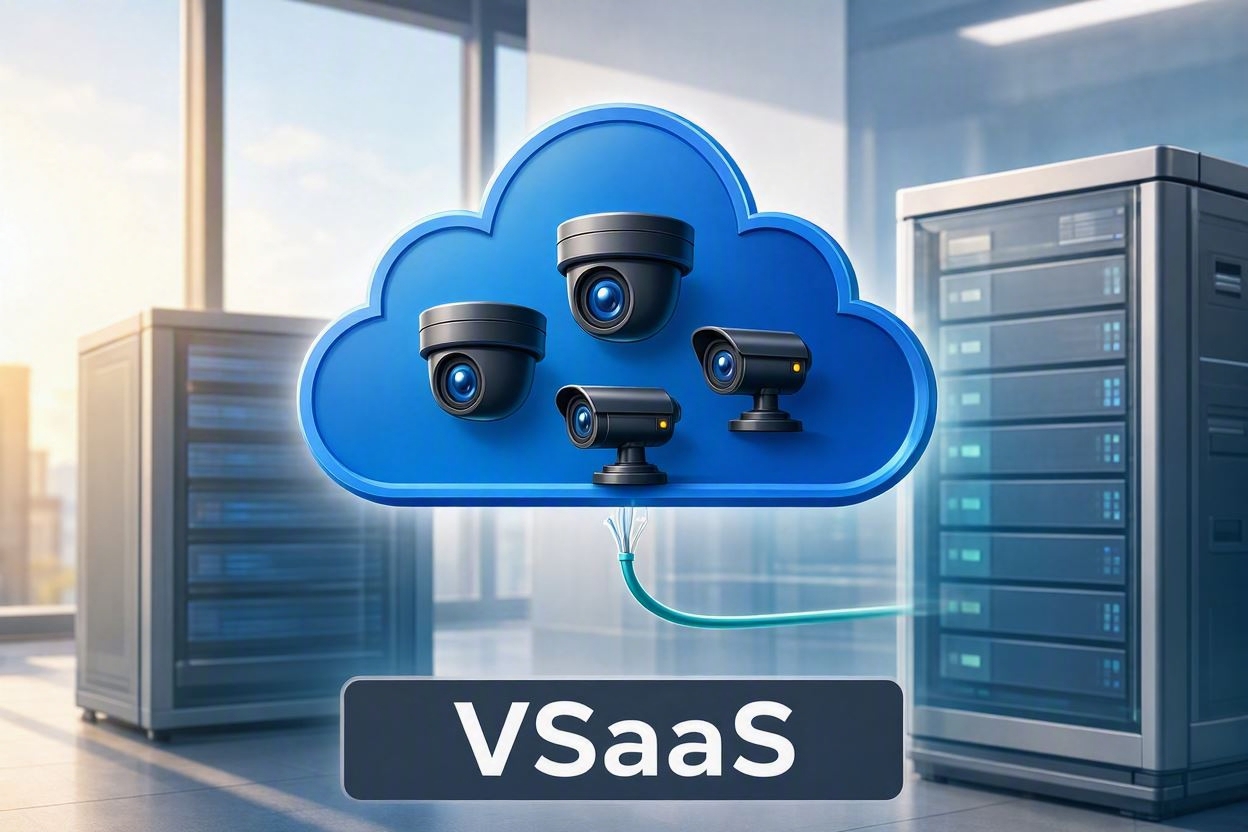
Primary VSaaS Market Drivers
The adoption of VSaaS is being accelerated by a convergence of technological and economic factors. Here are the primary drivers currently shaping the market.
The AI Revolution: From Passive Recording to Proactive Intelligence
The single most significant driver of the VSaaS market is the integration of Artificial Intelligence. AI has transformed video footage from a passive record of events into a rich data stream that provides proactive, actionable intelligence. This is one of the most critical VSaaS market drivers because it fundamentally changes the value proposition of surveillance.
Object Detection and Recognition: Traditional motion detection is plagued by false alarms triggered by animals, weather, or shadows. AI-powered object detection goes far beyond this by distinguishing between people, vehicles, and objects. This capability is critical for retail (identifying shoplifters), traffic management (monitoring vehicle flow), and industrial settings (ensuring safety protocols).
Real-time Threat Detection: AI enables systems to analyze video streams in real-time to identify specific threats as they happen. This includes intrusion detection, perimeter breaches, and weapon detection. The ability to automatically alert security personnel to a gun or a trespasser in a restricted area dramatically reduces response times and can prevent incidents before they escalate.
Facial Recognition and License Plate Recognition (LPR): These advanced AI capabilities are becoming standard features in many VSaaS platforms. Facial recognition is used for access control, criminal identification, and monitoring for persons of interest. LPR is invaluable in parking management, toll collection, and law enforcement.
Operational Intelligence: Beyond security, AI analytics provide significant business intelligence. Retailers use AI for queue management, traffic analysis in stores, and heat mapping to optimize product placement. This secondary benefit—deriving business insights from security infrastructure—makes the ROI of VSaaS even more compelling.
By reducing human error, automating monotonous tasks, and providing insightful data, AI has elevated VSaaS from a security tool to a comprehensive platform for operational excellence, cementing its status as a key market driver.
Economic and Operational Agility: The Shift to Cloud-Based Models
The economic benefits of the VSaaS model are powerful drivers for organizations of all sizes. The traditional on-premise model requires a substantial capital expenditure (CapEx) for cameras, servers, storage arrays, and recording software, followed by significant operational expenditure (OpEx) for maintenance, updates, and IT personnel.
VSaaS flips this model on its head, transforming CapEx into OpEx with a predictable, subscription-based pricing model. This shift provides several key advantages:
-
Lower Upfront Costs: VSaaS removes the barrier of high initial investment. Organizations can adopt advanced security without breaking the bank, making it a viable option for small and medium-sized enterprises (SMEs) that were previously priced out of robust surveillance systems.
-
Scalability and Flexibility: Adding new cameras to a VSaaS system is as simple as adding them to a software dashboard. There is no need to worry about storage capacity or server processing power, as the cloud provider handles the scaling. This is ideal for growing businesses or for seasonal surveillance needs.
-
Reduced Infrastructure and Maintenance: On-premise systems require dedicated server rooms, cooling, and specialized IT staff. VSaaS eliminates these costs and burdens. The service provider manages all software updates, security patches, and hardware maintenance, ensuring the system is always up-to-date and secure.
-
Predictable Budgeting: The subscription model allows for accurate financial forecasting, as security costs are predictable monthly or annual expenses.
This economic agility is a primary reason why businesses are rapidly migrating from legacy systems to cloud-based solutions, acting as a powerful catalyst for the global VSaaS market.
Remote Accessibility and Centralized Management
In an increasingly distributed world, the ability to monitor multiple locations from a single, centralized dashboard is invaluable. This is another vital element among VSaaS market drivers. With traditional systems, each location often has its own server and interface, making it difficult to manage security across an entire enterprise.
VSaaS enables seamless multi-site management. A security manager in New York can simultaneously monitor the premises of a retail chain in London, a construction site in Sydney, and a warehouse in Tokyo through a single, unified cloud platform. This capability is achieved through:
-
Anytime, Anywhere Access: Authorized personnel can view live or recorded footage from any device—a desktop computer, a tablet, or a smartphone—provided they have an internet connection. This is critical for remote monitoring, ensuring that management is always connected to their operations.
-
Centralized Control: Updates, permissions, and settings can be managed from a single point, ensuring consistency and control across all sites. This reduces administrative overhead and enforces uniform security policies.
-
Enhanced Collaboration: In the event of an incident, video footage can be easily shared with law enforcement, insurance companies, or internal stakeholders, facilitating faster investigations and resolution.
This level of centralized, remote management is a non-negotiable requirement for modern enterprises, making the adoption of VSaaS a strategic imperative.
Smart City and Public Safety Initiatives
Governments worldwide are undergoing massive digital transformations to create safer, more efficient urban environments. This is driving significant investment in public safety and infrastructure, creating a massive opportunity for the VSaaS market.
Asia Pacific, in particular, is leading this charge. The region is expected to dominate the market, driven by large-scale smart city deployments, especially in China. These initiatives encompass:
-
Intelligent Traffic Management: AI-powered VSaaS cameras are used to monitor traffic flow, detect accidents, enforce traffic laws (via LPR), and optimize traffic light patterns to reduce congestion.
-
Critical Infrastructure Protection: Governments are investing heavily in securing critical assets like seaports, airports, railway stations, power plants, and utilities. VSaaS provides the scalability and advanced analytics needed to monitor these large, complex perimeters effectively.
-
Public Venue Security: From parks and stadiums to government buildings, VSaaS is being deployed to enhance public safety, deter crime, and manage crowds during large events.
-
Response to Civil Unrest: In some regions, the rise in terrorism and civil unrest is driving government spending on advanced surveillance to maintain public order and respond rapidly to threats.
The substantial government funding pouring into smart city projects ensures that the public sector will remain a significant driver of the VSaaS market for the foreseeable future.
Download PDF Brochure @ https://www.marketsandmarkets.com/pdfdownloadNew.asp?id=773
Secondary Market Drivers
While AI, cost, and government initiatives are primary VSaaS market drivers, several other trends are contributing to market growth.
Increasing Security Concerns and Risk Mitigation
The modern business environment is fraught with risks. From theft and vandalism to workplace violence and cybersecurity threats, organizations must navigate a complex landscape of potential liabilities. VSaaS provides a comprehensive solution to mitigate these risks.
-
Theft Prevention: A visible surveillance system acts as a powerful deterrent to theft and pilferage. In the event of a crime, high-definition cloud footage provides invaluable evidence for police and insurance claims.
-
Operational and Safety Compliance: In industries like manufacturing, healthcare, and construction, VSaaS is used to monitor safety protocols, ensuring that employees are wearing proper protective equipment and that machinery is being operated safely. This reduces workplace accidents and liabilities. For instance, VSaaS can be used for smoke and fire detection, alongside industrial temperature monitoring, ensuring compliance with stringent safety regulations.
-
Reduced Insurance Premiums: Many insurance companies offer reduced premiums for businesses with monitored security systems, as they present a lower risk for claims. This creates a direct financial incentive for adopting VSaaS.
-
Cybersecurity Synergy: As IT and physical security converge, VSaaS providers are increasingly focusing on cybersecurity. Features like end-to-end encryption, two-factor authentication, and zero-trust security architectures are becoming standard, protecting the system itself from being a point of entry for cyberattacks.
Integration with Access Control and IoT Ecosystems
The future of security lies in a unified ecosystem. VSaaS is no longer a standalone solution; it is becoming the central nervous system of a comprehensive physical security platform that includes access control, environmental sensors, and other IoT devices.
-
Unified Platforms: Leading VSaaS providers, such as Verkada and Genetec, are offering platforms that seamlessly integrate video surveillance with access control, intrusion detection, and intercom systems. This convergence provides a single pane of glass for managing all aspects of a facility’s security.
-
IoT Integration: The rise of the Internet of Things (IoT) is adding immense value. Motion sensors, glass break detectors, and temperature sensors can trigger video recording and alert security teams. For example, a sensor detecting an open door after hours can cue the VSaaS system to focus on that specific entrance, providing immediate visual verification.
-
Automated Workflows: Integration allows for automated workflows. If an access card is used to enter a restricted area, the system can automatically begin recording and notify a supervisor, providing context and an audit trail.
This integration transforms a reactive security system into a proactive, intelligent building management platform, driving further demand for sophisticated VSaaS solutions.
The Asian Pacific Powerhouse: A Regional Driver
The massive growth of the VSaaS market is geographically uneven, with one region standing out as the primary engine of growth: the Asia Pacific. Its dominance is not a minor detail but a major global market driver in itself, shaping strategies for vendors worldwide.
Asia Pacific is expected to capture a significant ~47% share of the market in terms of value in 2026, a lead it is projected to maintain throughout the forecast period. This dominance is fueled by a confluence of powerful factors.
China: The Unquestionable Giant
China is the undisputed leader within the region, largely due to its aggressive, government-backed vision of a smart, safe, and interconnected society.
-
Massive Smart City Initiatives: The Chinese government has rolled out some of the world’s most extensive smart city programs. These projects involve the deployment of millions of AI-powered cameras across urban centers for traffic monitoring, crime detection, and public safety management.
-
Digital Transformation: China is heavily investing in digital infrastructure, including 5G networks and cloud computing, providing the necessary backbone for large-scale VSaaS deployment. The presence of leading domestic surveillance technology providers also accelerates adoption and technological innovation within the country.
-
Public Safety Investments: A strong focus on social stability and public safety has led to sustained investments in state-of-the-art surveillance systems, making China a massive and fast-growing market for VSaaS providers.
India: The Next Frontier
India represents another critical growth frontier in the APAC region. Rapid urbanization, a growing economy, and a focus on modernizing public infrastructure are driving demand for VSaaS.
-
Infrastructure Projects: Massive projects like the development of new smart cities, metro rail networks, and highway corridors are incorporating advanced surveillance systems from the outset.
-
Digital India Initiative: Government-led programs aimed at digital transformation are creating a favorable environment for cloud adoption, of which VSaaS is a key beneficiary.
-
Rising Business Confidence: India’s booming retail, IT, and banking sectors are seeking sophisticated security solutions to protect their rapidly expanding operations.
Other Key APAC Markets
-
Japan and South Korea: These technologically advanced nations are prioritizing reliability, operational continuity, and smart city capabilities, making them early adopters of the most cutting-edge VSaaS innovations.
-
Australia: Favoring cloud-managed security, Australia is seeing significant adoption across its dispersed commercial, government, and critical infrastructure assets.
The sheer scale and investment velocity in the Asia Pacific region make it a primary driver and the epicenter of the global VSaaS revolution. For any VSaaS provider, a strong strategy in this region is non-negotiable.
Market Segmentation and Key Developments
To fully appreciate the impact of these market drivers, it is essential to understand which specific segments are benefiting the most.
The Rise of the Hybrid Model
While “cloud” is the keyword of this era, not all organizations can or want to move 100% of their surveillance to the cloud. This has led to the significant growth of the Hybrid VSaaS segment, which combines the best of both worlds.
Why Hybrid?
Organizations choose a hybrid model to balance the flexibility of the cloud with the performance and control of on-premises infrastructure. This model allows for:
-
Regulatory Compliance: Some industries and regions have strict data residency laws requiring video footage to be stored locally. Hybrid VSaaS allows for local storage while still enabling cloud-based remote access and management.
-
Bandwidth Optimization: Streaming high-definition video 24/7 to the cloud can be bandwidth-intensive. Hybrid systems can process and store footage locally, only uploading metadata or specific events to the cloud, dramatically reducing network strain.
-
Reliability and Resilience: In the event of a network outage, the on-premise portion of the system continues to record, ensuring no security gaps.
The result: This segment is expected to record the highest CAGR during the forecast period, as it offers a flexible, future-proof solution for many enterprise customers.
AI Visual Analysis Takes Center Stage
Within the AI features, one capability stands out as the most adopted and fastest-growing: Object Detection & Recognition.
-
Dominance: This segment accounts for the largest share of the market due to its universal application. The ability to accurately detect and classify people, vehicles, and objects is the foundational layer for nearly all advanced security applications.
-
Wide Adoption: It is used across all sectors, from retail for loss prevention to smart cities for traffic management and industrial sites for safety monitoring.
-
Growth Potential: As AI algorithms become more sophisticated and edge computing becomes more prevalent, the accuracy and speed of object detection will only improve, further cementing its dominant position.
The Growing Importance of Edge Computing
The synergy between cloud and edge is a crucial technological driver. Edge computing involves processing video data on the camera itself (or on a local device) before sending it to the cloud.
Benefits:
-
Reduced Bandwidth: By filtering out irrelevant footage, edge computing cuts bandwidth needs by up to 70%.
-
Lower Latency: Critical alerts can be triggered in real-time at the source, enabling ultra-fast response times without waiting for cloud processing.
-
Cost-Efficiency: It reduces storage costs by only sending relevant data to the cloud for long-term retention or further analysis.
This trend is making VSaaS more efficient and affordable, especially in areas with limited network infrastructure.
Challenges and Future Outlook
While the future of VSaaS is bright, the market is not without its challenges. These include increasing regulatory scrutiny on data privacy (like GDPR), high bandwidth requirements, and the need for skilled professionals to manage these advanced systems. Providers are tackling these issues by offering better encryption, improved edge processing, and more intuitive management interfaces to reduce the skill gap.
Looking ahead, the VSaaS market is poised for even more transformative change. As technologies like 5G roll out globally, the possibilities for real-time, high-definition surveillance will expand exponentially. The line between physical and cybersecurity will continue to blur, with VSaaS becoming an integral part of a holistic security posture. Furthermore, AI will evolve to offer predictive security, not just reactive alerts, anticipating threats before they occur.
A Vision for the Future of Security
The VSaaS market drivers are a powerful testament to the technology’s profound value proposition. The convergence of AI-powered intelligence, the economic agility of the cloud, the necessity of remote accessibility, and the global push for smart cities are not just isolated trends; they are the engines of a security revolution.
Frequently Asked Questions (FAQs)
What is Video Surveillance as a Service (VSaaS)?
VSaaS is a cloud-based service model where video surveillance footage is recorded, stored, managed, and analyzed on a service provider’s cloud infrastructure. Users access their video feeds and manage their systems through a web browser or mobile app on a subscription basis, eliminating the need for on-premise servers and DVRs.
What are the primary VSaaS market drivers?
The primary drivers are the integration of AI-powered video analytics for proactive security, the cost-effectiveness and scalability of cloud-based subscription models, the need for remote and centralized multi-site management, and large-scale government investments in smart city and public safety initiatives.
How is AI transforming the VSaaS market?
AI is the most significant driver, transforming video from passive evidence into active intelligence. It enables capabilities like real-time object and facial recognition, intrusion and anomaly detection, automated alerts, and operational analytics for business intelligence, which dramatically improves both security and efficiency.
Why is the Hybrid VSaaS model growing so rapidly?
The Hybrid model is growing because it offers the best of both worlds: the flexibility, remote accessibility, and scalability of the cloud, combined with the data security, low latency, and regulatory compliance of on-premises local storage. This makes it ideal for enterprises needing to balance cloud innovation with stringent data governance.
What is the future of the VSaaS market?
The future involves deeper integration of edge computing for lower latency, wider adoption of AI for predictive and prescriptive security, and unified platforms that merge video surveillance with access control, IoT sensors, and other smart building systems. The market is on a clear upward trajectory, with the Asia Pacific region leading the charge.