
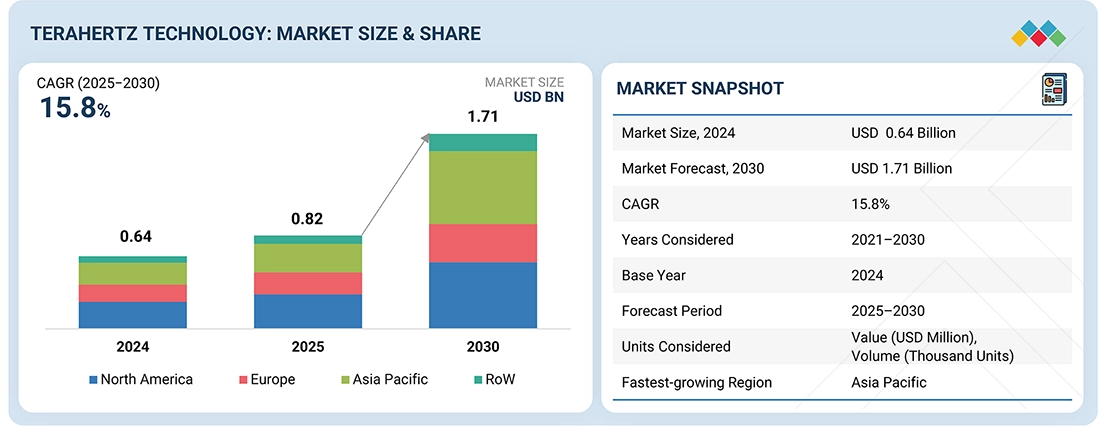
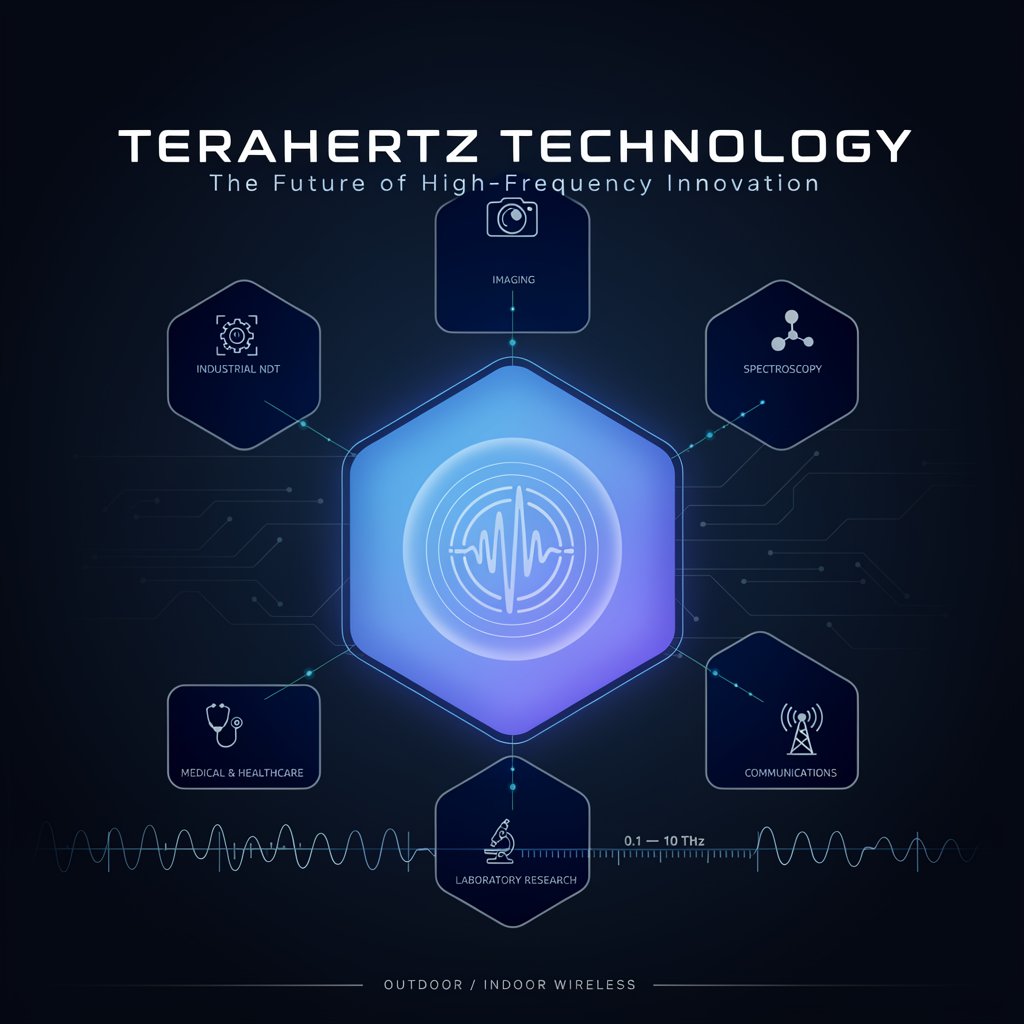
The Terahertz Technology Market is gaining momentum in medical diagnostics as healthcare researchers and technology developers explore terahertz radiation for non-invasive, non-ionizing, and label-free examination of biological tissues and biomolecules. Terahertz waves occupy the electromagnetic spectrum between microwave and infrared frequencies and are highly sensitive to water content and molecular interactions. These characteristics are creating opportunities for terahertz imaging and spectroscopy in disease detection, tissue characterization, pharmaceutical analysis, and point-of-care diagnostics.
One of the most important trends is the growing interest in non-invasive diagnostic imaging. Terahertz radiation has very low photon energy and does not have the ionizing characteristics associated with X-rays, making it attractive for applications where repeated or surface-level examination is required. Its sensitivity to hydration and tissue composition can provide complementary information to conventional imaging technologies. Research has explored applications involving skin, breast, brain, and other tissues, particularly for identifying differences between healthy and abnormal tissue.
Cancer detection is emerging as a significant area of research within terahertz-based diagnostics. Terahertz signals can respond differently to variations in tissue hydration, cellular structure, and biochemical composition. This has encouraged researchers to investigate the technology for tumor identification and pathological tissue characterization. Recent biomedical research has highlighted progress in tumor imaging and the potential for improved identification of tumor margins, although clinical translation remains under development.
Download PDF Brochure @ https://www.marketsandmarkets.com/pdfdownloadNew.asp?id=71182197

Skin diagnostics represent another promising application because terahertz radiation can examine superficial tissue layers. The technology’s sensitivity to water content can help researchers investigate hydration variations and biological responses. Emerging imaging approaches are being explored for dermatological evaluation, wound assessment, and monitoring changes in superficial tissues. Recent research has demonstrated terahertz imaging for observing localized hydration variations, supporting the potential for real-time tissue and wound monitoring.
Terahertz spectroscopy is also supporting advances in label-free biological detection. Researchers have investigated its ability to distinguish cells, bacteria, proteins, DNA, RNA, amino acids, and other biomolecules based on their spectral responses. This capability could eventually contribute to rapid biosensing and diagnostic platforms that identify biological characteristics without fluorescent labels or extensive sample preparation. Future development is expected to focus on making these systems faster, more compact, and easier to operate.
Point-of-care diagnostics represent an important future opportunity. Conventional diagnostic testing can require centralized laboratories and relatively long processing times. Terahertz-based biosensors could potentially support rapid, label-free analysis closer to the patient. Research has specifically identified convenient and rapid terahertz biosensors as an important future direction for biomedical applications. Improvements in miniaturized sources, detectors, microfluidic interfaces, and signal processing could help move these concepts toward practical diagnostic devices.
Inquiry Before Buying @ https://www.marketsandmarkets.com/Enquiry_Before_BuyingNew.asp?id=71182197
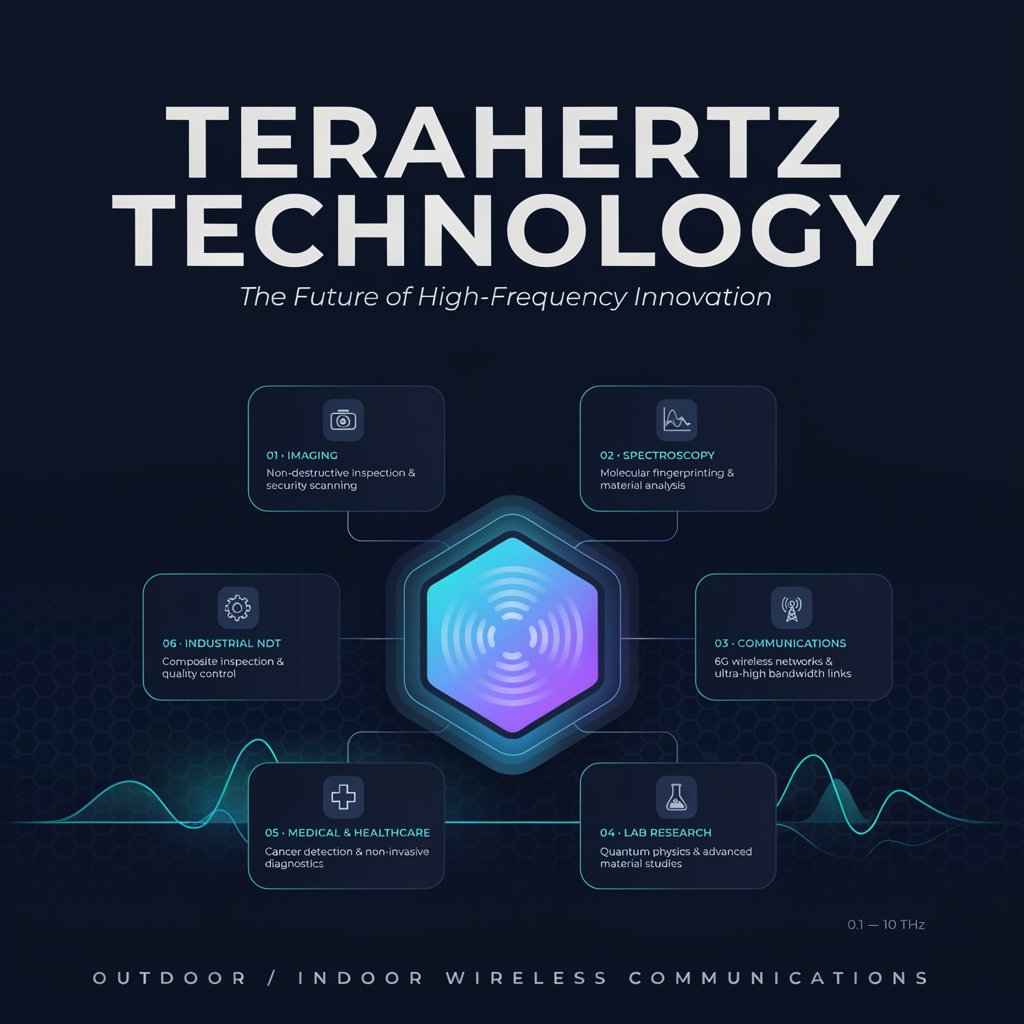
Advances in real-time imaging are strengthening the market’s prospects. Traditional terahertz imaging systems have often relied on mechanical scanning, which can limit acquisition speed. New imaging architectures are being developed to improve field of view, scanning speed, resolution, and system compactness. Recent research on telecentric reflective terahertz imaging has demonstrated high-speed imaging across a relatively large field of view while supporting hydration-sensitive measurements, highlighting opportunities for faster medical imaging and tissue assessment.
Artificial intelligence is expected to become increasingly important in terahertz-based diagnostics. Terahertz imaging and spectroscopy can generate complex multidimensional datasets containing temporal, spectral, and spatial information. AI algorithms can help identify subtle patterns, classify tissues, improve image reconstruction, and distinguish healthy from abnormal samples. The integration of AI-enhanced analytics with portable terahertz systems could improve diagnostic workflow efficiency and support more automated interpretation.
Signal-to-noise ratio is another major area of technological innovation. Medical diagnostic applications require reliable detection of subtle differences in biological materials. Research into improved signal processing, detector sensitivity, source performance, and noise reduction is therefore important for increasing measurement accuracy. Better signal quality can help terahertz systems detect weaker biological signatures and improve the reliability of diagnostic results.
The development of compact terahertz components is also influencing market growth. Historically, the size, cost, and complexity of terahertz equipment have limited clinical adoption. Advances in integrated terahertz optoelectronics are addressing some of these limitations by combining signal-generation and detection functions with semiconductor and photonic components. Such approaches could enable smaller and more scalable systems for medical diagnostics, spectroscopy, and hyperspectral imaging.
View detailed Table of Content here – https://www.marketsandmarkets.com/Market-Reports/terahertz-technology-market-71182197.html
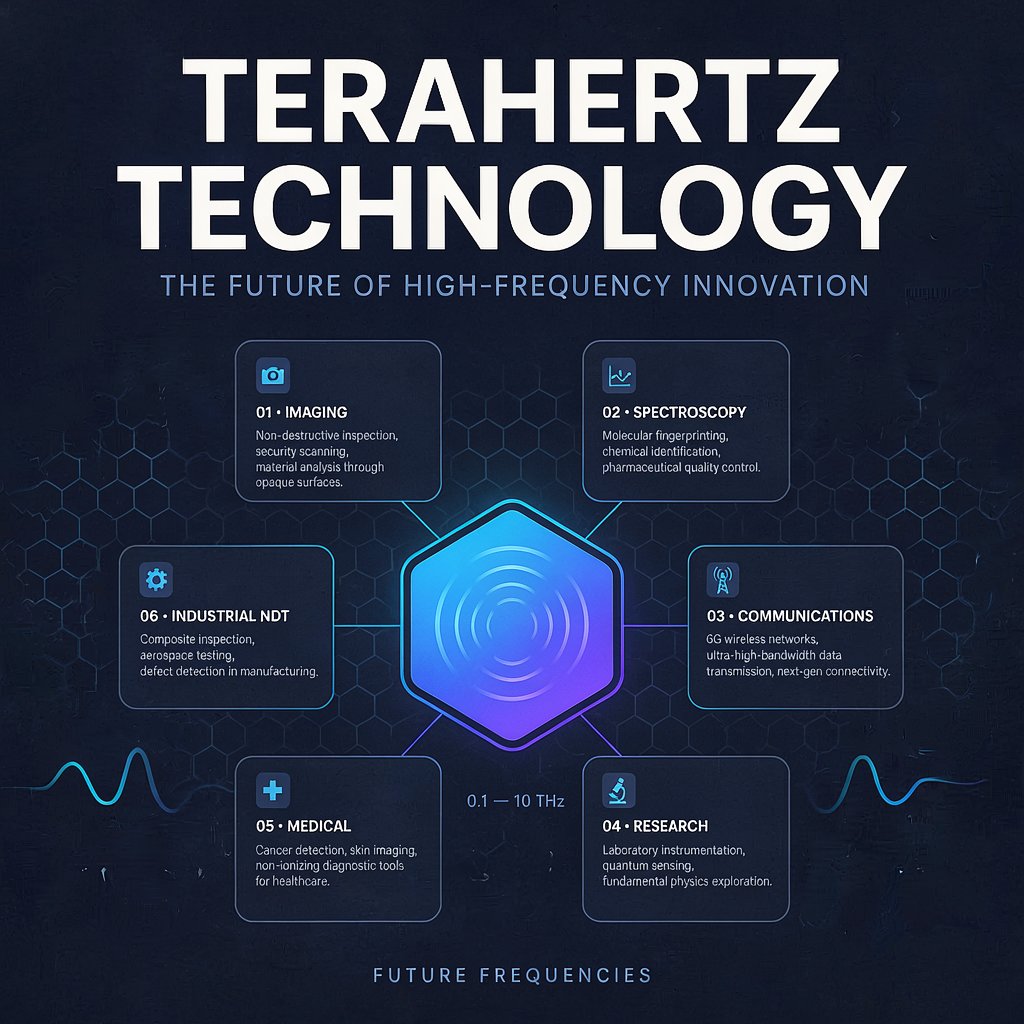
Dental and superficial-tissue imaging are additional areas attracting attention. Terahertz systems can potentially provide high-resolution information about tissue structure and hydration without ionizing radiation. These characteristics make them suitable for research into dental tissues, skin conditions, and other applications where localized and non-invasive assessment is valuable. The expansion of application-specific systems could create new commercial opportunities for terahertz imaging manufacturers.
Despite these opportunities, clinical adoption faces important challenges. Terahertz radiation is strongly absorbed by water, limiting penetration depth in biological tissues. This restricts applications involving deep internal organs and makes terahertz technology particularly suitable for superficial tissues and controlled laboratory measurements. Device size, cost, sensitivity, scanning speed, and clinical validation also remain barriers to widespread use.
Looking ahead, the Terahertz Technology Market is expected to benefit from advances in AI, real-time imaging, miniaturized sources and detectors, improved signal processing, and multimodal diagnostic platforms. Terahertz technology is unlikely to replace established medical imaging methods across all applications, but it could provide complementary information where hydration sensitivity, molecular fingerprints, superficial tissue characterization, and non-ionizing operation offer advantages. As research progresses from laboratory demonstrations toward validated clinical applications, terahertz-based diagnostics could become an increasingly important component of next-generation healthcare sensing and imaging technologies.