
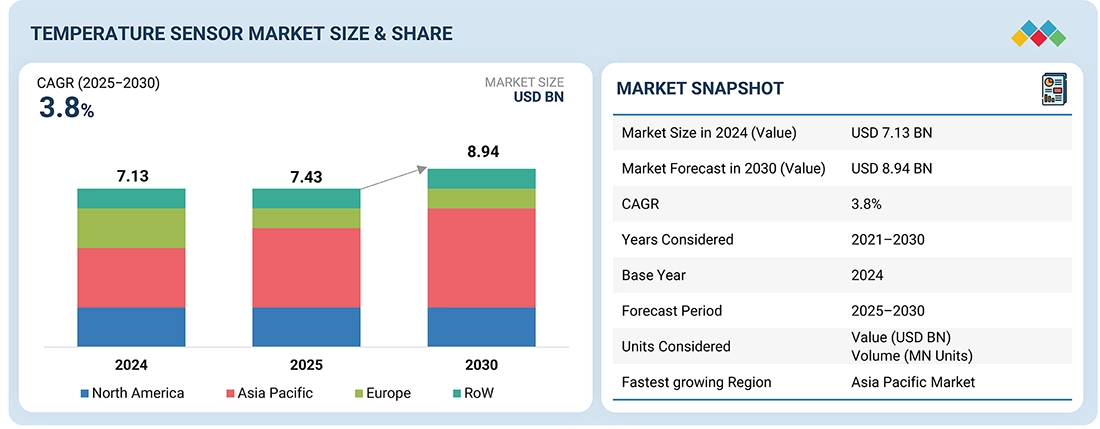
Introduction to High-Accuracy Temperature Measurement
The Temperature Sensor Market is experiencing growing demand for high-accuracy measurement systems as industries increasingly prioritize process precision, equipment reliability, and operational efficiency. Temperature measurement plays an important role in manufacturing, healthcare, energy, automotive, electronics, and scientific research. In these sectors, even minor temperature variations can influence product quality, equipment performance, safety, and process consistency.
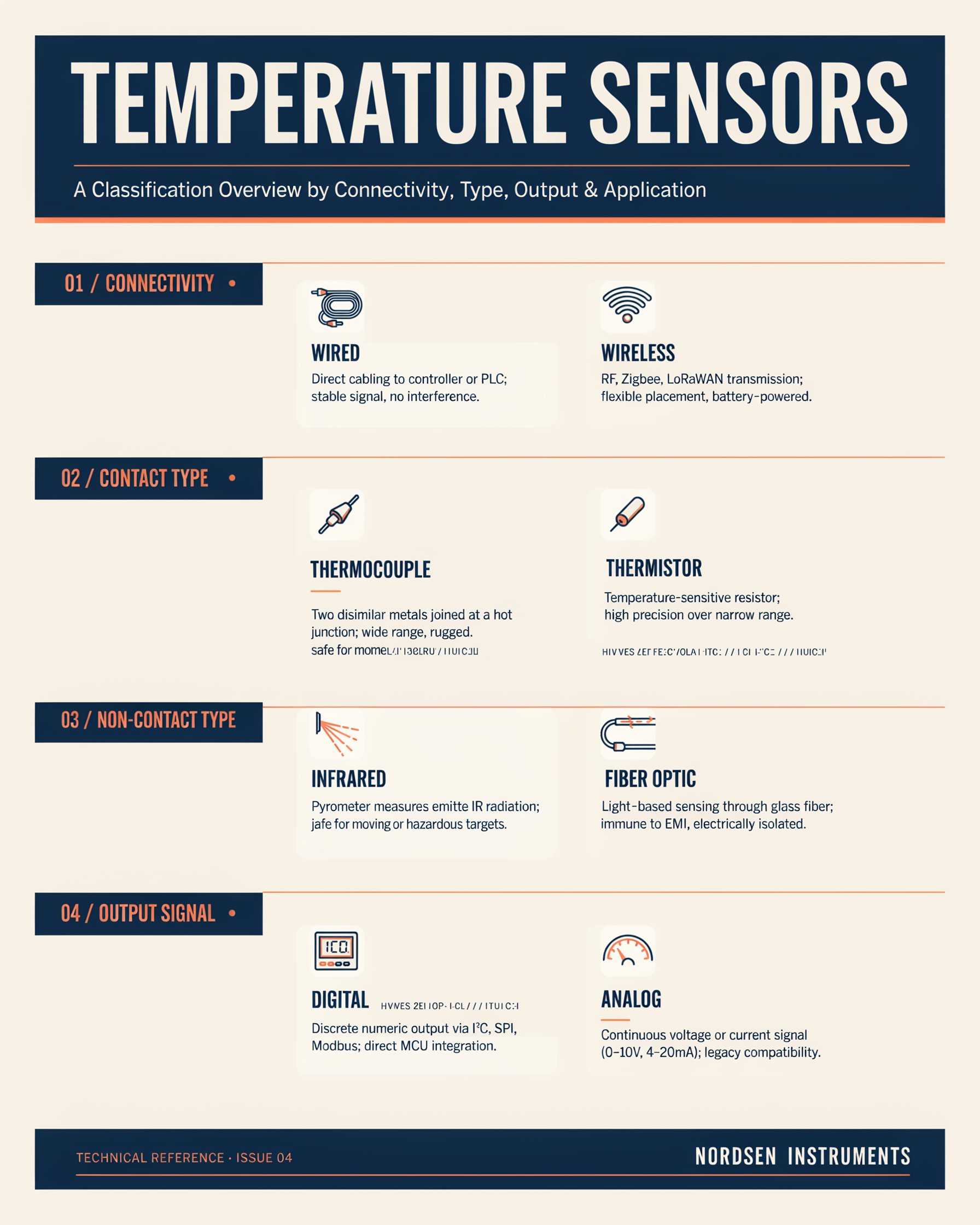
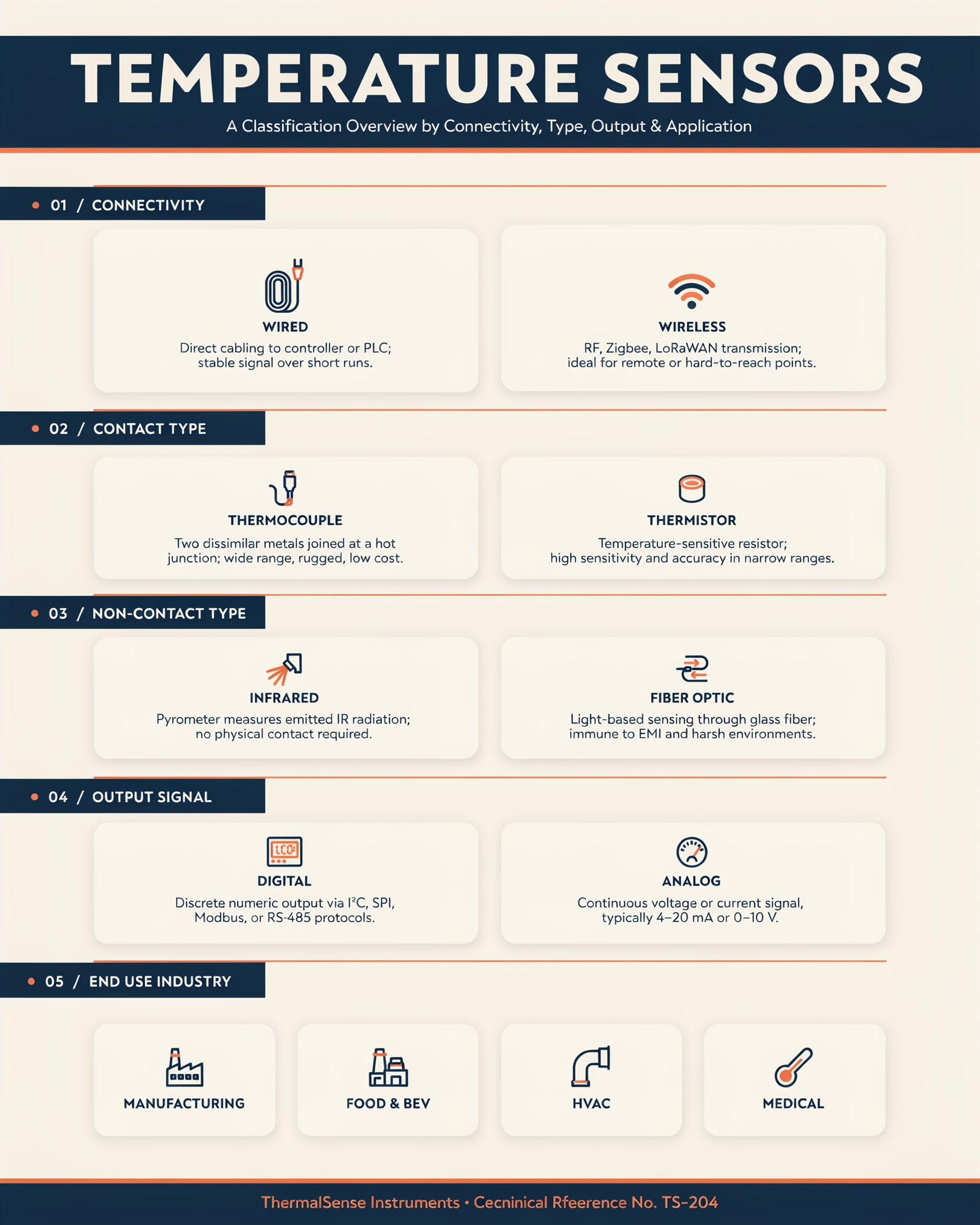
High-accuracy temperature sensors are designed to provide dependable readings within defined measurement ranges and operating conditions. These systems include resistance temperature detectors, thermocouples, thermistors, semiconductor temperature sensors, and specialized infrared sensing technologies. As industrial processes become more automated and connected, demand for accurate and stable temperature measurement is creating new opportunities for sensor manufacturers.
Download PDF Brochure @ https://www.marketsandmarkets.com/pdfdownloadNew.asp?id=522
Industrial Manufacturing Drives Demand for Precision
Industrial manufacturing is a major application area for high-accuracy temperature measurement systems. Production processes involving chemical reactions, material treatment, heat processing, and precision assembly require reliable thermal monitoring to maintain consistent operating conditions.
Temperature sensors are integrated into industrial machinery, processing equipment, ovens, reactors, and production lines. Accurate readings allow operators and automated control systems to monitor temperature changes and adjust process parameters when necessary. This helps manufacturers maintain product quality, reduce process variations, and improve production efficiency.
Industries such as pharmaceuticals, food processing, semiconductor manufacturing, and chemicals have particularly demanding temperature measurement requirements. In pharmaceutical production, temperature monitoring supports controlled manufacturing and storage conditions. In semiconductor facilities, precise thermal measurement is important for selected fabrication processes and equipment performance.
As manufacturers adopt smart factory technologies, high-accuracy temperature sensors are becoming important components of automated quality control and process optimization systems.
Advanced Sensor Technologies Strengthen Market Opportunities
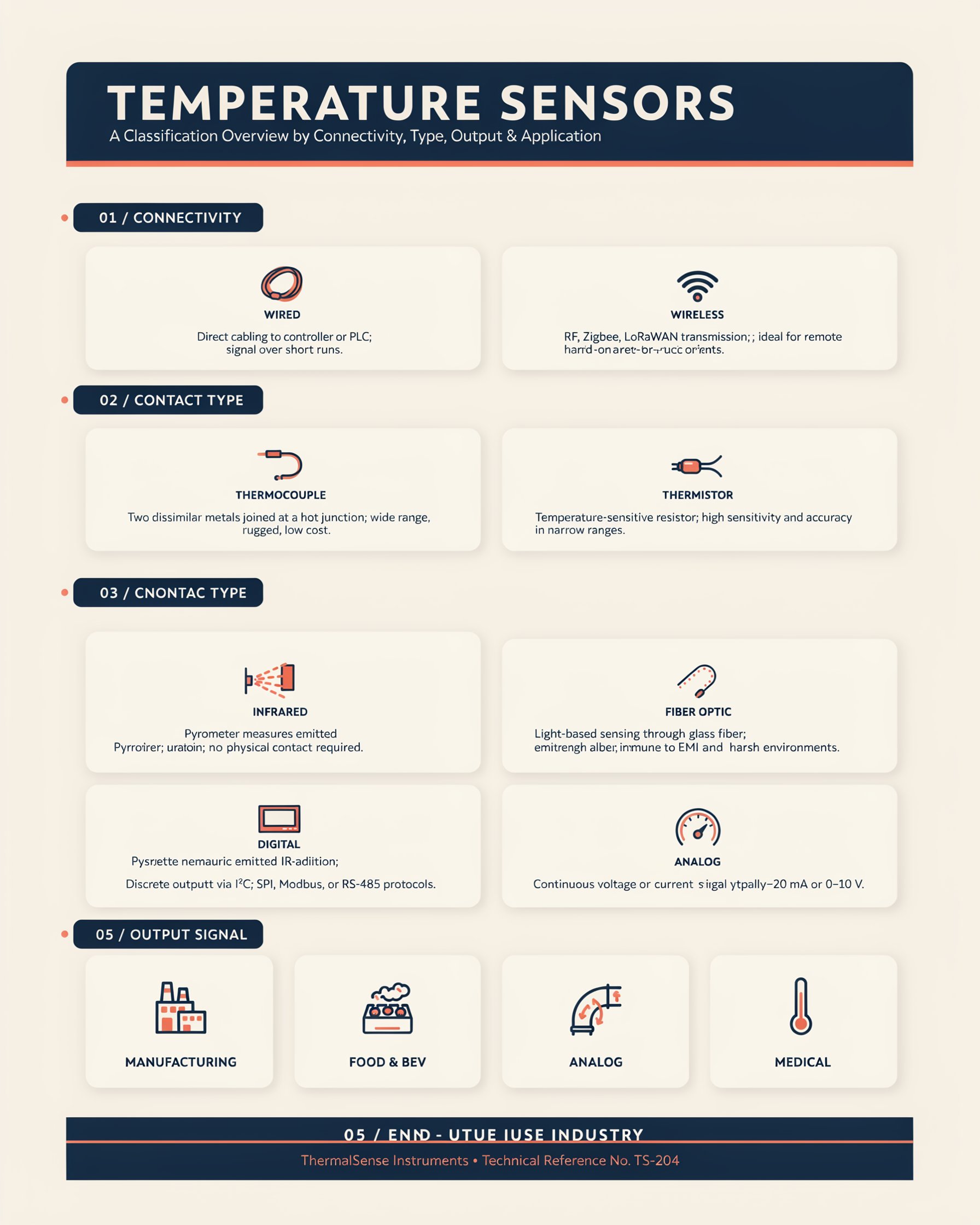
Technological advancements are supporting the development of temperature sensors with improved accuracy, stability, response time, and integration capabilities. Resistance temperature detectors are commonly selected for applications requiring stable and precise measurements, while thermocouples are widely used in industrial environments that involve broad temperature ranges.
Thermistors provide high sensitivity to temperature changes and are used in applications requiring precise monitoring over selected temperature ranges. Semiconductor temperature sensors are increasingly integrated into electronic systems, computing equipment, and compact consumer devices.
Infrared sensors offer non-contact measurement capabilities for applications involving moving objects, elevated temperatures, or inaccessible surfaces. Fiber optic temperature sensors can support specialized applications requiring electrical isolation or resistance to electromagnetic interference.
The selection of a high-accuracy sensor depends on the operating environment, required temperature range, calibration requirements, response time, and measurement uncertainty. These considerations are encouraging manufacturers to develop application-specific sensing solutions.
Inquiry Before Buying @ https://www.marketsandmarkets.com/Enquiry_Before_BuyingNew.asp?id=522
Automation and Industrial IoT Integration
The expansion of industrial automation and the Industrial Internet of Things is creating new opportunities for high-accuracy temperature measurement systems. Connected sensors can transmit temperature readings to monitoring platforms, industrial controllers, and data analytics systems.
This integration enables real-time monitoring of equipment and production processes. Operators can identify temperature variations, evaluate operating trends, and respond to abnormal conditions. Accurate temperature data can also support predictive maintenance by helping organizations identify thermal patterns associated with equipment degradation.
In connected manufacturing facilities, temperature sensors may operate alongside pressure, vibration, humidity, and flow sensors. Combining these measurements provides a more comprehensive view of equipment and process conditions.
As industries invest in digital transformation, demand for temperature measurement systems that can integrate with automated control and monitoring infrastructure is expected to remain important.
Healthcare, Electronics, and Energy Applications
Healthcare and medical technology represent significant application areas for high-accuracy temperature sensors. Medical equipment, laboratory instruments, diagnostic systems, and temperature-controlled storage facilities require dependable thermal measurement. Accurate temperature readings support equipment operation and help maintain appropriate conditions for selected medical processes.
The electronics industry is also increasing demand for precision temperature measurement. Computing equipment, semiconductor devices, power electronics, and battery systems require thermal monitoring to support performance and reliability. Temperature sensors can provide information that enables cooling systems and electronic controllers to respond to changing thermal conditions.
In the energy sector, temperature sensors are used to monitor power generation equipment, electrical infrastructure, renewable energy systems, and energy storage installations. High-accuracy measurement can support thermal management and equipment monitoring across these applications.
View detailed Table of Content here – https://www.marketsandmarkets.com/Market-Reports/temperature-sensor-market-522.html
Challenges in High-Accuracy Temperature Measurement
Despite growing demand, high-accuracy temperature measurement systems face challenges related to calibration, sensor drift, installation conditions, and environmental influences. Measurement accuracy can be affected by factors such as electrical interference, thermal gradients, sensor placement, and the characteristics of the material being measured.
Manufacturers must ensure that sensors are suitable for their intended applications and maintain performance throughout the expected operating life. Calibration and validation are particularly important in industries where measurement uncertainty can affect product quality or regulatory compliance.
Cost considerations can also influence adoption, especially when specialized sensors require advanced instrumentation or installation procedures.
Future Outlook for the Temperature Sensor Market
The Temperature Sensor Industry Outlook for high-accuracy measurement systems remains closely linked to industrial automation, smart manufacturing, healthcare innovation, electronics development, and energy infrastructure investments. As businesses seek more precise process control and reliable equipment monitoring, high-accuracy temperature sensors are expected to remain essential across diverse industries.
Continued improvements in sensor materials, calibration methods, digital connectivity, and signal processing are likely to support further innovation. Overall, high-accuracy measurement systems are creating opportunities for temperature sensor manufacturers by addressing the growing need for precision, reliability, and operational visibility in modern industrial and commercial applications.