
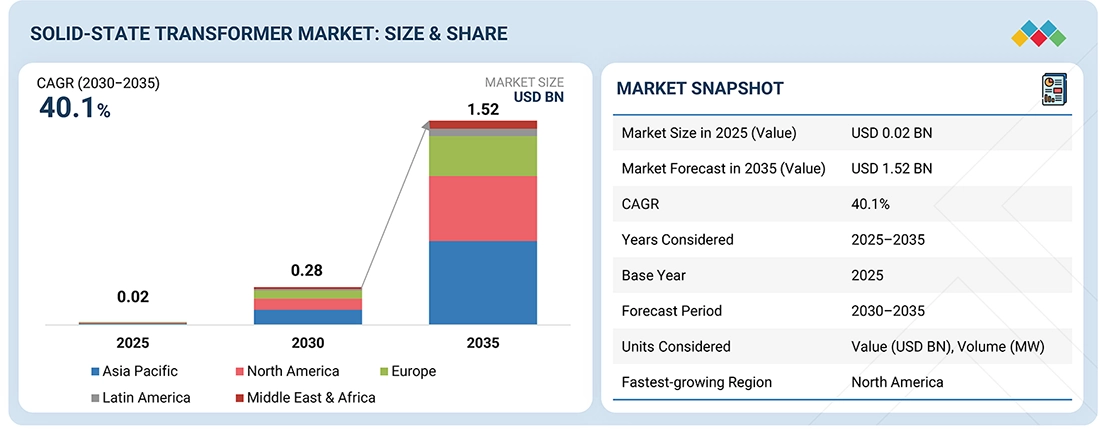
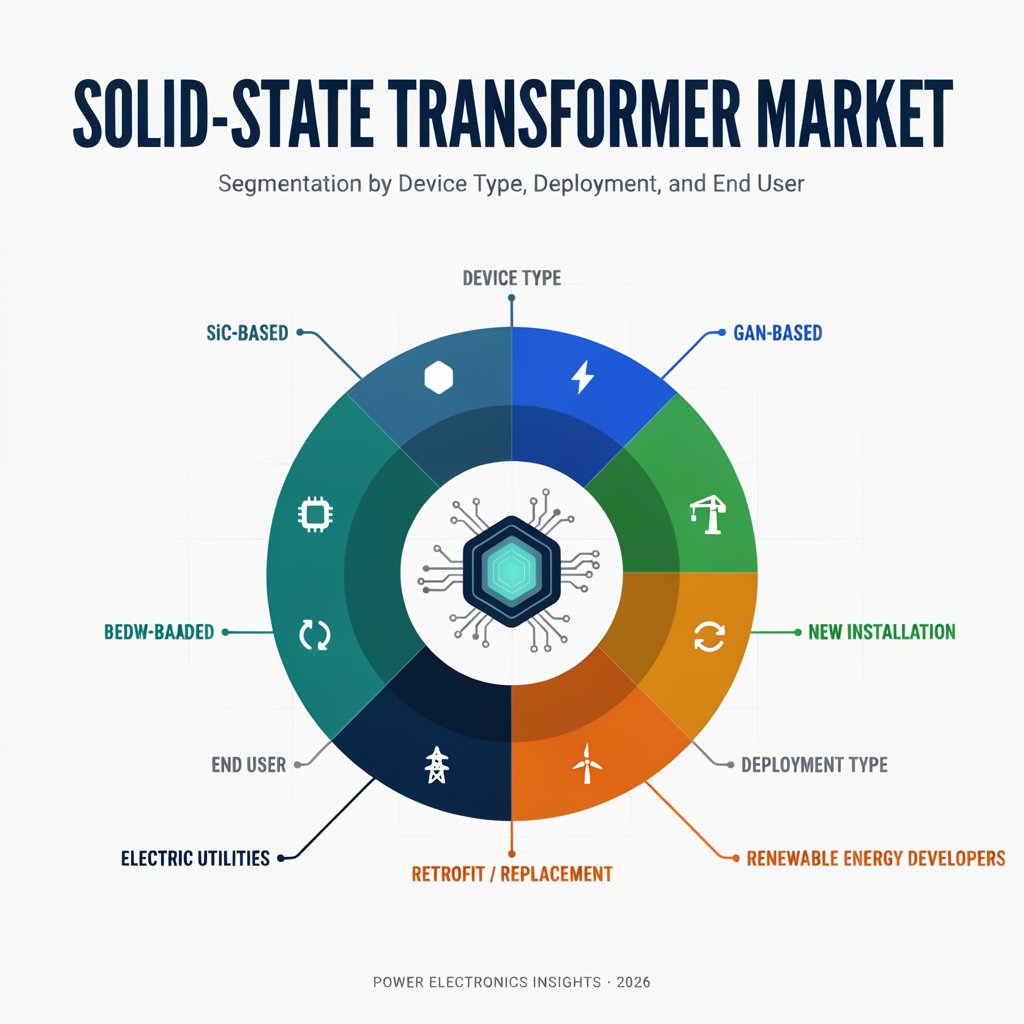
The Solid-State Transformer (SST) Market is gaining significant momentum from the rapid expansion of data center infrastructure worldwide. The growth of cloud computing, artificial intelligence, machine learning, high-performance computing, and digital services is driving substantial increases in data center electricity consumption. As operators seek highly efficient, reliable, and flexible power distribution systems, solid-state transformers are emerging as an advanced alternative to conventional transformer technologies. Their ability to provide intelligent voltage conversion, bidirectional power flow, power quality management, and real-time monitoring makes them increasingly relevant to next-generation data center power systems.
Data centers require continuous and high-quality electricity because even short power interruptions or voltage disturbances can affect servers, storage systems, networking equipment, and critical digital services. Conventional transformers primarily perform voltage conversion, while SSTs combine transformer functionality with advanced power electronics and digital control. This enables more precise management of electrical parameters and provides data center operators with greater visibility into power distribution performance. As data centers become more power-intensive, these capabilities are expected to support growing SST adoption.
The rapid development of artificial intelligence infrastructure is creating particularly strong opportunities. AI workloads require high-performance processors, graphics processing units, accelerators, and advanced networking equipment that consume substantial amounts of electricity. Increasing rack power density is placing greater pressure on data center electrical infrastructure. Solid-state transformers can support high-density power environments through efficient voltage conversion and dynamic power management, helping operators address rising electricity requirements within existing physical constraints.
Download PDF Brochure @ https://www.marketsandmarkets.com/pdfdownloadNew.asp?id=774
Energy efficiency is a major factor influencing the use of SSTs in data centers. Electricity represents a significant operating expense for large facilities, while cooling systems consume additional energy as electrical losses generate heat. Advanced power electronic architectures can reduce certain conversion losses and improve overall power management. By improving the efficiency of electrical conversion and reducing unnecessary losses, SSTs can contribute to lower operating costs and improved data center energy performance.
Power quality is another important consideration. Data center equipment is highly sensitive to voltage fluctuations, harmonics, and other electrical disturbances. Solid-state transformers can actively regulate voltage and support power quality management through sophisticated electronic controls. This capability can help create stable electrical conditions for sensitive computing equipment and reduce the risk of disruptions associated with poor power quality.
Renewable energy integration is also strengthening the data center application outlook. Data center operators are increasingly investing in solar power, wind energy, renewable energy procurement, and onsite generation to reduce emissions and meet sustainability objectives. SSTs can provide intelligent interfaces between renewable generation and data center electrical systems. Their ability to manage bidirectional electricity flows can also facilitate integration with battery energy storage systems, enabling excess renewable electricity to be stored and used during periods of high demand or low generation.
Battery storage is becoming an increasingly important component of modern data center power infrastructure. Energy storage can provide backup power, peak demand management, renewable energy balancing, and grid-support services. Solid-state transformers can manage power conversion between medium-voltage networks and battery storage assets while supporting intelligent charging and discharging. This creates opportunities for SSTs to become an important interface between data centers, energy storage systems, and utility grids.
Inquiry Before Buying @ https://www.marketsandmarkets.com/Enquiry_Before_BuyingNew.asp?id=774
The development of medium-voltage power distribution architectures is another factor supporting SST demand. As data centers expand in scale, operators are exploring electrical designs capable of delivering larger amounts of power efficiently across campuses. SSTs can provide flexible voltage conversion between utility connections, internal distribution networks, backup systems, and computing loads. Their compact architecture may also help reduce the footprint of electrical equipment in high-density facilities.
Digital monitoring capabilities further enhance the value of SSTs. Sensors can continuously measure voltage, current, temperature, load conditions, and component health. This information can be integrated with data center infrastructure management platforms to provide real-time visibility into electrical performance. Operators can use these insights to identify abnormal conditions, optimize energy consumption, and improve maintenance planning.
Artificial intelligence and advanced analytics can make SST-based data center systems even more intelligent. Predictive algorithms can analyze transformer operating conditions and identify patterns associated with component degradation or abnormal loads. AI-based control systems can optimize power flows according to computing demand, energy prices, renewable generation, and battery availability. This can improve energy efficiency while supporting more resilient power operations.
Wide-bandgap semiconductor technologies, particularly silicon carbide and gallium nitride, are expected to influence SST development for data centers. These devices can enable high-frequency switching, lower losses, and compact converter architectures. Higher power density is particularly valuable for data centers because electrical infrastructure must increasingly support more computing capacity within constrained spaces.
View detailed Table of Content here – https://www.marketsandmarkets.com/Market-Reports/solid-state-transformer-market-774.html
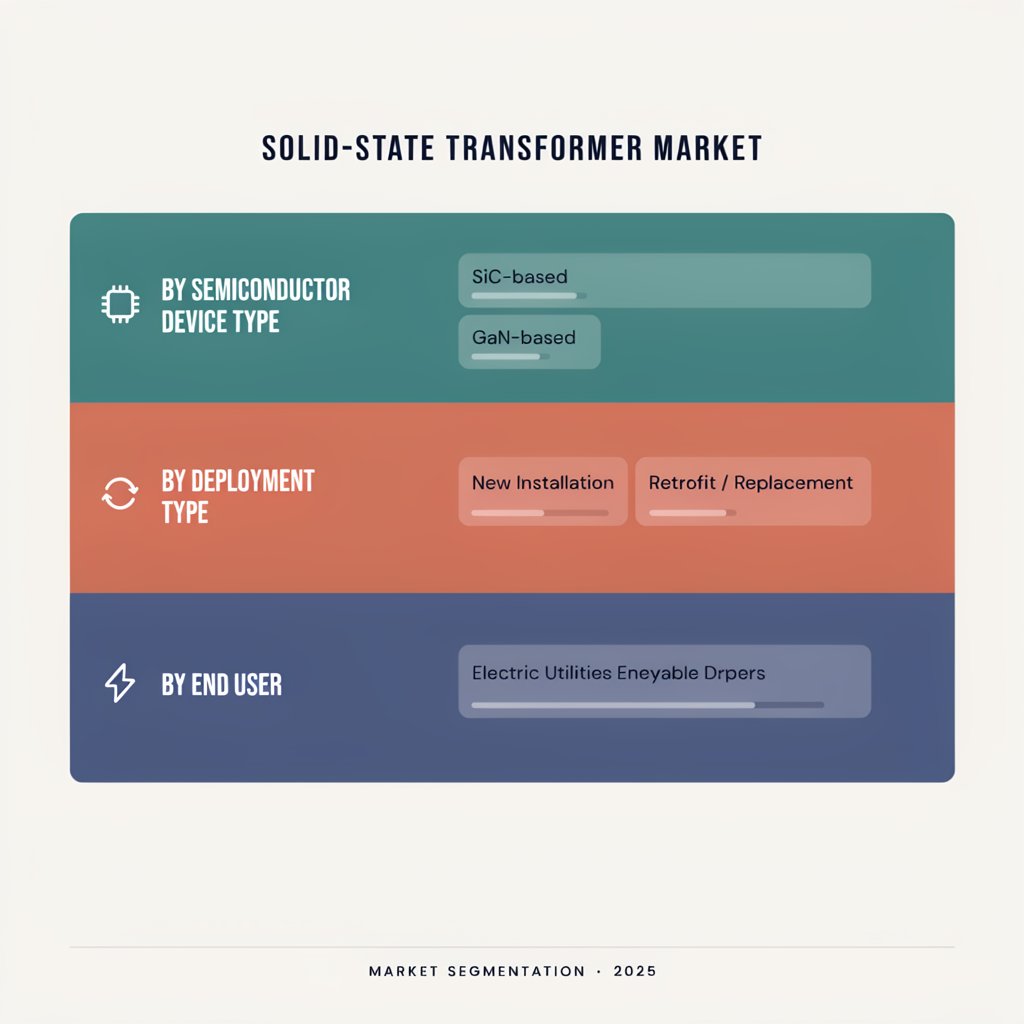
Data center expansion across cloud, telecommunications, colocation, enterprise, and hyperscale facilities is creating diverse opportunities. Hyperscale facilities require massive power infrastructure, while smaller edge data centers require compact and highly efficient electrical systems. SST technology can potentially be adapted to different deployment requirements through modular architectures and scalable power conversion designs.
Despite these opportunities, high upfront costs, complex power electronics, thermal management requirements, and limited deployment experience remain challenges. Data center operators must also consider reliability, cybersecurity, maintenance expertise, and compatibility with existing electrical infrastructure. Continued technological improvements and greater manufacturing scale are expected to address these barriers.
Looking ahead, the Solid-State Transformer Industry is expected to benefit significantly from data center power system modernization. The convergence of artificial intelligence, high-density computing, renewable energy, battery storage, digital monitoring, and advanced power electronics will increase demand for flexible and efficient electrical infrastructure. As data centers become central to the global digital economy, solid-state transformers are positioned to play an increasingly important role in delivering reliable, intelligent, and energy-efficient power distribution.