
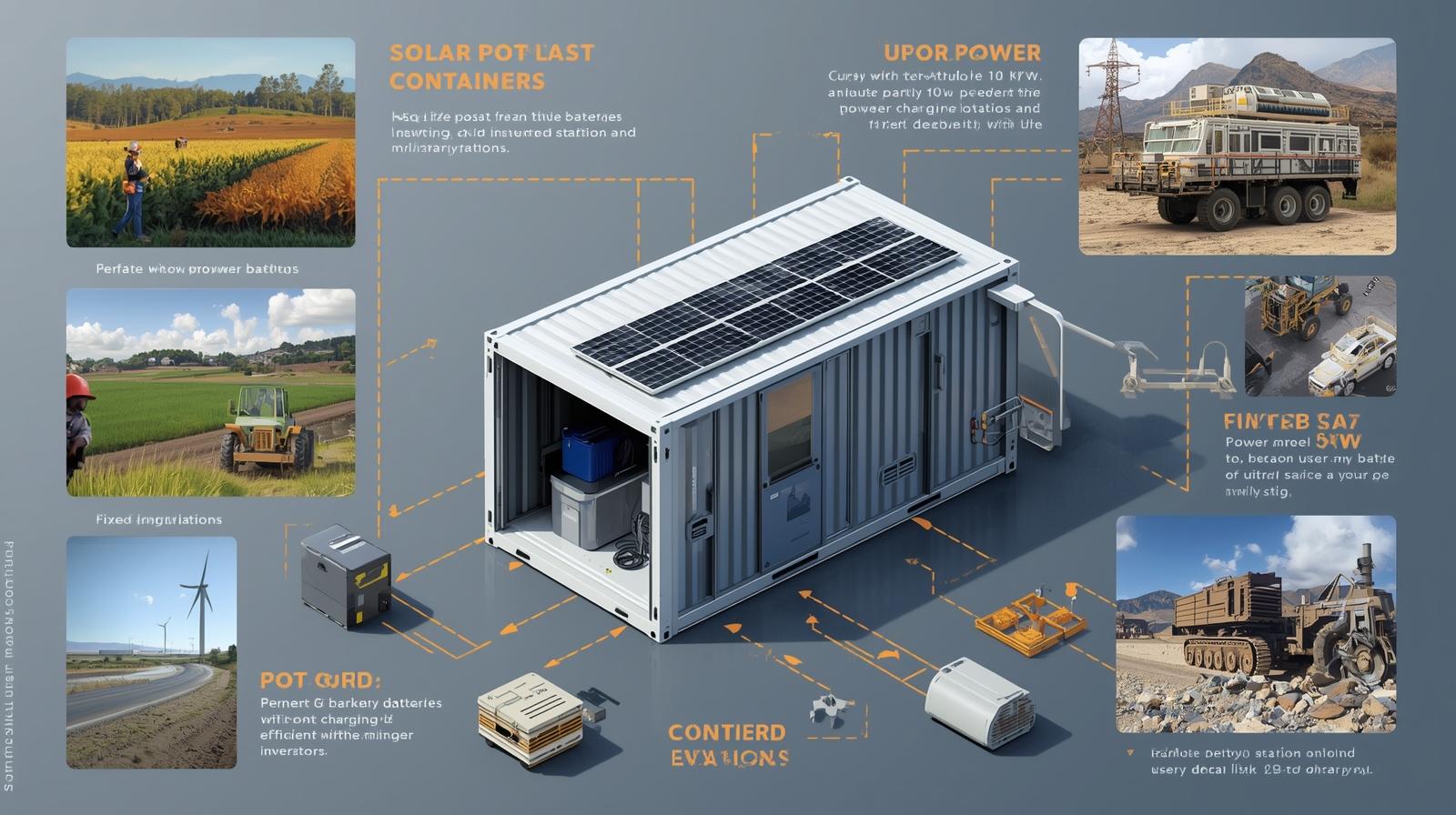
The solar container market is gaining momentum as governments, businesses, and communities increasingly adopt renewable energy technologies to meet their electricity requirements. Solar containers integrate photovoltaic (PV) panels, battery storage, inverters, and energy management systems into modular, transportable units that can deliver electricity in remote locations, temporary work sites, and areas with limited grid connectivity. These systems offer a flexible alternative to conventional power generation by combining portability, renewable energy production, and rapid deployment.
According to MarketsandMarkets, the global solar container market was valued at USD 0.29 billion in 2025 and is projected to reach USD 0.83 billion by 2030, registering a compound annual growth rate (CAGR) of 23.8% during the forecast period. Increasing demand for off-grid electricity, expanding rural electrification initiatives, and the need for dependable power in disaster-prone regions are supporting this growth. Improvements in solar panel efficiency, battery storage, and digital monitoring technologies are further strengthening the market’s potential.
Solar containers are becoming relevant across agriculture, construction, mining, defense, telecommunications, and emergency response. Their modular design enables users to deploy electricity infrastructure where conventional grid expansion is costly, time-consuming, or impractical. As the global energy transition accelerates, the market is expected to benefit from growing investments in decentralized power generation and sustainable infrastructure.
Key Drivers Supporting Solar Container Market Growth
Rising Demand for Renewable and Decentralized Energy
The transition toward clean energy is one of the major factors driving the solar container market. Businesses and public-sector organizations are seeking ways to reduce carbon emissions, improve energy efficiency, and limit dependence on fossil fuels. Solar containers address these requirements by generating electricity from sunlight while reducing the need for continuous diesel consumption in suitable applications.
In remote industrial locations, conventional electricity infrastructure can require significant investment in transmission lines, fuel transportation, and backup generators. Containerized solar systems provide an alternative that can be transported to the required location and configured according to the site’s power needs. These capabilities are particularly valuable for mining operations, temporary construction projects, rural communities, and field installations.
The growing emphasis on energy security is also encouraging organizations to diversify their power sources. Solar containers can support decentralized electricity generation and, when equipped with suitable storage and backup systems, improve resilience during grid interruptions. This combination of sustainability and operational flexibility is strengthening their appeal across industrial and commercial applications.
Download PDF Brochure @ https://www.marketsandmarkets.com/pdfdownloadNew.asp?id=234680839
Expansion of Off-Grid and Remote Power Applications
Demand for reliable electricity remains a significant consideration in remote and underserved areas. Solar containers can provide power to locations where grid access is unavailable or unreliable, including rural settlements, agricultural facilities, mining sites, and temporary infrastructure projects.
Their prefabricated configuration reduces the complexity of deploying a complete power system at the installation site. Depending on the design, units can incorporate solar panels, batteries, inverters, monitoring equipment, and control systems in a single transportable structure. This approach can simplify installation, commissioning, and future relocation.
Disaster relief is another important application. Following floods, storms, earthquakes, and other emergencies, solar containers can help provide electricity for temporary medical facilities, communications equipment, lighting, and essential services. Their usefulness depends on local sunlight conditions, system capacity, battery reserves, and the availability of backup power, but they can contribute to more resilient emergency infrastructure.
Technological Advancements in Solar Panels and Battery Storage
Technology improvements are creating new opportunities for solar container manufacturers. Higher-efficiency photovoltaic modules can increase electricity generation within a limited installation footprint, while improvements in battery systems allow more solar energy to be stored for use after sunset or during periods of low sunlight.
Battery storage is especially important for applications requiring a consistent power supply. By storing excess electricity generated during daylight hours, solar containers can help balance fluctuations in solar production with changing demand. Hybrid configurations can also combine solar panels and batteries with grid connections or backup generators, depending on the application.
Modern inverters and energy management systems further improve system performance by coordinating electricity generation, storage, and distribution. Remote monitoring tools can provide information about battery status, energy production, system faults, and operating conditions. These capabilities help operators identify performance issues and plan maintenance more effectively.
As component technologies continue to advance, solar containers are becoming more adaptable to different operating environments, power requirements, and deployment schedules. These improvements are expected to support adoption across both temporary and longer-term energy projects.
Solar Container Market Trends and Emerging Opportunities
Integration of Smart Energy Management Systems
The integration of intelligent energy management technologies is creating new growth opportunities in the solar container market. Modern systems increasingly use Internet of Things (IoT) connectivity, automated controls, and data analytics to monitor energy generation and consumption in real time.
Smart energy management systems can optimize the charging and discharging of batteries, prioritize critical loads, and adjust energy distribution according to demand. These capabilities are particularly beneficial for facilities operating independently of the electricity grid, where efficient energy utilization is essential.
For example, a remote mining operation can use monitoring software to track solar generation, battery performance, and equipment consumption from a centralized control center. Operators can identify potential faults, improve maintenance planning, and reduce unnecessary energy losses. Over time, these technologies can help improve system availability and lower operating costs.
Manufacturers that combine containerized solar hardware with intelligent software are well positioned to differentiate their offerings. As customers demand greater visibility, automation, and operational reliability, digital energy management is likely to become an increasingly important feature of advanced solar container solutions.
Growing Demand for Solar-Powered EV Charging
The expansion of electric mobility is opening additional opportunities for solar container manufacturers. Electric vehicle (EV) charging infrastructure requires dependable electricity access, but establishing conventional charging stations in remote areas can be challenging because of grid limitations and infrastructure costs.
Solar containers equipped with photovoltaic panels, battery storage, and charging equipment can support mobile or off-grid charging applications. Potential deployment locations include highway corridors, temporary fleet facilities, construction sites, remote industrial operations, and emergency response locations.
Battery storage can help manage variations in solar generation and support charging demand when sunlight is insufficient. Depending on system configuration, a solar container may also integrate with the grid or other power sources to maintain service availability.
The growing requirement for flexible charging infrastructure could encourage partnerships between solar container manufacturers, EV charging companies, battery suppliers, and renewable energy developers. These partnerships can help create modular charging solutions that can be expanded or relocated as demand changes.
Increasing Adoption of Hybrid Renewable Energy Systems
Hybrid power generation is another important trend shaping the solar container market. Although solar energy provides a clean source of electricity, its availability changes with weather conditions, seasonal variations, and the time of day. Combining solar panels with battery storage, grid connectivity, or backup generators can help address these limitations.
Hybrid solar containers can reduce fuel consumption while maintaining access to backup electricity when solar production and stored energy are insufficient. This approach is valuable for mining facilities, military installations, telecommunications infrastructure, and industrial sites where power interruptions can affect safety and productivity.
The ability to customize these systems according to operating requirements also creates opportunities for manufacturers. Customers may select different battery capacities, inverter configurations, monitoring features, and backup power options depending on their energy requirements.
As businesses increasingly prioritize reliable and lower-emission electricity, hybrid containerized systems could play a greater role in distributed energy projects.
Solar Container Market Segmentation and Growth Prospects
The solar container market is segmented by type, component, power capacity, installation type, application, and region. Each category represents distinct customer requirements and investment opportunities.
By Type: Portable and Fixed Solar Containers
Portable solar containers are gaining traction because of their mobility, rapid deployment capabilities, and suitability for temporary or remote power applications. These systems can be transported between project locations, making them useful for construction contractors, disaster response teams, mining companies, and defense organizations.
Fixed solar containers are designed for installations where power generation is required at a relatively stable location. They can support long-term operations at remote facilities, industrial sites, and decentralized energy installations.
The selection between portable and fixed configurations depends on deployment frequency, transportation requirements, power capacity, and project duration. Manufacturers that offer flexible designs can address a broader range of customer needs.
By Component: Solar Panels, Batteries, Inverters, and Monitoring Systems
Solar panels, batteries, inverters, monitoring systems, and energy management systems form the core components of containerized solar installations.
Solar panels generate electricity, while batteries store surplus energy for later consumption. Inverters convert electrical power into a suitable form for connected equipment, and monitoring systems help operators evaluate performance and detect operating issues.
According to the MarketsandMarkets report, the battery segment is projected to grow at a CAGR of 26.9% during 2025–2030. This outlook reflects the importance of energy storage in improving the flexibility and reliability of solar container installations.
Battery manufacturers and system integrators can benefit from demand for higher storage capacity, improved energy density, longer service life, and more effective battery management. Similarly, suppliers of advanced inverters and intelligent control systems can support the development of integrated power solutions.
By Power Capacity: Below 10 kW, 10–50 kW, and Above 50 kW
Power capacity determines the range of applications a solar container can support. Smaller systems can serve low-demand installations, remote communication equipment, and compact off-grid facilities. Medium-capacity systems can meet the requirements of agricultural operations, temporary work sites, and small industrial facilities.
Higher-capacity systems are suitable for applications with larger electricity requirements, including mining operations, commercial infrastructure, and selected industrial installations.
The 10–50 kW segment is expected to account for 42.9% of the market in 2025, according to MarketsandMarkets. Its versatility makes it relevant to customers seeking a balance between power output, scalability, and deployment flexibility.
By Installation Type: On-Grid and Off-Grid Systems
Off-grid solar containers provide electricity without requiring a connection to the conventional utility grid. They are particularly valuable in remote locations, rural electrification projects, and emergency operations. Their performance depends on the relationship between solar generation, storage capacity, and energy demand.
On-grid systems connect to existing electricity infrastructure and can complement grid power with renewable generation. Depending on the configuration and applicable regulations, these systems can help reduce electricity purchases and improve energy flexibility.
MarketsandMarkets identifies on-grid installations as a segment projected to grow at a CAGR of 28.5% during the forecast period. This growth outlook highlights the potential for containerized solar systems to complement established electricity infrastructure.
By Application: Agriculture, Mining, Military, and Remote Charging
Agriculture and irrigation represent important applications for solar containers. These systems can supply electricity to water pumps, irrigation equipment, farm operations, and selected cold-storage facilities, particularly in areas with limited grid access.
Mining companies can deploy containerized solar systems to supplement electricity supplies at remote extraction and processing sites. Military organizations and emergency response agencies can use portable configurations to support field operations and temporary facilities.
Remote charging stations offer another growth avenue as demand for distributed EV charging and mobile power increases. Energy companies can also use containerized solutions in microgrids and decentralized electricity projects.
The variety of end-use applications allows manufacturers to diversify their customer base and develop specialized products for different industries.
Regional Outlook: Asia Pacific Leads Solar Container Market Opportunities
Asia Pacific is an important region for the solar container market, supported by renewable energy investments, rural electrification initiatives, and demand for decentralized electricity. MarketsandMarkets estimates that Asia Pacific will account for 41.3% of the global market in 2025.
Future Outlook: Sustainable Power Generation Through 2030
The solar container market is positioned for significant expansion as renewable energy adoption extends beyond conventional rooftop and utility-scale installations. Portable and modular systems can help address electricity needs in locations where grid infrastructure is limited, temporary power is required, or energy resilience is a priority.
The integration of advanced battery storage, IoT-based monitoring, and intelligent energy management is expected to improve system performance and operational flexibility. Meanwhile, opportunities in agriculture, remote charging infrastructure, mining, defense, and disaster response will support demand across a broad range of industries.
However, continued market expansion will depend on addressing upfront costs, battery performance, environmental durability, and maintenance requirements. Companies that combine dependable hardware with intelligent controls, flexible system configurations, and strong service capabilities will be better positioned to capitalize on emerging opportunities.
Overall, the solar container market represents a growing segment of the decentralized renewable energy industry. With the global market projected to reach USD 0.83 billion by 2030, the sector offers opportunities for manufacturers, technology providers, investors, and energy developers seeking to support more flexible and sustainable electricity generation.
Frequently Asked Questions (FAQs)
1. What is the projected size of the solar container market by 2030?
The global solar container market is projected to grow from USD 0.29 billion in 2025 to USD 0.83 billion by 2030, at a CAGR of 23.8%.
2. What are the major factors driving solar container market growth?
Major growth drivers include increasing renewable energy adoption, demand for off-grid electricity, rural electrification, advancements in battery storage, and the need for portable power in remote and emergency applications.
3. Which are the key applications of solar containers?
Major applications include agriculture and irrigation, remote charging stations, mining, military operations, construction, disaster relief, and decentralized energy infrastructure.
4. Which region is expected to lead the solar container market?
Asia Pacific is estimated to account for the largest share of the solar container market in 2025, supported by renewable energy investments and growing demand for decentralized power solutions.
5. What opportunities are emerging in the solar container market?
Key opportunities include smart energy management, advanced battery storage, hybrid renewable systems, solar-powered EV charging, and modular electricity solutions for remote industrial and agricultural operations.