
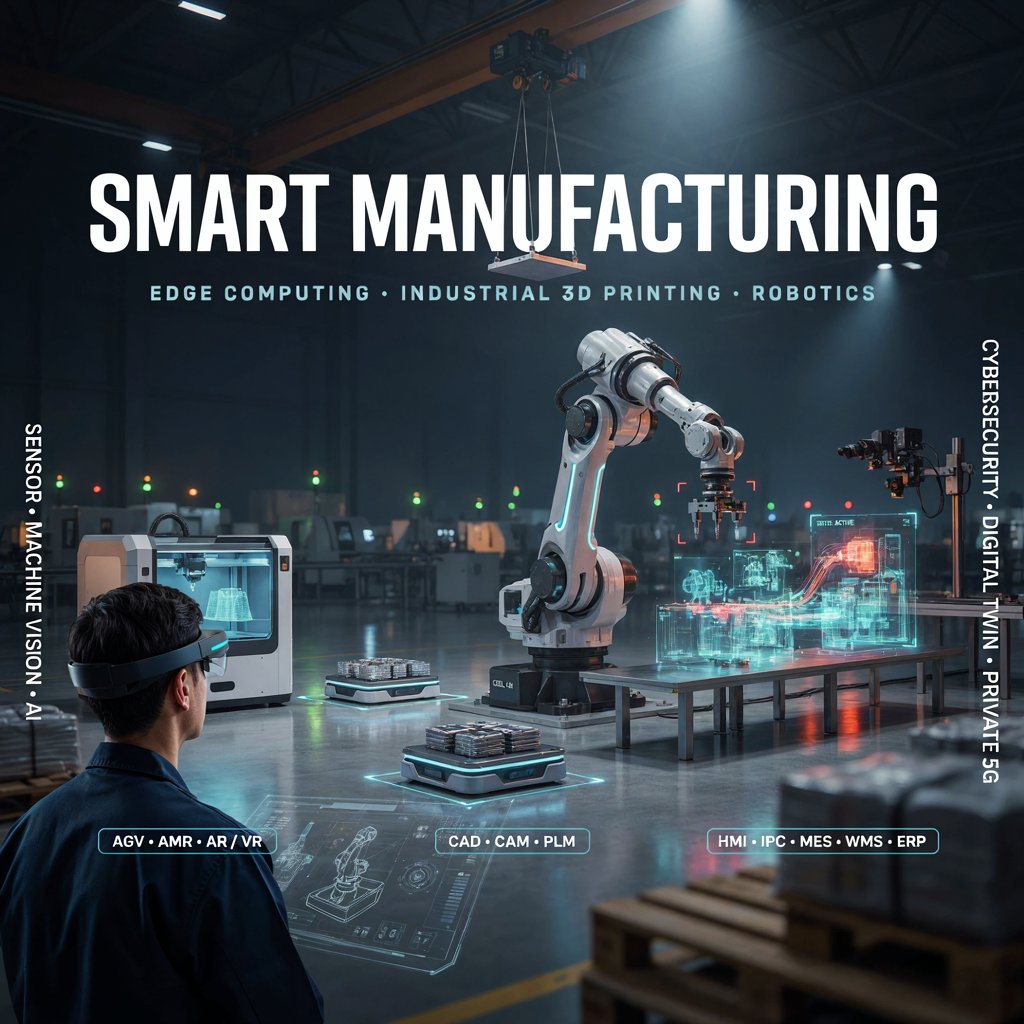
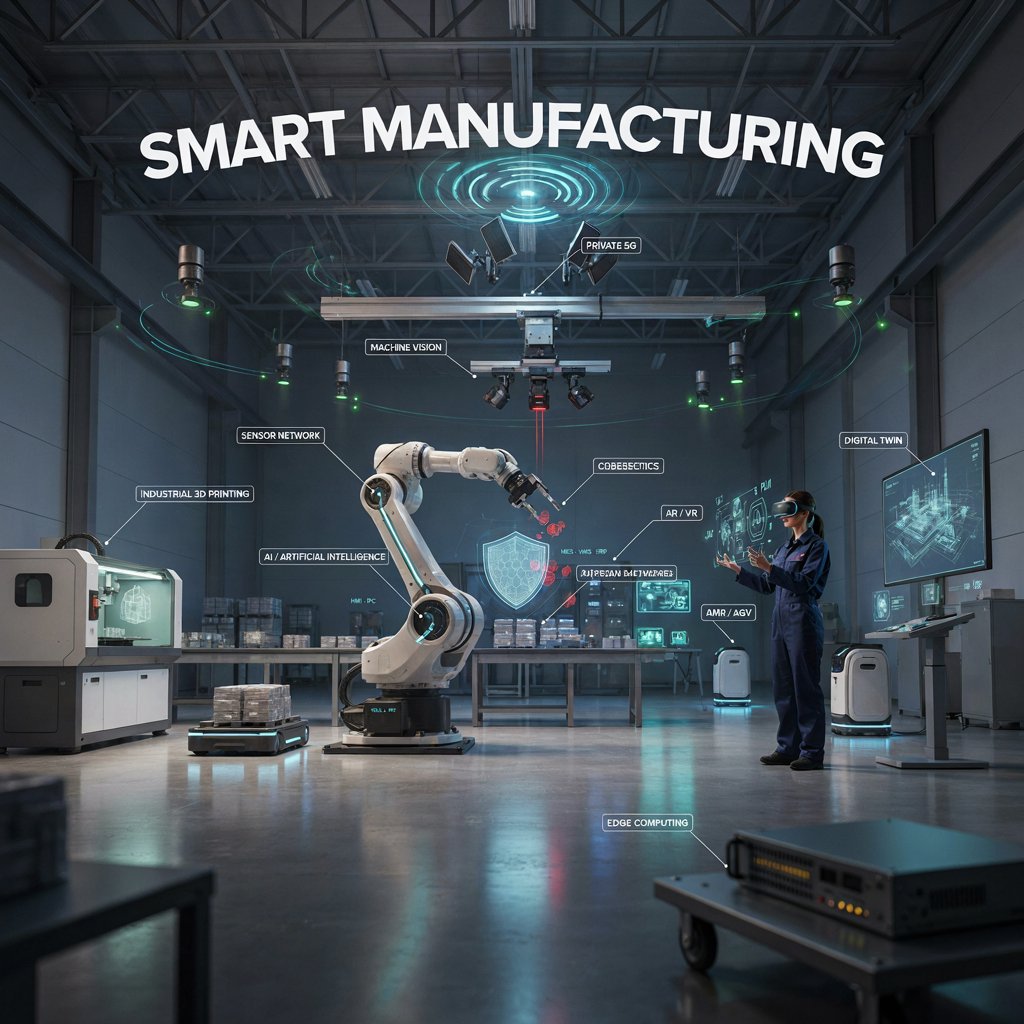
The Smart Manufacturing Market is experiencing growing interest in private 5G industrial connectivity as manufacturers seek faster, more reliable, and flexible communication networks for connected factories. Private 5G networks are enabling manufacturers to connect machines, robots, sensors, cameras, autonomous vehicles, mobile devices, and production management systems through dedicated wireless infrastructure. The technology is becoming an important component of Industry 4.0 strategies because it can support high data rates, low latency, network reliability, device density, and flexible factory operations.
Growing Demand for Connected Factory Networks
Manufacturers are increasingly connecting production assets to improve operational visibility and automation. Traditional wired networks can provide high reliability but may require extensive cabling and become difficult to modify when production layouts change.
Private 5G can provide wireless connectivity across factories while supporting large numbers of connected devices. This flexibility is particularly valuable for facilities that frequently reconfigure production lines or introduce new automation equipment.
The increasing adoption of connected manufacturing systems is therefore expected to create opportunities for private 5G providers within the Smart Manufacturing Market.
Low-latency Communication for Industrial Automation
Low latency is one of the key advantages associated with private 5G. Many industrial applications require rapid communication between machines, controllers, robots, and monitoring systems.
Private 5G can support time-sensitive applications such as robotic coordination, automated guided vehicles, machine control, and real-time monitoring. Faster communication can improve synchronization between production assets and enable more responsive automation.
As manufacturers increase their reliance on automated systems, demand for reliable low-latency connectivity is expected to increase.
Support for Industrial IoT
Industrial IoT is a major foundation of smart manufacturing, with sensors generating continuous information about machines, production processes, energy consumption, and environmental conditions.
Private 5G networks can connect large numbers of sensors and devices across industrial facilities. This connectivity can enable manufacturers to collect data from equipment that may previously have operated independently.
The integration of private 5G with industrial IoT platforms can support real-time monitoring, predictive maintenance, production optimization, and asset tracking.
Download PDF Brochure @ https://www.marketsandmarkets.com/pdfdownloadNew.asp?id=105448439
Robotics and Autonomous Mobile Equipment
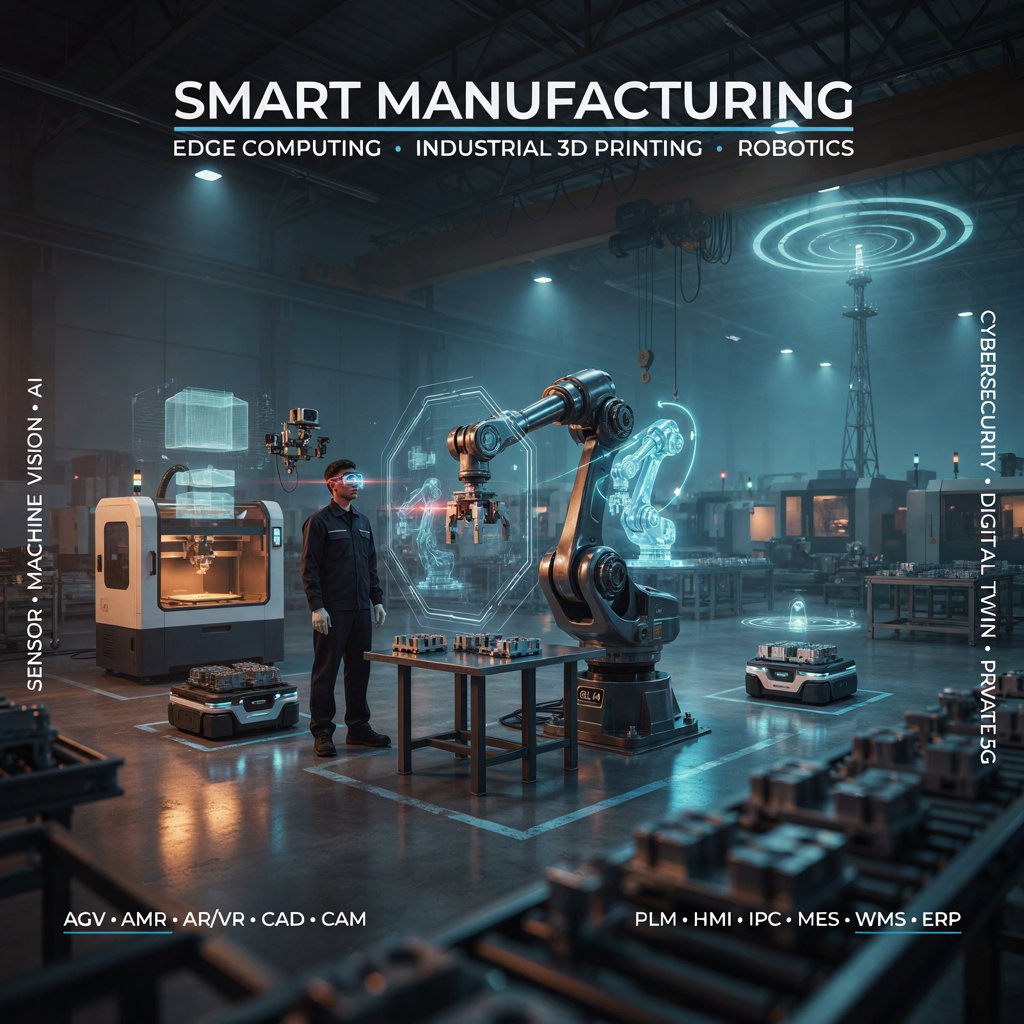
The adoption of robotics is creating new requirements for wireless industrial connectivity. Autonomous mobile robots, automated guided vehicles, and collaborative robots need reliable communication to navigate facilities, exchange information, and coordinate activities.
Private 5G can provide broad wireless coverage and support communication between mobile equipment and factory systems. This can reduce reliance on physical network connections and enable greater mobility.
As manufacturers deploy larger fleets of autonomous systems, private 5G is expected to become increasingly relevant to smart factory infrastructure.
Machine Vision and High-bandwidth Applications
Industrial machine vision is generating significant amounts of image and video data. High-resolution cameras used for automated inspection can require high-bandwidth connections to edge computing systems and analytics platforms.
Private 5G can support wireless transmission of high-volume visual data while providing the reliability needed for industrial environments. This can facilitate flexible placement of cameras and inspection equipment.
The combination of private 5G, edge AI, and machine vision is expected to create opportunities for advanced quality control applications.
Edge Computing Integration
Private 5G and edge computing are increasingly being deployed together. While 5G provides connectivity, edge computing enables data processing closer to the production environment.
This combination can support real-time analytics and rapid decision-making for applications such as machine monitoring, robotics, quality inspection, and process optimization.
Edge processing can also reduce the need to transmit all industrial data to centralized cloud systems, helping manufacturers manage network bandwidth and improve response times.
Inquiry Before Buying @ https://www.marketsandmarkets.com/Enquiry_Before_BuyingNew.asp?id=105448439
Digital Twin Connectivity
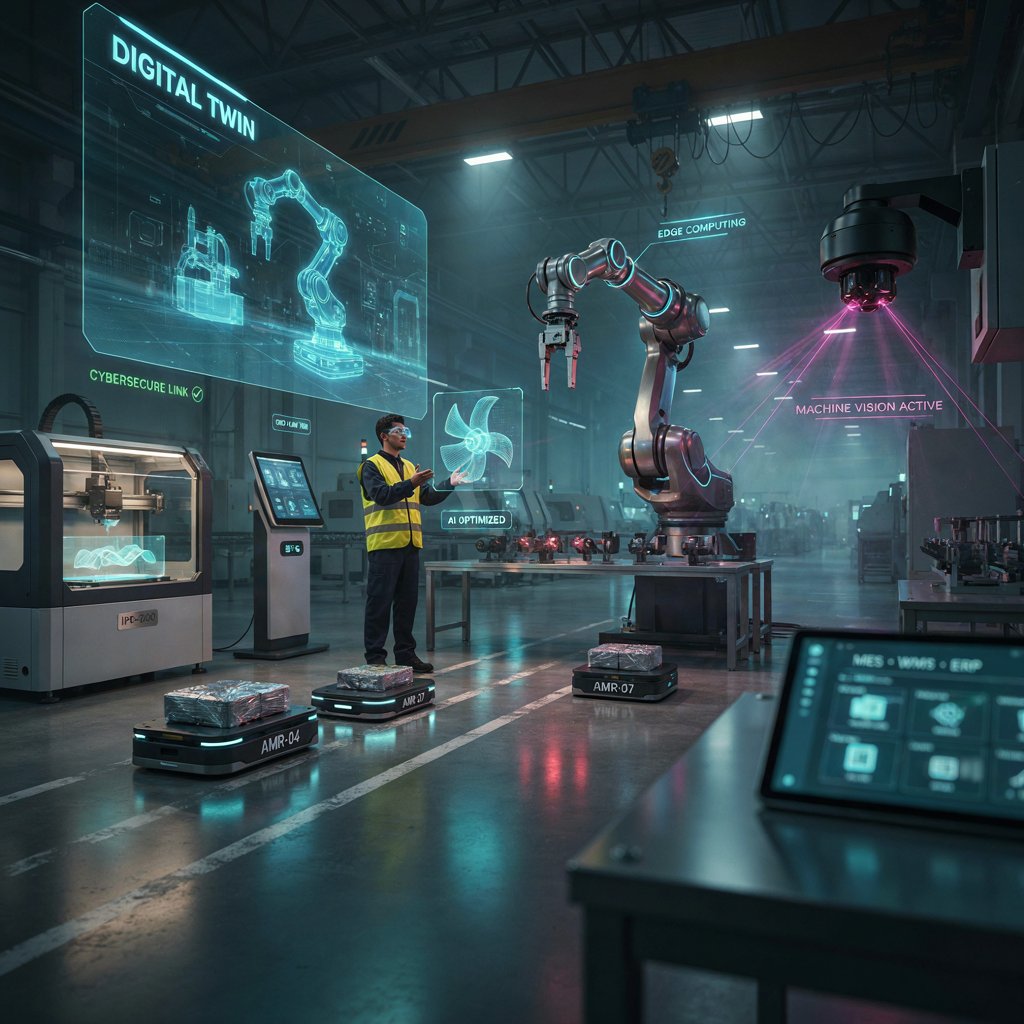
Digital twins require continuous data from physical equipment to accurately represent real-world operating conditions. Private 5G can provide wireless communication between machines, sensors, and digital twin platforms.
Real-time data can update digital representations of production equipment and processes. Manufacturers can then use these models to simulate operational changes, monitor performance, and identify potential bottlenecks.
As digital twin adoption increases, reliable industrial connectivity will become increasingly important.
Flexible Factory Layouts
Factory flexibility is another major trend supporting private 5G adoption. Modern manufacturers increasingly need to adjust production layouts to accommodate new products, equipment, and automation systems.
Wireless connectivity can reduce the time and cost associated with moving equipment and installing new network connections. Production lines can be reconfigured more easily while maintaining communication between connected assets.
This flexibility supports agile manufacturing and can help manufacturers respond more quickly to changing market requirements.
Network Slicing and Application Prioritization
Advanced 5G capabilities can allow manufacturers to prioritize network resources for different industrial applications. Critical production systems can receive higher network priority than less time-sensitive applications.
This capability can help manufacturers manage connectivity requirements across robotics, machine vision, sensors, worker devices, and enterprise applications.
As private 5G networks mature, advanced network management capabilities are expected to become increasingly important for industrial users.
View detailed Table of Content here – https://www.marketsandmarkets.com/Market-Reports/smart-manufacturing-market-105448439.html
Improved Asset Tracking
Private 5G can also support improved tracking of materials, tools, equipment, and products within manufacturing facilities. Connected devices can provide information about the location and movement of assets.
Improved tracking can reduce material search times, optimize internal logistics, and improve inventory visibility. When combined with autonomous mobile robots and warehouse management systems, private 5G can contribute to more efficient material flows.
Cybersecurity and Network Control
Private 5G provides manufacturers with greater control over their industrial communication infrastructure compared with relying entirely on public wireless networks. Dedicated networks can be designed around specific security, access, and operational requirements.
Manufacturers can implement authentication, network segmentation, access controls, monitoring, and other cybersecurity measures. However, private 5G deployments still require strong security practices to protect connected industrial assets.
Cybersecurity will remain an important consideration as manufacturers connect increasingly critical operations to wireless networks.
Energy and Operational Efficiency
Private 5G can support smart energy-management applications by connecting sensors and monitoring equipment throughout factories. Real-time information about energy consumption can help manufacturers identify inefficient machines and optimize resource usage.
Connected energy monitoring can also support sustainability initiatives and provide manufacturers with detailed operational data for improving energy performance.
Future Market Outlook
Private 5G industrial connectivity is expected to become an increasingly important technology within the Smart Manufacturing Industry as factories become more connected, automated, and data-driven. Its combination of low latency, high bandwidth, reliability, device density, and wireless flexibility can support industrial IoT, robotics, machine vision, edge computing, digital twins, and autonomous production systems.
Future developments are likely to focus on easier deployment, stronger cybersecurity, improved interoperability, advanced network management, and integration with cloud and edge platforms. As manufacturers modernize production facilities and seek flexible connectivity for Industry 4.0 applications, private 5G is expected to play a significant role in the development of next-generation smart factories.