
The smart lighting industry is evolving from conventional illumination toward connected, automated, and intelligent lighting infrastructure. Lighting systems increasingly combine LED technology, sensors, communication networks, software, and digital control platforms to improve energy efficiency and operational visibility. Smart lighting is being adopted across residential buildings, offices, retail spaces, industrial facilities, streets, campuses, and public infrastructure. The integration of Internet of Things technology is also allowing lighting systems to communicate with other connected devices and building management platforms. These developments are creating a more technology driven competitive environment for lighting manufacturers and solution providers.
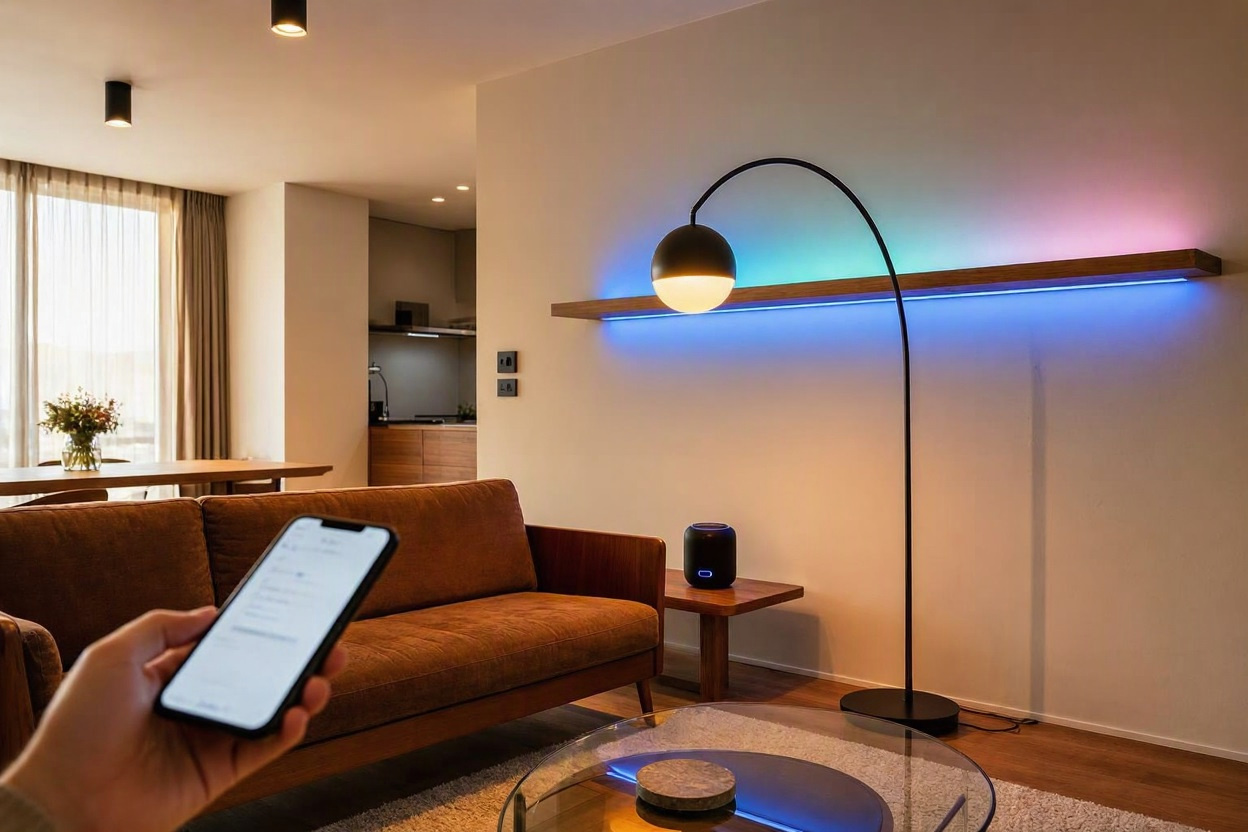
According to Marketsandmarkets, the global smart lighting market size was valued at USD 9.86 billion in 2025 and is projected to reach USD 17.38 billion by 2030, growing at a CAGR of 12.0% from 2025 to 2030.
Download PDF Brochure @ https://www.marketsandmarkets.com/pdfdownloadNew.asp?id=985
Smart Lighting Market Trends are increasingly influenced by the convergence of lighting, automation, artificial intelligence, connectivity, and energy management. Customers are moving beyond basic lighting controls and seeking systems that can respond to occupancy, daylight conditions, user preferences, and operational requirements. Wireless communication is also gaining importance because it can simplify deployment in existing buildings and support scalable installations. At the same time, retrofit projects are becoming important because organizations can modernize existing lighting infrastructure without completely rebuilding electrical systems. These changes are encouraging suppliers to develop complete ecosystems rather than individual lighting products.
Major Companies Shaping the Competitive Landscape
The competitive structure includes established lighting manufacturers, electrical technology companies, building automation providers, smart home specialists, and companies developing connected lighting platforms. Companies compete through product development, ecosystem integration, partnerships, distribution capabilities, software functionality, and expansion into new application areas. The competitive landscape identified by MarketsandMarkets includes major participants such as Signify Holding, Acuity Brands, Legrand, Honeywell International, and Panasonic Holdings.
Other companies active across different parts of the ecosystem include Eaton, Lutron Electronics, Hubbell, Cree Lighting, Samsung Electronics, Xiaomi, Leviton Manufacturing, Current Lighting, ams OSRAM, and other specialized technology providers. The competitive environment is not limited to manufacturers of lamps and luminaires because lighting controls, sensors, gateways, software platforms, communication technologies, and building management systems are becoming increasingly important. This broader ecosystem is expanding the number of companies competing for value across the smart lighting value chain.
Strategic Competition Is Moving Beyond Lighting Hardware
Smart Lighting Market Trends indicate that hardware alone is no longer sufficient to differentiate products in many applications. Lighting manufacturers are increasingly incorporating sensors, controllers, wireless connectivity, software interfaces, cloud management, and analytics into their solutions. These capabilities allow customers to remotely monitor lighting assets, adjust operating schedules, identify equipment issues, and optimize energy consumption. As a result, companies are increasingly competing based on the intelligence and connectivity surrounding their lighting products.
The shift toward integrated solutions is also changing how customers evaluate lighting investments. Buyers increasingly consider interoperability, installation requirements, cybersecurity, maintenance, analytics, and compatibility with existing building systems. A lighting system that can integrate with occupancy sensors and building automation infrastructure can provide broader operational value than a standalone connected lamp. This has encouraged suppliers to develop platforms capable of supporting multiple devices and applications within a single environment.
Mergers and Acquisitions Are Reshaping the Industry
Mergers and acquisitions are becoming an important strategic mechanism across the broader connected building and lighting ecosystem. Companies are using acquisitions to obtain technologies, software capabilities, customer relationships, distribution networks, engineering expertise, and access to new geographic markets. The broader smart building technology sector recorded substantial M&A activity during the first half of 2026, with transactions spanning building automation, energy management, access control, and smart lighting.
Recent transaction activity also demonstrates increasing interest in connected residential and building technologies. In September 2026, Schneider Electric announced a voluntary public takeover bid for Shelly Group, a smart home technology company, in a transaction valued at approximately €1.2 billion. The proposed transaction is intended to strengthen Schneider Electric’s position in connected home technology and demonstrates how smart building capabilities can attract strategic investment from larger technology and electrical infrastructure companies.
M&A activity is relevant to Smart Lighting Market Trends because lighting is increasingly connected with broader building technology ecosystems. An acquisition involving smart home controls, energy management, sensors, building automation, or connected devices can indirectly affect the competitive positioning of lighting suppliers. Companies with complementary technologies can combine their capabilities to create broader solutions covering illumination, automation, energy optimization, and digital building management.
Product Development Is Increasing Competitive Pressure
Product innovation remains a central element of competition. Manufacturers are developing connected luminaires, intelligent lamps, wireless controllers, occupancy sensors, daylight sensors, gateways, switches, dimmers, and software platforms. The objective is increasingly to create lighting environments that can automatically respond to changing conditions rather than requiring continuous manual adjustment.
Smart Lighting Market Trends also show increasing interest in human centric lighting. These systems can adjust lighting characteristics according to occupancy, time of day, environmental conditions, or user requirements. In workplaces, educational facilities, healthcare environments, and hospitality locations, lighting can become part of the broader occupant experience. This creates opportunities for companies to differentiate their offerings through personalization and automation rather than relying exclusively on hardware specifications.
IoT Integration Is Transforming Lighting Systems
Internet of Things integration is one of the most important developments affecting connected lighting. Smart lighting systems can use sensors and communication technologies to collect information about occupancy, environmental conditions, operating status, and energy consumption. This information can then be used to automate lighting behavior and support operational decisions.
The integration of IoT also enables lighting infrastructure to become part of broader smart building platforms. Lighting systems can communicate with heating, ventilation, security, access control, energy management, and other building systems. This creates opportunities for companies that can provide interoperable solutions across multiple building technologies. MarketsandMarkets identifies IoT integration, sensors, wireless communication, smart city initiatives, and data analytics as important factors influencing the development of the industry.
Artificial Intelligence Creates New Lighting Capabilities
Artificial intelligence is becoming increasingly relevant to smart lighting because connected lighting systems generate operational data that can support automated decision making. AI based systems can analyze occupancy patterns, usage behavior, environmental conditions, and operational data to improve lighting control. This can enable more adaptive lighting environments and help building operators identify inefficient operating patterns.
Smart Lighting Market Trends involving AI are particularly relevant to large commercial buildings and public infrastructure. Instead of using fixed schedules, intelligent systems can dynamically modify lighting according to real time conditions. AI can also support predictive maintenance by identifying unusual equipment behavior and helping operators address issues before they become significant operational problems. These capabilities are encouraging companies to combine lighting hardware with software and analytics.
Wireless Connectivity Supports Retrofit Adoption
Wireless communication is becoming increasingly important because it can simplify the installation of connected lighting systems. Traditional buildings may contain complex electrical infrastructure that makes extensive rewiring expensive or disruptive. Wireless controls can provide an alternative approach by allowing lighting devices and sensors to communicate without requiring extensive new cabling.
Several connectivity technologies are used across smart lighting applications, including Wi Fi, Bluetooth, Zigbee, and other wireless communication technologies. Wired communication continues to be relevant for applications requiring reliable connectivity and centralized infrastructure. The choice of technology depends on building size, security requirements, installation conditions, interoperability requirements, and the intended application.
Retrofit Projects Create New Business Opportunities
Retrofit installations represent an important opportunity because a large installed base of conventional lighting infrastructure remains in commercial, industrial, residential, and public buildings. Organizations can replace conventional fixtures with connected LED systems while adding sensors and controls to existing spaces. This approach can improve energy management without requiring a complete reconstruction of the building.
Smart Lighting Market Trends related to retrofits are particularly relevant for older commercial properties and industrial facilities. Building owners can gradually modernize lighting infrastructure according to budget availability and operational requirements. Suppliers that offer flexible retrofit solutions can therefore address customers that may not be ready for large scale building automation projects. Installation services, system commissioning, software support, and maintenance can further expand revenue opportunities around retrofit projects.
Smart Cities Are Expanding Outdoor Lighting Applications
Smart city initiatives are creating demand for connected outdoor lighting infrastructure. Municipalities can use networked street lighting to manage illumination, monitor equipment, reduce unnecessary operating time, and integrate lighting with broader urban infrastructure. Smart outdoor lighting can also support applications involving public spaces, roads, parking areas, transportation infrastructure, and municipal facilities.
The connection between lighting and smart city infrastructure is expanding the competitive scope of the industry. Companies are increasingly required to provide not only lighting hardware but also controllers, sensors, communication networks, software platforms, and maintenance capabilities. MarketsandMarkets identifies smart city implementation as an important driver for connected and energy efficient lighting adoption.
Energy Efficiency Remains a Core Demand Driver
Energy efficiency continues to influence investment decisions across residential, commercial, industrial, and public applications. LED technology already provides an efficient foundation, while smart controls can further improve energy management by adjusting lighting according to occupancy and environmental conditions.
The combination of LEDs, sensors, automation, and analytics can help organizations better understand how lighting is being used. Smart systems can identify areas where lights remain active unnecessarily and provide operators with greater control over operating schedules. Energy management is therefore becoming an important component of Smart Lighting Market Trends, particularly as organizations pursue sustainability and operational efficiency objectives.
Interoperability Remains a Competitive Challenge
One of the challenges affecting the industry is interoperability. Customers may use products from multiple suppliers, each with different communication technologies, software platforms, and control architectures. If these systems cannot communicate effectively, organizations may face difficulties when expanding or upgrading their lighting infrastructure.
Industry participants are therefore paying greater attention to common communication standards and integration capabilities. Interoperability can make it easier to connect lighting with building management systems, smart home platforms, energy management systems, and other connected infrastructure. Companies capable of supporting multiple protocols and integration environments can address a broader range of customer requirements.
Cybersecurity Is Becoming More Important
Connected lighting systems introduce cybersecurity considerations because lighting devices can become part of wider networks. Systems connected to cloud platforms or building networks require appropriate authentication, secure communications, access controls, software updates, and monitoring.
Cybersecurity is particularly important for commercial facilities, industrial environments, public infrastructure, and large building networks. Smart Lighting Market Trends are therefore increasingly connected with the broader cybersecurity requirements of IoT infrastructure. Suppliers need to consider security throughout product design, deployment, maintenance, and software management rather than treating cybersecurity as an additional feature.
Companies Are Building Broader Technology Ecosystems
Competitive differentiation increasingly depends on ecosystem development. Companies are combining lighting products with controls, sensors, software, analytics, automation platforms, and services. This approach can create stronger customer relationships because organizations may prefer integrated solutions rather than purchasing separate components from multiple suppliers.
The ecosystem approach also encourages partnerships between lighting companies, technology providers, system integrators, building automation specialists, and communication technology suppliers. Partnerships can help companies expand capabilities without developing every technology internally. This trend is expected to remain important as smart buildings become more connected and lighting becomes one component of a larger digital infrastructure.
Two Key Areas Driving Competitive Differentiation
Companies operating in the smart lighting ecosystem are increasingly focusing on the following areas:
Connected lighting platforms that combine fixtures, sensors, controls, communication technologies, software, and analytics to provide centralized management.
Application specific solutions designed for smart homes, offices, retail locations, industrial facilities, outdoor infrastructure, campuses, and smart cities.
These approaches demonstrate how competition is shifting from individual products toward complete solutions. Customers increasingly evaluate the ability of suppliers to support installation, integration, monitoring, maintenance, and future upgrades. This is encouraging companies to build stronger software and service capabilities alongside their hardware portfolios.
Regional Competition Continues to Evolve
Competition varies across regions because adoption is influenced by urbanization, building infrastructure, energy policies, technology availability, consumer behavior, and smart city investment. North America and Europe have established connected building ecosystems, while Asia Pacific is experiencing increasing demand supported by urban development, infrastructure modernization, and technology adoption.
Smart Lighting Market Trends in Asia Pacific are particularly connected with smart city development and the expansion of connected buildings. MarketsandMarkets identifies Asia Pacific as an important regional growth area, supported by urbanization and adoption of IoT enabled lighting solutions.
The Competitive Landscape Is Becoming More Integrated
The smart lighting competitive landscape is becoming increasingly integrated with the wider electrical, automation, IoT, and smart building industries. Established lighting companies are expanding digital capabilities, while technology companies are entering lighting through connected home and building platforms. This creates competition between traditional lighting expertise and software driven technology capabilities.
Mergers, acquisitions, partnerships, product launches, and geographic expansion are consequently becoming important strategic activities. Recent M&A activity across lighting and connected building technologies illustrates how companies are seeking complementary capabilities and broader technology portfolios.
Future Direction of Smart Lighting Competition
The next stage of industry competition is likely to focus increasingly on intelligence, interoperability, energy optimization, cybersecurity, and user experience. Lighting systems are becoming platforms for collecting operational information and controlling connected environments. This creates opportunities for companies that can combine reliable hardware with software and digital services.
Smart Lighting Market Trends will continue to be influenced by AI, IoT, sensors, wireless connectivity, smart city projects, human centric lighting, and building automation. At the same time, customers will continue to evaluate total ownership costs, integration requirements, security, and ease of deployment. Companies capable of addressing these requirements through integrated solutions will remain important participants in the evolving competitive environment.
Conclusion
The smart lighting industry is moving from conventional illumination toward connected infrastructure that combines lighting, sensors, controls, software, communication technologies, and analytics. Companies are competing through innovation, ecosystem development, partnerships, acquisitions, geographic expansion, and application specific solutions. M&A activity across connected building technology is also demonstrating the increasing strategic value of smart home and building capabilities.
Smart Lighting Market Trends reflect a broader transformation in how buildings and cities manage energy, comfort, automation, and infrastructure. As lighting becomes more deeply integrated with IoT and building management platforms, competitive differentiation will increasingly depend on interoperability, intelligence, cybersecurity, and service capabilities. The companies that can connect lighting hardware with broader digital ecosystems will help shape the next phase of connected lighting adoption.
FAQs
What are the major Smart Lighting Market Trends?
Major Smart Lighting Market Trends include IoT integration, wireless connectivity, AI enabled controls, human centric lighting, smart city deployment, retrofit installations, energy optimization, sensor based automation, and integration with building management platforms.
Which companies are active in the smart lighting industry?
The competitive landscape includes companies such as Signify Holding, Acuity Brands, Legrand, Honeywell International, Panasonic Holdings, Eaton, Lutron Electronics, Hubbell, Samsung Electronics, Xiaomi, Cree Lighting, and other regional and specialized technology providers.
Why are mergers and acquisitions important for smart lighting?
Mergers and acquisitions allow companies to obtain complementary technologies, software capabilities, distribution networks, customer relationships, and connected building expertise. Recent activity across smart building technology demonstrates the strategic importance of combining complementary capabilities.
How is AI affecting smart lighting?
AI can help analyze occupancy, usage, environmental conditions, and system performance. These capabilities can support adaptive lighting, automated control, energy optimization, anomaly detection, and predictive maintenance.
Why are retrofit installations important?
Retrofit installations allow building owners to modernize existing lighting infrastructure without completely replacing building electrical systems. Connected controls and sensors can be introduced alongside efficient lighting technologies, supporting gradual modernization.
What role does IoT play in smart lighting?
IoT enables lighting devices, sensors, controllers, and software platforms to communicate and exchange operational information. This supports remote management, automation, monitoring, analytics, and integration with broader smart building infrastructure.
What are the major challenges facing smart lighting?
Important challenges include interoperability, cybersecurity, installation complexity, initial equipment costs, integration with existing infrastructure, and the need for skilled installation and maintenance support.
How are smart cities influencing lighting adoption?
Smart city programs are encouraging municipalities to deploy connected outdoor lighting for improved energy management, remote monitoring, adaptive illumination, and integration with wider urban infrastructure.
What is changing the competitive landscape?
The competitive landscape is being influenced by product innovation, software integration, partnerships, mergers and acquisitions, smart home adoption, building automation, IoT connectivity, and the growing demand for integrated lighting ecosystems.
Why is interoperability important?
Interoperability allows lighting systems from different technology environments to communicate with building management systems, sensors, automation platforms, and other connected devices. Better interoperability can simplify deployment and future system expansion.