
Lighting technology is undergoing a significant transformation as homes, commercial buildings, industrial facilities, and public infrastructure increasingly adopt intelligent illumination solutions. Traditional lighting systems are gradually evolving into connected environments that offer automation, remote access, energy optimization, and personalized lighting experiences. These developments are changing how people interact with lighting in their everyday environments. The growing adoption of connected devices and intelligent building technologies is creating new opportunities for advanced lighting applications.
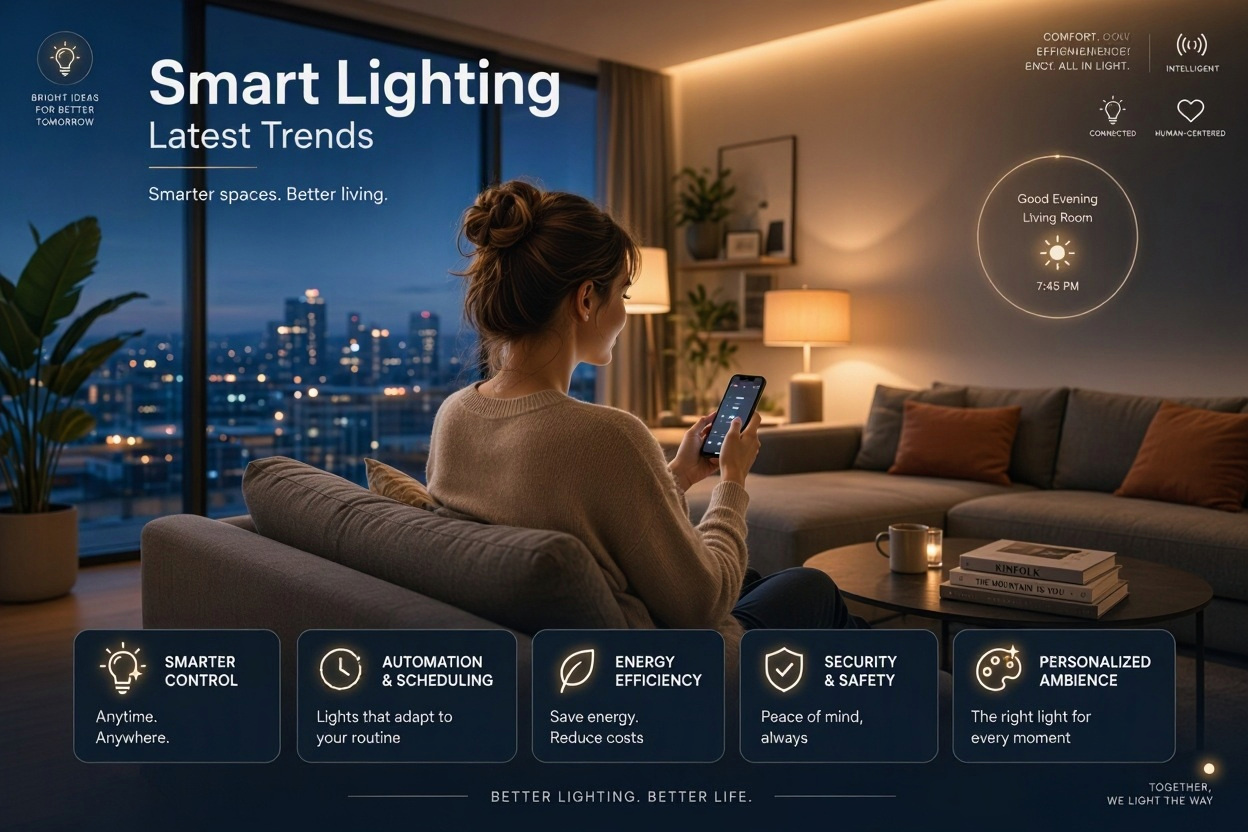
According to Marketsandmarkets, the global smart lighting market size is projected to grow from USD 11.00 billion in 2026 to USD 20.50 billion by 2032, growing at a CAGR of 10.9% from 2026 to 2032.
The Smart Lighting Latest Trend reflects a shift from conventional illumination toward intelligent systems that can understand environmental conditions, respond to user preferences, and adjust lighting automatically. Modern solutions combine LED technology, wireless communication, sensors, software platforms, and advanced control systems to deliver greater flexibility. Users can manage brightness, color temperature, operating schedules, and lighting zones through mobile applications or centralized platforms. This transformation is making lighting an important part of smart buildings, connected homes, and energy efficient infrastructure.
Download PDF Brochure @ https://www.marketsandmarkets.com/pdfdownloadNew.asp?id=985
Another important development is the increasing integration of artificial intelligence, Internet of Things connectivity, and data analytics into lighting infrastructure. These technologies allow lighting systems to become more responsive and adaptive rather than operating through fixed schedules. From automatically adjusting brightness based on natural daylight to creating personalized workplace environments, intelligent illumination is becoming more sophisticated. Understanding the emerging Smart Lighting Latest Trend helps businesses, property developers, facility managers, and consumers identify the technologies shaping the future of illumination.
AI Powered Lighting Automation
Artificial intelligence is becoming an important technology in intelligent illumination because it enables lighting systems to respond to changing environmental conditions and user requirements. Traditional lighting controls depend on manual adjustments or predefined schedules, whereas AI powered solutions can analyze usage patterns and automatically optimize lighting operations. These systems can learn when particular spaces are occupied, identify preferred brightness levels, and adjust illumination accordingly. This makes lighting management more convenient while supporting efficient energy consumption.
One significant Smart Lighting Latest Trend is the integration of AI algorithms with connected sensors and lighting management platforms. These systems collect information about occupancy, daylight availability, room temperature, and user activities to make intelligent lighting decisions. For example, an office lighting system can automatically reduce brightness near windows when sufficient natural light is available. Similarly, lights in meeting rooms can activate when people enter and switch off after the space becomes vacant. Such capabilities are transforming lighting from a manually operated utility into an intelligent building service.
AI based lighting automation is also becoming useful in industrial environments, warehouses, educational institutions, and healthcare facilities. Large buildings often contain hundreds or thousands of lighting fixtures that require consistent monitoring and control. Intelligent platforms can analyze operating conditions, identify unusual energy consumption, and recommend adjustments to improve performance. Predictive maintenance capabilities can also identify potential equipment problems before complete failure occurs. These developments are helping facility managers improve operational efficiency and simplify lighting administration.
IoT Connected Lighting Systems
The Internet of Things is transforming conventional illumination into connected lighting infrastructure. IoT enabled lighting systems connect luminaires, sensors, switches, gateways, and software platforms through communication networks. This connectivity allows users to monitor and control lighting from smartphones, computers, and centralized building management systems. Instead of operating individual fixtures independently, building owners can manage multiple lighting zones through a unified interface. This approach improves flexibility and provides greater visibility into lighting operations.
IoT integration is an important Smart Lighting Latest Trend because it allows lighting equipment to exchange information with other connected devices. For example, occupancy sensors can communicate with lighting controllers to activate illumination when someone enters a room. Similarly, daylight sensors can measure available sunlight and automatically adjust artificial lighting levels. Connected lighting infrastructure can also communicate with heating, ventilation, air conditioning, and security systems. This integration supports more coordinated building automation and creates a connected environment.
The adoption of IoT based illumination is expanding across residential, commercial, industrial, and public infrastructure applications. Smart homes use connected lighting to support voice commands, remote switching, and customized lighting schedules. Commercial buildings use centralized platforms to manage lighting across offices, conference rooms, and common areas. Industrial facilities benefit from connected monitoring and automated lighting operations across production floors and warehouses. As IoT ecosystems become more sophisticated, lighting is increasingly functioning as an essential component of intelligent infrastructure.
Human Centric Lighting Solutions
Human centric lighting is gaining attention because it focuses on the relationship between illumination and human comfort. Traditional lighting systems primarily emphasize brightness and visibility, whereas human centric solutions consider factors such as color temperature, intensity, timing, and the activities performed within a space. These systems can adjust lighting conditions throughout the day to create environments that better support everyday activities. The approach is particularly relevant in offices, hospitals, educational institutions, and residential environments.
An important Smart Lighting Latest Trend is the development of lighting systems that can dynamically adjust color temperature and brightness according to daily routines. Cooler white lighting can support visibility and concentration during daytime activities, while warmer lighting can create a more relaxing atmosphere during evening hours. Tunable white LED technology makes these adjustments possible through programmable lighting controls. Users can also customize lighting scenes according to reading, working, relaxing, or other activities. This creates more adaptable indoor environments.
Human centric illumination is especially relevant in workplaces where employees spend extended periods indoors. Poorly designed lighting can cause visual discomfort, glare, and difficulties with concentration. Intelligent lighting systems can help address these challenges by maintaining appropriate illumination levels and reducing unnecessary brightness variations. Healthcare facilities can also use adjustable lighting to create more comfortable environments for patients and staff. However, lighting solutions should be designed carefully because individual responses to light vary, and lighting alone cannot guarantee improvements in health or sleep quality.
Energy Efficient Smart LED Technology
Energy efficiency remains one of the most important considerations in modern lighting development. LED technology has already transformed illumination by providing higher efficiency, longer operating life, and lower maintenance requirements compared with many traditional lighting technologies. The latest developments combine efficient LED components with intelligent controls, enabling users to optimize energy consumption according to actual lighting requirements. This approach reduces unnecessary illumination and supports more responsible electricity usage.
The Smart Lighting Latest Trend is moving beyond replacing conventional lamps with LED alternatives toward optimizing the entire lighting system. Advanced controls can adjust brightness based on occupancy, daylight availability, operating schedules, and specific application requirements. For instance, a warehouse does not need every lighting fixture operating at full brightness throughout the day. Sensors and automated controls can activate selected lighting zones according to worker movement and operational activity. These capabilities help reduce wasted electricity while maintaining suitable visibility.
Modern LED systems are also incorporating improved drivers, optical designs, dimming capabilities, and modular components. These improvements support better lighting distribution, reduced energy losses, and easier maintenance. Building owners are increasingly considering the complete lifecycle of lighting installations rather than focusing only on initial purchasing costs. Long operating life, repairability, component replacement, and energy performance are becoming important selection criteria. The International Energy Agency has also highlighted system level efficiency, smart controls, and longer lasting modular lighting designs as important priorities for the next phase of LED development.
IEA
Wireless Lighting Control Technologies
Wireless communication is simplifying the installation and management of intelligent lighting systems. Conventional lighting installations often require extensive wiring and centralized control infrastructure, which can increase installation complexity in existing buildings. Wireless technologies allow connected fixtures, switches, sensors, and controllers to communicate without requiring additional control wiring throughout every space. This flexibility makes wireless lighting suitable for residential renovations, commercial buildings, educational campuses, and selected industrial applications.
Bluetooth Mesh, Zigbee, Wi Fi, and Thread are among the communication technologies supporting connected illumination. These technologies offer different capabilities related to connectivity, network architecture, power consumption, and device integration. Mesh networking is particularly useful because compatible devices can communicate through multiple network paths, helping extend coverage across larger environments. Wireless controllers also allow building operators to modify lighting schedules and settings without physically accessing individual fixtures.
Another Smart Lighting Latest Trend is the growing emphasis on wireless interoperability and simplified installation. Building owners increasingly prefer systems that can work with different sensors, control devices, and automation platforms. Compatibility reduces the complexity of expanding lighting networks and makes future upgrades easier. However, selecting an appropriate communication technology requires consideration of network coverage, reliability, cybersecurity, and long term maintenance. Wireless systems must also be designed to minimize connectivity interruptions in applications where consistent illumination is essential.
Voice Controlled and App Based Lighting
Smartphones and voice assistants are changing how consumers interact with lighting systems. Instead of relying exclusively on conventional switches, users can control connected lamps through mobile applications, voice commands, and automated routines. These interfaces make it easier to adjust brightness, switch between lighting scenes, and manage multiple rooms from a single device. This convenience is encouraging the adoption of connected illumination in modern residential environments.
The Smart Lighting Latest Trend also includes personalized lighting experiences through application based controls. Users can create customized settings for different activities, such as reading, watching television, working, or sleeping. Lighting schedules can be configured to activate automatically at selected times, while remote access allows users to operate lights when they are away from home. Voice commands provide another convenient control option, particularly for individuals who prefer hands free operation.
App based lighting is also becoming relevant in commercial environments where different spaces require different illumination settings. Retail stores can adjust lighting scenes to highlight products, while hotels can provide guests with personalized room controls. Offices can create predefined lighting configurations for meeting rooms, collaborative areas, and individual workstations. As smart home and building ecosystems become more integrated, app based lighting controls are likely to become an increasingly familiar part of everyday environments.
Adaptive Lighting with Occupancy and Daylight Sensors
Sensor based lighting is improving the ability of illumination systems to respond to actual environmental conditions. Occupancy sensors detect the presence or movement of people and control lighting accordingly. Daylight sensors measure the amount of natural light entering a room and adjust artificial illumination to maintain suitable brightness. Combining these technologies allows lighting systems to operate more intelligently without requiring continuous manual intervention.
This Smart Lighting Latest Trend is particularly valuable in environments where occupancy changes frequently. Corridors, meeting rooms, storage areas, washrooms, parking facilities, and warehouses often experience varying levels of activity. Automated lighting controls can reduce brightness or switch off fixtures when spaces are unoccupied. In areas with sufficient natural sunlight, daylight harvesting systems can reduce artificial lighting output while maintaining comfortable visibility. These functions help improve energy management and reduce unnecessary operating hours.
Advanced sensor technologies are also expanding beyond basic motion detection. Modern systems can use multiple sensors to understand occupancy conditions, environmental changes, and space utilization patterns. Some applications combine lighting data with building management platforms to support operational planning. However, sensor placement, detection range, response time, and calibration are important for achieving reliable results. Poorly configured sensors can cause unwanted switching or insufficient illumination, making proper system design essential.
Smart Street Lighting and Smart City Infrastructure
Smart street lighting is becoming an important part of connected urban infrastructure. Municipal authorities are increasingly exploring intelligent illumination systems to improve public lighting management, reduce energy consumption, and simplify maintenance operations. Traditional streetlights generally operate according to fixed schedules, whereas connected street lighting can respond to traffic conditions, pedestrian movement, and environmental requirements. Centralized platforms allow authorities to monitor individual fixtures and manage large lighting networks remotely.
The Smart Lighting Latest Trend in urban infrastructure involves integrating streetlights with sensors, communication networks, and centralized management platforms. These systems can automatically adjust brightness according to traffic density, road conditions, and surrounding activity. For example, lighting levels can be optimized in selected road sections during periods of low traffic while maintaining suitable visibility and safety requirements. Connected streetlights can also provide operational information about fixture performance and maintenance requirements.
Smart streetlight infrastructure can support additional urban applications when designed with appropriate equipment and security controls. Streetlight poles may accommodate environmental sensors, communication equipment, traffic monitoring devices, and public safety technologies. This creates opportunities to use existing urban infrastructure for multiple connected services. However, municipalities must carefully evaluate installation costs, data protection, network reliability, maintenance responsibilities, and compatibility before deploying large scale systems.
Integration with Smart Building Management Systems
Modern buildings increasingly depend on integrated automation platforms to manage lighting, heating, ventilation, air conditioning, security, and energy consumption. Smart lighting is becoming an important part of these connected building environments because illumination systems generate useful operational data and can respond to information from other building technologies. Integration enables building operators to coordinate multiple systems through a centralized interface rather than managing each installation separately.
A significant Smart Lighting Latest Trend is the integration of lighting controls with building management systems. For example, occupancy information collected through lighting sensors can support the operation of other building services. Meeting room lighting can activate when a space is occupied, while ventilation settings can be adjusted according to relevant building automation rules. Similarly, facility managers can analyze lighting schedules alongside building energy information to identify opportunities for operational improvements.
This integrated approach is useful in offices, hospitals, hotels, shopping centers, airports, and educational campuses. Large buildings often contain multiple lighting zones with different operating requirements. Centralized platforms allow facility managers to establish schedules, monitor system conditions, and identify equipment that requires attention. Interoperability is especially important because lighting equipment must communicate reliably with different building technologies. Open communication protocols and compatible control platforms can make these installations easier to manage and expand.
building-technologies.messefrankfurt.com+1
Li Fi and Visible Light Communication
Li Fi is an emerging wireless communication technology that uses light to transmit information. Unlike conventional wireless communication systems that rely on radio frequency signals, Li Fi uses modulated light from compatible illumination sources to communicate with receiving devices. This creates opportunities to combine illumination and data transmission within selected indoor environments. The technology is attracting interest in applications where additional communication options may complement existing wireless infrastructure.
The Smart Lighting Latest Trend associated with Li Fi involves exploring lighting infrastructure as a platform for both illumination and connectivity. In suitable environments, compatible LED fixtures can transmit information without creating noticeable changes in visible brightness. Potential applications include offices, educational facilities, healthcare environments, and specialized industrial locations. Li Fi may also offer advantages in certain situations where radio frequency interference or restricted wireless communication is a concern.
Despite its potential, Li Fi still faces practical implementation challenges. Communication generally requires a suitable optical path or carefully designed system architecture, and performance can be affected by obstacles and environmental conditions. Compatible transmitters, receivers, and supporting infrastructure are also necessary. Therefore, Li Fi should be viewed as a complementary connectivity technology rather than a universal replacement for existing wireless networks. Continued improvements in hardware, standardization, and integration will influence its practical adoption.
Cybersecurity and Data Privacy in Smart Lighting
As lighting systems become increasingly connected, cybersecurity and data protection are becoming important considerations. Smart lighting networks may collect information about occupancy, operating schedules, device activity, and building usage patterns. When connected to broader building management platforms, these systems become part of the digital infrastructure that requires appropriate security measures. Unauthorized access could affect lighting operations, expose sensitive building information, or create disruptions in connected environments.
Cybersecurity is therefore an important Smart Lighting Latest Trend for residential and commercial installations. Manufacturers and building operators are paying greater attention to secure device authentication, encrypted communication, software updates, and access management. Network segmentation can help separate lighting devices from other critical building systems. Regular security assessments and appropriate configuration practices can also reduce potential vulnerabilities.
Data privacy is equally important when lighting systems use cameras, occupancy monitoring, or other advanced sensing technologies. Building operators should understand what information is collected, how long it is stored, and who can access it. Privacy focused system design can reduce unnecessary data collection while maintaining essential automation functions. As connected illumination becomes more common, security and privacy will remain important factors in technology selection and deployment.
Sustainable and Circular Lighting Design
Sustainability is influencing how lighting products and systems are designed, manufactured, installed, and maintained. Earlier lighting decisions often focused primarily on brightness, energy consumption, and purchasing costs. Modern approaches increasingly consider product durability, repairability, component replacement, material efficiency, and end of life management. These considerations are encouraging manufacturers and building owners to adopt more responsible lighting solutions.
One emerging Smart Lighting Latest Trend is the development of modular lighting products that support component replacement instead of complete fixture disposal. Drivers, control modules, optical components, and other parts can be designed for easier servicing. This approach can extend product life and reduce electronic waste. Recyclable materials and improved product design can also support more responsible resource utilization throughout the lighting lifecycle.
Smart lighting systems can contribute to sustainability through better operational management. Automated dimming, occupancy detection, and daylight harvesting reduce unnecessary electricity consumption. Intelligent monitoring can also identify inefficient operating patterns and support preventive maintenance. The next phase of sustainable illumination will depend not only on energy efficient LED technology but also on durable design, repairability, interoperability, and responsible disposal practices.
IEA Smart Lighting in Retail and Commercial Spaces
Retail and commercial environments are increasingly using intelligent illumination to improve customer experiences and operational flexibility. Lighting influences how products, displays, interiors, and architectural features appear to visitors. Connected lighting systems allow businesses to modify brightness, color temperature, and lighting scenes according to different activities and operating requirements. This makes illumination an important part of modern commercial space design.
The Smart Lighting Latest Trend in retail environments includes programmable lighting scenes and zone based control. Stores can use different illumination settings for product displays, promotional areas, entrances, and customer service zones. Restaurants and hospitality facilities can modify lighting conditions according to the atmosphere they want to create. Offices can use adjustable lighting to support different working arrangements, including focused individual tasks and collaborative activities.
Commercial lighting platforms also provide opportunities for centralized monitoring and operational optimization. Facility managers can review lighting schedules, identify fixtures that require maintenance, and manage multiple locations through connected interfaces. When integrated with building automation, lighting systems can contribute to more efficient space management. These capabilities are making intelligent illumination relevant not only for energy management but also for interior design, customer engagement, and workplace functionality.
Advanced Lighting Analytics and Predictive Maintenance
Data analytics is adding another layer of intelligence to connected lighting infrastructure. Smart lighting systems can collect information about operating hours, energy consumption, equipment performance, and environmental conditions. Analyzing this information helps facility managers understand how lighting infrastructure is being used and identify opportunities to improve its performance. This is particularly useful in large facilities where manual inspection of every lighting fixture can be time consuming.
The Smart Lighting Latest Trend is increasingly focused on predictive maintenance and data driven decision making. Connected platforms can monitor equipment conditions and identify unusual operating patterns that may indicate component deterioration or system faults. Maintenance teams can use this information to prioritize inspections and replace components before complete equipment failure. This can improve maintenance planning and help reduce unexpected operational interruptions.
Lighting analytics can also support better resource allocation across buildings and public infrastructure. Facility managers can compare energy consumption across different zones, evaluate lighting schedules, and identify spaces where illumination is being used unnecessarily. Historical operating information can help organizations understand changes in building utilization. When combined with reliable sensors and appropriate analytics tools, lighting data can become a valuable resource for improving building operations.
Smart Lighting in Healthcare and Educational Institutions
Healthcare and educational institutions require lighting environments that support different activities, operating schedules, and user requirements. Hospitals need appropriate illumination for patient rooms, corridors, examination areas, and clinical workspaces. Educational institutions require flexible lighting for classrooms, libraries, laboratories, and common areas. Intelligent lighting systems can provide centralized management while allowing different spaces to use customized illumination settings.
The Smart Lighting Latest Trend in healthcare includes adjustable brightness, tunable white lighting, occupancy based automation, and integration with building management platforms. Patient rooms may use different lighting scenes for daytime activities, examinations, and nighttime comfort. Hospitals can also use connected controls to manage lighting across multiple departments. Proper lighting design is essential because clinical spaces have specific visual requirements that must be considered alongside automation and energy efficiency.
Educational environments can benefit from automated lighting that responds to classroom occupancy and natural daylight. Teachers and facility managers can select suitable lighting conditions for presentations, reading, examinations, and collaborative activities. Libraries and laboratories may require different illumination levels according to their functions. Connected lighting platforms can help institutions simplify maintenance and manage energy consumption while creating more adaptable learning environments.
Challenges Affecting Smart Lighting Adoption
Despite the advantages of intelligent illumination, several challenges can influence adoption across residential, commercial, industrial, and public infrastructure applications. Initial installation costs, system complexity, compatibility issues, and cybersecurity concerns can make implementation difficult. Older buildings may also require modifications to existing electrical infrastructure before advanced lighting controls can be installed. These factors can affect project planning and overall investment decisions.
One major challenge associated with the Smart Lighting Latest Trend is interoperability between different lighting products and communication platforms. Devices from different ecosystems may not always communicate effectively, creating difficulties during installation and future expansion. Proprietary systems can also limit flexibility and increase dependence on particular technology providers. Selecting compatible products and standardized communication protocols can help reduce these issues and simplify long term system management.
Another important consideration is the availability of technical expertise. Smart lighting installations require knowledge of electrical systems, communication networks, sensors, software configuration, and cybersecurity. Improper installation or configuration can reduce system performance and create unnecessary maintenance requirements. Organizations should evaluate operational needs, infrastructure compatibility, technical support, and lifecycle costs before implementing intelligent lighting solutions.
Future Direction of Smart Lighting Technology
The future of intelligent illumination will be shaped by the continued convergence of artificial intelligence, connected devices, advanced sensors, efficient LEDs, and building automation technologies. Lighting systems are gradually evolving from standalone electrical equipment into intelligent infrastructure that can collect information and respond to changing requirements. This transition will create new possibilities across residential, commercial, industrial, healthcare, educational, and urban environments.
An important Smart Lighting Latest Trend will be the development of more autonomous lighting environments. Future systems may combine edge computing, AI based analytics, and advanced sensing to make faster decisions without depending entirely on cloud platforms. Improved interoperability will also help lighting devices communicate with different smart home and building automation ecosystems. These developments can make intelligent illumination more flexible, accessible, and easier to manage.
Sustainability, human comfort, and system reliability will remain important priorities in future lighting development. Organizations will increasingly evaluate lighting solutions according to their complete lifecycle performance, including energy consumption, product durability, repairability, and maintenance requirements. The integration of lighting with other digital infrastructure will also create opportunities for more coordinated building and urban management. Ultimately, intelligent illumination will play an important role in creating efficient, connected, and adaptable environments.
Frequently Asked Questions (FAQs)
1. What are the latest trends in smart lighting technology?
The latest Smart Lighting Latest Trend developments include AI powered automation, IoT connectivity, human centric lighting, wireless controls, occupancy sensors, daylight harvesting, and intelligent LED systems. These technologies improve lighting flexibility, energy efficiency, and user convenience across different applications.
2. How does AI improve smart lighting systems?
Artificial intelligence helps lighting systems analyze occupancy, daylight availability, and user preferences. It can automatically adjust brightness, optimize operating schedules, identify unusual energy consumption, and support predictive maintenance.
3. What is human centric lighting?
Human centric lighting is an approach that considers how illumination affects human comfort and everyday activities. It uses adjustable brightness and color temperature to create suitable lighting environments for working, relaxing, learning, and other activities.
4. How does IoT support smart lighting?
IoT connects lighting fixtures, sensors, controllers, and management platforms through communication networks. It enables remote monitoring, automated switching, intelligent scheduling, and integration with other connected building systems.
5. What role do sensors play in smart lighting?
Sensors detect occupancy, movement, and natural daylight to automatically control illumination. They help reduce unnecessary lighting operations while maintaining appropriate brightness in residential, commercial, and industrial environments.
6. What is the difference between traditional lighting and smart lighting?
Traditional lighting generally requires manual switching or basic timers, whereas smart lighting uses connected devices, sensors, software, and automated controls. Smart systems provide remote access, customized settings, adaptive brightness, and centralized management.
7. How does smart lighting contribute to energy efficiency?
Smart lighting improves energy efficiency through LED technology, automatic dimming, occupancy detection, and daylight harvesting. These features reduce unnecessary electricity consumption by adjusting illumination according to actual requirements.
8. What is wireless smart lighting?
Wireless smart lighting uses communication technologies such as Bluetooth Mesh, Zigbee, Wi Fi, and Thread to connect lighting devices. It simplifies installation, enables remote management, and supports flexible lighting automation.
9. Where are smart lighting systems commonly used?
Smart lighting systems are used in residential buildings, offices, hospitals, educational institutions, shopping centers, industrial facilities, warehouses, streetlights, and smart city infrastructure.
10. What is the future of smart lighting technology?
The future of smart lighting will involve greater integration of artificial intelligence, IoT, advanced sensors, energy efficient LEDs, and building automation. Intelligent illumination will increasingly focus on automation, occupant comfort, sustainability, interoperability, and connected infrastructure.