
The Smart Home Market is entering a high-growth phase as consumers increasingly adopt connected living solutions powered by artificial intelligence (AI), Internet of Things (IoT), and automation technologies. One of the most significant shifts shaping this industry is the rapid surge in voice-activated devices and integrated IoT ecosystems, which are redefining how users interact with home environments. From smart speakers and lighting systems to connected security and energy management solutions, the Smart Home Market is evolving into a fully interconnected digital ecosystem.
Smart Home Market Transformation Through Voice and IoT Integration
The Smart Home Market is experiencing strong expansion as voice assistants such as smart speakers, AI-enabled home hubs, and mobile-controlled ecosystems become mainstream. These systems allow users to control lighting, temperature, entertainment, and security systems using simple voice commands or mobile applications.
At the same time, IoT integration is enabling seamless communication between devices. Smart thermostats, cameras, appliances, and sensors now work together in a unified ecosystem, improving efficiency, convenience, and energy management. This convergence of voice technology and IoT is making smart homes more intuitive and user-friendly than ever before.
Market Growth Driven by AI and Automation
The Smart Home Market is benefiting significantly from advancements in AI and automation. AI-powered systems are enabling predictive behavior analysis, allowing homes to automatically adjust settings based on user habits. For example, lighting and temperature can be optimized based on occupancy patterns, while smart security systems can detect unusual activity in real time.
Automation is also reducing manual intervention, making homes more efficient and secure. With increasing demand for convenience and energy efficiency, consumers are rapidly shifting toward fully automated home environments.
Rising Adoption of Voice-Activated Devices
Voice-activated devices are becoming one of the fastest-growing segments in the Smart Home Market. Smart speakers and voice assistants are now central control points for connected homes, enabling users to manage multiple devices through natural language commands.
The popularity of voice assistants is driven by their ease of use, accessibility, and continuous improvements in natural language processing (NLP). As AI algorithms become more advanced, these systems are becoming more accurate, responsive, and capable of understanding complex commands.
Integration with third-party applications and IoT devices is further expanding their functionality, making voice-activated systems a core component of modern smart homes.
Download PDF Brochure @ https://www.marketsandmarkets.com/pdfdownloadNew.asp?id=121
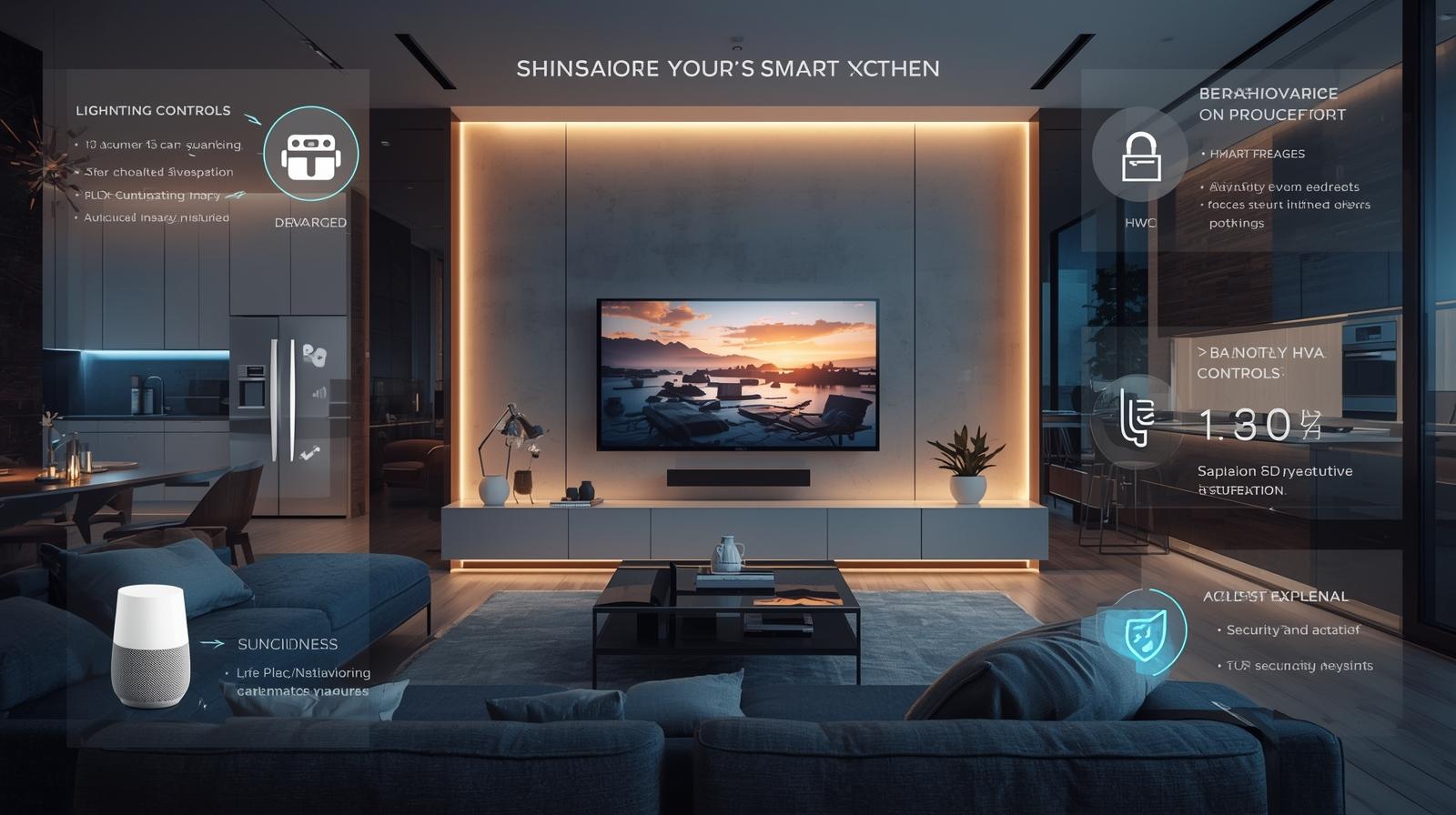
IoT Ecosystem Expansion in Smart Homes
The expansion of IoT ecosystems is a key driver of the Smart Home Market. IoT-enabled devices are allowing seamless connectivity between various home systems, including lighting, HVAC, security, entertainment, and appliances.
Smart sensors play a crucial role in collecting real-time data on temperature, motion, energy usage, and air quality. This data is then processed to optimize home performance and improve user experience. Cloud computing and edge computing technologies are further enhancing the scalability and responsiveness of IoT ecosystems.
As interoperability between devices improves, consumers are increasingly adopting integrated smart home platforms that unify all connected devices under a single control system.
Security and Energy Efficiency as Key Drivers
Security and energy efficiency are major factors driving Smart Home Market adoption. Smart security systems equipped with AI-based surveillance, facial recognition, and motion detection are becoming standard in modern homes.
Similarly, smart energy management systems are helping households reduce electricity consumption through automated lighting, smart thermostats, and energy monitoring tools. These solutions not only enhance convenience but also contribute to sustainability goals, making smart homes more environmentally friendly.
Regional Growth Dynamics
The Smart Home Market is expanding across all major regions, with North America leading due to high technology adoption rates and strong presence of smart device manufacturers. Europe follows closely, driven by energy efficiency regulations and growing demand for sustainable living solutions.
Asia Pacific is emerging as the fastest-growing region, fueled by rapid urbanization, rising disposable income, and increasing penetration of smart devices in countries such as China, India, and Japan. The region is also witnessing strong growth in smartphone usage, which is accelerating smart home adoption.
Challenges in the Smart Home Market
Despite strong growth, the Smart Home Market faces challenges such as data privacy concerns, interoperability issues, and high initial installation costs. Consumers are increasingly cautious about data security, especially with devices constantly collecting and transmitting personal information.
Additionally, the lack of standardized protocols across different manufacturers can create compatibility issues, limiting seamless integration of smart home ecosystems. However, ongoing advancements in cybersecurity and industry standardization are expected to address these challenges over time.
Future Outlook
The future of the Smart Home Market is closely tied to advancements in AI, IoT, and 5G connectivity. As voice recognition systems become more sophisticated and IoT networks expand, smart homes will become increasingly autonomous and predictive.
Future smart homes will likely feature fully integrated ecosystems where devices communicate seamlessly, anticipate user needs, and self-optimize for energy efficiency, comfort, and security. The combination of AI-driven automation and real-time data analytics will transform homes into intelligent living environments.
Conclusion
The Smart Home Market is undergoing a significant transformation, driven by the rapid rise of voice-activated devices and expanding IoT ecosystems. As consumers demand greater convenience, security, and energy efficiency, smart home technologies are becoming an essential part of modern living.
With continuous innovation in AI, IoT, and automation, the Smart Home Market is set to witness sustained growth in the coming years. The convergence of these technologies is not only enhancing user experience but also redefining the future of connected living spaces globally.
FAQs
1. What is driving the growth of the Smart Home Market?
The Smart Home Market is growing due to rising adoption of AI, IoT-enabled devices, voice-activated systems, increasing demand for home automation, and strong focus on energy efficiency and security.
2. Why are voice-activated devices important in smart homes?
Voice-activated devices act as central control systems, allowing users to manage lighting, security, appliances, and entertainment systems using simple voice commands, improving convenience and accessibility.
3. How does IoT contribute to the Smart Home Market?
IoT enables seamless connectivity between devices such as thermostats, cameras, sensors, and appliances, allowing real-time monitoring, automation, and improved energy management within smart homes.
4. Which region leads the Smart Home Market?
North America currently leads the Smart Home Market due to high technology adoption, strong infrastructure, and widespread use of smart devices, while Asia Pacific is the fastest-growing region.