
The global Smart Home Market is witnessing remarkable growth as artificial intelligence (AI), Internet of Things (IoT), and connected technologies continue transforming residential living environments. Modern consumers are increasingly adopting smart home solutions to improve convenience, energy efficiency, security, and lifestyle automation.
From voice-controlled assistants and smart appliances to intelligent lighting and home security systems, smart homes are rapidly evolving into interconnected ecosystems powered by advanced digital technologies. The integration of AI and IoT is accelerating innovation across the industry, enabling homes to become more intelligent, predictive, and responsive.
As urbanization, digitalization, and smart city initiatives expand globally, the Smart Home Market is projected to reach USD 230.76 billion in 2026 and USD 450.20 billion by 2032, exhibiting a CAGR of 11.8%.
Rising Adoption of AI-Powered Smart Home Technologies
Artificial intelligence has become one of the most transformative technologies driving the Smart Home Market. AI enables smart devices to learn user behavior, automate tasks, and provide personalized experiences.
AI-powered smart home systems can:
- Adjust lighting based on occupancy and preferences
- Optimize heating and cooling automatically
- Improve voice recognition accuracy
- Detect unusual activity for enhanced security
- Manage household energy consumption efficiently
Voice assistants such as smart speakers have become central hubs for home automation, allowing users to control multiple connected devices using natural language commands.
Machine learning algorithms also enable predictive automation, where devices adapt to daily routines and optimize home operations without manual intervention.
As AI technologies continue to improve, smart homes are becoming more intuitive, responsive, and energy-efficient.
IoT Connectivity Revolutionizing Smart Homes
The Internet of Things (IoT) is a major foundation of the Smart Home Market. IoT enables seamless communication between connected devices, creating integrated ecosystems where appliances, sensors, and systems work together intelligently.
IoT-enabled smart homes include:
- Smart thermostats
- Connected lighting systems
- Smart locks and surveillance cameras
- Intelligent refrigerators and appliances
- Automated blinds and entertainment systems
These devices exchange real-time data to automate household operations and improve user convenience.
The growing availability of high-speed internet, 5G connectivity, and cloud computing infrastructure is further strengthening IoT adoption in residential environments.
As connected ecosystems become more sophisticated, IoT will continue driving long-term smart home market expansion.
Smart Security Systems Fueling Market Demand
Home security remains one of the strongest growth segments within the Smart Home Market. Consumers are increasingly investing in intelligent security solutions to improve safety and remote monitoring capabilities.
Smart security systems include:
- AI-powered surveillance cameras
- Smart doorbells
- Motion sensors
- Smart locks
- Remote monitoring applications
Advanced AI-based analytics can identify suspicious activities, recognize faces, and send real-time alerts to homeowners through mobile applications.
Remote accessibility is a major advantage of smart home security systems, enabling users to monitor and control their homes from anywhere.
Growing concerns regarding residential security and rising urbanization are expected to further boost adoption of smart home security technologies.
Download PDF Brochure @ https://www.marketsandmarkets.com/pdfdownloadNew.asp?id=121
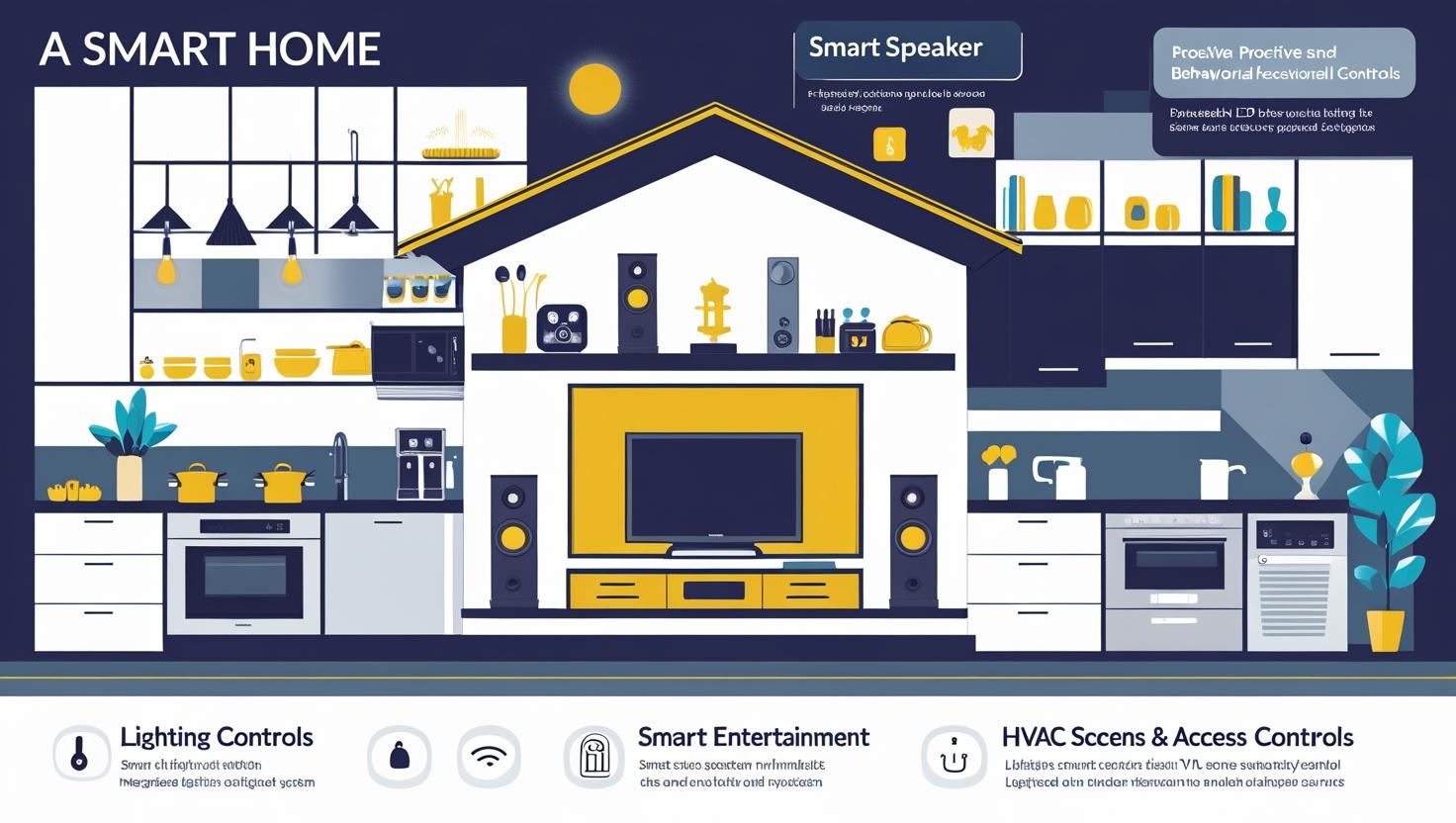
Energy Efficiency and Sustainability Driving Smart Home Adoption
Energy management has become a critical factor accelerating Smart Home Market growth. Consumers and governments worldwide are increasingly prioritizing sustainable living and energy conservation.
Smart home technologies help reduce energy consumption through:
- Intelligent lighting automation
- Smart HVAC control systems
- Energy monitoring platforms
- Automated appliance management
AI-powered energy management systems can optimize electricity usage based on occupancy, weather conditions, and utility pricing.
Smart thermostats, in particular, are becoming highly popular due to their ability to lower energy costs while maintaining indoor comfort.
The growing emphasis on reducing carbon footprints and achieving sustainability goals is expected to significantly increase demand for energy-efficient smart home solutions through 2032.
Expansion of Smart Appliances and Connected Devices
The rapid growth of connected consumer electronics is strengthening the Smart Home Market ecosystem.
Manufacturers are increasingly introducing smart versions of:
- Refrigerators
- Washing machines
- Air conditioners
- Ovens
- Vacuum cleaners
These devices offer:
- Remote control through smartphone apps
- Predictive maintenance alerts
- Automated operation schedules
- Voice assistant integration
The convenience offered by connected appliances is encouraging widespread consumer adoption, particularly among tech-savvy urban populations.
As smart appliance prices become more affordable, market penetration is expected to increase significantly across residential sectors worldwide.
Smart Speakers and Voice Assistants Driving Consumer Adoption
Smart speakers and voice-controlled assistants have emerged as key growth drivers for the Smart Home Market.
Voice assistants allow users to:
- Control home devices hands-free
- Access entertainment services
- Manage schedules and reminders
- Perform online searches
- Automate household routines
The convenience and accessibility of voice-based control systems are making smart homes more user-friendly and attractive to mainstream consumers.
Advancements in natural language processing and multilingual AI capabilities are further improving user interaction and expanding adoption globally.
Integration of Smart Homes with Smart Cities
Smart city initiatives worldwide are creating new opportunities for the Smart Home Market. Governments are increasingly investing in connected urban infrastructure to improve sustainability, energy efficiency, and digital services.
Smart homes are becoming an important component of broader smart city ecosystems through integration with:
- Smart grids
- Renewable energy systems
- EV charging infrastructure
- Intelligent transportation systems
This integration enables more efficient energy distribution and urban resource management.
As smart city development accelerates globally, the adoption of smart home technologies is expected to rise significantly.
Regional Market Trends
North America
North America remains one of the leading regions in the Smart Home Market due to:
- High consumer awareness
- Strong smart device adoption
- Advanced internet infrastructure
- Growing AI and IoT ecosystems
The United States continues to dominate regional market growth with increasing demand for connected home technologies.
Europe
Europe is experiencing strong smart home adoption driven by:
- Energy efficiency regulations
- Sustainability initiatives
- Rising demand for home automation
Smart lighting and energy management systems are particularly popular across European residential markets.
Asia-Pacific
Asia-Pacific is expected to witness the fastest growth through 2032 due to:
- Rapid urbanization
- Expanding middle-class population
- Rising smartphone penetration
- Smart city investments
Countries such as China, India, Japan, and South Korea are emerging as major growth hubs for smart home technologies.
Challenges Facing the Smart Home Market
Despite strong growth potential, the Smart Home Market faces several challenges:
- Data privacy and cybersecurity concerns
- Compatibility issues among devices
- High installation costs for advanced systems
- Dependence on internet connectivity
- Complexity of ecosystem integration
Manufacturers are increasingly focusing on improving interoperability, data protection, and user-friendly interfaces to address these concerns.
Future Outlook of the Smart Home Market Through 2032
The future of the Smart Home Market looks highly promising as AI and IoT technologies continue advancing rapidly.
Future trends expected to shape the industry include:
- AI-powered predictive home automation
- Edge computing integration
- Fully autonomous smart homes
- Advanced energy optimization systems
- Greater adoption of smart healthcare devices
- Enhanced cybersecurity technologies
The combination of AI, IoT, 5G connectivity, and cloud computing will continue transforming residential environments into intelligent, connected living spaces.
As digital lifestyles become increasingly mainstream, smart homes are expected to become a standard feature of modern residential infrastructure worldwide.
Top 10 Key Takeaways
- AI and IoT are the primary drivers of Smart Home Market growth.
- Voice assistants and smart speakers are accelerating consumer adoption.
- Smart security systems remain one of the fastest-growing segments.
- Energy efficiency and sustainability are major market growth factors.
- Connected appliances are expanding the smart home ecosystem.
- Smart homes are increasingly integrated with smart city infrastructure.
- North America currently leads global smart home adoption.
- Asia-Pacific is expected to witness the fastest market growth through 2032.
- AI-powered automation is improving user convenience and personalization.
- Future smart homes will become increasingly autonomous and predictive.
Frequently Asked Questions (FAQs)
1. What is a smart home?
A smart home uses connected devices and automation technologies to control lighting, security, appliances, heating, and entertainment systems remotely or automatically.
2. What is driving Smart Home Market growth?
The market is driven by AI innovation, IoT connectivity, smart security demand, energy efficiency needs, and rising adoption of connected consumer devices.
3. How does AI improve smart home systems?
AI enables predictive automation, voice recognition, energy optimization, personalized experiences, and intelligent decision-making within smart home ecosystems.
4. Which devices are commonly used in smart homes?
Common smart home devices include smart speakers, thermostats, security cameras, smart locks, connected appliances, and intelligent lighting systems.
5. Which region is expected to grow fastest in the Smart Home Market?
Asia-Pacific is expected to witness the fastest growth due to urbanization, rising internet penetration, and increasing smart city investments.