
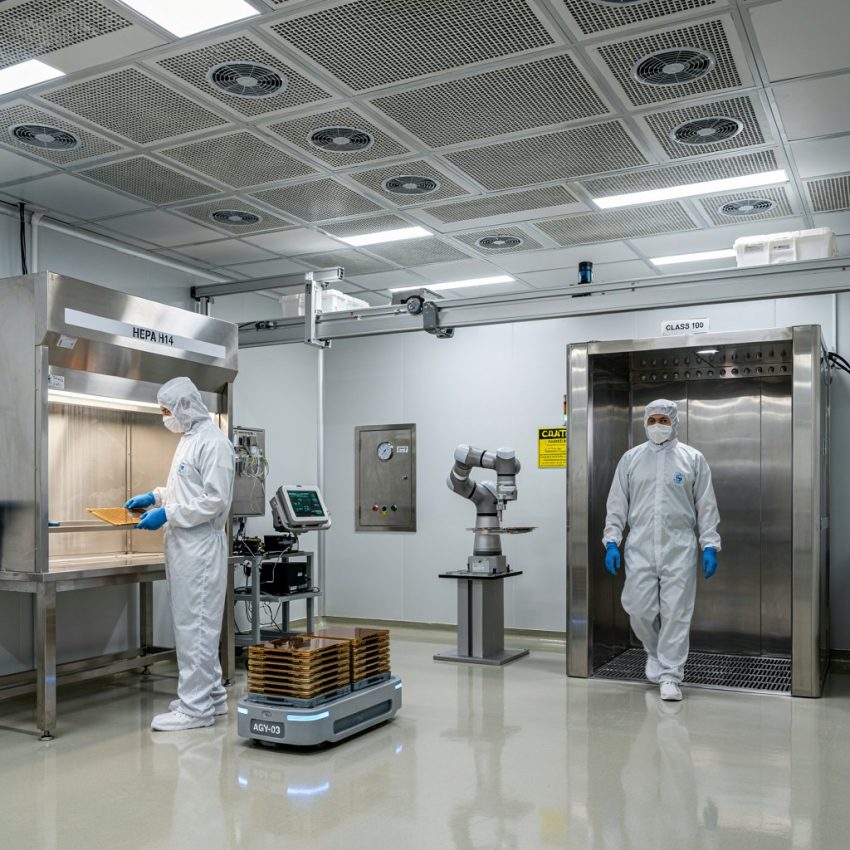
The Semiconductor Cleanroom Market is witnessing growing demand for real time particle monitoring as semiconductor manufacturers pursue higher yields, advanced process control, and increasingly stringent contamination management. Semiconductor fabrication environments must maintain extremely low particle concentrations because microscopic contaminants can damage wafers, interfere with lithography, and reduce device reliability. Real time particle monitoring systems use airborne particle counters, sensors, data platforms, and automated alerts to continuously evaluate cleanroom conditions. As fabs adopt advanced automation, artificial intelligence, Industrial IoT, and digital facility management, continuous particle monitoring is becoming an important element of modern cleanroom infrastructure.
Growing Importance of Contamination Control
The transition toward advanced semiconductor process technologies is increasing sensitivity to airborne contamination. Smaller device geometries leave less tolerance for particles and environmental variations during fabrication.
Real time monitoring enables manufacturers to identify changes in airborne particle concentrations as they occur rather than relying only on periodic measurements. Continuous monitoring can provide early indications of contamination events and allow facility teams to investigate potential causes. This capability supports more consistent cleanroom conditions and can contribute to improved process stability.
Download PDF Brochure @ https://www.marketsandmarkets.com/pdfdownloadNew.asp?id=190223958
Automated Particle Counting Systems
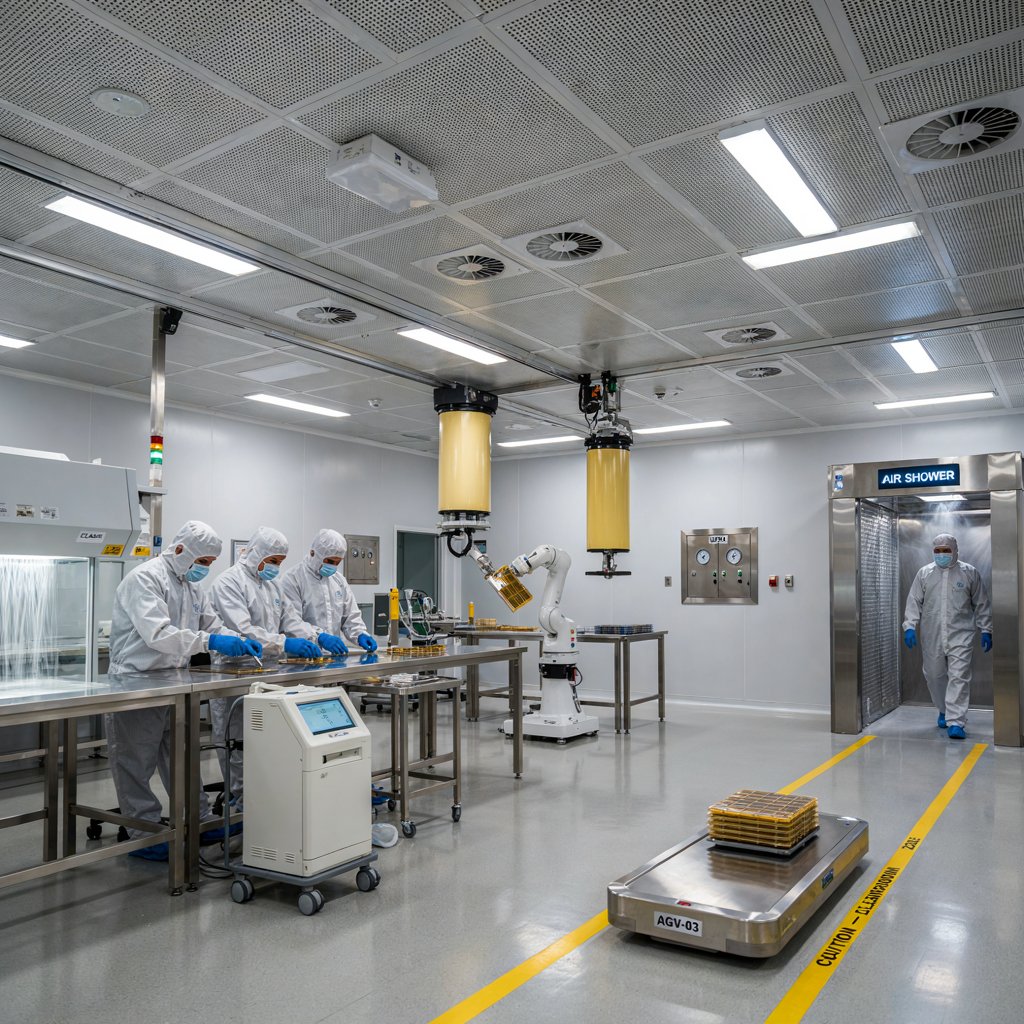
Automated airborne particle counters are becoming increasingly important in semiconductor cleanrooms. These systems continuously sample air and measure particle concentrations across defined size ranges.
Modern monitoring networks can distribute particle counters throughout fabrication areas, process zones, and equipment environments. Automated data collection reduces reliance on manual measurements and provides a more complete view of cleanroom performance. As semiconductor fabs become larger and more automated, demand for scalable particle-monitoring networks is expected to increase.
Industrial IoT Connectivity
Industrial IoT is transforming how particle monitoring systems communicate with cleanroom management platforms. Connected particle counters and environmental sensors can transmit measurements to centralized systems in real time.
This connectivity allows operators to monitor particle levels alongside temperature, humidity, pressure, airflow, and equipment conditions. Integrating multiple environmental parameters can help manufacturers identify relationships between facility conditions and contamination events. IoT-enabled monitoring is therefore becoming an important component of smart semiconductor cleanroom infrastructure.
AI Based Contamination Analysis
Artificial intelligence is creating new opportunities for real time particle monitoring. AI algorithms can analyze large volumes of particle data and identify unusual patterns associated with equipment operation, personnel movement, airflow changes, or filtration performance.
Predictive analytics can help distinguish normal fluctuations from potentially significant contamination events. AI systems can also support predictive maintenance by identifying changes in filter performance or HVAC operation before they result in elevated particle concentrations. The combination of AI and particle monitoring is expected to strengthen demand for intelligent contamination-control solutions.
Inquiry Before Buying @ https://www.marketsandmarkets.com/Enquiry_Before_BuyingNew.asp?id=190223958
Integration With Automated Manufacturing
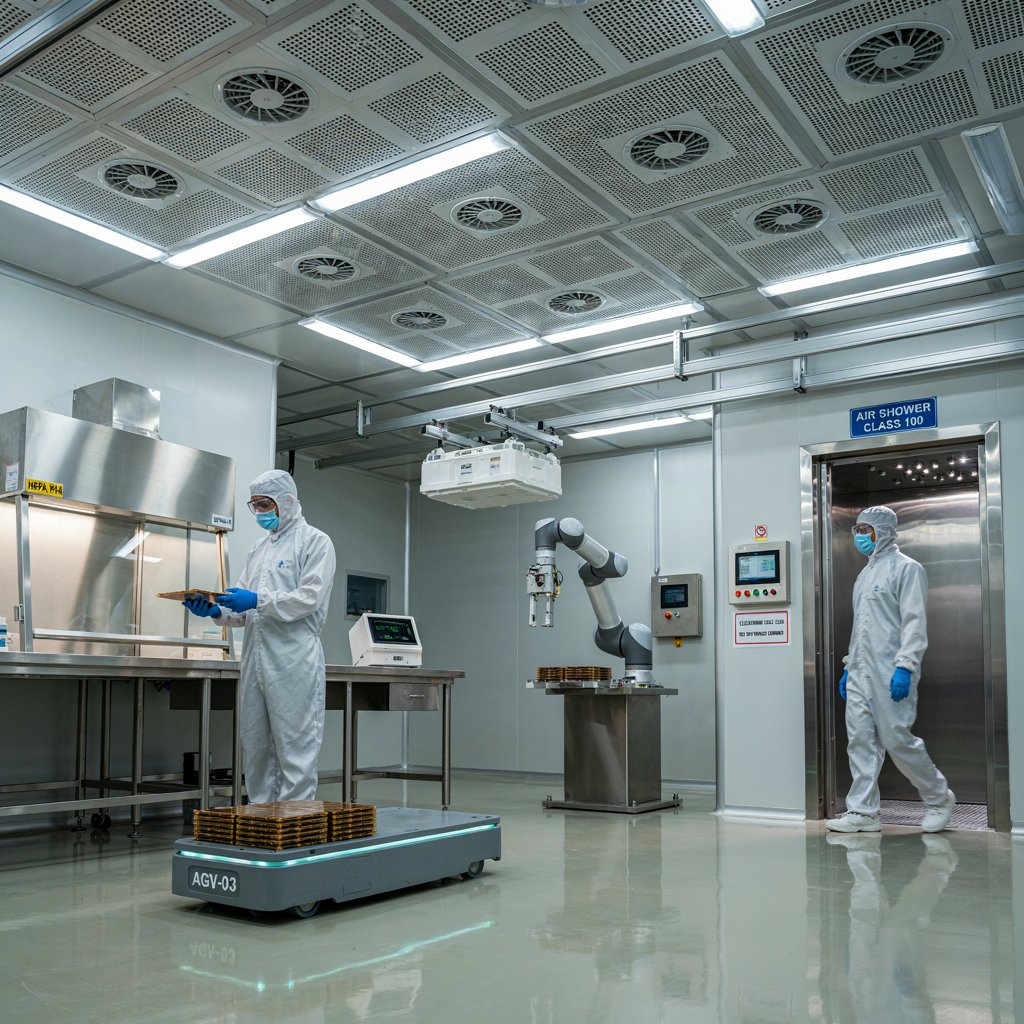
Particle monitoring is increasingly being integrated with automated semiconductor manufacturing systems. Robots, automated material handling equipment, lithography tools, inspection systems, and process equipment operate within tightly controlled cleanroom environments.
Real time particle data can be associated with specific manufacturing activities, equipment states, or process stages. This information can help manufacturers investigate contamination sources and improve production workflows. Integration with manufacturing execution systems can also enable more detailed traceability and quality analysis.
Monitoring Around Advanced Lithography
Advanced lithography is creating significant requirements for precise particle monitoring. Semiconductor manufacturing processes involving sophisticated lithography equipment require highly controlled environments because particles can affect wafer surfaces and pattern formation.
Real time monitoring systems can continuously evaluate particle concentrations around sensitive process areas. Combining particle measurements with airflow and pressure monitoring can provide greater visibility into cleanroom performance. As semiconductor manufacturers invest in advanced process technologies, specialized monitoring solutions are expected to gain importance.
Smart HVAC and Filtration Management
Particle monitoring is closely connected to cleanroom HVAC and filtration systems. Changes in particle concentration can indicate issues with airflow distribution, filter performance, pressure balance, or facility operation.
Real time monitoring enables automated systems to respond to changing environmental conditions. Smart HVAC platforms can adjust airflow and filtration parameters according to production requirements and measured conditions. This integration can support contamination control while helping manufacturers optimize energy consumption.
View detailed Table of Content here – https://www.marketsandmarkets.com/Market-Reports/semiconductor-cleanroom-market-190223958.html
Predictive Maintenance and Facility Intelligence
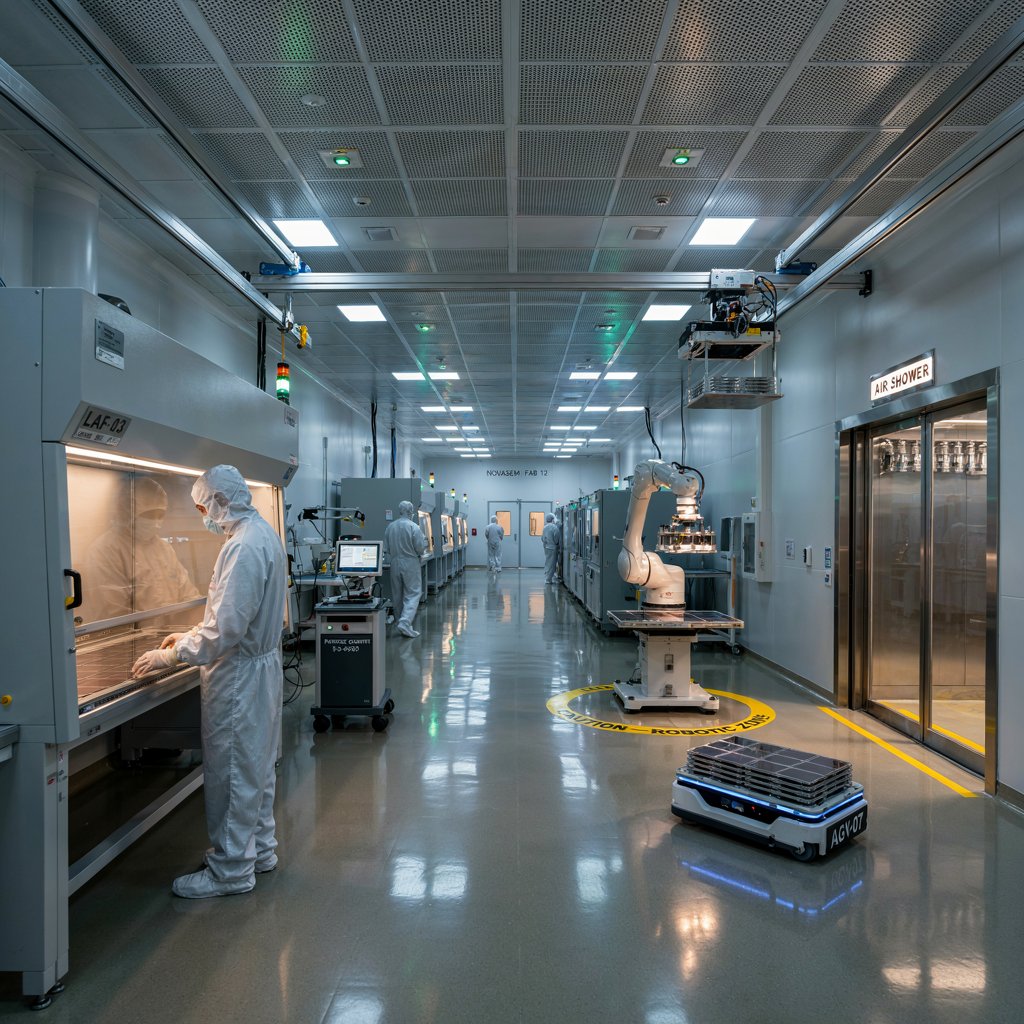
Real time particle monitoring is becoming part of broader predictive maintenance strategies. Continuous data can reveal gradual changes in cleanroom performance that may not be visible during periodic inspections.
Analytics platforms can identify trends in particle concentrations and correlate them with HVAC equipment, filtration systems, manufacturing tools, or transportation activities. Early detection can allow maintenance teams to investigate issues before contamination affects significant quantities of production material. This capability can support operational continuity and reduce the potential impact of cleanroom disruptions.
Digital Twins and Data Driven Cleanrooms
Digital twins can further enhance particle monitoring by incorporating real time environmental information into virtual cleanroom models. Manufacturers can use these models to visualize particle distribution, airflow behavior, equipment locations, and operational conditions.
Historical and live particle data can help facility teams evaluate contamination patterns and simulate potential changes to equipment layouts or airflow systems. Digital twins combined with AI and Industrial IoT can create more intelligent approaches to cleanroom planning and facility management.
Energy Efficiency and Sustainability
Energy efficiency is becoming increasingly important in particle monitoring because cleanroom environmental systems operate continuously. Real time data can help manufacturers optimize airflow and filtration according to actual operating conditions rather than maintaining unnecessarily high settings.
Intelligent controls can coordinate particle monitoring with HVAC operation, equipment activity, and facility occupancy. This approach can support contamination control while reducing unnecessary energy consumption. As semiconductor manufacturers focus on sustainable production, integrated monitoring and facility optimization are expected to gain greater attention.
Future Market Outlook
The Semiconductor Cleanroom Industry is expected to benefit from increasing adoption of real time particle monitoring as semiconductor fabrication becomes more advanced, automated, and digitally connected. Automated particle counters, Industrial IoT connectivity, artificial intelligence, predictive maintenance, smart HVAC integration, and digital twins are strengthening contamination-control capabilities.
As manufacturers expand production of advanced processors, memory devices, power semiconductors, sensors, and advanced packaging technologies, maintaining precise environmental conditions will remain critical. Future market opportunities will increasingly focus on connected monitoring networks, AI-based contamination analysis, automated alerts, predictive facility management, and energy-efficient cleanroom operation. The convergence of real time particle monitoring with smart manufacturing technologies is expected to play an important role in supporting reliable and high-yield semiconductor production.