
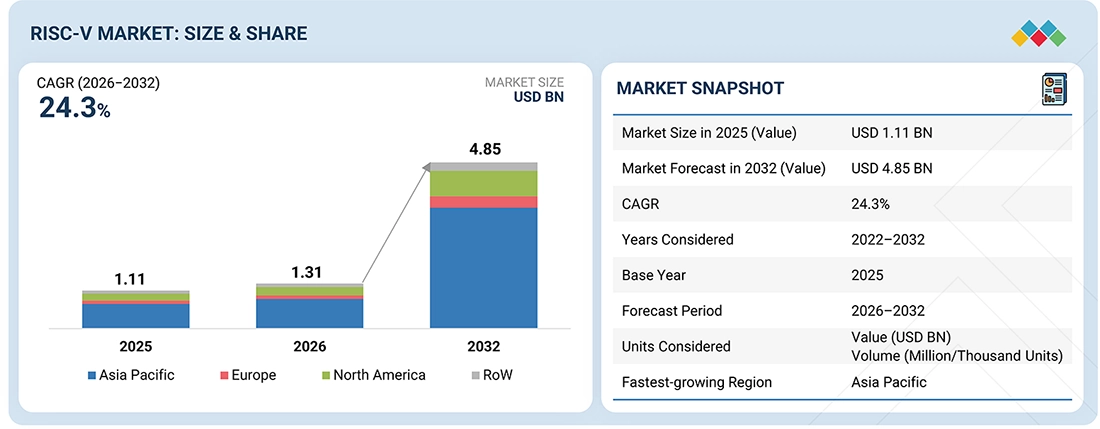
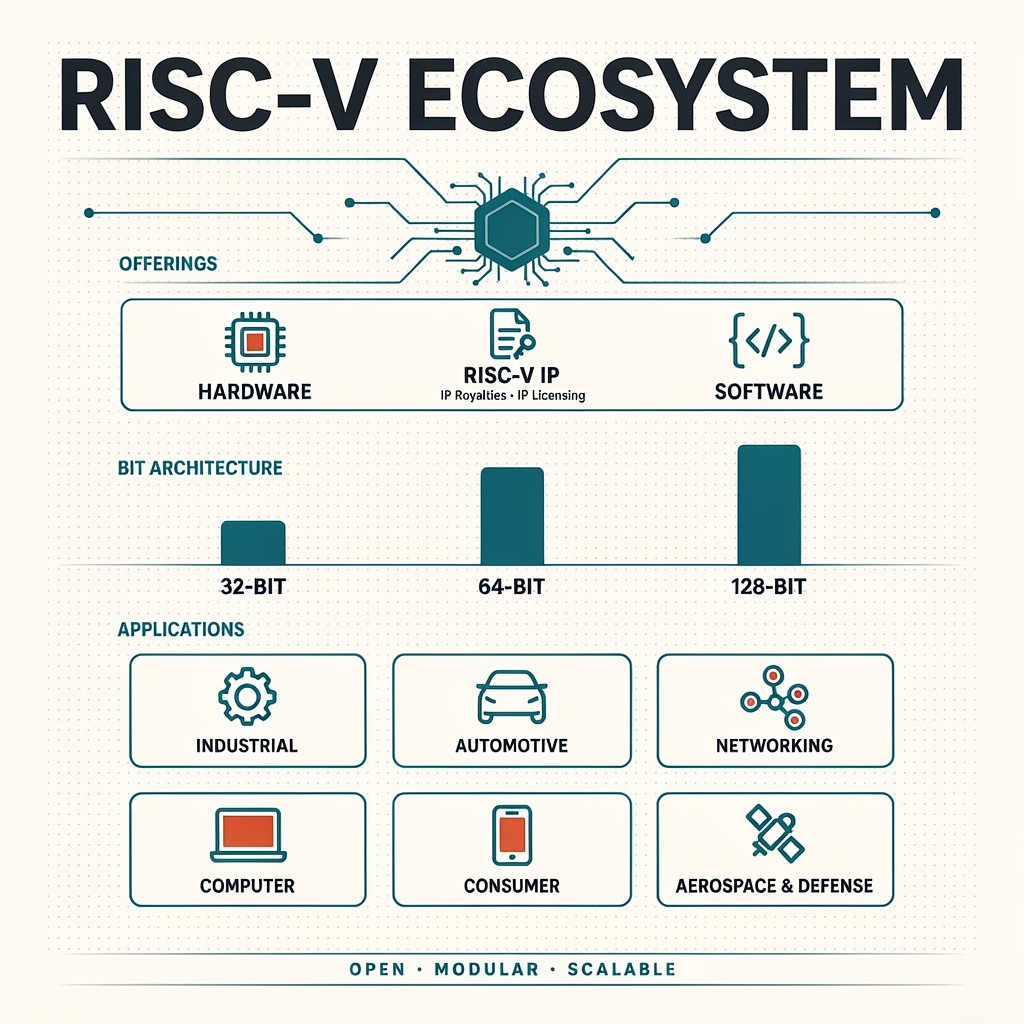
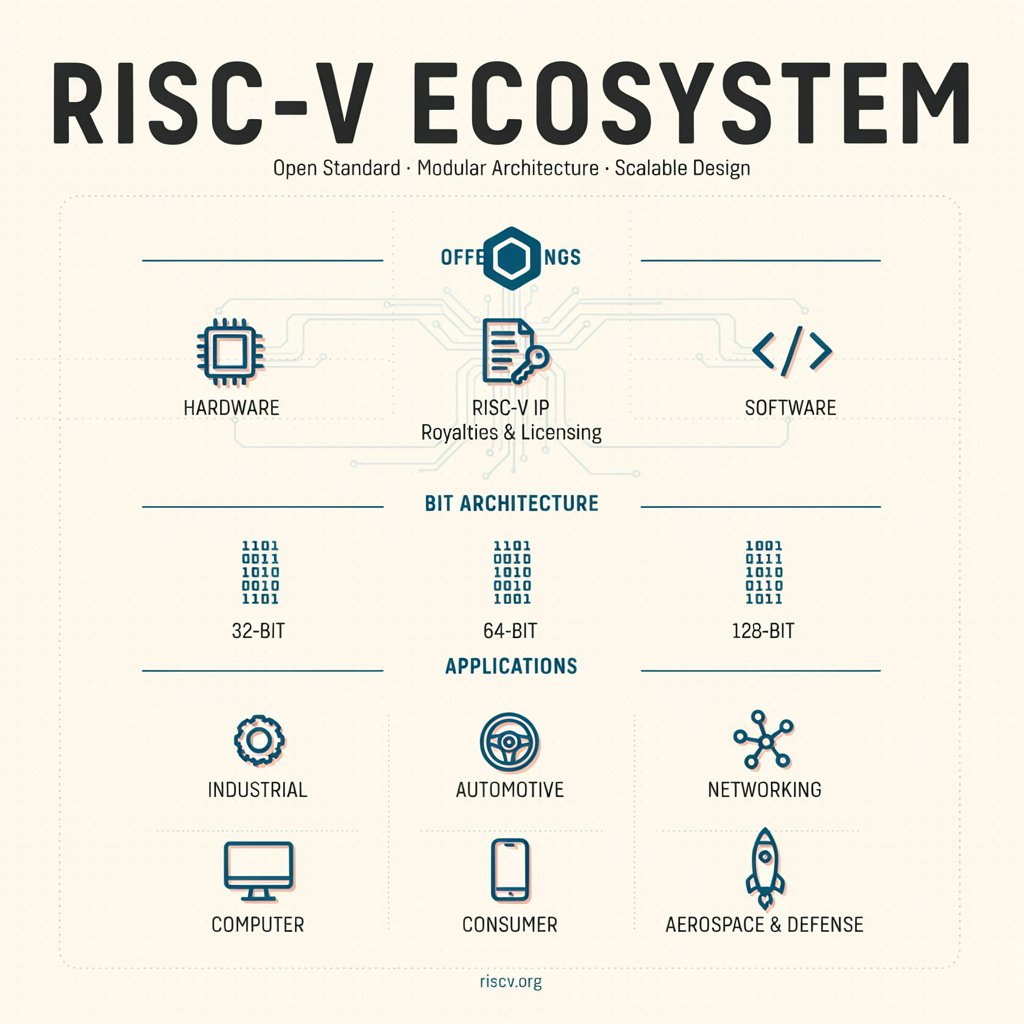
The RISC-V Market is evolving rapidly as artificial intelligence workloads become increasingly important across data centers, edge computing, automotive systems, industrial automation, robotics, consumer electronics, and telecommunications. AI applications require high computational performance while maintaining efficient power consumption and low latency. RISC-V provides an open and extensible instruction set architecture that enables semiconductor designers to integrate general-purpose processor cores with specialized AI accelerators, creating heterogeneous computing platforms optimized for specific workloads.
The integration of RISC-V processors and AI accelerators is becoming a significant semiconductor design trend because general-purpose CPUs alone are often inefficient for intensive machine learning workloads. AI accelerators can perform specialized operations such as matrix multiplication, convolution, vector processing, and neural network inference more efficiently. RISC-V processors can manage system control, scheduling, operating system functions, data movement, and application-level tasks while dedicated accelerators handle computationally intensive AI workloads.
Edge AI is one of the strongest drivers of this integration trend. Connected devices increasingly process data locally to reduce latency, improve privacy, and minimize cloud communication. Smart cameras, industrial sensors, autonomous robots, drones, medical devices, and intelligent gateways require both general-purpose processing and AI inference capabilities. RISC-V-based SoCs can integrate CPU cores with neural processing units, vector engines, or other AI accelerators to provide localized intelligence within compact and energy-efficient systems.
RISC-V’s extensibility is particularly valuable for AI accelerator integration. Designers can add custom instructions that improve communication between the CPU and accelerator or accelerate frequently executed machine learning operations. This capability enables semiconductor manufacturers to create specialized processor architectures for specific AI workloads rather than relying on standardized CPU configurations. Custom extensions can also improve data movement and reduce the number of instructions required for AI-related tasks.
Download PDF Brochure @ https://www.marketsandmarkets.com/pdfdownloadNew.asp?id=263639200
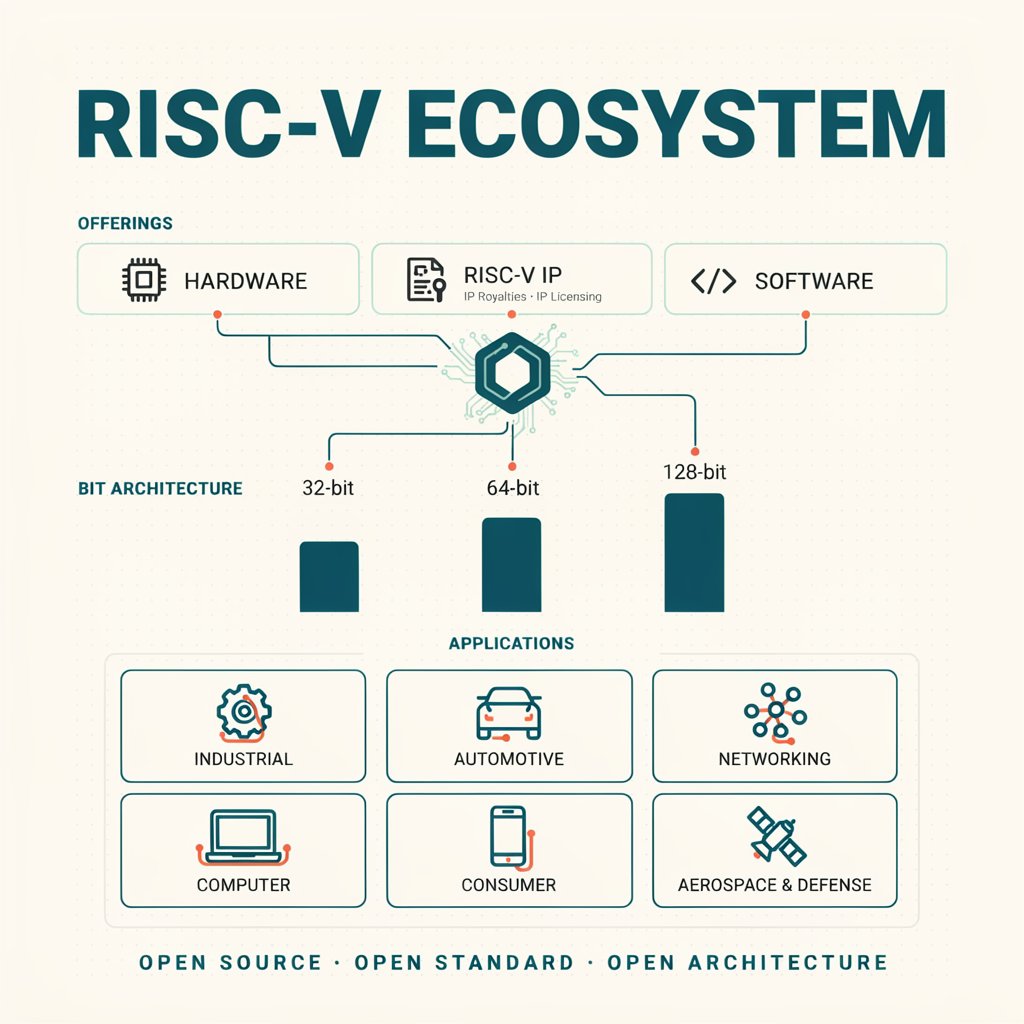
Vector processing is becoming an important component of RISC-V-based AI systems. Vector extensions enable processors to perform operations on multiple data elements simultaneously, making them suitable for machine learning, image processing, digital signal processing, and scientific workloads. By integrating vector-capable RISC-V processors with dedicated AI accelerators, chip designers can create flexible computing platforms capable of handling both general-purpose and specialized workloads.
Automotive applications are creating additional opportunities for integrated RISC-V and AI solutions. Modern vehicles increasingly use AI for advanced driver assistance, driver monitoring, object detection, autonomous navigation, predictive maintenance, and intelligent cockpit systems. These applications require processors capable of handling real-time control and AI workloads simultaneously. RISC-V CPUs can provide system-level control while AI accelerators process sensor data from cameras, radar, lidar, and other vehicle sensors.
Electric vehicles are also benefiting from AI-enabled semiconductor integration. AI can support battery health prediction, thermal management, energy optimization, charging control, and predictive maintenance. RISC-V processors can manage battery control functions while dedicated accelerators support machine learning algorithms. This combination can improve system responsiveness and energy efficiency.
Industrial automation is another major application area. Smart factories use machine vision and AI to identify manufacturing defects, monitor equipment, optimize production processes, and support autonomous robotics. RISC-V processors can manage real-time industrial control and communications while integrated AI accelerators process visual and sensor information. This heterogeneous architecture allows industrial systems to combine deterministic control with intelligent decision-making.
Inquiry Before Buying @ https://www.marketsandmarkets.com/Enquiry_Before_BuyingNew.asp?id=263639200
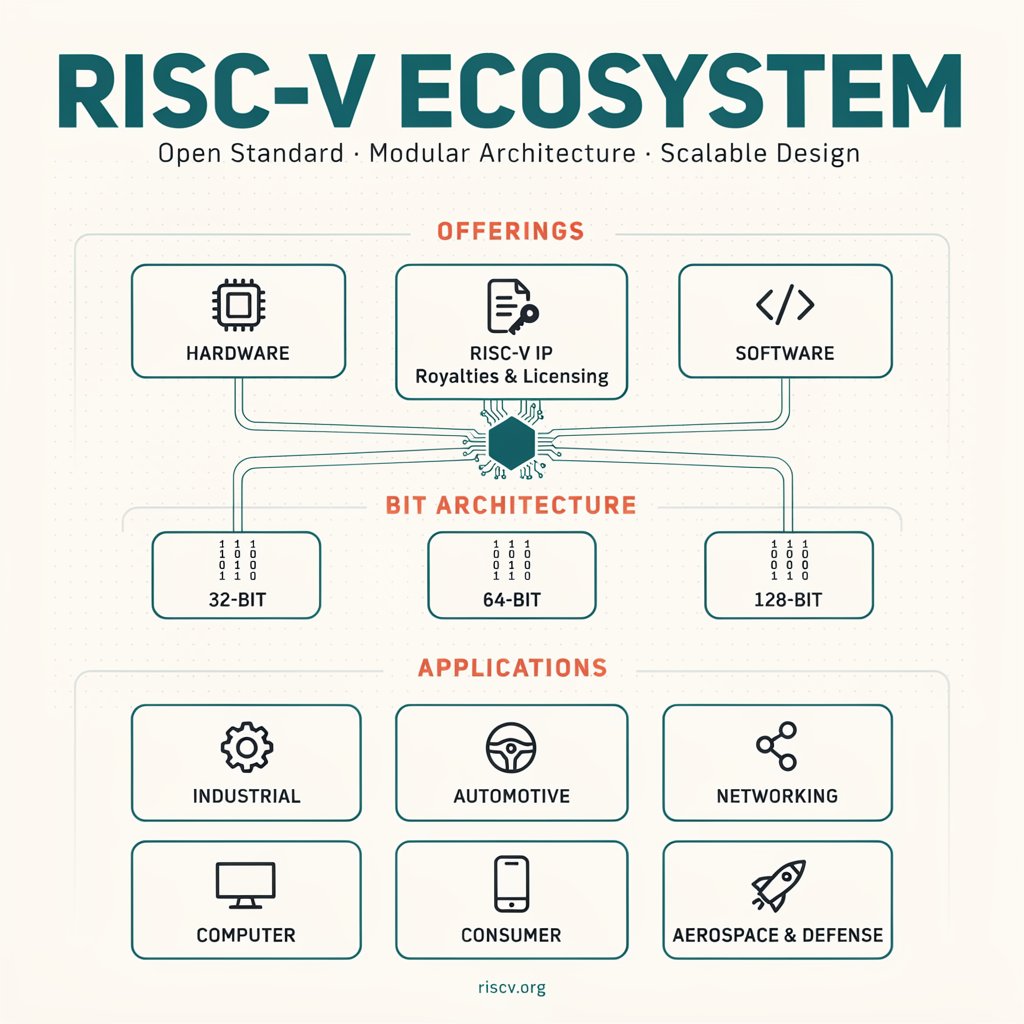
Robotics platforms are increasingly adopting similar approaches. Robots require AI for perception, navigation, object recognition, manipulation, and environmental analysis. At the same time, they need real-time processors for motor control, sensor management, and communication. RISC-V-based SoCs can integrate CPU cores with AI and vector accelerators, allowing developers to balance real-time control with computationally intensive perception workloads.
Data center applications represent an important long-term opportunity. AI servers require high-performance processors and specialized accelerators to handle training and inference workloads. RISC-V processors can provide control and management functions within accelerator-based platforms, including networking, storage, security, and workload scheduling. As RISC-V software support improves, the architecture may become increasingly relevant to specialized AI infrastructure and accelerator control systems.
Memory integration is becoming increasingly important as AI workloads require access to large datasets. The efficiency of AI acceleration depends heavily on how quickly data can move between memory, CPUs, and accelerators. RISC-V SoCs can integrate optimized memory controllers, cache architectures, high-speed interconnects, and dedicated data-movement engines. These technologies can reduce memory bottlenecks and improve overall performance per watt.
Chiplet architectures are creating another emerging opportunity. Future semiconductor platforms may combine RISC-V CPU chiplets with AI accelerator, memory, networking, and security chiplets within a single package. This modular approach can allow developers to select different processor and accelerator combinations for specific applications. RISC-V’s flexibility makes it well suited to these architectures because CPU functionality can be customized independently of specialized accelerator components.
View detailed Table of Content here – https://www.marketsandmarkets.com/Market-Reports/risc-v-market-263639200.html
Security is also becoming an important consideration. AI-enabled devices often process sensitive information, including images, location data, industrial information, and personal data. RISC-V processors can incorporate secure boot, trusted execution environments, cryptographic acceleration, memory protection, and hardware authentication. These features can work alongside AI accelerators to provide secure processing from data collection through inference.
Energy efficiency remains a key market consideration. AI workloads can consume substantial power, especially in edge devices. RISC-V allows designers to optimize CPU cores for low-power operation and use dedicated accelerators for computationally intensive AI functions. By assigning workloads to the most efficient processing unit, integrated architectures can improve performance per watt and extend battery life in portable and embedded systems.
North America remains a major center for RISC-V and AI semiconductor development because of strong investments in artificial intelligence, cloud computing, advanced chip design, and autonomous technologies. Asia Pacific is expected to experience significant growth due to its large electronics and semiconductor manufacturing ecosystem, while Europe is exploring RISC-V for automotive, industrial, and AI applications.
Looking ahead, AI accelerator and processor integration will remain a major trend shaping the RISC-V Market. Increasing demand for edge AI, autonomous vehicles, intelligent robotics, smart industrial systems, specialized data center infrastructure, and connected consumer devices will encourage greater integration of RISC-V CPUs with AI accelerators. Advances in vector processing, custom instructions, chiplets, memory architectures, security, and energy-efficient designs will further strengthen the role of RISC-V in heterogeneous AI computing platforms and support the development of next-generation intelligent semiconductor systems.