
The global renewable energy industry is rapidly evolving as countries accelerate investments in clean power infrastructure to meet sustainability goals and reduce carbon emissions. As renewable energy installations continue expanding worldwide, the need for advanced monitoring, automation, and control systems has become increasingly critical. This is driving strong growth in the SCADA for Renewable Market, where real-time monitoring technologies are transforming how renewable energy assets are managed and optimized.
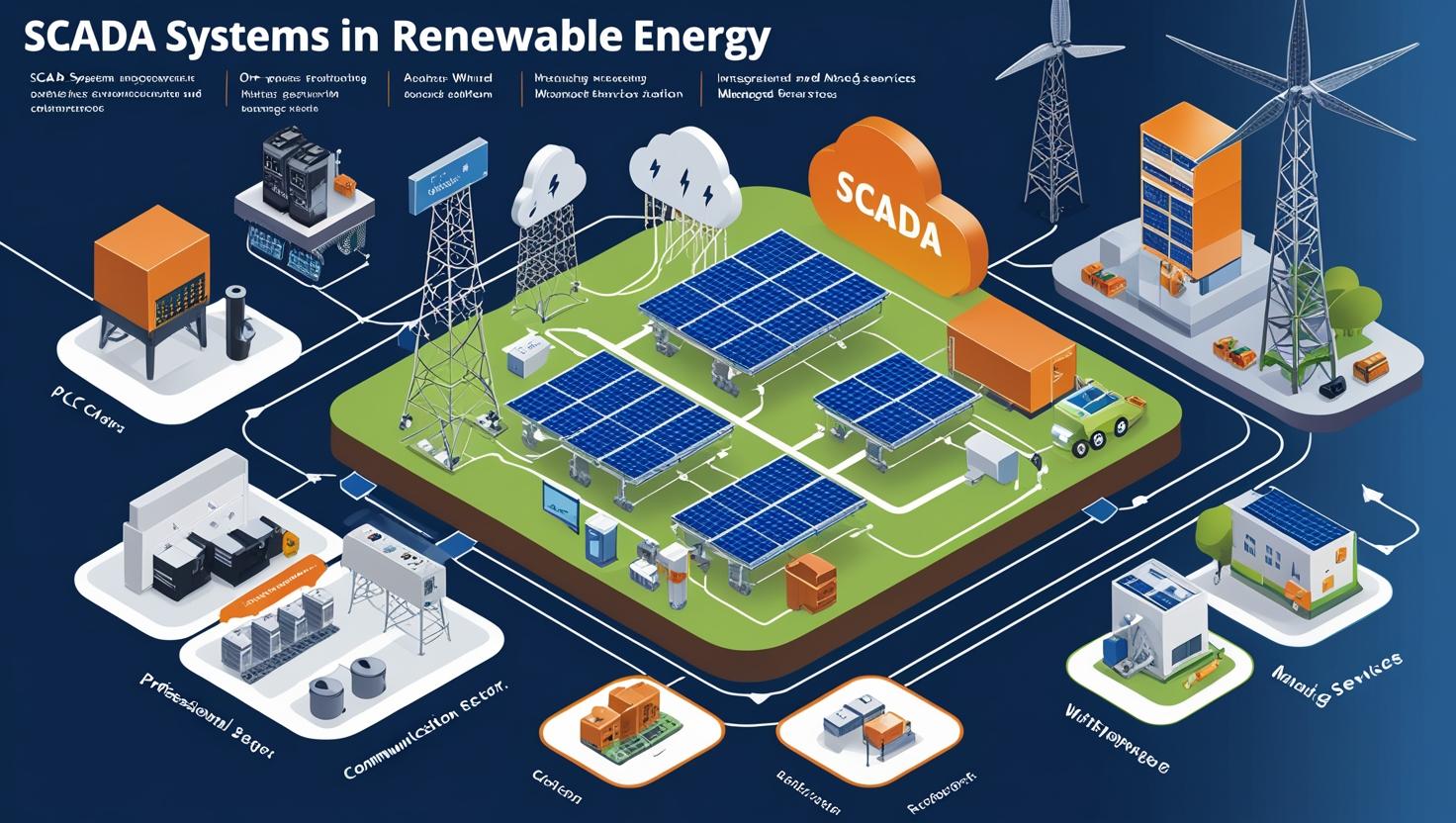
Supervisory Control and Data Acquisition (SCADA) systems have become the digital backbone of renewable energy operations. Modern SCADA platforms provide centralized monitoring, data acquisition, remote control, and performance analytics for renewable energy facilities such as solar farms, wind farms, hydroelectric plants, and energy storage systems.
The integration of real-time monitoring technologies, Industrial Internet of Things (IIoT), artificial intelligence (AI), cloud computing, and predictive analytics is significantly accelerating the growth of the SCADA for Renewable Market globally.
Understanding SCADA for Renewable Energy
SCADA systems are industrial automation platforms designed to monitor and control distributed assets in real time. In renewable energy applications, SCADA systems collect operational data from equipment such as:
- Solar panels
- Wind turbines
- Inverters
- Battery storage systems
- Transformers
- Grid infrastructure
The SCADA for Renewable Market focuses on providing operators with real-time visibility into energy generation, equipment performance, grid conditions, and maintenance requirements.
Modern SCADA systems help renewable energy operators:
- Improve energy efficiency
- Reduce operational downtime
- Optimize power generation
- Enhance grid reliability
- Enable remote asset management
As renewable energy infrastructure expands worldwide, the SCADA for Renewable Market is becoming essential for efficient energy operations.
Rising Demand for Real-Time Monitoring Technologies
One of the primary growth drivers in the SCADA for Renewable Market is the increasing demand for real-time monitoring capabilities. Renewable energy assets are often geographically distributed across remote areas, making centralized monitoring essential.
Real-time monitoring technologies enable operators to:
- Track energy production continuously
- Detect equipment faults instantly
- Monitor environmental conditions
- Analyze system performance remotely
- Improve response time during operational issues
Without advanced monitoring systems, managing large-scale renewable energy facilities becomes highly complex and inefficient.
The growing deployment of utility-scale solar and wind projects is significantly increasing demand for intelligent SCADA solutions with advanced monitoring capabilities.
Download PDF Brochure @ https://www.marketsandmarkets.com/pdfdownloadNew.asp?id=18400746
Smart Grid Modernization Driving SCADA Adoption
Global smart grid modernization initiatives are creating major opportunities for the SCADA for Renewable Market. Renewable energy integration requires intelligent grid systems capable of managing variable energy generation from solar and wind resources.
SCADA systems support smart grids by enabling:
- Real-time grid balancing
- Remote switching operations
- Energy flow optimization
- Demand-response management
- Grid stability monitoring
As utilities continue modernizing transmission and distribution networks, advanced SCADA systems are becoming critical for integrating renewable energy into national power grids.
The transition toward decentralized energy systems is further strengthening demand within the SCADA for Renewable Market.\
Integration of Industrial IoT (IIoT)
The Industrial Internet of Things is revolutionizing renewable energy management and significantly boosting the SCADA for Renewable Market.
IIoT-enabled SCADA systems use connected sensors and smart devices to gather operational data from renewable energy assets in real time.
These systems monitor:
- Temperature levels
- Vibration patterns
- Wind speed and direction
- Solar radiation intensity
- Equipment health conditions
- Energy output performance
IIoT integration enhances visibility across renewable energy facilities and allows operators to make data-driven decisions more efficiently.
By combining SCADA with IIoT platforms, renewable energy companies can improve operational reliability and maximize energy production.
Artificial Intelligence and Predictive Analytics Enhancing SCADA Systems
Artificial intelligence is becoming a transformative technology within the SCADA for Renewable Market. AI-powered SCADA systems can analyze large volumes of operational data and generate predictive insights.
Key AI applications include:
- Predictive maintenance
- Fault detection and diagnostics
- Energy forecasting
- Performance optimization
- Automated operational adjustments
Predictive analytics helps renewable energy operators identify potential equipment failures before they occur, reducing downtime and maintenance costs.
For example, AI-enabled SCADA systems can predict wind turbine component wear or solar inverter performance degradation, allowing maintenance teams to take proactive action.
The growing use of AI and machine learning is significantly improving the intelligence and efficiency of SCADA platforms.
Cloud-Based SCADA Systems Gaining Popularity
Cloud computing is another major trend accelerating the growth of the SCADA for Renewable Market. Traditional on-premise SCADA systems are gradually being replaced by cloud-based platforms that offer greater scalability and remote accessibility.
Cloud-based SCADA solutions provide:
- Centralized monitoring from any location
- Lower infrastructure costs
- Real-time data synchronization
- Improved system scalability
- Enhanced cybersecurity updates
Renewable energy companies operating multiple facilities across different regions are increasingly adopting cloud-based SCADA systems for unified operational management.
The flexibility and cost efficiency of cloud platforms are making them highly attractive for renewable energy operators worldwide.
Wind Energy Sector Driving Strong Market Demand
The wind energy industry remains one of the largest contributors to the SCADA for Renewable Market. Wind farms rely heavily on SCADA systems to manage complex turbine operations and optimize energy production.
SCADA systems in wind farms monitor:
- Rotor speed
- Blade pitch control
- Turbine temperature
- Wind conditions
- Power output
Real-time monitoring helps operators maximize turbine efficiency while minimizing maintenance costs and operational risks.
As offshore and onshore wind installations continue expanding globally, demand for advanced SCADA solutions is expected to rise significantly.
Solar Energy Expansion Supporting SCADA Growth
The rapid growth of utility-scale solar power projects is also fueling the SCADA for Renewable Market.
SCADA systems play a critical role in:
- Monitoring solar panel performance
- Managing inverter operations
- Tracking energy production
- Detecting system faults
- Optimizing energy output
Real-time analytics allow solar farm operators to quickly identify underperforming panels and improve overall system efficiency.
With governments worldwide increasing investments in solar infrastructure, SCADA adoption in solar applications is expected to grow steadily.
Cybersecurity Becoming a Key Priority
As renewable energy systems become increasingly connected, cybersecurity is emerging as a major concern within the SCADA for Renewable Market.
Modern SCADA platforms must protect critical infrastructure from:
- Cyberattacks
- Unauthorized access
- Data breaches
- Network disruptions
Advanced cybersecurity measures now integrated into SCADA systems include:
- Encrypted communication protocols
- Multi-factor authentication
- Intrusion detection systems
- Real-time threat monitoring
The growing importance of infrastructure security is driving investment in secure SCADA technologies for renewable energy networks.
Energy Storage Integration Expanding Market Opportunities
The increasing deployment of battery energy storage systems (BESS) is creating new growth opportunities for the SCADA for Renewable Market.
SCADA systems help manage:
- Battery charging and discharging cycles
- Energy balancing
- Grid stabilization
- Storage system performance
As renewable energy generation becomes more intermittent, energy storage systems combined with advanced SCADA controls are becoming essential for maintaining grid reliability.
Regional Outlook of the SCADA for Renewable Market
North America
North America remains a major market due to smart grid investments, renewable energy expansion, and advanced utility infrastructure.
Europe
Europe is experiencing strong growth driven by aggressive carbon neutrality targets and large-scale offshore wind projects.
Asia-Pacific
Asia-Pacific is emerging as the fastest-growing region due to rapid solar and wind energy installations in China, India, Japan, and Australia.
Future Outlook
The future of the SCADA for Renewable Market looks highly promising as renewable energy infrastructure continues expanding worldwide.
Future trends may include:
- AI-driven autonomous energy management
- Advanced digital twin integration
- Edge computing for faster data processing
- Blockchain-enabled energy monitoring
- Fully automated smart renewable grids
As renewable energy systems become more complex and interconnected, real-time monitoring technologies will remain central to operational efficiency and grid stability.
Real-time monitoring technologies are significantly accelerating the growth of the SCADA for Renewable Market by enabling smarter, more efficient, and highly reliable renewable energy operations.
The integration of AI, IIoT, cloud computing, predictive analytics, and cybersecurity into SCADA systems is transforming how renewable energy assets are monitored and controlled.
As global investments in clean energy continue rising, advanced SCADA platforms will play a critical role in supporting the next generation of smart, sustainable, and digitally connected energy infrastructure.