
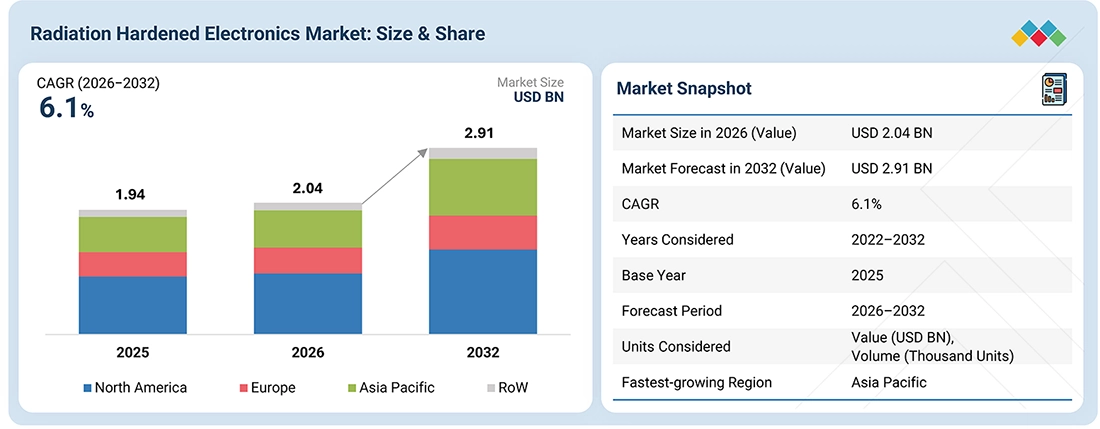
Radiation Hardened Electronics Market Overview
The Radiation Hardened Electronics Market Size is undergoing continuous technological transformation as demand increases for reliable semiconductor components across aerospace, defense, satellite communication, and space exploration applications. Radiation hardened electronics are specifically designed to operate in environments exposed to ionizing radiation while maintaining stable performance and long term reliability. These components are essential for satellites, spacecraft, launch vehicles, missile systems, military communication networks, and other mission critical platforms.
The expansion of commercial space activities, increasing satellite launches, and growing investments in defense infrastructure are encouraging manufacturers to develop advanced radiation resistant electronic systems. Emerging technologies in semiconductor fabrication, circuit design, artificial intelligence, and testing are improving component capabilities. These developments are also creating opportunities for companies to introduce smaller, more energy efficient, and higher performance solutions.
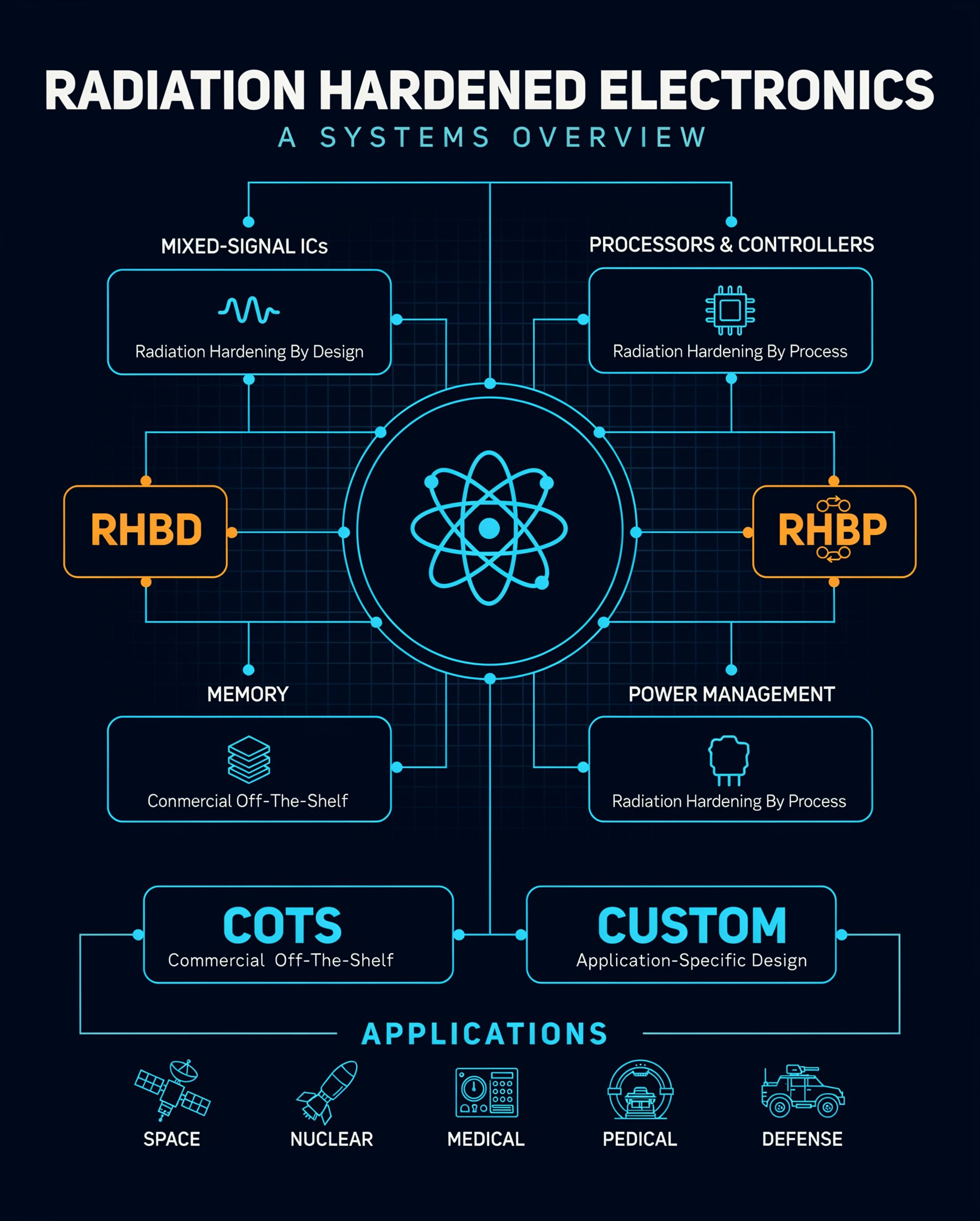
Advanced Radiation Hardening by Design Technologies
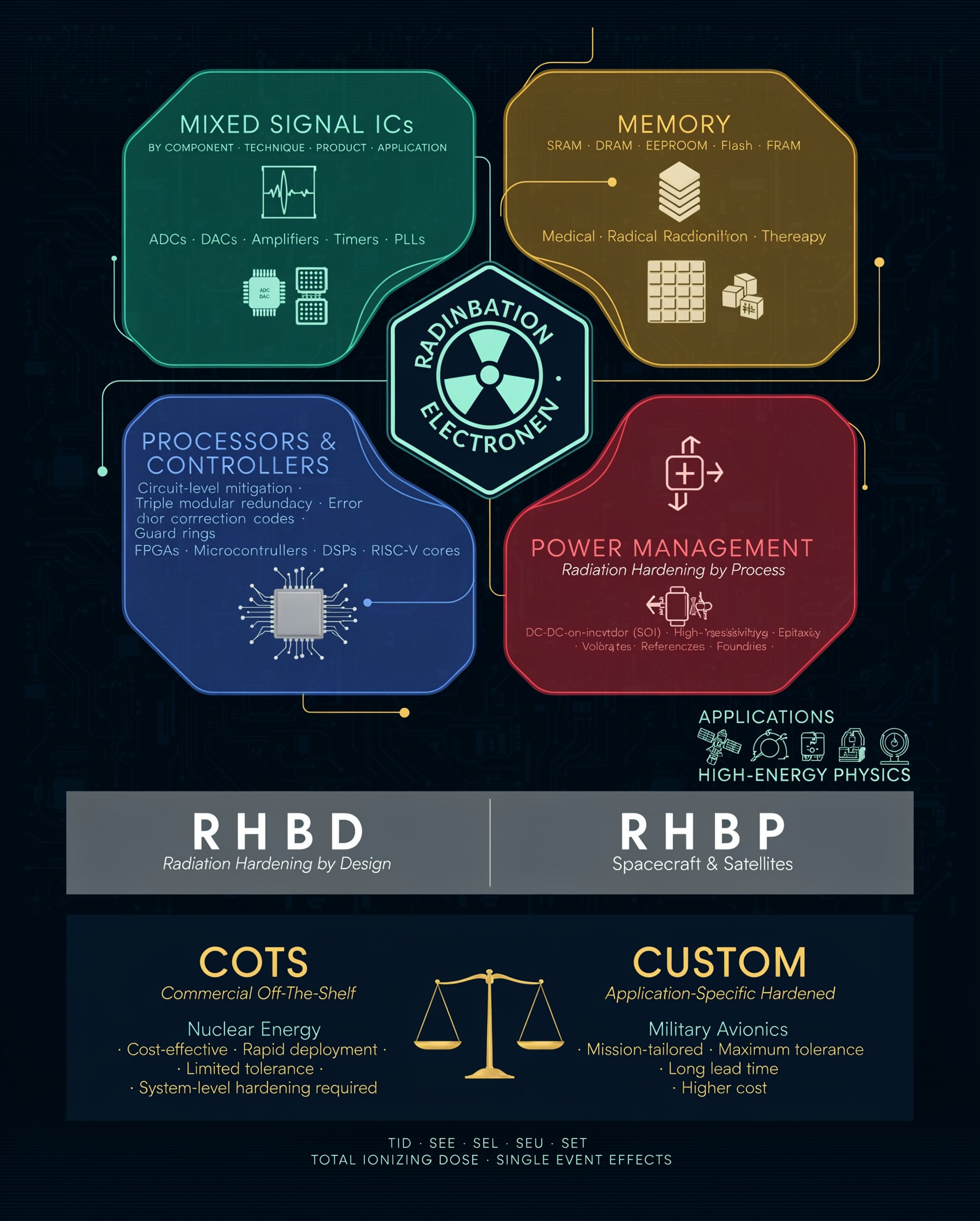
Radiation hardening by design is one of the most important emerging technologies in the market. This approach incorporates protective features directly into semiconductor circuit architectures to reduce the impact of radiation induced failures. Manufacturers use redundant logic, error correction mechanisms, specialized transistor structures, and latch up prevention techniques to improve device reliability.
These technologies are particularly important for processors, memory devices, and field programmable gate arrays used in satellites and spacecraft. Redundant circuit designs can help maintain system functionality when individual components experience radiation related disturbances. Error detection and correction technologies also improve data integrity in electronic systems operating in challenging environments.
Continuous improvements in circuit architecture are allowing manufacturers to develop radiation hardened components with better processing performance and lower power consumption. These developments are supporting increasingly complex aerospace and defense applications.
Download PDF Brochure @ https://www.marketsandmarkets.com/pdfdownloadNew.asp?id=44047967
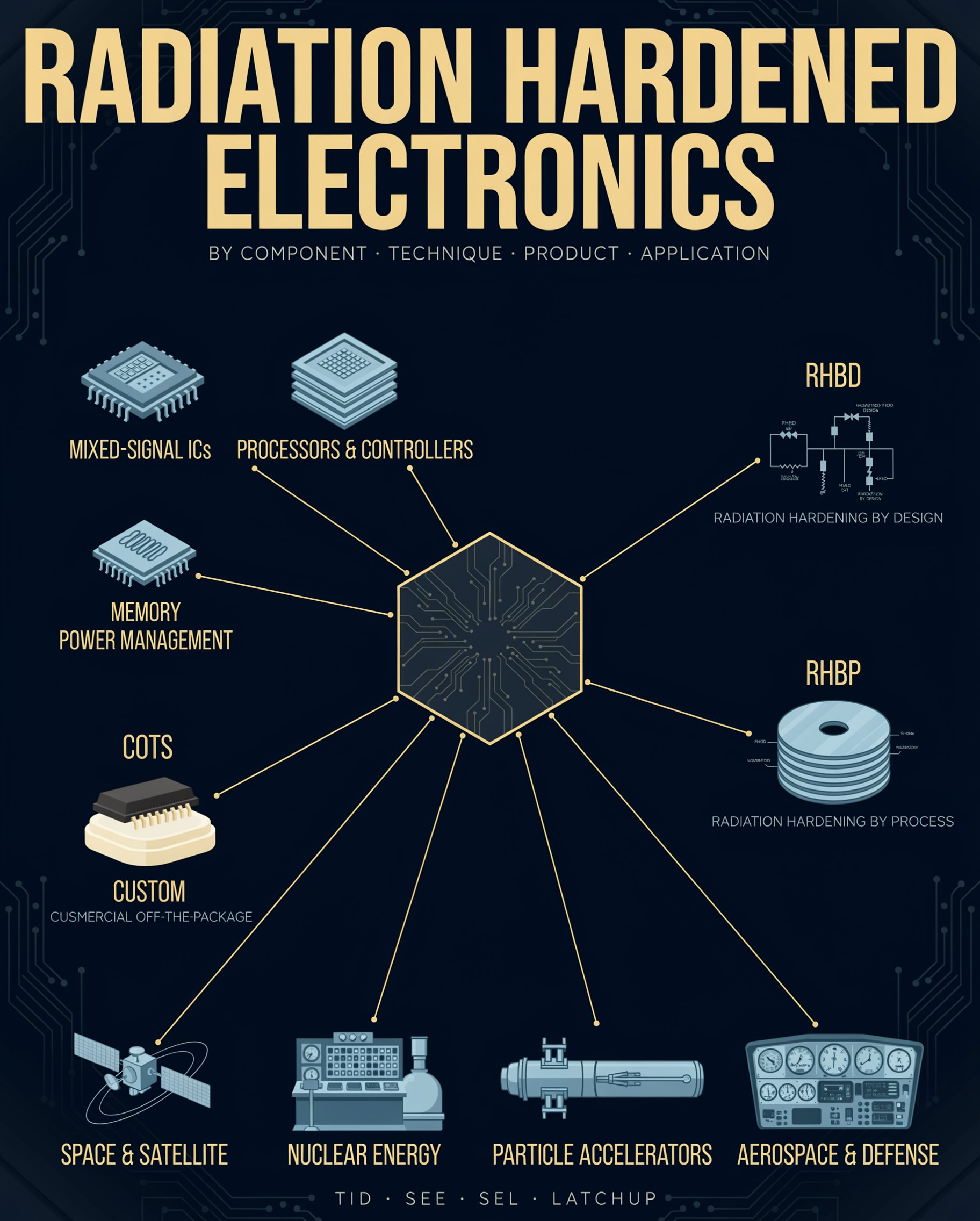
Silicon on Insulator and Advanced Semiconductor Processes
Silicon on insulator technology is an important semiconductor development supporting radiation hardened electronics. Its structure isolates active silicon regions through an insulating layer, helping reduce certain radiation related effects and improve electrical performance. SOI based devices are used in selected processors, control circuits, and other electronic components designed for demanding applications.
Manufacturers are also exploring advanced semiconductor fabrication techniques to improve radiation tolerance and device efficiency. Specialized process technologies, optimized transistor structures, and improved material engineering are helping address challenges associated with total ionizing dose and single event effects.
Wide bandgap materials such as silicon carbide and gallium nitride are attracting attention for power electronics because of their thermal and electrical characteristics. Their potential use in radiation intensive applications depends on device architecture, operating conditions, and qualification results. Continued research is expected to expand understanding of their suitability for specialized aerospace and defense systems.
Artificial Intelligence and Autonomous Spacecraft Processing
Artificial intelligence is emerging as an important technology trend influencing radiation hardened electronics development. Modern satellites increasingly require onboard processing to analyze imaging data, monitor equipment performance, identify operational anomalies, and support autonomous decision making. These capabilities can reduce dependence on continuous communication with ground stations and improve mission efficiency.
The integration of AI related processing capabilities into spacecraft is creating demand for high performance radiation tolerant processors and programmable logic devices. Manufacturers are exploring architectures that can support computationally intensive workloads while maintaining reliability and managing power consumption.
Autonomous spacecraft operations are also creating opportunities for advanced electronic control systems. Radiation hardened components support navigation, fault detection, communication management, and real time data processing in challenging space environments.
Inquiry Before Buying @ https://www.marketsandmarkets.com/Enquiry_Before_BuyingNew.asp?id=44047967
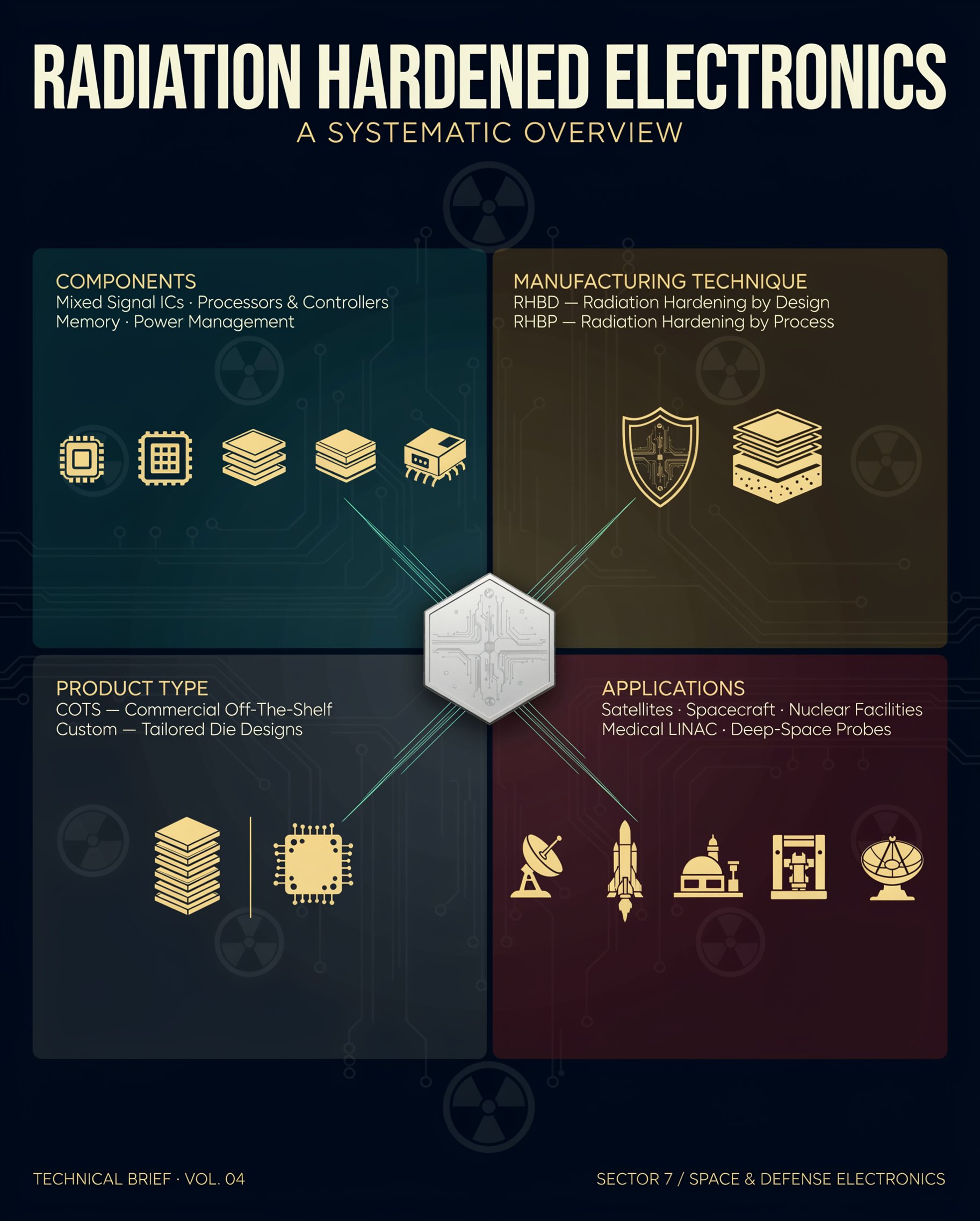
Development of Radiation Tolerant Commercial Electronics
The growing commercialization of space is encouraging the development of radiation tolerant commercial off the shelf components. Traditional radiation hardened devices often require specialized fabrication and extensive qualification, which can increase production costs and development timelines. Radiation tolerant commercial components offer potential cost advantages for missions with suitable radiation and reliability requirements.
Small satellite manufacturers, commercial space startups, and emerging aerospace companies are showing interest in these solutions. Manufacturers are improving screening methods, circuit protection, packaging, and radiation testing to assess component performance. This trend is expanding the range of potential suppliers and creating opportunities for more flexible semiconductor solutions.
However, the selection of commercial components depends on mission duration, radiation exposure, operating environment, and required reliability. Qualification and testing remain essential before deployment in critical applications.
Advancements in Radiation Testing and Simulation
Improved radiation testing and simulation technologies are strengthening the development of radiation hardened electronics. Manufacturers use specialized testing procedures to evaluate total ionizing dose, single event effects, and displacement damage. These assessments help determine whether semiconductor components can meet the requirements of specific space and defense missions.
Advanced simulation tools allow engineers to identify potential weaknesses during the design stage. This can support more efficient product development and reduce the risk of performance problems after deployment. Improved testing methods are particularly important as semiconductor devices become more complex and incorporate advanced circuit architectures.
View detailed Table of Content here – https://www.marketsandmarkets.com/Market-Reports/radiation-hardened-electronics-market-44047967.html
Industry Developments and Competitive Strategies
The industry is witnessing continued investment in semiconductor innovation, product qualification, and collaboration between technology suppliers and aerospace organizations. Companies such as Microchip Technology, Infineon Technologies, BAE Systems, Texas Instruments, STMicroelectronics, Renesas Electronics, and Frontgrade Technologies participate in the broader radiation hardened electronics ecosystem.
Market participants are focusing on developing advanced processors, memory devices, programmable logic solutions, and power management components. Strategic partnerships with space agencies, defense contractors, and satellite manufacturers are also supporting product development and qualification activities.
Future Outlook for Emerging Technologies
The Radiation Hardened Electronics Industry is expected to benefit from advances in semiconductor manufacturing, radiation tolerant computing, artificial intelligence, and high efficiency power electronics. Growing satellite constellations, commercial space infrastructure, deep space exploration, and defense modernization will continue creating demand for reliable electronic components.
Manufacturers that combine improved radiation resistance with higher processing capabilities, compact designs, and lower power consumption may gain new opportunities. Overall, emerging technologies and ongoing industry developments will remain essential to strengthening the performance and adoption of radiation hardened electronics across aerospace and defense applications.