
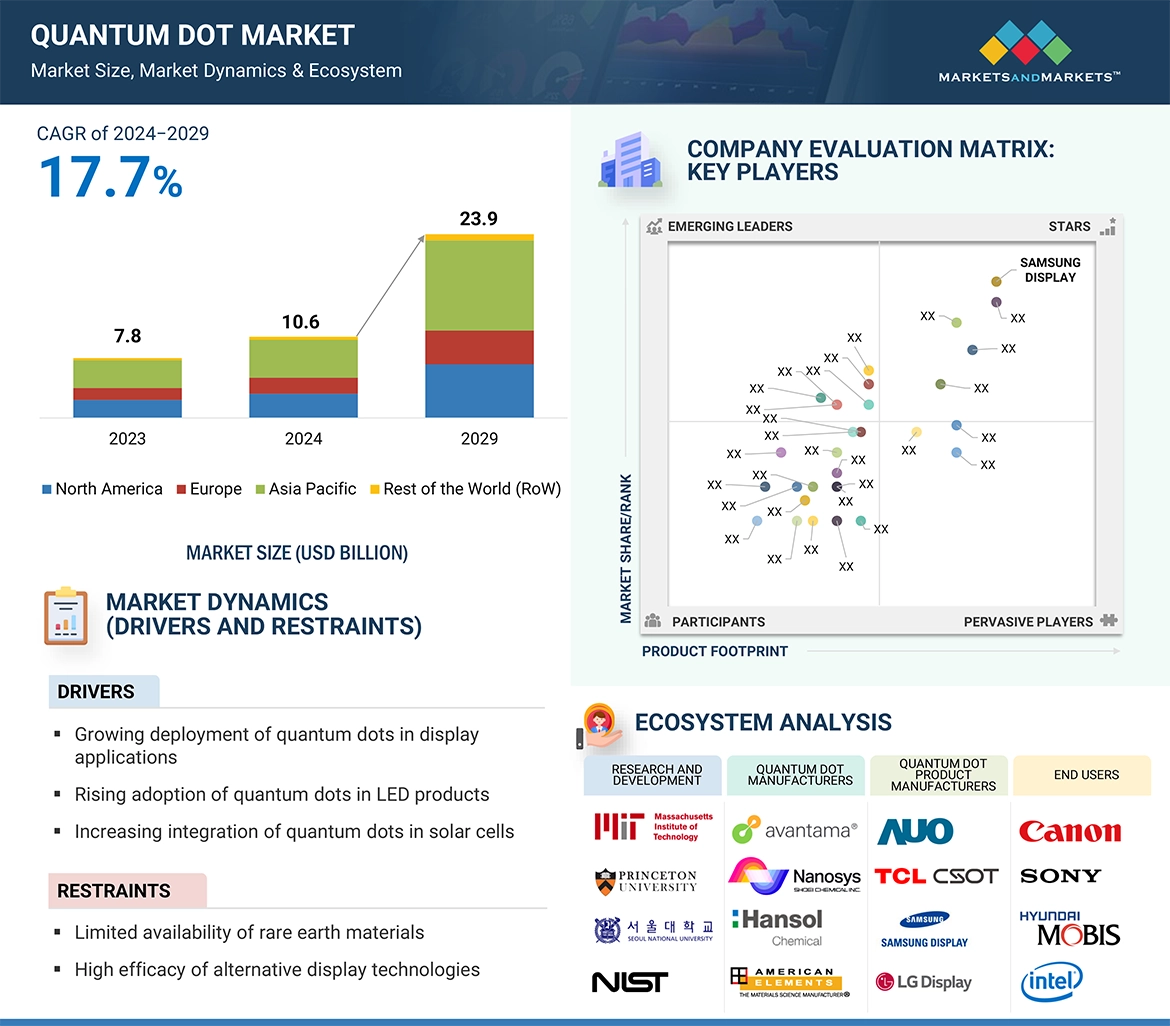
The Quantum Dot Market is advancing rapidly as innovations in nanotechnology continue to strengthen the capabilities of advanced photonics. Photonics, which focuses on the generation, manipulation, transmission, and detection of light, is becoming increasingly important across telecommunications, healthcare, industrial automation, consumer electronics, quantum computing, and scientific research. Quantum dots have emerged as one of the most promising materials supporting this evolution because of their exceptional optical properties, including size-dependent wavelength tuning, high photoluminescence efficiency, narrow emission bandwidth, and excellent color stability. These characteristics enable the development of compact, highly efficient, and high-performance photonic devices that address the growing demand for faster communication, improved sensing, and energy-efficient optical technologies.
One of the most important innovations supporting advanced photonics is the continuous improvement in quantum dot synthesis. Researchers have developed increasingly precise manufacturing techniques that allow tight control over particle size, shape, and composition. Since the optical properties of quantum dots depend directly on their physical dimensions, improved synthesis methods produce highly consistent nanocrystals capable of emitting extremely pure and predictable wavelengths. This consistency is essential for photonic applications where precision, reliability, and optical uniformity determine overall system performance.
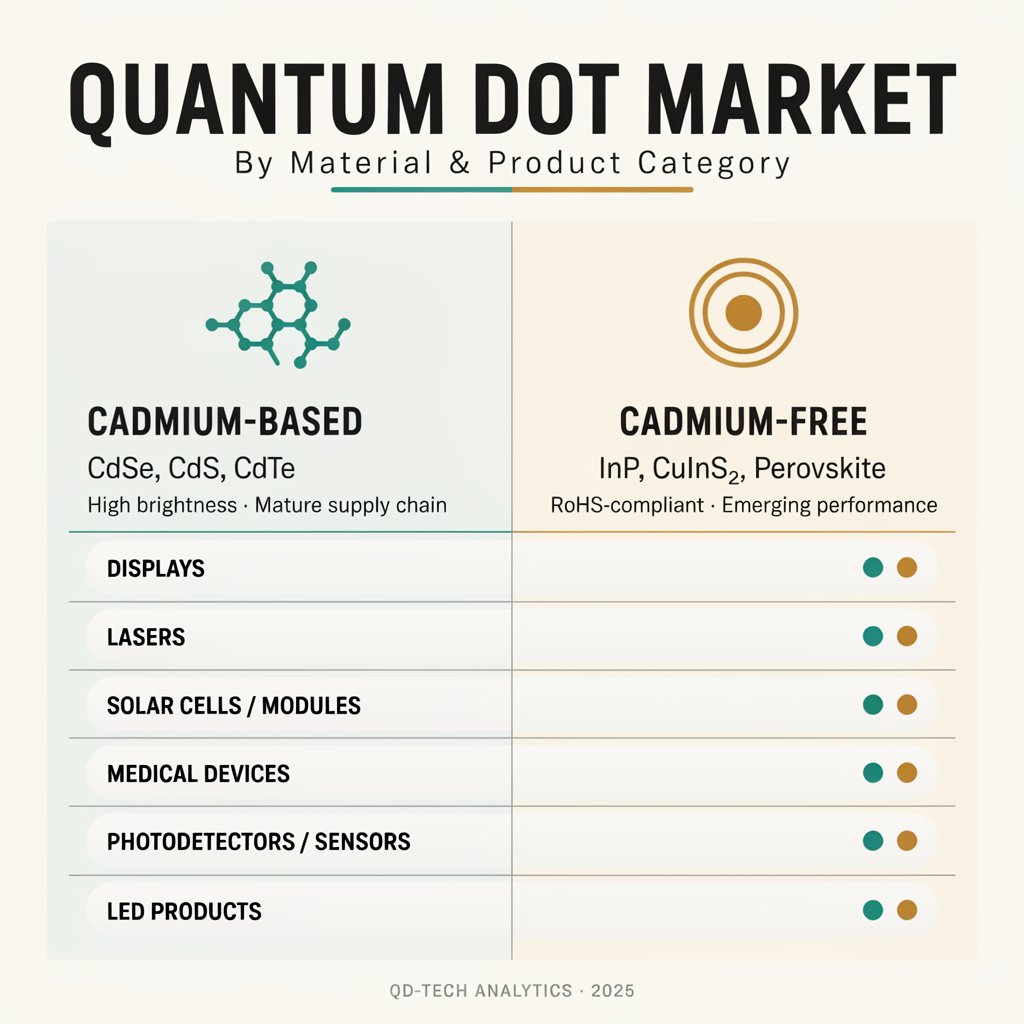
Material innovation is also transforming the market. While early commercial quantum dots relied primarily on cadmium-based compounds because of their excellent optical efficiency, current research increasingly emphasizes environmentally friendly alternatives such as indium phosphide and other cadmium-free materials. These newer materials provide comparable optical performance while meeting stricter environmental regulations. Continuous improvements in material stability and efficiency are allowing advanced photonic systems to achieve long operational lifetimes without sacrificing performance, making sustainable quantum dots increasingly attractive for commercial deployment.
Laser technology represents one of the strongest areas of photonic innovation supported by quantum dots. Quantum dot lasers offer significant advantages over conventional semiconductor lasers, including lower threshold current, improved temperature stability, reduced energy consumption, and highly tunable emission wavelengths. These characteristics improve performance across optical communication systems, industrial manufacturing, medical equipment, and scientific instrumentation. As demand for compact and efficient laser sources continues increasing, quantum dot innovations are expected to play a larger role in the next generation of photonic devices.
Download PDF Brochure @ https://www.marketsandmarkets.com/pdfdownloadNew.asp?id=694
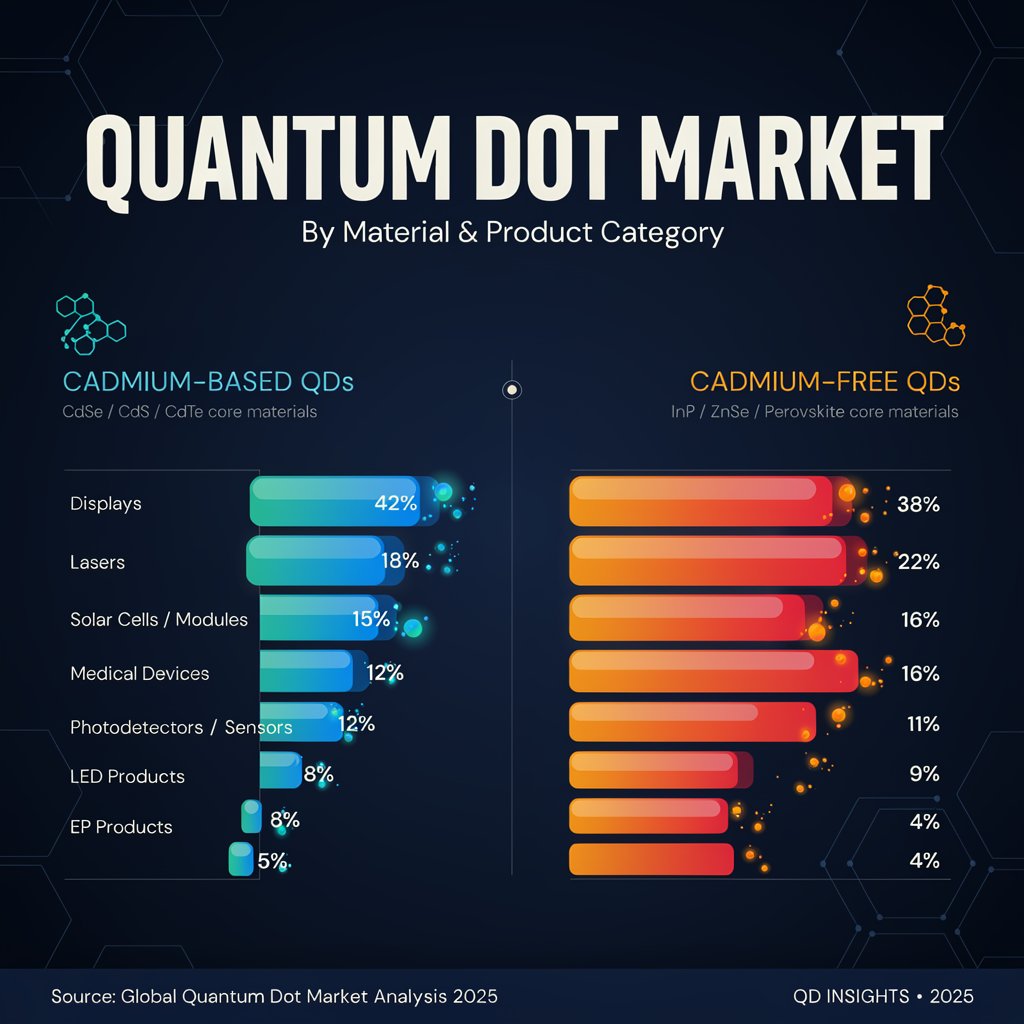
Optical communication networks are benefiting considerably from these developments. Modern communication infrastructure depends on high-speed fiber-optic transmission to support cloud computing, artificial intelligence, streaming services, data centers, and 5G connectivity. Quantum dot-based photonic components improve signal quality while reducing power consumption and enabling higher transmission efficiency. Their ability to operate across carefully controlled wavelengths allows engineers to optimize optical communication systems for increasing bandwidth requirements, supporting future network expansion.
Photodetector innovation is another important trend. Quantum dots enable photodetectors with high sensitivity across visible, infrared, and ultraviolet wavelengths. These devices convert incoming light into electrical signals for applications including imaging systems, environmental monitoring, industrial automation, autonomous vehicles, and scientific research. Advances in quantum dot photodetector technology are improving detection accuracy, expanding spectral response, and enabling compact sensor designs that support increasingly sophisticated photonic systems.
Integrated photonic circuits are becoming an important area of research where quantum dots demonstrate significant potential. Similar to how electronic integrated circuits revolutionized computing, integrated photonic circuits combine multiple optical components onto a single platform to improve performance while reducing size and energy consumption. Quantum dots support this miniaturization by providing efficient light emission and optical modulation within compact semiconductor structures. Their integration into photonic chips could accelerate development of advanced computing, optical communication, and sensing technologies.
Quantum computing is emerging as another promising application for advanced photonics. Researchers continue exploring quantum dots as stable and controllable sources of single photons, which are fundamental building blocks for quantum communication and quantum information processing. The ability to generate photons with precise optical characteristics makes quantum dots attractive candidates for secure communication systems, quantum encryption, and future quantum computing architectures. Although commercialization remains in its early stages, ongoing research continues demonstrating encouraging progress.
Inquiry Before Buying @ https://www.marketsandmarkets.com/Enquiry_Before_BuyingNew.asp?id=694
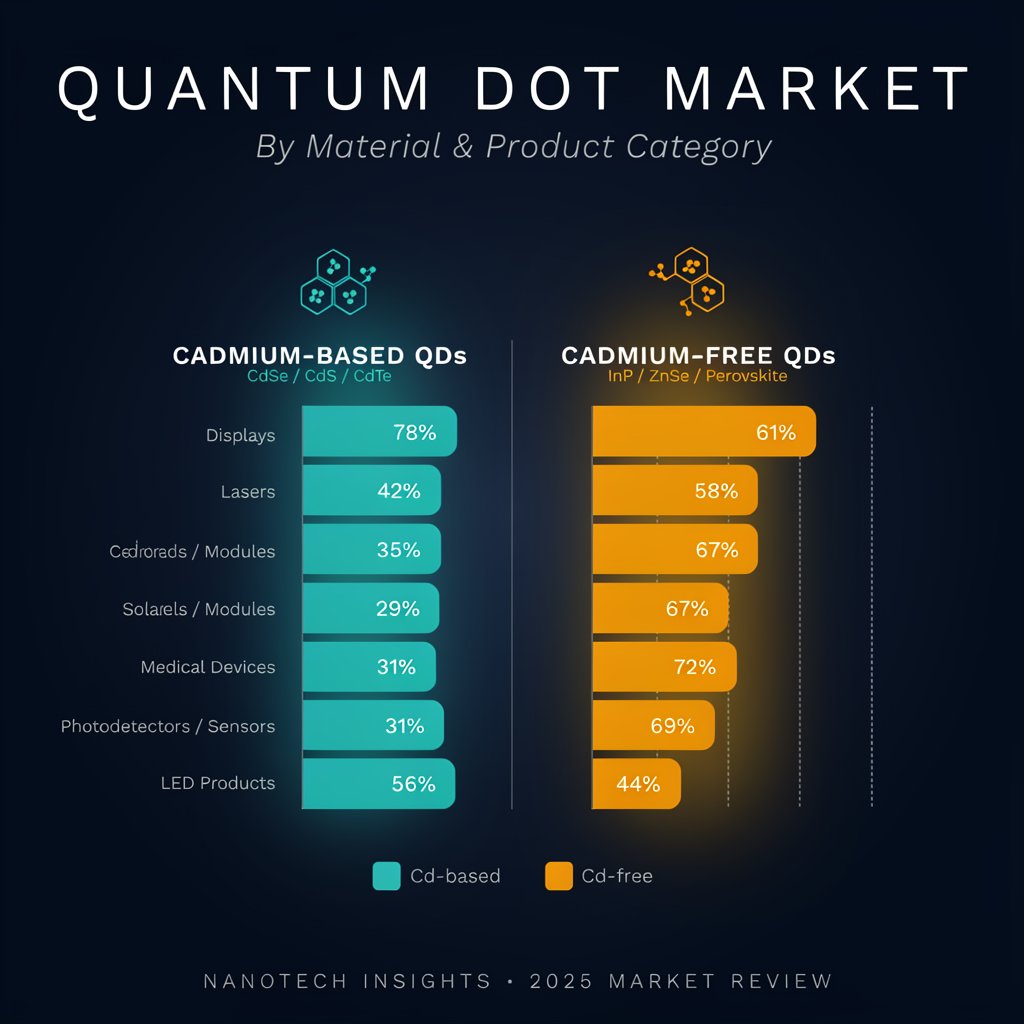
Biomedical photonics is creating substantial commercial opportunities as well. Advanced optical imaging systems increasingly rely on quantum dots for molecular imaging, fluorescence microscopy, biosensing, and diagnostic technologies. Their exceptional fluorescence brightness enables highly detailed visualization of biological structures while supporting improved disease detection. Photonic innovations incorporating quantum dots contribute to more accurate diagnostics, personalized medicine, and advanced life science research. Continued investment in healthcare technology is expected to further expand this application segment.
Industrial sensing technologies are also evolving through quantum dot innovation. Manufacturing facilities increasingly deploy optical sensors to monitor production quality, measure environmental conditions, and perform real-time process control. Quantum dot-enhanced photonic sensors provide higher sensitivity, faster response, and improved durability compared with many conventional sensing technologies. Their versatility allows deployment across industries including automotive manufacturing, semiconductor production, chemical processing, aerospace, and energy infrastructure.
Display technologies continue benefiting from photonic innovation as well. Quantum dots remain essential components in advanced display panels because they efficiently convert light into highly saturated colors with minimal energy loss. Continuous improvements in light management, optical films, and nanocrystal stability contribute to brighter displays, higher color accuracy, and lower power consumption. Integration with Mini-LED, Micro-LED, and OLED technologies further expands the capabilities of modern photonic display systems.
Artificial intelligence is accelerating photonic innovation by improving material discovery, optical simulation, and manufacturing optimization. AI algorithms analyze large datasets to predict optimal nanocrystal compositions, improve optical efficiency, and identify manufacturing parameters that maximize product quality. Machine learning also supports automated quality inspection during production, reducing variability and accelerating commercialization of advanced photonic components.
View detailed Table of Content here – https://www.marketsandmarkets.com/Market-Reports/quantum-dots-qd-market-694.html
Nanofabrication techniques continue improving the integration of quantum dots into complex photonic devices. Advances in lithography, thin-film deposition, and semiconductor packaging allow manufacturers to position quantum dots with greater precision while maintaining optical efficiency. Improved manufacturing accuracy supports higher device performance and greater scalability for commercial production, making advanced photonic products increasingly competitive across global markets.
Collaboration between research institutions and industry continues driving innovation throughout the value chain. Universities, semiconductor manufacturers, telecommunications companies, healthcare organizations, and material suppliers are working together to develop practical applications for quantum dot photonics. These partnerships accelerate technology transfer from laboratory research into commercial products while supporting continuous improvements in manufacturing efficiency and device performance.
Regional investments further strengthen market growth. North America continues leading research in photonics, semiconductor technology, and quantum information science through strong government funding and private-sector innovation. Europe emphasizes industrial photonics, automotive electronics, and environmentally sustainable nanomaterials, while Asia Pacific remains the global manufacturing center for photonic devices and advanced electronics. Strong investment across all major regions supports continued commercialization of quantum dot innovations.
Looking ahead, advanced photonics will remain one of the most dynamic application areas within the Quantum Dot Market. Continuous progress in material science, semiconductor engineering, artificial intelligence, integrated photonic circuits, optical communications, biomedical imaging, and quantum information technologies will continue expanding commercial opportunities. As industries increasingly require faster, smaller, more efficient, and highly reliable optical components, quantum dots are expected to play a central role in enabling the next generation of photonic innovations that support digital transformation across global technology markets.