
NVIDIA’s Expanding Role in the Data Center Semiconductor Industry
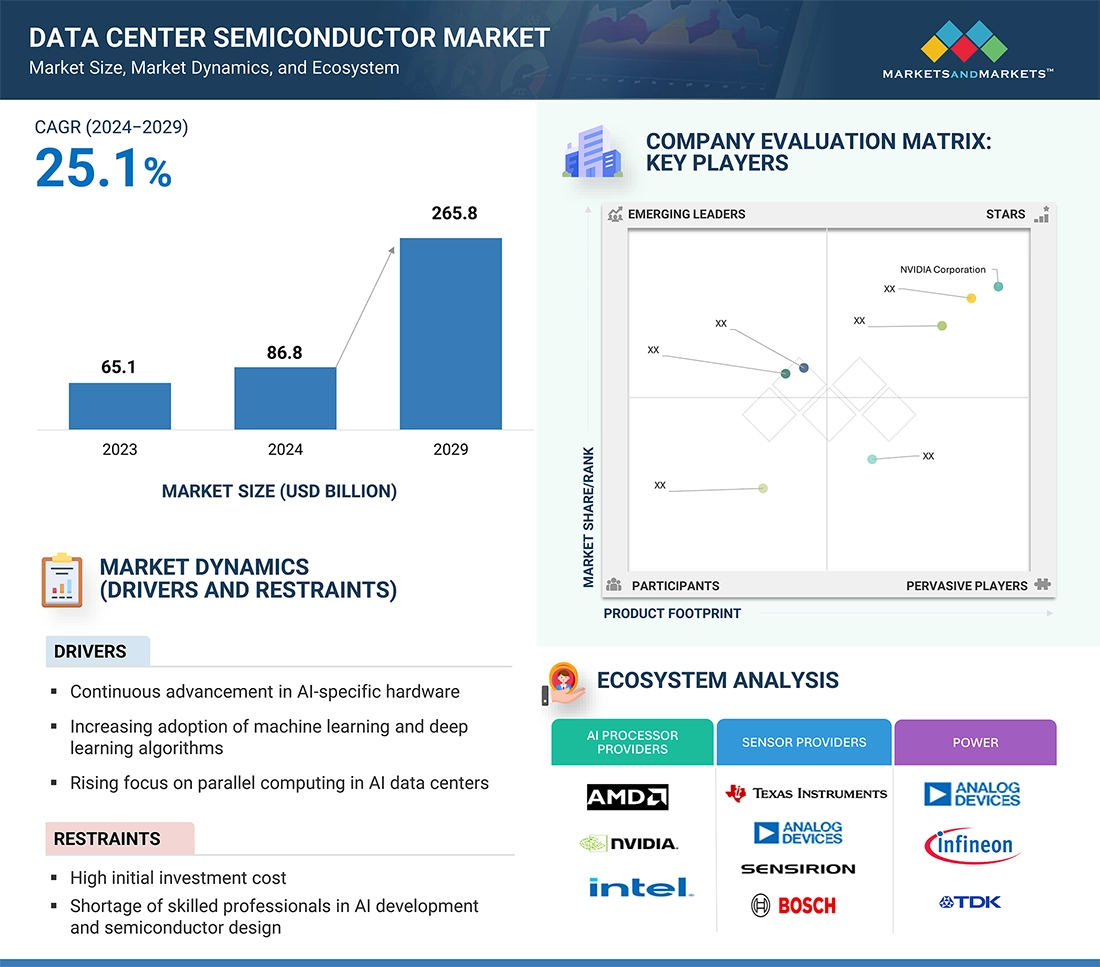
The rapid growth of artificial intelligence (AI), cloud computing, and high-performance computing is transforming the global Data Center Semiconductor Market. As organizations increasingly deploy generative AI applications, large language models, and advanced analytics platforms, demand for powerful processors and specialized computing infrastructure continues to rise. NVIDIA has strengthened its position in this evolving market through its extensive portfolio of graphics processing units (GPUs), AI accelerators, networking technologies, and software platforms. Its integrated approach to computing hardware and software has made the company an important technology provider for hyperscale cloud operators, enterprise data centers, and AI infrastructure developers.
Unlike traditional computing architectures that primarily rely on central processing units (CPUs), modern AI workloads require highly parallel processing capabilities. NVIDIA GPUs are designed to perform large numbers of calculations simultaneously, making them suitable for AI model training, inference, scientific computing, and data-intensive applications. This growing requirement for accelerated computing is supporting the company’s influence across the data center semiconductor ecosystem.
Download PDF Brochure @ https://www.marketsandmarkets.com/pdfdownloadNew.asp?id=47625470
AI Accelerators Drive Demand for NVIDIA Semiconductor Solutions
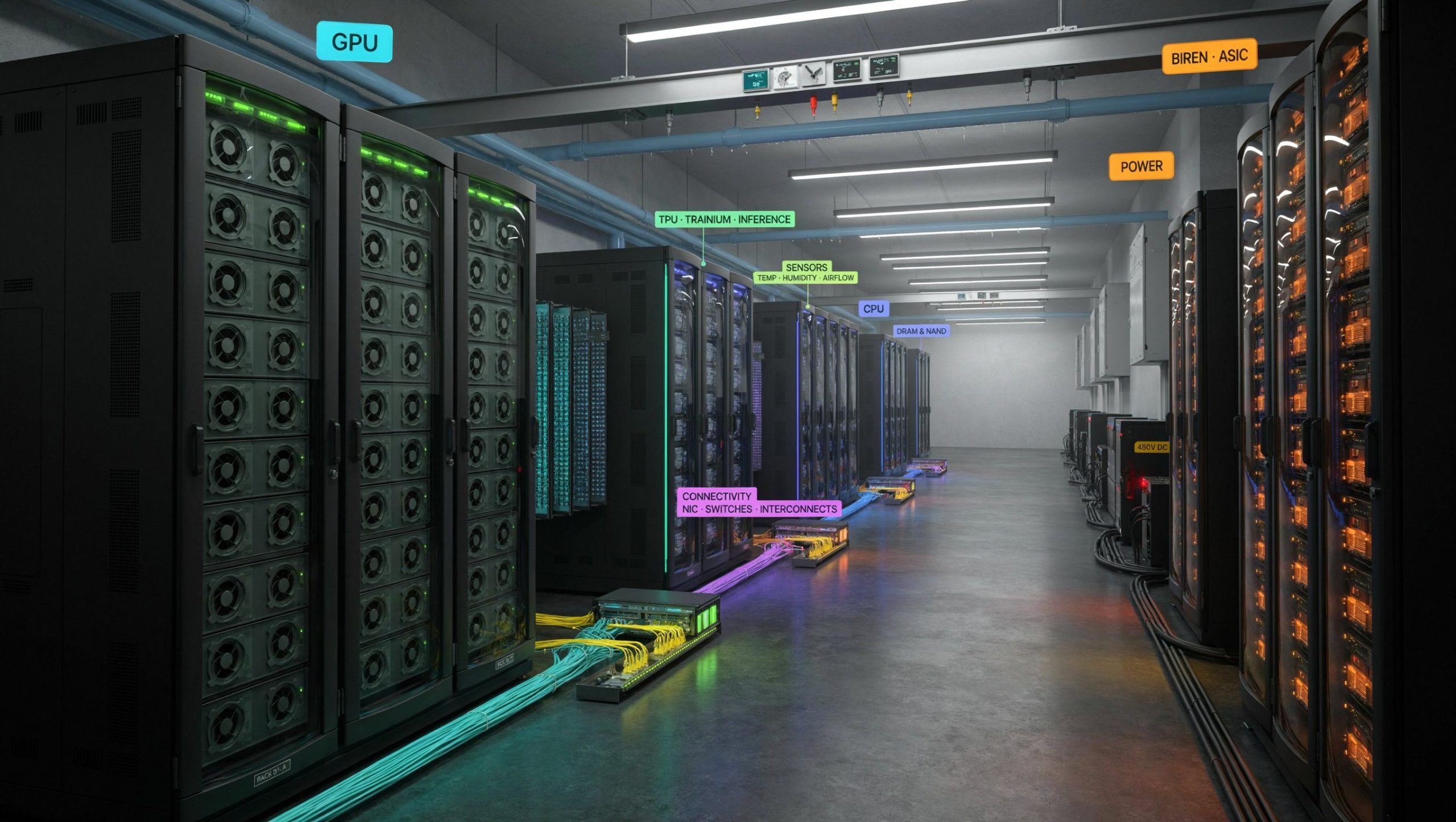
The increasing adoption of generative AI is a major factor strengthening NVIDIA’s position in data center semiconductors. Training large AI models requires substantial computing capacity, high memory bandwidth, and efficient communication between processors. NVIDIA’s data center GPU platforms are designed to address these requirements by combining parallel processing capabilities with advanced memory and high-speed interconnect technologies.
The company’s GPU architecture supports demanding workloads across natural language processing, computer vision, recommendation systems, robotics, and scientific research. As enterprises integrate AI into business operations, demand for accelerated computing infrastructure is expanding beyond traditional technology companies. Healthcare organizations, financial institutions, automotive manufacturers, and industrial businesses are increasingly exploring AI-powered applications that require specialized semiconductor platforms.
AI inference is also becoming an important growth area. Once models are trained, they must process user requests and generate outputs efficiently. This creates demand for processors that deliver high performance while managing power consumption and operating costs. NVIDIA’s continued development of accelerated computing platforms supports the evolving requirements of both AI training and inference environments.
Integrated Hardware and Software Ecosystem Strengthens Competitiveness
A significant element of NVIDIA’s competitive position is its combination of semiconductor hardware, software, and development tools. The CUDA parallel computing platform enables developers to optimize applications for NVIDIA GPUs, supporting adoption across research institutions, software companies, and enterprise technology environments. This established software ecosystem creates continuity for developers and can make migration to alternative computing platforms more complex.
NVIDIA also provides networking and system-level technologies designed to connect multiple processors within large AI clusters. High-speed interconnect solutions, networking switches, and data processing technologies help coordinate communication between computing resources. These capabilities are important because advanced AI workloads frequently require thousands of processors to operate together.
The company’s integrated platform strategy allows customers to deploy computing systems designed around compatible processors, networking components, software libraries, and development environments. This approach strengthens its role in data center infrastructure while creating opportunities across several semiconductor product categories.
Inquiry Before Buying @ https://www.marketsandmarkets.com/Enquiry_Before_BuyingNew.asp?id=47625470
Advanced Networking and Memory Technologies Support AI Infrastructure
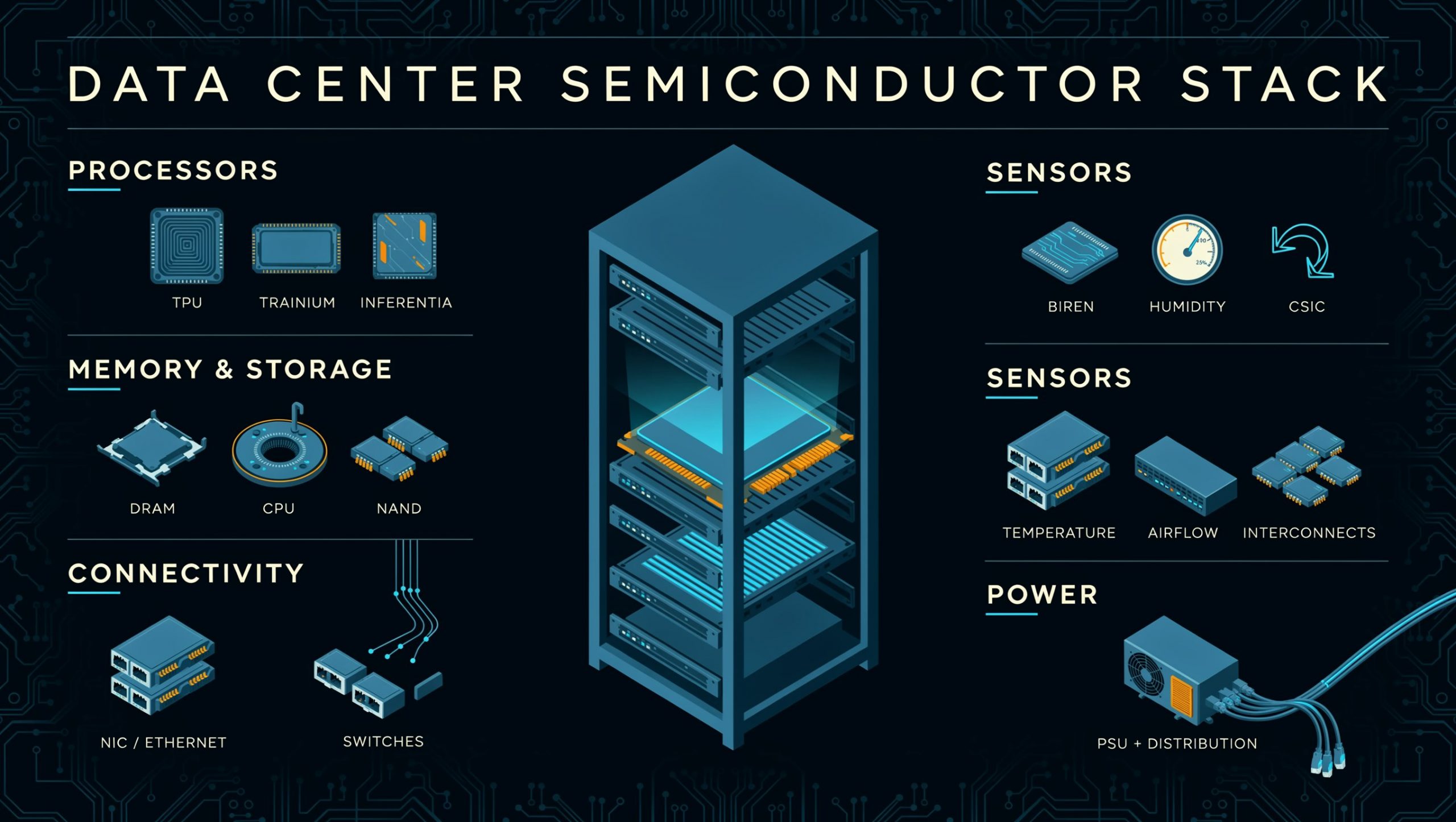
The expansion of AI data centers is increasing demand for high-bandwidth communication between processors, memory systems, and storage infrastructure. NVIDIA is addressing these requirements through technologies that support high-speed interconnects and scalable networking architectures. Efficient communication is essential for distributed AI training, where multiple accelerators must exchange large volumes of data with minimal delays.
Memory bandwidth is another important factor influencing semiconductor performance. AI accelerators depend on rapid access to large datasets and model parameters. Advanced memory technologies, including high-bandwidth memory, are therefore becoming increasingly important in next-generation GPU platforms. The integration of processors and memory through advanced packaging also supports improved data transfer efficiency.
These developments are creating opportunities for semiconductor foundries, memory manufacturers, packaging providers, and networking component suppliers. NVIDIA’s demand for advanced semiconductor manufacturing and packaging capabilities also highlights the importance of collaboration across the global semiconductor supply chain.
Strategic Investments and Competition in AI Computing
The rapid expansion of AI infrastructure is encouraging NVIDIA to continue developing advanced computing architectures and expanding its data center technology portfolio. The company is focusing on improving processing performance, energy efficiency, networking capabilities, and system integration to address the requirements of increasingly complex AI workloads.
At the same time, competition in the data center semiconductor market is intensifying. AMD, Intel, and several specialized semiconductor companies are developing processors and accelerators designed for AI and high-performance computing. Major cloud service providers are also investing in internally developed AI chips to optimize performance and reduce dependence on external suppliers.
This competitive environment is encouraging continuous innovation across processor architecture, memory integration, packaging, and power management. NVIDIA’s established developer ecosystem and integrated hardware portfolio provide important competitive advantages, although maintaining leadership will require continued technological investment and responsiveness to customer requirements.
View detailed Table of Content here – https://www.marketsandmarkets.com/Market-Reports/data-center-semiconductor-market-47625470.html
Challenges Across the Data Center Semiconductor Ecosystem
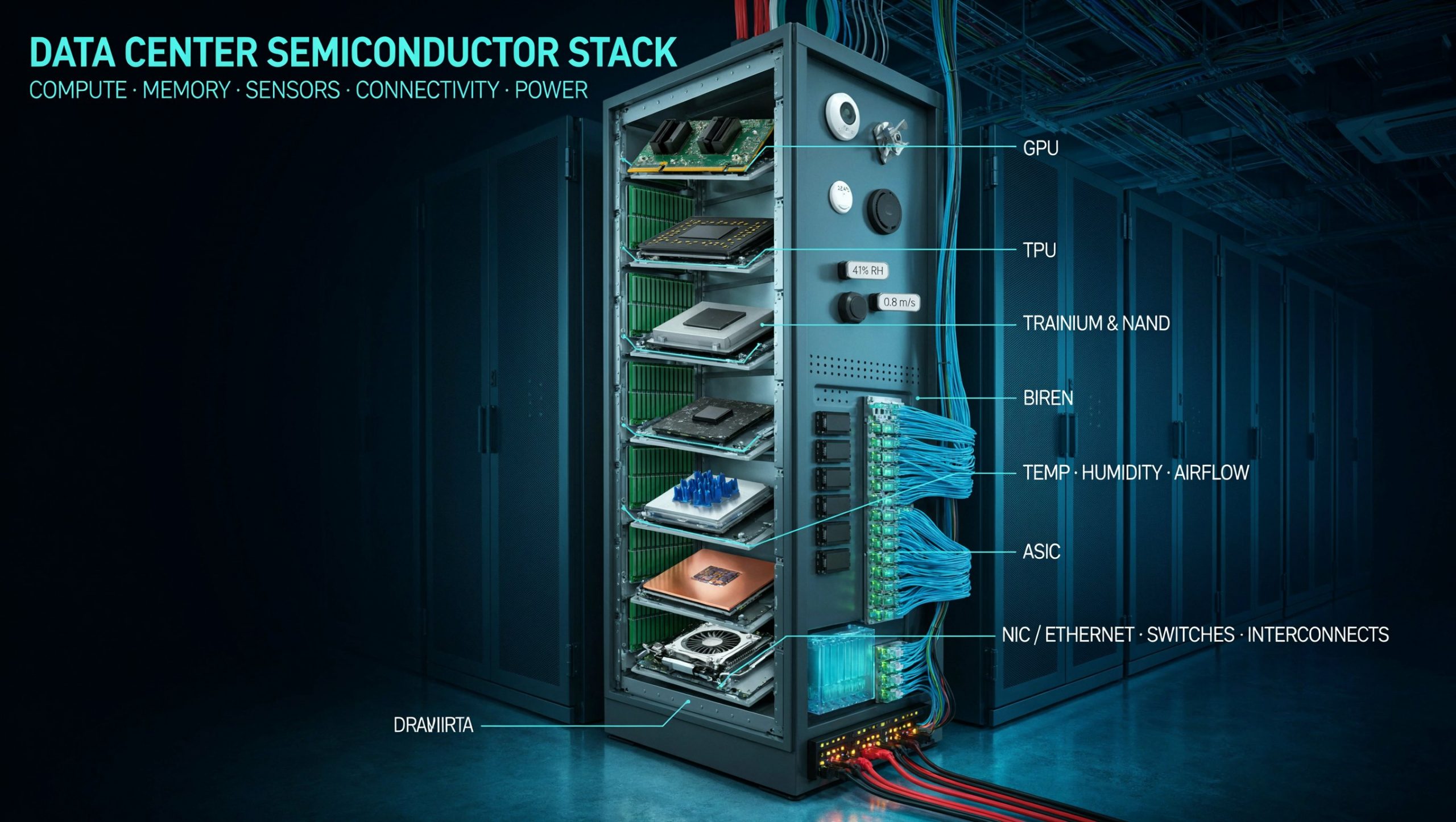
Despite its strong market position, NVIDIA faces several challenges associated with the rapid expansion of AI infrastructure. Access to advanced semiconductor manufacturing capacity, high-bandwidth memory, and sophisticated packaging technologies is essential for producing next-generation accelerators. Manufacturing constraints and supply chain disruptions can influence product availability and deployment schedules.
Power consumption and thermal management also represent significant challenges. High-performance GPUs require substantial electricity and generate considerable heat during intensive computing operations. Data center operators must invest in efficient cooling systems, power distribution infrastructure, and optimized server designs to support these processors.
Additionally, semiconductor export regulations, geopolitical developments, and increasing competition can influence NVIDIA’s global business environment. The company must continue strengthening its supply chain relationships while developing technologies that address performance, reliability, and energy efficiency requirements.
Future Outlook for NVIDIA in Data Center Semiconductor Technologies
The future growth of NVIDIA’s data center semiconductor business will be closely connected to the expansion of generative AI, enterprise automation, cloud computing, and high-performance computing. Increasing investments in AI factories and hyperscale data centers are expected to sustain demand for advanced GPUs, networking components, and integrated computing platforms.
Developments in accelerated computing, advanced packaging, high-bandwidth memory, and optical networking will further influence the evolution of AI infrastructure. NVIDIA’s ability to combine semiconductor innovation with software development and networking technologies positions it to remain an influential participant in this changing industry.
Overall, NVIDIA is strengthening its leadership in AI and data center semiconductor technologies through continued innovation in GPUs, accelerated computing platforms, and integrated infrastructure solutions. As organizations invest in increasingly sophisticated AI applications, the company’s technologies are expected to remain important to the development of next-generation data centers and the broader global semiconductor ecosystem.