
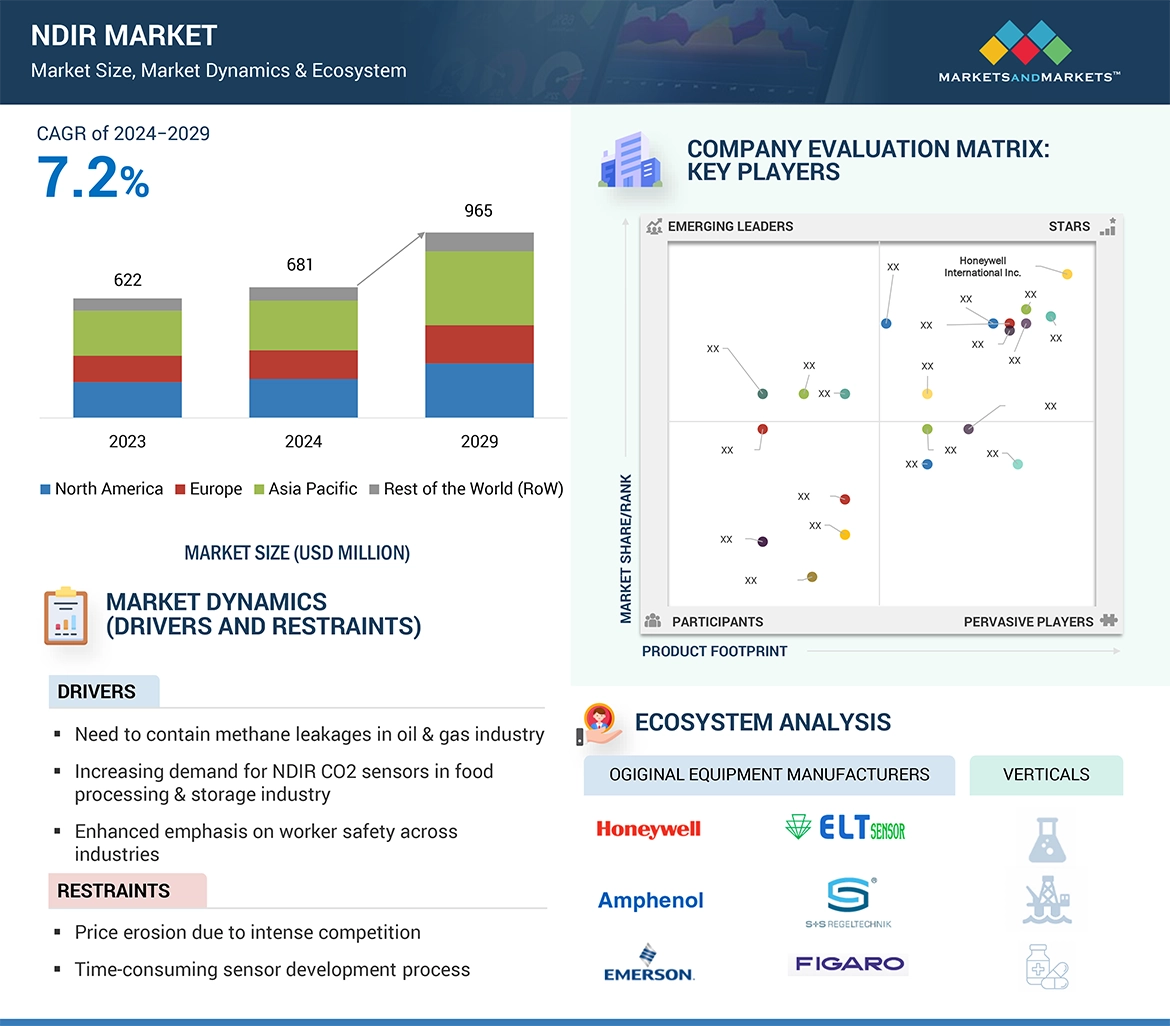
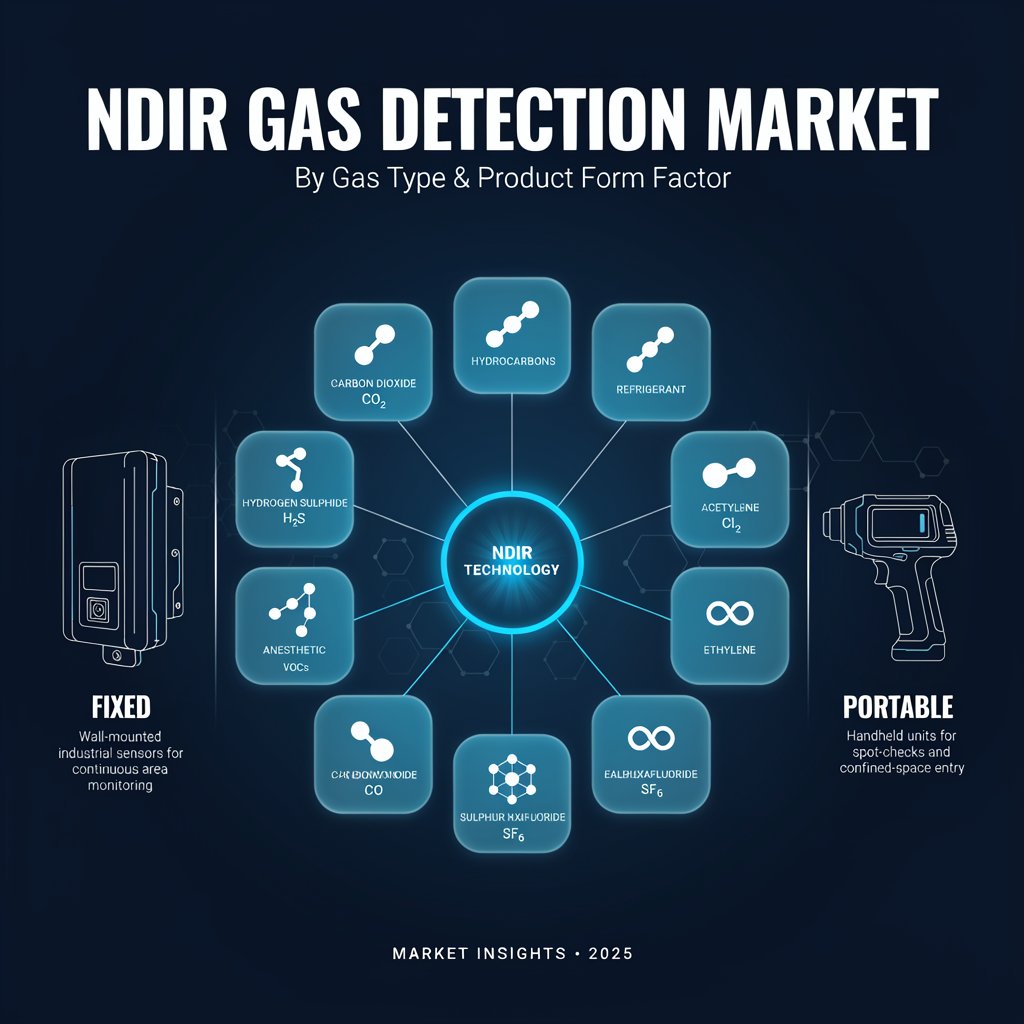
The Non-dispersive Infrared Market is experiencing significant technological development as industries increasingly require accurate, reliable, compact, and connected gas-sensing solutions. Advanced infrared gas sensors are being adopted across industrial safety, environmental monitoring, HVAC, automotive, healthcare, food processing, energy, and commercial applications. NDIR technology is gaining attention because it enables gas detection through infrared absorption while supporting continuous measurement and long-term operation. Developments in infrared sources, detectors, optical components, electronics, and signal processing are improving the performance and expanding the application scope of advanced NDIR sensors.
Advances in Infrared Detection Technology
One of the most important developments in the NDIR Market is the improvement of infrared emitters and detectors. Manufacturers are developing more stable and efficient infrared sources that can provide consistent optical output while consuming less power. Improvements in detector sensitivity are also enabling sensors to identify lower concentrations of target gases with greater accuracy.
Advanced detector technologies can improve signal-to-noise ratios and support more precise concentration measurements. These developments are particularly important for industrial and environmental applications where small changes in gas concentration may need to be identified quickly.
Improved Optical Designs
Optical architecture plays a critical role in NDIR sensor performance. Manufacturers are developing optimized optical paths, filters, chambers, and reflective structures to improve infrared absorption measurements.
Improved optical designs can increase the interaction between infrared radiation and the target gas, supporting greater measurement sensitivity. Better filtering can also reduce interference from other gases and environmental conditions.
These developments are helping NDIR manufacturers create sensors that deliver more consistent measurements across a wider range of applications.
Download PDF Brochure @ https://www.marketsandmarkets.com/pdfdownloadNew.asp?id=90187624
Multi-gas Detection Capabilities
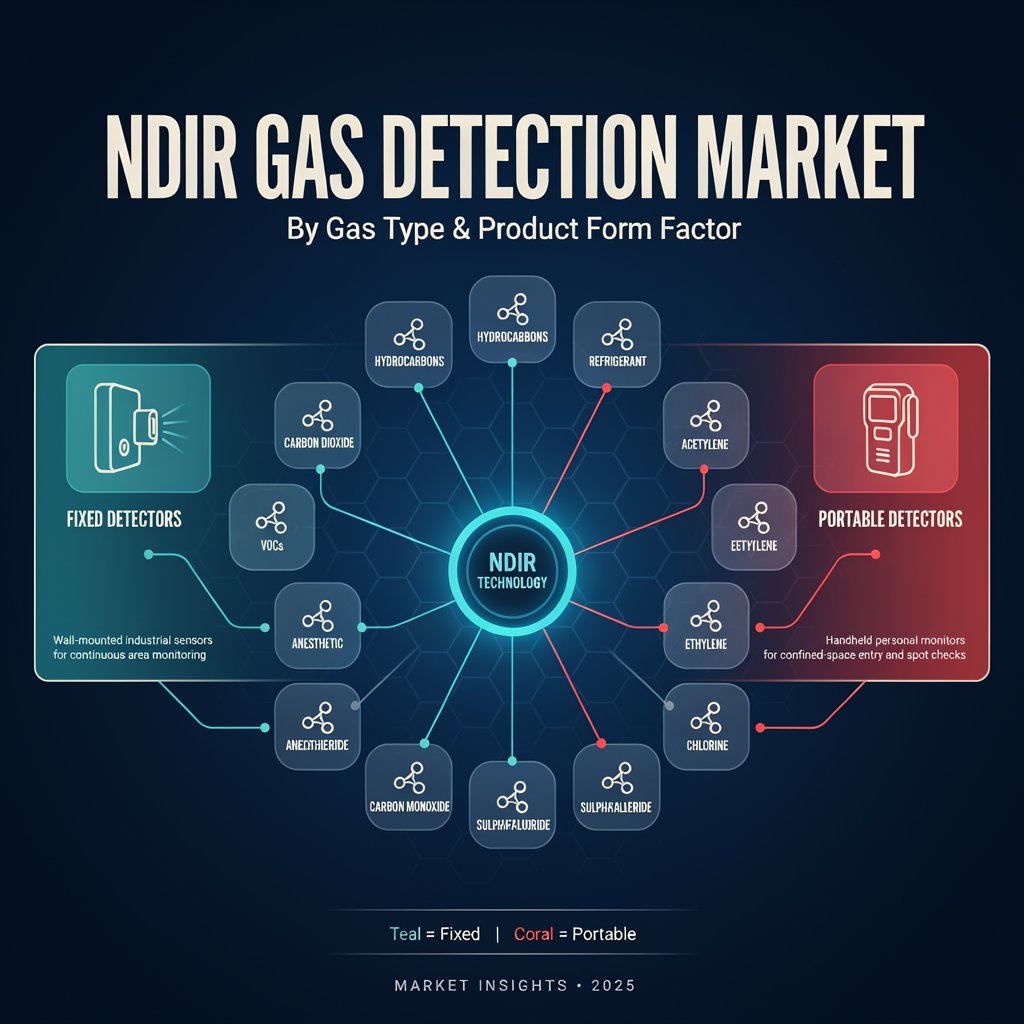
The market is also moving toward multi-gas sensing solutions. Conventional NDIR sensors may focus on a single target gas, but advanced platforms can be designed to detect multiple gases within one instrument or sensor module.
Multi-gas detection can provide greater value in industrial facilities, environmental monitoring systems, laboratories, and process-control applications. A single platform capable of monitoring several gases can reduce system complexity and provide operators with a more comprehensive view of atmospheric conditions.
The development of multi-channel optical systems and advanced signal-processing algorithms is expected to support this trend.
Miniaturization of Gas Sensors
Miniaturization is becoming an important development as NDIR sensors are increasingly integrated into compact electronic devices. Smaller sensor modules can be incorporated into smart thermostats, indoor-air-quality monitors, portable gas analyzers, industrial controllers, automotive systems, and connected environmental devices.
Advances in microelectronics, optical packaging, and infrared components are allowing manufacturers to reduce sensor dimensions while maintaining measurement performance.
Compact NDIR technology can also enable distributed monitoring, allowing multiple sensors to be deployed across buildings, industrial facilities, or other large environments.
Low-power NDIR Solutions
Energy efficiency is another major focus of sensor development. Conventional gas-monitoring systems may require continuous power, which can limit their deployment in remote or battery-powered applications.
Advanced NDIR sensors are being designed with lower-power infrared sources, efficient signal processing, and optimized electronic architectures. These improvements can extend battery life and make wireless gas-monitoring networks more practical.
Low-power operation is particularly important for IoT-connected sensors deployed across large facilities where replacing or recharging batteries frequently can increase maintenance costs.
Inquiry Before Buying @ https://www.marketsandmarkets.com/Enquiry_Before_BuyingNew.asp?id=90187624
Intelligent Calibration and Compensation
Environmental conditions such as temperature, humidity, pressure, and contamination can influence infrared gas measurements. Advanced NDIR sensors are therefore incorporating improved calibration and compensation technologies.
Digital algorithms can compensate for changes in operating conditions and help maintain measurement accuracy over time. Automatic calibration and self-diagnostic functions can also reduce maintenance requirements.
These capabilities are particularly valuable in industrial environments where sensors may be exposed to demanding conditions for extended periods.
IoT Connectivity
Connectivity is transforming advanced NDIR sensors from standalone measurement devices into components of intelligent monitoring systems. Sensors can increasingly communicate with building management systems, Industrial IoT platforms, cloud applications, and remote monitoring networks.
Connected NDIR sensors can provide real-time gas concentration data, generate alerts, and support historical analysis. Facility managers can monitor multiple locations from centralized dashboards and identify changes that require attention.
The increasing adoption of connected infrastructure is expected to accelerate demand for digitally enabled NDIR products.
Edge Computing and Real-time Analytics
Edge computing is emerging as another development area. By processing sensor data locally, NDIR systems can identify abnormal gas concentrations without depending entirely on remote cloud infrastructure.
Local data processing can reduce latency and support faster responses in safety-critical applications. Industrial facilities can use edge-enabled gas sensors to trigger alarms, ventilation systems, or other automated responses.
The combination of NDIR sensing and edge intelligence can improve the responsiveness and reliability of gas-monitoring networks.
AI-enabled Gas Monitoring
Artificial intelligence is creating additional opportunities for advanced NDIR systems. AI algorithms can analyze gas concentration measurements alongside temperature, humidity, occupancy, process conditions, and historical data.
These systems can identify unusual patterns, predict potential leaks, and support preventive maintenance. In smart buildings, AI-enabled platforms can use carbon dioxide measurements to optimize ventilation according to occupancy and indoor conditions.
The integration of AI with NDIR sensing is expected to increase the value of gas-monitoring data and support more intelligent decision-making.
View detailed Table of Content here – https://www.marketsandmarkets.com/Market-Reports/non-dispersive-infrared-market-90187624.html
Industrial Safety Applications
Advanced infrared gas sensors are increasingly being developed for industrial safety applications. Oil and gas facilities, chemical plants, refineries, manufacturing sites, and energy infrastructure require continuous monitoring of combustible and potentially hazardous gases.
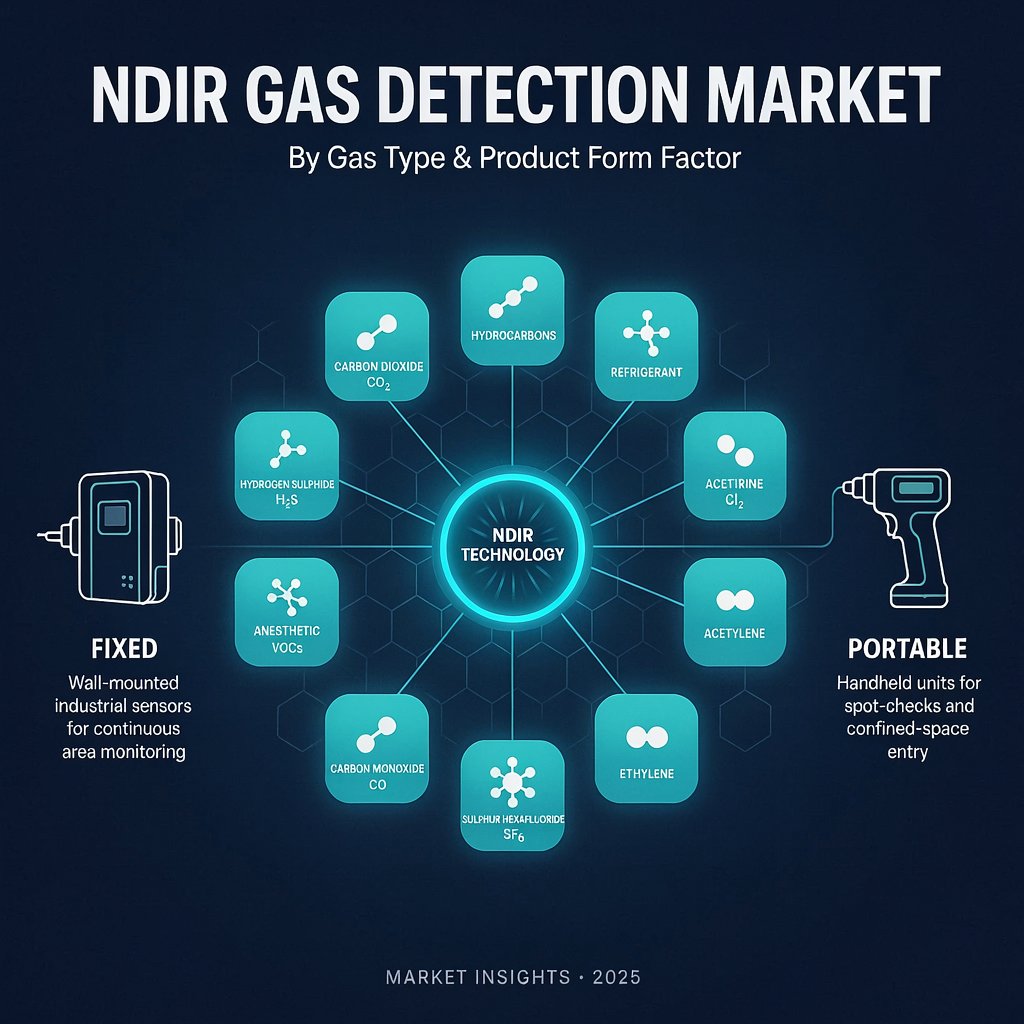
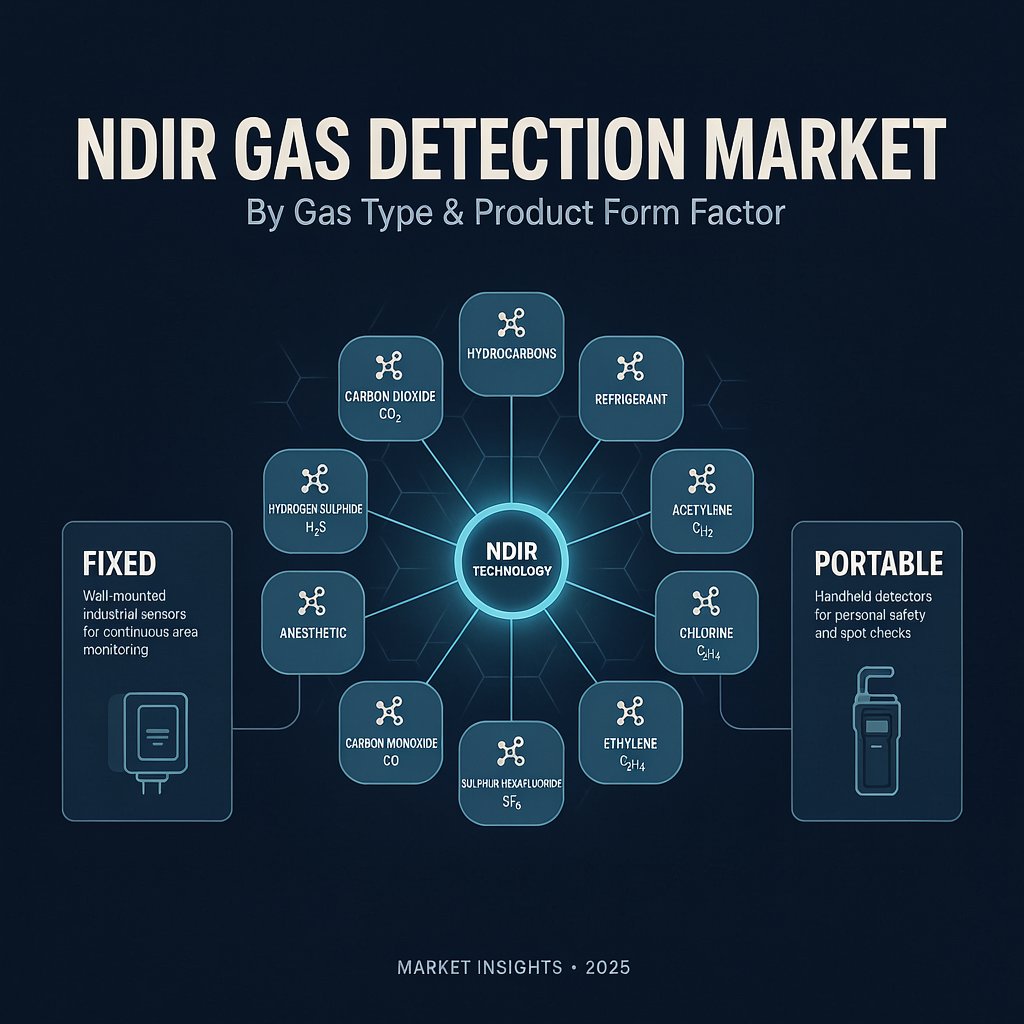
Improved sensor sensitivity, response time, durability, and environmental resistance can support earlier detection of gas leaks. Fixed and portable NDIR systems can be deployed together to provide continuous facility monitoring and flexible inspection capabilities.
Environmental and Emissions Monitoring
Environmental regulations and sustainability initiatives are also encouraging advanced NDIR development. Methane and carbon dioxide monitoring are particularly important for industries seeking to identify emissions and improve environmental performance.
Advanced sensors can provide continuous measurements that help organizations identify potential emission sources and evaluate the effectiveness of mitigation strategies.
Greater accuracy and connectivity can also support automated reporting and centralized emissions-management platforms.
Future Market Outlook
The Non-dispersive Infrared Industry is expected to benefit from continued development of advanced infrared gas sensors. Improvements in optical systems, infrared sources, detectors, multi-gas measurement, miniaturization, low-power operation, calibration, and environmental compensation will continue to enhance sensor performance.
The convergence of NDIR technology with IoT, edge computing, AI, and automated control systems is expected to create new applications across industrial, commercial, automotive, environmental, and healthcare markets. As organizations increasingly require continuous, connected, and high-accuracy gas monitoring, advanced NDIR sensors are expected to remain an important technology for improving safety, energy efficiency, process control, and environmental management.