
Growing 5G Infrastructure Investments
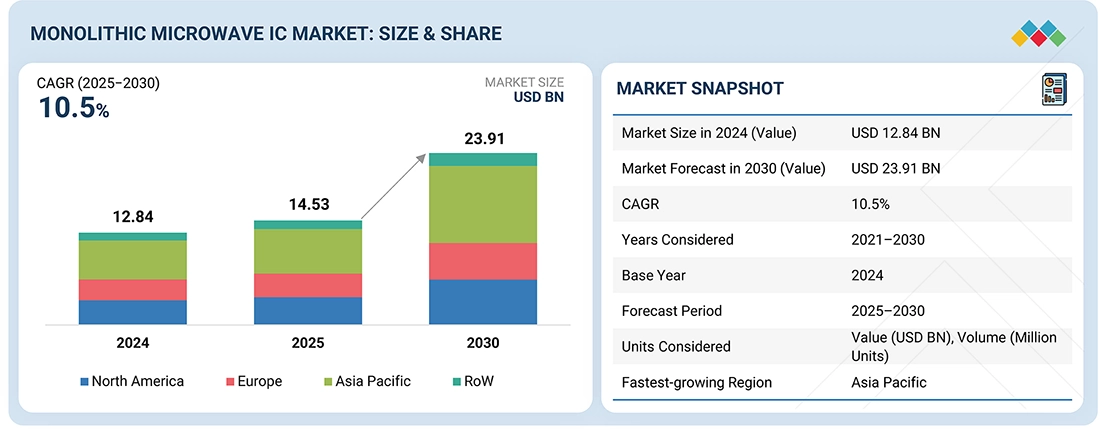
The Monolithic Microwave IC Market is expanding as telecommunications operators, network equipment manufacturers, and governments increase investments in 5G infrastructure. The deployment of 5G networks requires advanced radio-frequency components capable of supporting higher frequencies, wider bandwidths, lower latency, and greater network capacity. Monolithic microwave integrated circuits, or MMICs, are becoming important components in 5G radio front ends because they integrate multiple microwave functions into compact semiconductor devices.
Increasing Demand for High-Frequency RF Components
The transition from conventional mobile networks toward advanced 5G architectures is increasing demand for high-performance RF components. 5G networks operate across sub-6 GHz and millimeter-wave frequency ranges, creating opportunities for MMICs designed for different frequency bands and application requirements.
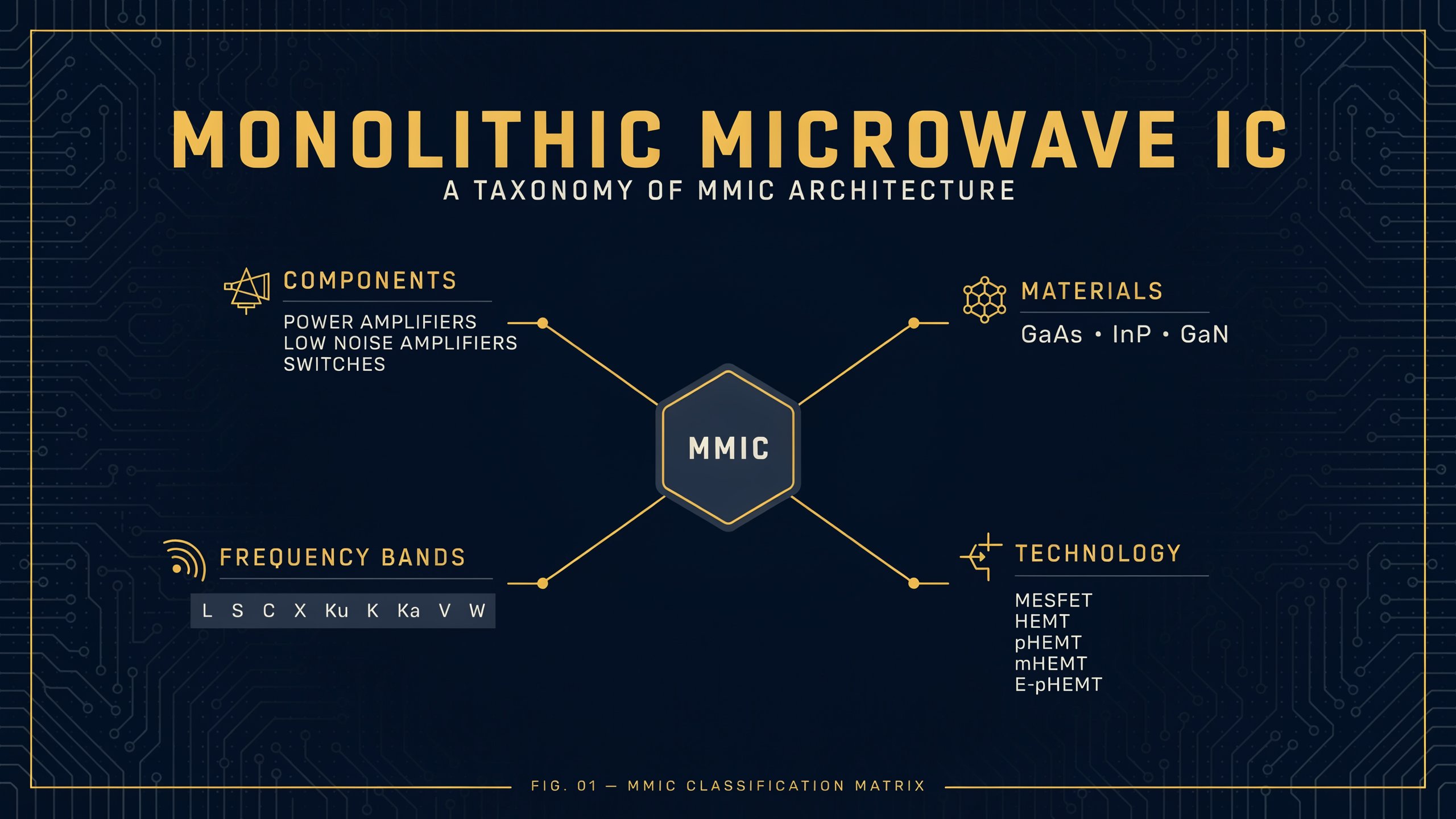
MMICs can integrate power amplifiers, low-noise amplifiers, mixers, switches, phase shifters, and other signal-processing functions within a single compact device. This integration can reduce system complexity while supporting the miniaturization requirements of modern 5G radio equipment.
Download PDF Brochure @ https://www.marketsandmarkets.com/pdfdownloadNew.asp?id=86745565
Millimeter-Wave 5G Deployment
Millimeter-wave 5G is an important growth opportunity for the Monolithic Microwave IC Market. Higher-frequency 5G networks can provide extremely high data rates and substantial bandwidth, making them suitable for dense urban environments, fixed wireless access, enterprise connectivity, and specialized high-capacity applications.
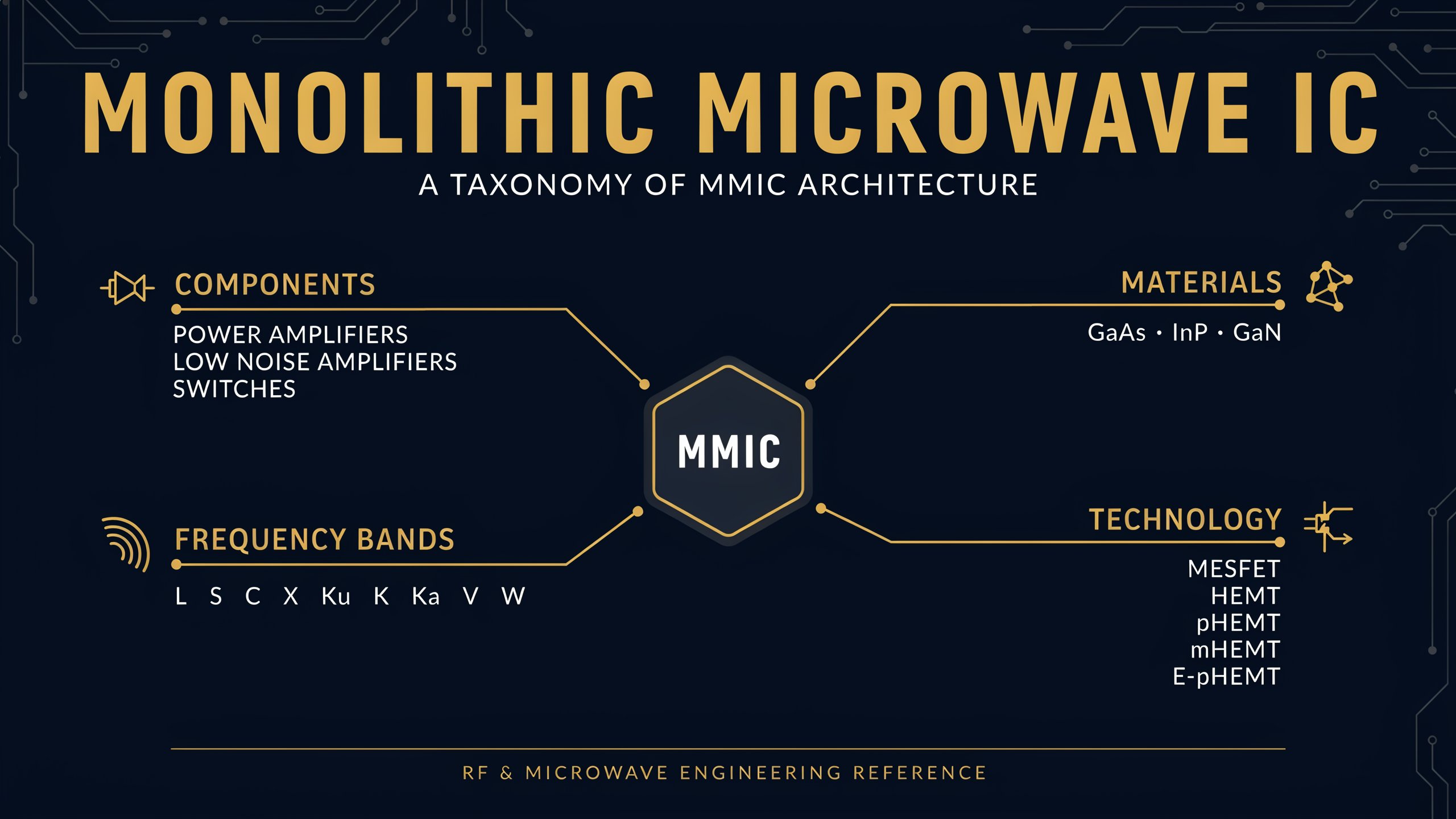
Operating at millimeter-wave frequencies requires RF components with low signal loss, high linearity, efficient amplification, and reliable thermal performance. MMIC technologies based on GaAs, GaN, and advanced silicon processes are being developed to address these requirements.
Beamforming and Massive MIMO Adoption
The expansion of massive multiple-input multiple-output and beamforming technologies is further supporting MMIC demand. 5G base stations increasingly use multiple antenna elements to direct radio-frequency energy toward individual users and improve network coverage and capacity.
Beamforming architectures require multiple RF channels containing amplifiers, phase-control components, switches, and other microwave functions. MMICs provide a compact approach to integrating these functions, allowing manufacturers to develop smaller and more efficient antenna modules.
The growing adoption of active antenna systems is therefore expected to create sustained demand for highly integrated microwave semiconductor devices.
Small Cell and Dense Network Deployment
5G networks rely heavily on small cells to improve coverage and capacity in high-traffic areas. Small-cell infrastructure is being deployed in urban locations, commercial buildings, transportation hubs, stadiums, industrial facilities, and other dense environments.
Because small cells require compact radio equipment, MMICs can offer advantages through high functional integration and reduced component count. Smaller RF modules can simplify equipment installation while supporting the performance requirements of dense 5G deployments.
Inquiry Before Buying @ https://www.marketsandmarkets.com/Enquiry_Before_BuyingNew.asp?id=86745565
Private 5G and Industrial Connectivity
Private 5G networks are creating additional opportunities for the Monolithic Microwave IC Market. Manufacturers, logistics companies, utilities, ports, warehouses, and other organizations are deploying dedicated wireless networks for industrial automation, machine connectivity, robotics, and real-time data exchange.
Industrial 5G infrastructure requires reliable RF components capable of continuous operation in demanding environments. MMICs can support compact radio units and advanced antenna systems used in private wireless networks.
The convergence of 5G, Industrial IoT, edge computing, and automation is expected to strengthen demand for integrated RF technologies.
GaN and GaAs Supporting 5G Performance
Compound semiconductor technologies are playing an important role in meeting the performance requirements of advanced 5G infrastructure. GaAs remains attractive for high-frequency applications requiring strong gain and low-noise performance, while GaN offers high power density, efficiency, breakdown voltage, and thermal robustness.
GaN-based MMICs are particularly relevant to high-power RF applications, while GaAs-based solutions continue to support low-noise and high-frequency signal-processing functions. Improvements in semiconductor fabrication and packaging are expected to expand the use of these technologies in 5G radio equipment.
Advanced Packaging and Miniaturization
The increasing complexity of 5G radio systems is encouraging innovations in MMIC packaging. Advanced packaging techniques can reduce parasitic effects, improve thermal management, and enable closer integration between RF components and antenna systems.
Miniaturized packages are especially valuable for massive MIMO and millimeter-wave modules where space is limited. Improvements in packaging, interconnect technologies, and thermal design could allow MMIC manufacturers to deliver higher performance within increasingly compact form factors.
View detailed Table of Content here – https://www.marketsandmarkets.com/Market-Reports/monolithic-microwave-ic-market-86745565.html
5G Backhaul and Fixed Wireless Access
Beyond base stations, MMICs are gaining opportunities in wireless backhaul and fixed wireless access systems. High-frequency links can provide broadband connectivity without extensive wired infrastructure, particularly in locations where fiber deployment is difficult or expensive.
MMIC-based RF front ends can support high-frequency transmit and receive functions in these systems. As operators expand broadband coverage and seek flexible network architectures, demand for microwave and millimeter-wave semiconductor technologies may increase.
Future Market Outlook
The Monolithic Microwave IC Industry is expected to benefit from continued global investment in 5G infrastructure, millimeter-wave networks, massive MIMO, small cells, private 5G, fixed wireless access, and advanced wireless backhaul. The growing need for higher data capacity and compact radio architectures will continue encouraging the integration of microwave functions into highly efficient semiconductor devices.
Future market expansion will increasingly depend on improvements in GaN and GaAs technologies, advanced packaging, thermal management, beamforming, and high-frequency signal processing. As telecommunications networks evolve toward higher frequencies and increasingly intelligent architectures, MMICs are expected to remain a critical technology supporting the performance, scalability, and miniaturization of next-generation 5G infrastructure.