
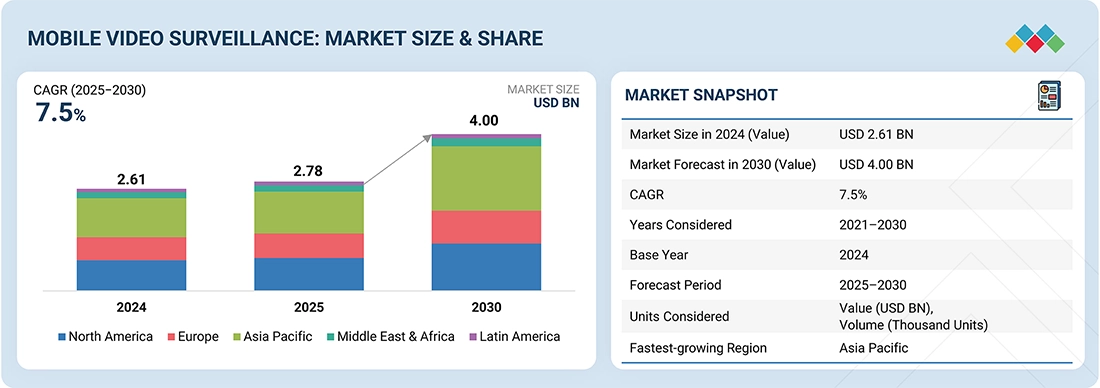
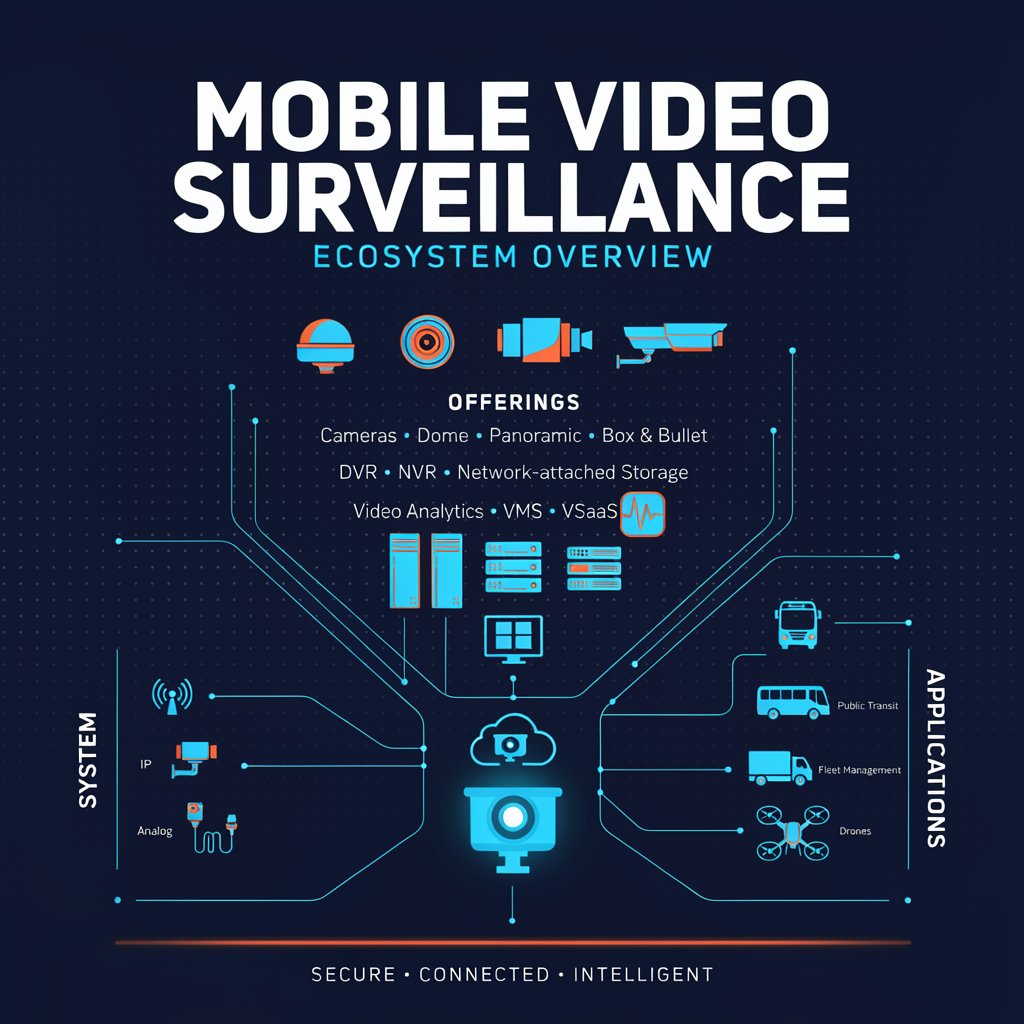
The Mobile Video Surveillance Market is expanding as organizations across public safety, transportation, logistics, industrial, commercial, and critical infrastructure sectors seek flexible technologies for security, monitoring, detection, and investigation. Unlike fixed surveillance systems that remain at predetermined locations, mobile video surveillance platforms can operate from vehicles, body-worn devices, drones, portable units, and rapidly deployable systems. These solutions enable security teams to collect visual information across changing environments and integrate video with artificial intelligence, wireless connectivity, cloud computing, edge processing, and intelligent video management platforms.
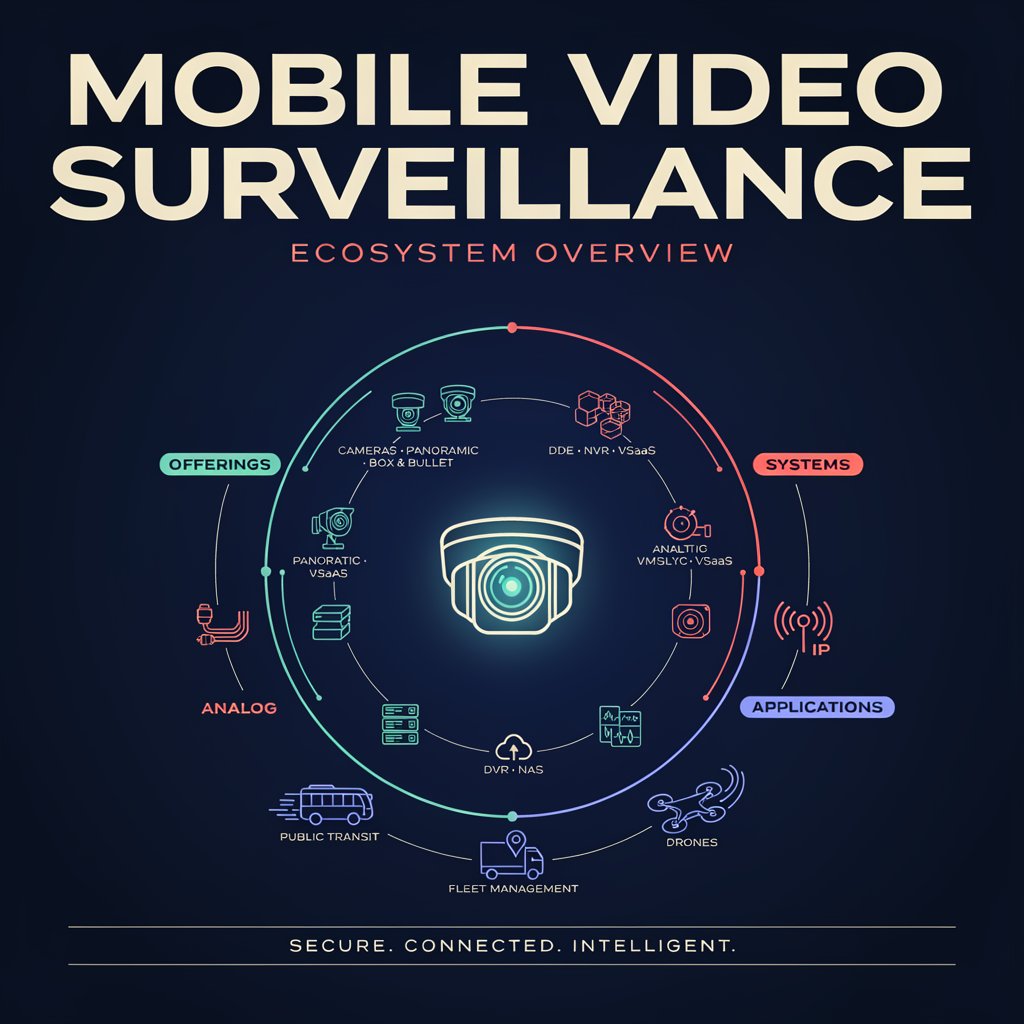
Security applications represent a fundamental area of demand for mobile video surveillance. Organizations require continuous protection of people, property, vehicles, cargo, and infrastructure across locations that may not have permanent camera coverage. Mobile surveillance systems can extend security coverage to parking areas, construction sites, transportation corridors, industrial facilities, public events, and remote infrastructure. The ability to reposition cameras according to changing security requirements provides greater flexibility compared with permanently installed equipment.
Law enforcement is one of the most important application areas. Police departments increasingly use body-worn cameras, in-car video systems, mobile command vehicles, and drones to improve operational visibility. Body-worn cameras can document interactions between officers and members of the public, while vehicle-mounted cameras can record traffic incidents, pursuits, and patrol activities. Recorded footage can support accountability, evidence collection, incident reconstruction, and legal proceedings.
Transportation security is another significant market opportunity. Buses, trains, taxis, airports, and other passenger transportation systems can use mobile cameras to monitor passengers, drivers, vehicle interiors, and surrounding environments. Video surveillance can help identify incidents involving vandalism, theft, accidents, unauthorized access, or passenger disputes. Integration with GPS and transportation management systems can provide additional context for security investigations.
Logistics and freight operators are also increasing their use of mobile surveillance. Trucks, delivery vehicles, and cargo fleets can be equipped with cameras to monitor road conditions, driver behavior, cargo compartments, and delivery activities. Video can provide evidence when goods are damaged, stolen, or incorrectly delivered. When integrated with telematics, mobile surveillance can also help fleet managers evaluate driving events and improve safety procedures.
Download PDF Brochure @ https://www.marketsandmarkets.com/pdfdownloadNew.asp?id=28819736
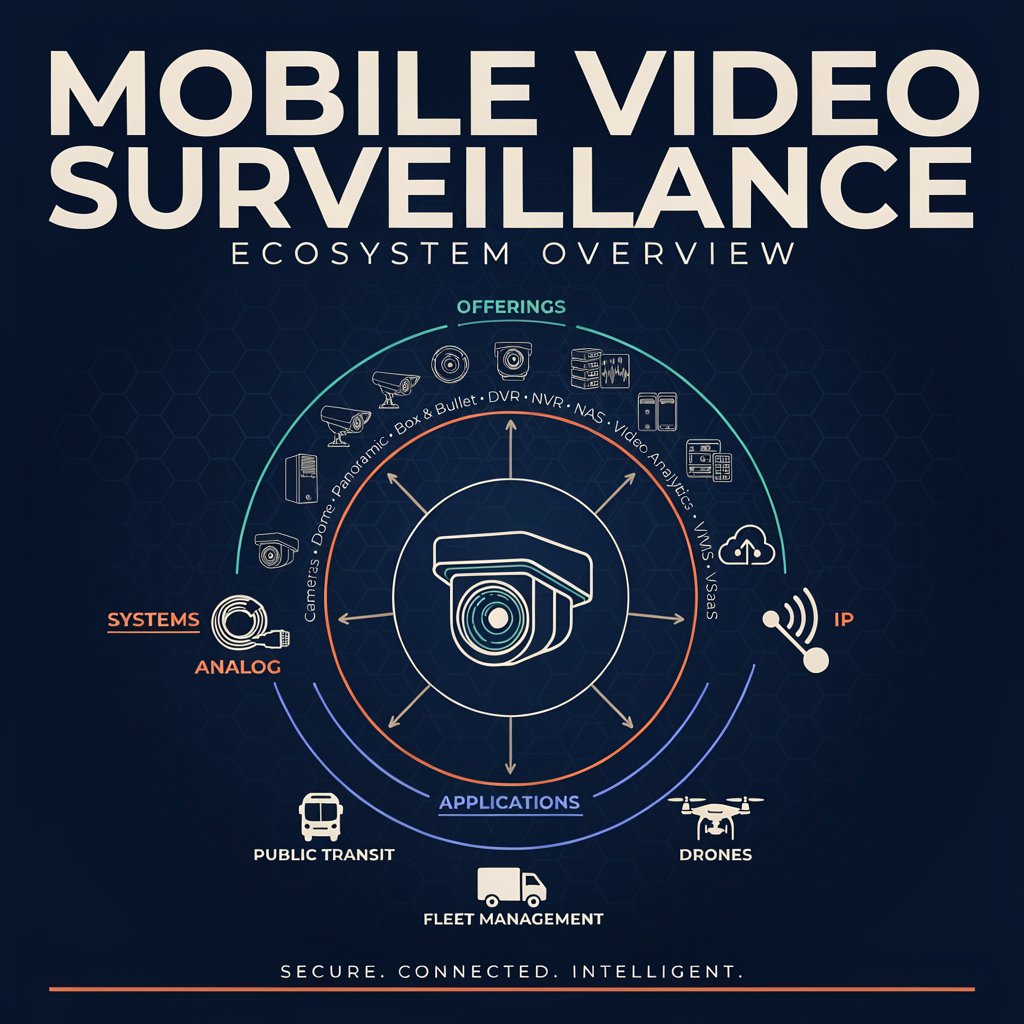
Monitoring applications are expanding as organizations seek real-time visibility into geographically distributed operations. Mobile cameras can transmit selected video feeds to centralized control centers using cellular, 5G, private wireless, Wi-Fi, or satellite connectivity. Security personnel can remotely observe vehicles, facilities, and temporary sites without requiring a physical presence at every location. This capability is especially valuable for large organizations managing multiple operational areas.
Remote monitoring is becoming more efficient through edge computing. High-resolution cameras can generate substantial amounts of data, making continuous transmission challenging in some environments. Edge-enabled devices can process video locally and identify selected events before transmitting information to a central platform. This can reduce bandwidth requirements while allowing important alerts and video clips to reach security teams quickly.
Detection capabilities are being strengthened by artificial intelligence and computer vision. AI algorithms can identify people, vehicles, objects, and predefined events within video streams. Systems can detect movement in restricted areas, unusual vehicle activity, abandoned objects, or other specified conditions. Automated detection can reduce the burden on security personnel who would otherwise need to monitor numerous video feeds continuously.
Advanced analytics can also support anomaly detection. Instead of simply identifying movement, intelligent systems can analyze patterns and determine whether activity differs from expected conditions. In industrial and transportation environments, this can help identify potentially unsafe or unauthorized behavior. AI-based detection can improve the prioritization of alerts, although human review remains important for sensitive security decisions.
Perimeter monitoring represents another important application. Large industrial facilities, energy installations, warehouses, construction sites, and infrastructure projects can have extensive boundaries that are difficult to protect using fixed cameras alone. Mobile surveillance units and drones can provide flexible perimeter coverage. When combined with motion sensors, access-control systems, and AI analytics, mobile video can create a more responsive detection system.
Inquiry Before Buying @ https://www.marketsandmarkets.com/Enquiry_Before_BuyingNew.asp?id=28819736
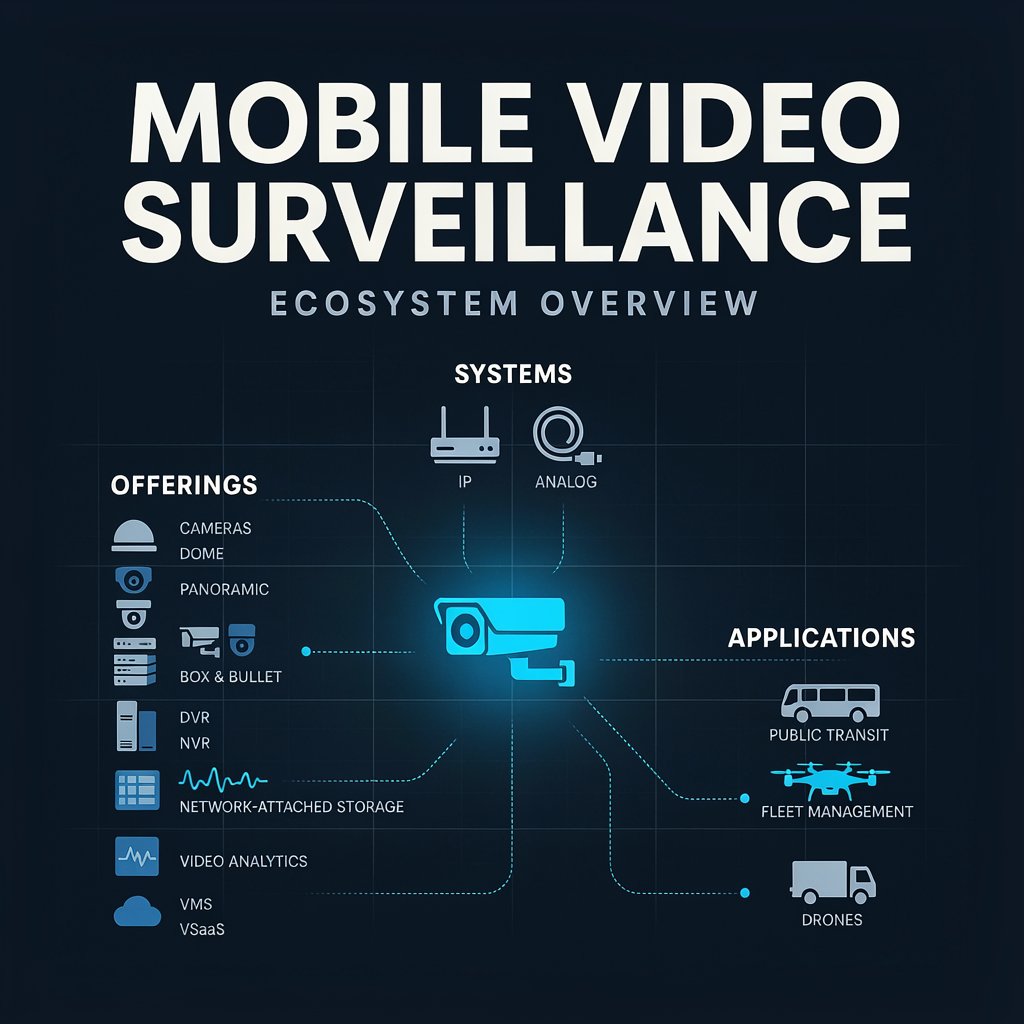
Drone surveillance is expanding the detection capabilities of mobile video systems. Aerial platforms can monitor large areas, investigate alarms, and provide visual information from difficult-to-access locations. Thermal cameras and low-light imaging can support surveillance during nighttime or challenging environmental conditions. AI-based object detection and tracking can further improve the ability of operators to identify relevant activity within aerial video.
Investigation applications represent a major source of value for mobile surveillance. Recorded video can provide evidence for accident analysis, criminal investigations, insurance claims, employee safety reviews, and operational assessments. Intelligent video management systems can organize footage by time, location, camera, object, and event, allowing authorized users to locate relevant information more quickly.
AI-assisted video search is transforming investigation workflows. Traditional investigations may require personnel to review hours of footage manually. Intelligent platforms can index video and identify specific characteristics, such as vehicles, people, objects, or activities. Advanced search capabilities can reduce investigation time and help organizations retrieve relevant evidence from large archives.
Integration with other data sources is increasing the usefulness of investigation platforms. Mobile video can be combined with GPS information, telematics, access records, alarm events, sensor data, and communication logs. This can help investigators establish a more complete timeline of an incident. For example, vehicle video can be correlated with speed, location, braking, and route information to support accident reconstruction.
Cloud-based evidence management is becoming increasingly important for distributed organizations. Cloud platforms can provide centralized storage and controlled access to video generated by body cameras, vehicles, drones, and portable systems. Authorized personnel can retrieve footage from different locations through secure interfaces. Cloud systems can also support automated backup, retention management, user permissions, and software updates.
Security operations centers are increasingly integrating mobile video into broader command-and-control environments. Video feeds can be displayed alongside alarms, access-control information, maps, and sensor data. This creates a unified operational picture and allows personnel to evaluate incidents using multiple sources of information. Mobile cameras can therefore become active components of security infrastructure rather than isolated recording devices.
View detailed Table of Content here – https://www.marketsandmarkets.com/Market-Reports/mobile-video-surveillance-market-28819736.html
Cybersecurity is a critical consideration across security, monitoring, detection, and investigation applications. Mobile surveillance devices may communicate through wireless networks and connect to cloud or on-premises video platforms. Strong encryption, authentication, access management, secure firmware, and device monitoring are necessary to protect video and prevent unauthorized access. Cybersecurity requirements are particularly important when video is used as legal or operational evidence.
Privacy and regulatory requirements will also shape market development. Mobile cameras can record individuals in public and private environments, while AI analytics may introduce additional concerns when automated identification or behavioral analysis is used. Organizations must establish appropriate policies for recording, data access, retention, and sharing. Compliance capabilities will increasingly influence purchasing decisions.
High-performance hardware is supporting broader application opportunities. Improvements in camera resolution, low-light sensitivity, thermal imaging, battery efficiency, ruggedized design, and wireless communication are making mobile systems more suitable for demanding environments. Portable systems can operate for longer periods, while vehicle-mounted cameras can withstand vibration and environmental conditions associated with continuous operation.
The competitive landscape includes camera manufacturers, video management software providers, AI analytics companies, cloud service providers, telecommunications companies, drone manufacturers, and systems integrators. Vendors are increasingly competing on analytics capabilities, interoperability, cybersecurity, remote management, image quality, scalability, and total cost of ownership. Integrated solutions that combine hardware, software, connectivity, and analytics can provide greater value to customers.
Looking ahead, the Mobile Video Surveillance Industry is expected to benefit from continued demand across security, monitoring, detection, and investigation applications. AI, edge computing, cloud platforms, 5G, IoT sensors, drones, and advanced imaging technologies will expand the capabilities of mobile surveillance systems. These developments will enable organizations to monitor more locations, detect events faster, and investigate incidents more efficiently.
The market is gradually moving from passive video recording toward intelligent security ecosystems capable of collecting, analyzing, and acting on visual information. As organizations prioritize real-time awareness, flexible deployment, evidence management, and proactive threat detection, mobile video surveillance will become increasingly integrated into modern security operations. Continued technological advances are expected to create new opportunities across public safety, transportation, logistics, industrial security, commercial facilities, and critical infrastructure.