
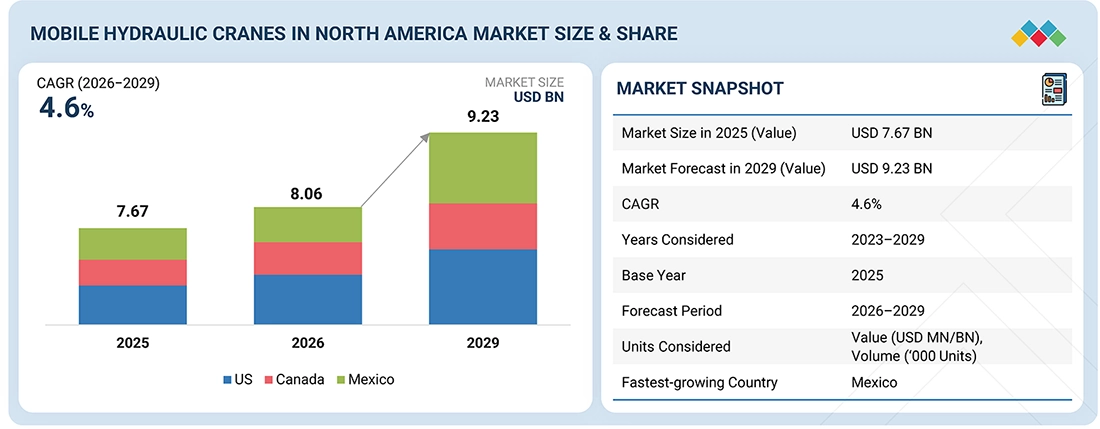
The Mobile Hydraulic Cranes Market is undergoing significant digital transformation as construction, infrastructure, energy, manufacturing, mining, and logistics companies adopt connected technologies to improve lifting productivity, safety, and equipment efficiency. Traditional hydraulic crane systems are increasingly being enhanced with telematics, IoT sensors, artificial intelligence, cloud platforms, automation, and digital control systems. These developments are creating a technology-driven shift toward intelligent cranes capable of providing real-time operational information and supporting data-based decision-making.
Expansion of Connected Crane Technologies
Connected equipment is becoming increasingly important across modern construction and industrial operations. Mobile hydraulic cranes can be equipped with sensors that collect information about hydraulic pressure, engine performance, fuel consumption, load conditions, boom position, operating hours, and machine location.
This information can be transmitted through telematics platforms to operators and fleet managers. Continuous connectivity provides greater visibility into equipment performance and enables companies to optimize crane deployment, monitor utilization, and respond more quickly to operational issues.
Download PDF Brochure @ https://www.marketsandmarkets.com/pdfdownloadNew.asp?id=38642664
IoT-Enabled Crane Monitoring
The Internet of Things is playing an important role in the digital transformation of mobile hydraulic cranes. IoT-enabled sensors allow different crane components to communicate operational information to centralized monitoring systems.
Connected monitoring can help identify changes in equipment behavior, track lifting cycles, and provide alerts when operating conditions move outside predefined parameters. As IoT infrastructure becomes more accessible, crane manufacturers are expected to integrate greater levels of connectivity into new equipment platforms.
Artificial Intelligence and Advanced Analytics
Artificial intelligence is expanding the capabilities of digital crane management systems. AI algorithms can analyze large volumes of operational information to identify equipment utilization patterns, maintenance requirements, safety risks, and performance inefficiencies.
Machine learning can also support predictive maintenance by recognizing early indicators of component deterioration. Over time, AI-based analytics can help fleet operators optimize equipment scheduling, reduce downtime, and improve overall productivity.
Automation and Semi-Autonomous Operations
Automation is becoming a major technology outlook for the Mobile Hydraulic Cranes Market. Advanced electronic controls can automate selected functions such as boom positioning, load handling, speed regulation, and movement coordination.
Semi-autonomous systems can combine automated functions with operator supervision, allowing human personnel to intervene when complex site conditions arise. This approach can improve lifting consistency while reducing the operational burden on crane operators.
Inquiry Before Buying @ https://www.marketsandmarkets.com/Enquiry_Before_BuyingNew.asp?id=38642664
Smart Load Monitoring and Safety
Digital transformation is also strengthening crane safety through smart load monitoring. Load cells, hydraulic pressure sensors, boom angle sensors, and electronic rated capacity systems can provide continuous information about lifting conditions.
When integrated with intelligent control platforms, these technologies can generate warnings when loads or operating configurations approach safety thresholds. Real-time monitoring can support better operator decisions and reduce risks associated with overloading and unstable lifting conditions.
Cloud-Based Fleet Management
Cloud computing is enabling crane owners and rental companies to manage distributed fleets through centralized digital platforms. Equipment location, operating hours, maintenance records, fuel consumption, and machine health information can be accessed remotely.
Cloud-based systems can improve coordination between field teams, maintenance personnel, and fleet managers. They can also provide historical data that supports equipment lifecycle analysis and long-term asset planning.
Digital Twins and Virtual Crane Models
Digital twin technology is emerging as an important component of the crane technology outlook. Digital representations of mobile hydraulic cranes can combine equipment specifications, sensor information, operating data, and maintenance history.
These models can support equipment diagnostics, performance simulation, predictive maintenance, operator training, and optimization. Digital twins may become increasingly valuable as crane operations become more automated and interconnected with broader construction management systems.
View detailed Table of Content here – https://www.marketsandmarkets.com/Market-Reports/mobile-hydraulic-cranes-market-38642664.html
Edge Computing and Real-Time Decision-Making
Edge computing can complement cloud platforms by processing selected crane data closer to the equipment. Local processing can reduce response times for safety alerts, machine diagnostics, and automated control functions.
This capability is particularly useful at remote construction, mining, infrastructure, and energy sites where network connectivity may be inconsistent. Combining edge computing with IoT sensors can enable faster responses while maintaining centralized data management through cloud systems.
Electrification and Energy Optimization
The transition toward hybrid and electric construction equipment is adding another dimension to digital transformation. Electrified mobile hydraulic cranes can incorporate digital systems for monitoring battery condition, charging requirements, energy consumption, and operating cycles.
Intelligent energy management can help fleet operators understand equipment efficiency and optimize charging or power usage. The integration of electrification with connected technologies can support lower operating emissions and more efficient crane utilization.
Future Market Outlook
The Mobile Hydraulic Cranes Industry is expected to continue evolving through the integration of IoT, telematics, AI, automation, cloud computing, edge processing, digital twins, smart load monitoring, and electrification. These technologies will increasingly influence crane design, fleet management, maintenance strategies, and safety systems.
As construction and industrial environments become more connected, digital transformation will shift mobile hydraulic cranes from standalone lifting machines toward intelligent and data-driven equipment platforms. Continued advances in sensors, connectivity, AI analytics, automated controls, and energy management are expected to create new technology opportunities while improving productivity, reliability, safety, and lifecycle efficiency across the Mobile Hydraulic Cranes Market.