
The Mining Automation Market is undergoing significant transformation as mining companies increasingly adopt autonomous equipment, robotics, artificial intelligence (AI), and digital technologies to improve operational efficiency, productivity, and workplace safety. The growing need to optimize mining operations, reduce labor dependency, minimize operational risks, and improve resource utilization is accelerating the adoption of automated mining solutions across surface and underground mining environments.
Mining automation technologies include autonomous haulage systems, remotely operated mining equipment, automated drilling systems, fleet management solutions, and advanced monitoring platforms. These technologies enable mining operators to improve operational visibility, streamline material handling, and support continuous mining activities.
The increasing integration of Industrial Internet of Things (IIoT), machine learning, cloud computing, and advanced analytics is further transforming conventional mining operations into connected and intelligent mining environments. As competition intensifies, leading companies are focusing on technological innovation, strategic partnerships, acquisitions, and product portfolio expansion to strengthen their market positions.
Top 10 Key Takeaways
-
The global mining automation market is projected to reach USD 5.93 billion by 2030.
-
The market is expected to grow at a CAGR of 8.4% from 2025 to 2030.
-
Underground mining held the largest market share in 2024.
-
Equipment represents a significant share of the market, driven by autonomous trucks, drilling rigs, and loaders.
-
Mine development held the largest share by workflow in 2024.
-
Mineral mining dominated the market by application in 2024.
-
Asia Pacific is expected to register the highest growth rate.
-
AI, IoT, robotics, and digital twins are transforming mining operations.
-
Caterpillar, Komatsu, Sandvik, Epiroc, and Hitachi Construction Machinery are key market participants.
-
Autonomous equipment, predictive maintenance, and smart connected mining will create future growth opportunities.
Download PDF Brochure @ https://www.marketsandmarkets.com/pdfdownloadNew.asp?id=257609431
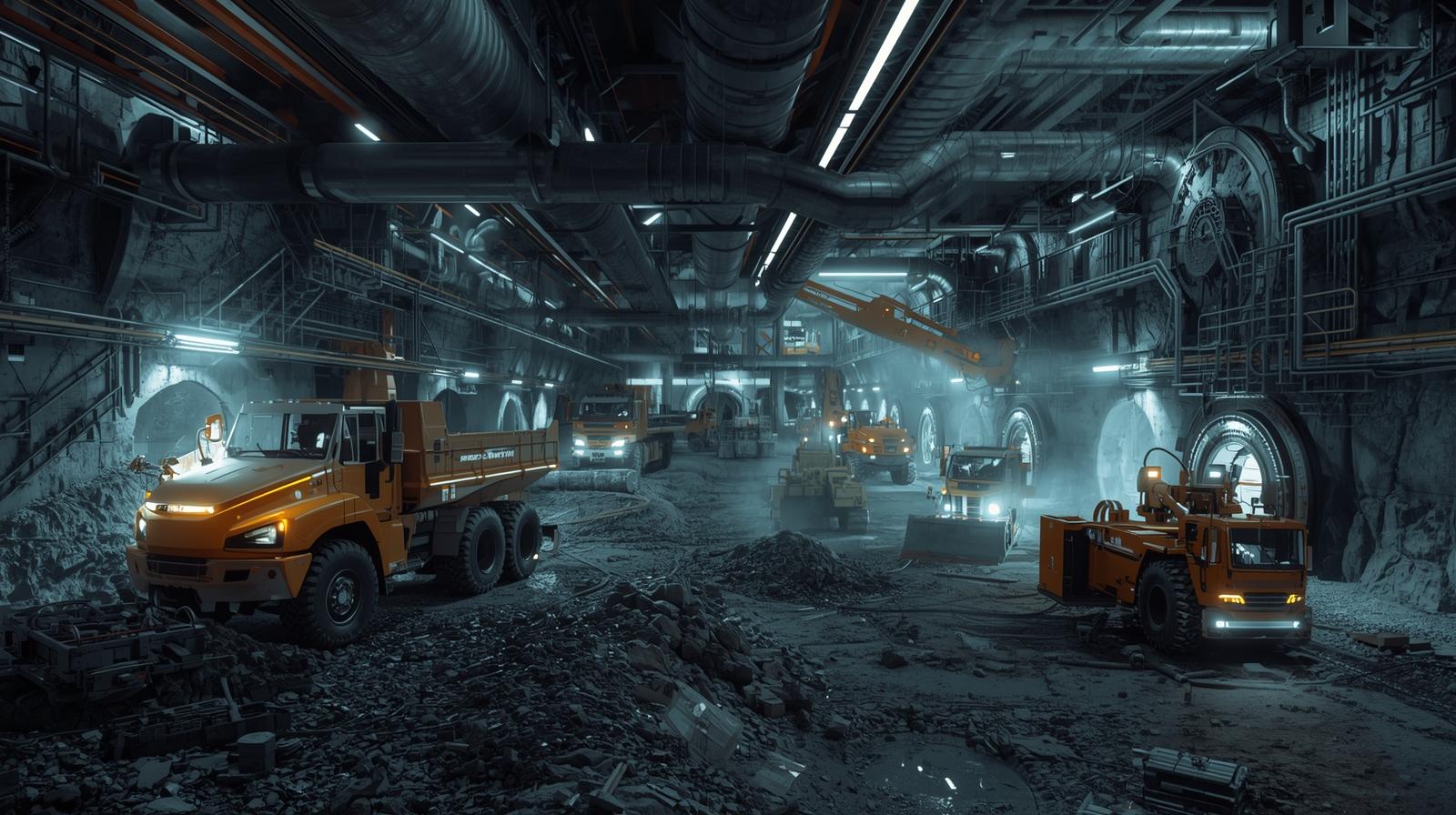
Mining Automation Market
Mining Automation Market Size and Growth Outlook
According to MarketsandMarkets, the global mining automation market is valued at USD 3.96 billion in 2025 and is projected to reach USD 5.93 billion by 2030, registering a CAGR of 8.4% during the forecast period.
The market is expanding as mining companies increasingly invest in autonomous equipment, advanced software platforms, and connected communication systems. Automation is helping mining operators improve productivity, reduce equipment downtime, optimize fleet utilization, and minimize human exposure to hazardous working conditions.
The growing demand for metals, minerals, and critical raw materials used in electric vehicles, renewable energy systems, electronics, and infrastructure is further encouraging mining companies to modernize their operations.
Mining Automation Market: Understanding the Competitive Landscape
The competitive landscape of the mining automation market is characterized by established mining equipment manufacturers and technology providers offering integrated automation solutions. Companies are competing through equipment innovation, software development, strategic collaborations, acquisitions, and expansion into emerging mining markets.
Major companies operating in the market include Caterpillar, Komatsu, Sandvik AB, Epiroc AB, and Hitachi Construction Machinery Co., Ltd.
These companies are developing autonomous mining trucks, automated drilling rigs, underground loaders, remote monitoring platforms, fleet management software, and intelligent mining communication systems.
Caterpillar maintains a strong competitive position through its autonomous haulage technologies and connected mining equipment. Komatsu is expanding its autonomous mining capabilities through advanced equipment and fleet management solutions. Sandvik and Epiroc are strengthening their underground mining automation portfolios through remote-controlled equipment, automated drilling systems, and digital mining technologies.
The ability to provide integrated hardware, software, and communication solutions is becoming an important competitive differentiator.
Product Innovation and Autonomous Mining Equipment
Product innovation is one of the most important competitive strategies in the mining automation market. Mining companies are increasingly adopting autonomous haul trucks, automated drilling rigs, underground load-haul-dump (LHD) loaders, and intelligent tunneling equipment.
Autonomous mining trucks enable continuous material transportation with reduced human intervention. These systems use sensors, positioning technologies, communication networks, and intelligent control software to navigate mining environments and optimize hauling operations.
Automated drilling rigs are improving drilling precision, reducing manual intervention, and supporting consistent production performance. Similarly, automated underground loaders help mining operators improve material handling while limiting worker exposure to hazardous underground conditions.
Leading manufacturers are investing in advanced machine control systems, collision avoidance technologies, and real-time monitoring capabilities to improve equipment performance.
These innovations allow manufacturers to differentiate their portfolios while helping mining companies reduce operating costs and improve productivity.
Strategic Partnerships and Technology Collaborations
Strategic partnerships are becoming increasingly important as mining automation requires the integration of equipment, software, sensors, communication networks, and artificial intelligence.
Mining equipment manufacturers are collaborating with technology providers, mining operators, and software companies to develop integrated automation ecosystems. These partnerships help accelerate product development, improve interoperability, and support the deployment of advanced mining solutions.
Collaborations between mining operators and equipment manufacturers also enable companies to test autonomous technologies in real-world operating environments.
For example, Caterpillar and Komatsu have continued to develop autonomous mining equipment and connected fleet technologies. Sandvik and Epiroc are strengthening their digital mining capabilities through automated underground equipment and remote-operation solutions.
Technology collaborations are also supporting the integration of AI, IoT, and advanced analytics into mining operations.
Companies that establish strong technology ecosystems and long-term customer relationships are better positioned to capture opportunities in the evolving mining automation industry.
AI, IoT, and Digital Transformation in Smart Mining
Artificial intelligence and Industrial Internet of Things technologies are transforming mining operations by enabling real-time monitoring, predictive maintenance, and data-driven decision-making.
AI-powered systems can analyze equipment performance, identify operational abnormalities, optimize production schedules, and improve fleet utilization. These capabilities help mining companies reduce unexpected breakdowns and improve overall equipment effectiveness.
IoT-enabled sensors collect information related to equipment temperature, vibration, pressure, fuel consumption, and operating conditions. This information can be analyzed through digital platforms to identify potential equipment failures before they disrupt mining operations.
Digital twins are also becoming increasingly relevant. Mining companies can use virtual representations of equipment and operational processes to simulate different scenarios, monitor asset performance, and optimize mining activities.
Leading automation providers are investing in connected mining platforms that combine equipment monitoring, operational analytics, and remote management capabilities.
The integration of AI, IoT, and digital twins is creating opportunities for manufacturers to move beyond traditional equipment sales toward software-enabled services and long-term digital solutions.
Underground Mining Automation: A Major Growth Opportunity
Underground mining is an important segment of the mining automation market and held the largest market share in 2024. Underground mining environments involve significant safety risks, restricted working spaces, and challenging operating conditions, making automation particularly valuable.
Automated drilling, remote-controlled loaders, autonomous haulage systems, and smart ventilation technologies are helping mining operators improve safety and operational efficiency.
Remote operation centers allow operators to control equipment from safer locations, reducing the need for workers to remain in hazardous underground environments.
Smart ventilation systems also support improved air quality management by adjusting ventilation requirements based on operating conditions and equipment activity.
As mining companies increasingly extract minerals from deeper deposits, demand for advanced underground automation technologies is expected to increase.
For equipment manufacturers, developing reliable underground automation solutions presents an important opportunity to strengthen their market presence.
Software and Communication Systems Driving Connected Mining
Software and communication systems are becoming essential components of modern mining automation infrastructure.
Remote monitoring platforms enable mining operators to track equipment performance, identify operational issues, and manage activities across multiple mining sites. Asset management software helps organizations monitor equipment health, schedule maintenance, and improve asset utilization.
Fleet management systems are also improving mining productivity by optimizing equipment movement, reducing idle time, and coordinating transportation activities.
Wireless communication networks, industrial connectivity solutions, and IoT platforms enable continuous information exchange between mining equipment, control centers, and operational management systems.
Companies are increasingly integrating software capabilities with autonomous equipment to provide complete mining automation solutions.
This shift is creating new business opportunities through software subscriptions, remote diagnostics, predictive maintenance, and digital mining services.
Regional Expansion and Emerging Market Opportunities
Regional expansion is another important competitive strategy for companies operating in the mining automation market.
Asia Pacific is projected to register the highest CAGR during the forecast period, supported by extensive mineral reserves, increasing mining investments, and growing adoption of smart mining technologies.
China, India, and Australia are important markets due to their mining activities and demand for advanced extraction technologies. Increasing industrialization and the growing need for metals and minerals are encouraging mining companies to invest in automated equipment and connected operational systems.
North America and Europe also represent important markets because of their established mining industries, advanced technology ecosystems, and increasing focus on workplace safety and operational efficiency.
For global manufacturers, expanding distribution networks, developing regional partnerships, and offering customized automation solutions will be essential to capturing emerging opportunities.
Sustainability and Operational Efficiency as Competitive Priorities
Sustainability is becoming an important consideration in mining automation investments. Mining companies are increasingly focusing on reducing fuel consumption, optimizing equipment utilization, minimizing waste, and improving environmental performance.
Automated haulage systems can optimize vehicle movement and reduce unnecessary idling. Intelligent drilling systems can improve extraction precision, while predictive maintenance helps extend equipment life and reduce resource consumption.
Advanced monitoring systems also enable mining operators to track energy usage and identify operational inefficiencies.
Manufacturers are increasingly developing electric mining equipment, energy-efficient systems, and intelligent fleet management solutions to support more sustainable mining operations.
Companies that combine automation capabilities with energy efficiency and environmental performance can strengthen their competitive positioning.
Competitive Challenges in the Mining Automation Market
Despite significant growth opportunities, market participants face several challenges.
High Initial Investment: Autonomous mining equipment, communication infrastructure, sensors, and advanced software require substantial capital expenditure. This can limit adoption among smaller mining operators.
Interoperability Issues: Integrating equipment and software from different manufacturers can create technical challenges and increase implementation costs.
Workforce Skill Gaps: Automated mining operations require specialized skills in robotics, software management, data analytics, and equipment maintenance. Mining companies must invest in workforce training and technical development.
Cybersecurity Risks: Increasing connectivity between mining equipment and digital platforms creates potential vulnerabilities. Protecting operational data and industrial control systems is becoming increasingly important.
Resource Depletion: Declining availability of easily accessible mineral deposits can increase extraction complexity and operational costs, creating additional pressure on mining companies.
Manufacturers that address these challenges through scalable platforms, open communication standards, secure systems, and workforce training solutions are likely to gain a competitive advantage.
Future Outlook: Competitive Strategies Will Shape the Future of Smart Mining
The mining automation market is moving toward an increasingly connected, autonomous, and intelligent operating environment. Competitive success will depend on manufacturers’ ability to combine advanced equipment, digital software, AI, robotics, and communication technologies into integrated mining solutions.
Autonomous haulage systems, automated drilling rigs, remote monitoring platforms, and predictive maintenance technologies will remain important areas of innovation. The growing adoption of smart connected mining will also create opportunities for companies offering integrated digital infrastructure.
Strategic partnerships, acquisitions, regional expansion, and product innovation will continue to influence competitive positioning. Meanwhile, increasing demand for critical minerals used in electric vehicles, renewable energy, and advanced electronics will encourage mining companies to improve extraction efficiency and operational productivity.
With the global mining automation market projected to reach USD 5.93 billion by 2030, leading companies will increasingly compete through technology differentiation, equipment reliability, software integration, and customer-focused automation solutions.
Companies that successfully combine operational efficiency, worker safety, sustainability, and digital innovation will be well positioned to shape the future of smart mining.
Frequently Asked Questions (FAQs)
1. What is the projected size of the Mining Automation Market by 2030?
The global mining automation market is projected to reach USD 5.93 billion by 2030, growing from USD 3.96 billion in 2025.
2. What is driving the growth of the Mining Automation Market?
Increasing demand for operational efficiency, workplace safety, autonomous equipment, AI-powered monitoring, and connected mining technologies is driving market growth.
3. Which mining technique holds the largest market share?
Underground mining held the largest market share in 2024 due to increasing adoption of automated drilling, hauling, and monitoring technologies.
4. Which region is expected to grow fastest in the Mining Automation Market?
Asia Pacific is projected to register the highest CAGR, supported by mining investments and smart mining adoption in China, India, and Australia.
5. Who are the key players in the Mining Automation Market?
Major players include Caterpillar, Komatsu, Sandvik AB, Epiroc AB, and Hitachi Construction Machinery Co., Ltd.