
The global Millimeter Wave Technology Market is witnessing unprecedented growth as telecommunications operators, governments, semiconductor manufacturers, and network equipment providers accelerate investments in 5G Advanced infrastructure. The latest wave of next-generation wireless deployments is creating significant demand for millimeter wave (mmWave) spectrum technologies capable of delivering ultra-high-speed connectivity, low latency, and massive network capacity.
As countries race to strengthen their digital economies and support emerging applications such as artificial intelligence (AI), autonomous mobility, industrial automation, immersive reality, and smart city ecosystems, millimeter wave technology has become a critical enabler of next-generation communications infrastructure.
Download PDF Brochure @ https://www.marketsandmarkets.com/pdfdownloadNew.asp?id=981
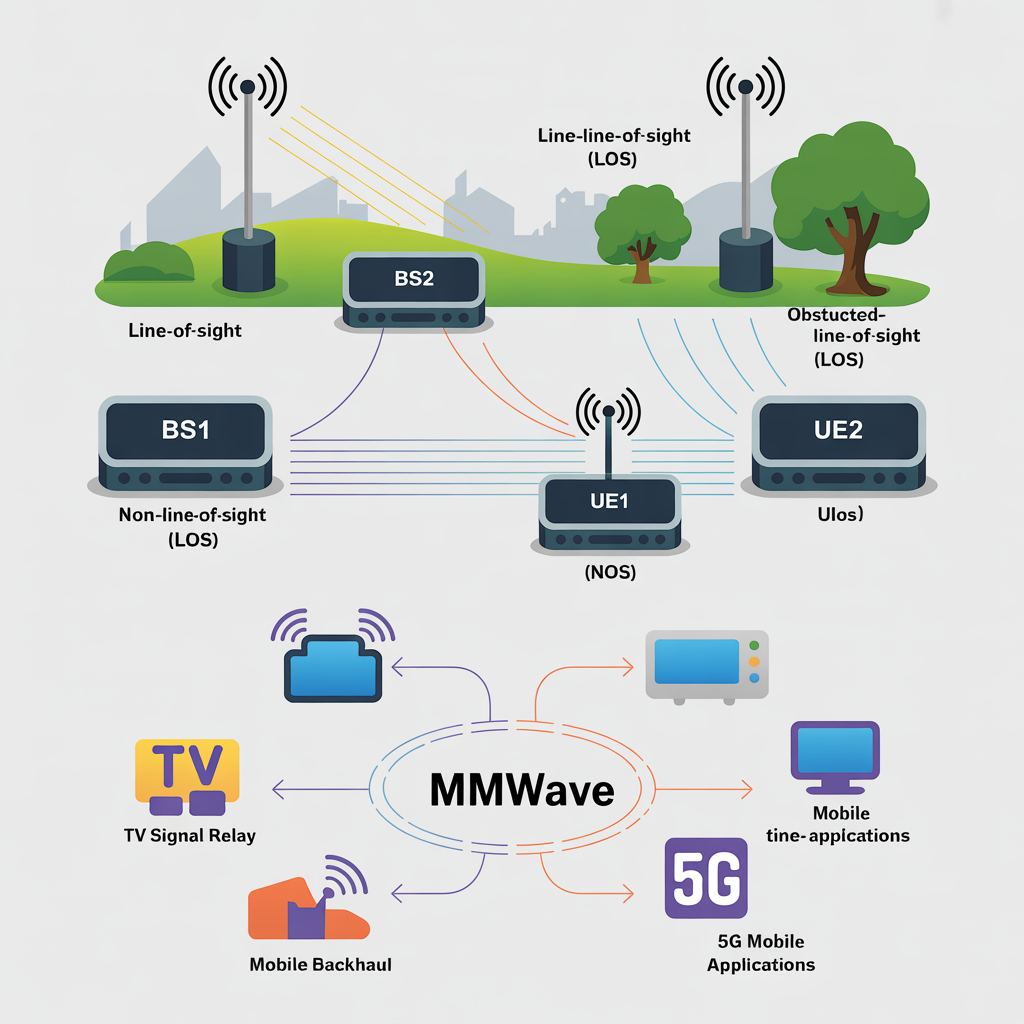
5G Advanced Rollouts Fuel Demand for Millimeter Wave Solutions
The recent expansion of 5G Advanced networks across North America, Europe, Asia Pacific, and the Middle East is significantly boosting demand for mmWave-enabled equipment and components. Telecommunications operators are increasingly leveraging high-frequency spectrum bands to overcome network congestion and support bandwidth-intensive applications.
Unlike traditional cellular frequencies, millimeter wave bands offer significantly larger bandwidth capacity, enabling multi-gigabit data transmission speeds. This capability is becoming essential as mobile data consumption continues to rise and enterprises deploy increasingly sophisticated digital technologies.
The growing deployment of fixed wireless access (FWA), private 5G networks, cloud gaming platforms, augmented reality applications, and AI-powered services is creating new growth opportunities for millimeter wave technology providers.
Data Center Expansion Creates New Market Opportunities
The rapid growth of AI infrastructure and hyperscale data centers is further strengthening the outlook for the millimeter wave technology market. Major technology companies are investing billions of dollars in advanced computing facilities that require ultra-fast data transmission and low-latency networking solutions.
Millimeter wave technology is increasingly being integrated into high-performance wireless backhaul systems, data center interconnects, and edge computing architectures. These applications enable faster communication between distributed computing resources while supporting the growing demands of AI model training and real-time analytics.
As organizations seek to reduce network bottlenecks and improve operational efficiency, mmWave-based communication systems are emerging as a strategic investment across the digital infrastructure ecosystem.
Automotive Industry Accelerates Adoption of Millimeter Wave Radar
One of the fastest-growing applications for millimeter wave technology is advanced driver assistance systems (ADAS) and autonomous vehicle development. Automotive manufacturers are increasingly incorporating mmWave radar sensors to enhance vehicle safety, navigation accuracy, and collision avoidance capabilities.
Millimeter wave radar systems provide superior object detection in challenging weather conditions such as rain, fog, snow, and darkness. As governments worldwide strengthen vehicle safety regulations and consumers demand advanced safety features, automotive radar adoption is expected to increase substantially.
The transition toward connected and autonomous mobility solutions is expected to create long-term revenue opportunities for millimeter wave component suppliers, radar system manufacturers, and semiconductor companies.
Industrial Automation and Industry 4.0 Drive Market Expansion
Manufacturing organizations are embracing Industry 4.0 initiatives to improve productivity, efficiency, and operational visibility. Millimeter wave technology is playing a vital role in enabling real-time communication between industrial devices, robotics systems, sensors, and automated machinery.
Factories are increasingly deploying private wireless networks powered by mmWave frequencies to support mission-critical operations. These networks provide the reliability, speed, and capacity required for predictive maintenance, machine vision, digital twins, and autonomous industrial systems.
As smart manufacturing investments continue to grow globally, demand for high-performance wireless communication technologies is expected to rise accordingly.
Defense and Aerospace Applications Strengthen Market Potential
The defense and aerospace sectors remain important contributors to millimeter wave technology adoption. Military organizations utilize mmWave systems for advanced radar, surveillance, target tracking, electronic warfare, and secure communications applications.
Governments across major economies are increasing defense modernization spending, creating opportunities for companies developing next-generation radar and sensing technologies. The ability of millimeter wave systems to deliver highly accurate detection and imaging capabilities makes them particularly valuable for defense operations.
Additionally, aerospace companies are exploring mmWave technologies to enhance aircraft communication systems, navigation platforms, and situational awareness capabilities.
Asia Pacific Emerges as a High-Growth Regional Market
Asia Pacific continues to establish itself as one of the most attractive regions for millimeter wave technology investments. Countries including China, Japan, South Korea, and India are aggressively expanding 5G infrastructure and digital transformation initiatives.
Strong government support, rising smartphone penetration, increasing industrial automation, and growing semiconductor manufacturing capabilities are contributing to regional market growth. The presence of leading electronics manufacturers and telecommunications equipment suppliers further strengthens the region’s competitive position.
Meanwhile, North America remains a key innovation hub, driven by early adoption of advanced wireless technologies, robust research and development investments, and extensive deployment of next-generation communication networks.
Competitive Landscape
The millimeter wave technology market features participation from major semiconductor manufacturers, telecommunications equipment providers, radar system developers, and wireless infrastructure companies. Industry leaders are focusing on product innovation, strategic partnerships, spectrum optimization, and advanced chipset development to strengthen their market positions.
Companies are investing heavily in research and development to improve signal propagation, reduce deployment costs, enhance network efficiency, and expand the commercial viability of millimeter wave applications across multiple industries.
Future Outlook
The future of the millimeter wave technology market appears exceptionally promising as global demand for high-capacity wireless communications continues to accelerate. The convergence of 5G Advanced networks, AI-powered digital infrastructure, autonomous transportation, Industry 4.0 initiatives, and next-generation defense systems is expected to drive sustained market expansion throughout the forecast period.
Organizations seeking to capitalize on these opportunities are increasingly relying on comprehensive market intelligence to understand technology trends, competitive dynamics, investment hotspots, and emerging application areas. As digital transformation reshapes industries worldwide, millimeter wave technology is positioned to become a foundational pillar of the connected economy.
According to MarketsandMarkets, the Millimeter Wave Technology Market is expected to experience strong growth over the coming years, supported by expanding 5G deployments, increasing adoption of advanced radar systems, and rising investments in high-speed wireless communication infrastructure worldwide.
For more info: https://www.marketsandmarkets.com/Market-Reports/millimeter-wave-technology-market-981.html