
The 4D imaging radar market is emerging as a critical pillar in the evolution of autonomous mobility and advanced sensing systems. The 4D imaging radar market is expected to grow from USD 392.8 million in 2025 to USD 1,206.9 million by 2030, at a CAGR of 25.2%
This rapid growth is being fueled by the increasing demand for high-resolution perception, all-weather sensing, and advanced driver-assistance systems (ADAS). As automotive intelligence advances, 4D imaging radar is becoming a core enabler of safe and reliable autonomous decision-making.
Below are the key trends shaping the future of this fast-growing market.
1. Rising Demand for ADAS and Autonomous Driving
One of the strongest drivers of the 4D imaging radar market is the rapid adoption of ADAS and autonomous vehicle technologies.
4D radar provides four-dimensional sensing—range, azimuth, elevation, and velocity—allowing vehicles to detect objects with high precision even in complex environments. This capability is essential for:
- Collision avoidance
- Lane change assistance
- Adaptive cruise control
- Highway autonomous navigation
As automakers move toward Level 2+ and Level 3 autonomy, 4D imaging radar is becoming indispensable for safety-critical decision-making.
2. Superior Performance in Adverse Weather Conditions
Unlike cameras and LiDAR systems, 4D imaging radar performs reliably in fog, rain, snow, and low-light conditions.
This resilience is a key reason for its increasing adoption in automotive and mobility applications. The ability to maintain consistent object detection regardless of visibility conditions is making radar a preferred complementary sensor in sensor fusion architectures.
This trend is especially important for autonomous driving safety in real-world, unpredictable environments.
Download PDF Brochure @ https://www.marketsandmarkets.com/pdfdownloadNew.asp?id=226035909
3. Shift Toward High-Resolution Sensing and Sensor Fusion
Modern autonomous systems rely on multi-sensor fusion, combining data from cameras, LiDAR, and radar.
4D imaging radar enhances this ecosystem by delivering:
- High-resolution spatial mapping
- Accurate velocity tracking
- Improved object classification
- Enhanced depth perception
This makes it a key component in enabling robust and redundant perception systems, which are essential for autonomous safety.
4. Advancements in Radar Chipsets and MIMO Technology
Technological innovation in radar hardware is accelerating market growth.
Key developments include:
- MIMO (Multiple Input Multiple Output) radar architectures
- AI-enabled signal processing
- Higher channel count radar chips
- Compact and cost-efficient semiconductor designs
These advancements are improving angular resolution, detection range, and real-time processing capability, making 4D imaging radar more viable for mass-market deployment.
5. Expansion Beyond Automotive Applications
While automotive remains the dominant segment, 4D imaging radar is expanding into other industries such as:
- Aerospace & defense (surveillance, UAV detection, ISR missions)
- Traffic monitoring systems (smart city infrastructure)
- Industrial automation (robotics and logistics safety systems)
This diversification is expanding the total addressable market and accelerating adoption across non-automotive sectors.
6. Growth of Long-Range and High-Performance Radar Systems
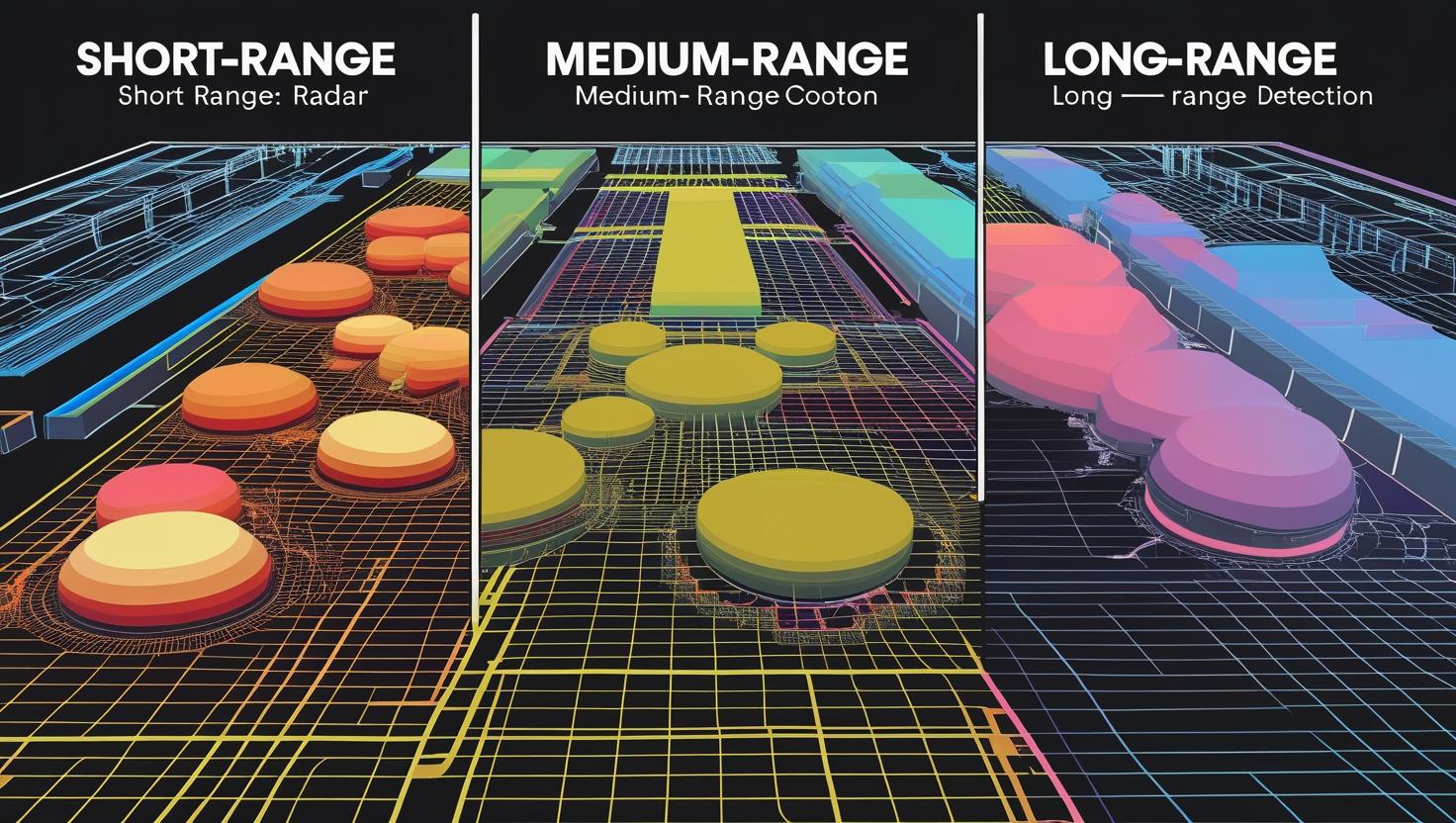
Long-range 4D imaging radar systems are gaining traction due to their ability to detect objects at high speeds and long distances, often exceeding 300 meters.
These systems are critical for:
- Highway autonomous driving
- Early hazard detection
- High-speed object tracking
As autonomy levels increase, demand for high-performance long-range sensing solutions continues to rise.
7. Increasing Focus on Safety Regulations and Standardization
Governments and regulatory bodies are enforcing stricter vehicle safety and automation standards, accelerating adoption of advanced sensing technologies.
4D imaging radar is becoming a key enabler of compliance with:
- Collision avoidance mandates
- Advanced braking systems
- Driver monitoring requirements
This regulatory push is significantly contributing to sustained market growth.
Conclusion: A Core Enabler of Autonomous Mobility
The 4D imaging radar market is entering a high-growth phase driven by the convergence of autonomy, safety, and sensor innovation. Its ability to deliver real-time, high-resolution, all-weather perception positions it as a foundational technology for the future of mobility.
As automotive systems evolve toward full autonomy, 4D imaging radar will play an increasingly central role in enabling safer, smarter, and more reliable transportation ecosystems.