
The increasing demand for real-time monitoring and analytics is becoming a major factor shaping the IoT Technology Market. Connected devices continuously generate information from industrial equipment, buildings, vehicles, healthcare systems, consumer devices, and infrastructure. This data can be processed and analyzed to provide actionable insights, improve productivity, support predictive maintenance, and enhance resource management. IoT Technology Market Statistics and Growth Outlook
The IoT Technology Market is expected to grow from USD 959.30 billion in 2025 to USD 1,148.62 billion by 2030, representing an increase of nearly USD 189.32 billion over the forecast period. The market is projected to grow at a 3.7% CAGR between 2025 and 2030. The growth reflects the increasing integration of connected technologies into industrial and consumer environments.
IoT technology encompasses multiple layers, including node components, software solutions, platforms, services, and end-use applications. The analysis covers components such as processors, connectivity ICs, sensors, memory devices, and logic devices. Software solutions include data management, real-time streaming analytics, network bandwidth management, remote monitoring, and security solutions.
The growing scale of connected ecosystems is also increasing the importance of data processing and analytics. IoT devices generate large volumes of information that can be used to identify operational patterns, detect anomalies, monitor assets, and optimize processes. As organizations seek faster access to actionable information, real-time analytics is becoming increasingly important to IoT deployments.
Download PDF Brochure @ https://www.marketsandmarkets.com/pdfdownloadNew.asp?id=258239167
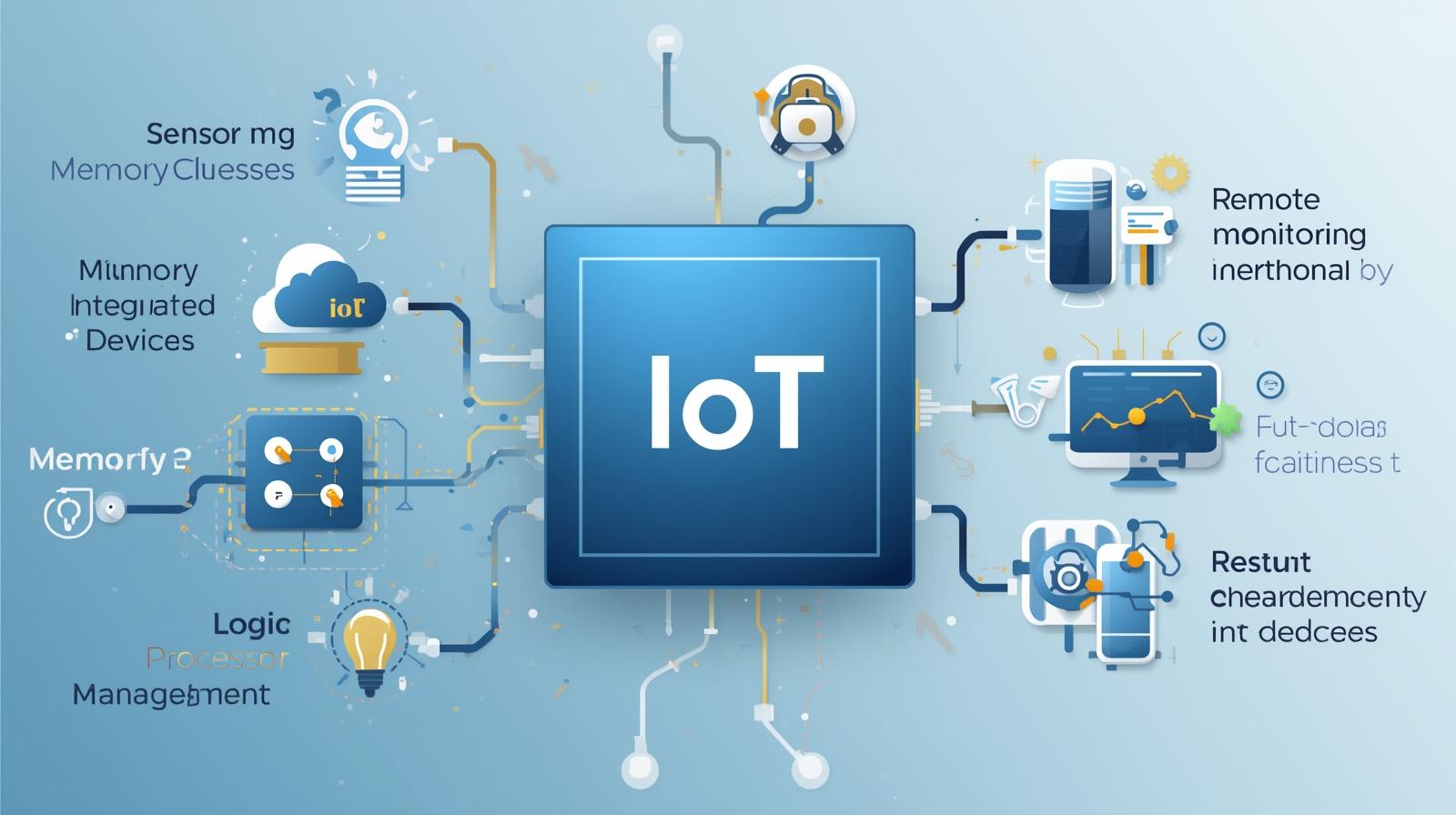
Rising Demand for Real-Time Monitoring
Real-time monitoring has become one of the most important applications of IoT technology. Connected sensors and devices can continuously capture information about equipment, environmental conditions, production processes, energy consumption, location, and other operational parameters.
In manufacturing, IoT-enabled monitoring can help organizations track machine performance and identify potential equipment problems before they result in significant downtime. In healthcare, connected devices can support remote monitoring and continuous collection of patient-related information. Smart buildings can use connected sensors to monitor energy consumption, occupancy, temperature, and other environmental conditions.
The growing availability of high-speed connectivity is therefore helping organizations deploy IoT systems at larger scales.
IoT Data Analytics Strengthens Decision-Making
The value of IoT technology extends beyond connecting devices. The ability to process and analyze the data generated by those devices is becoming increasingly important. Organizations are using IoT-generated data to identify trends, optimize resources, improve customer experiences, and make faster operational decisions.
Real-time streaming analytics is particularly important in applications where decisions need to be made quickly. Instead of waiting for data to be collected and analyzed later, organizations can process information as it is generated. This approach can support faster responses to equipment conditions, production changes, security events, and other operational situations.
real-time streaming analytics, network bandwidth management, remote monitoring, and security solutions as key software solution areas within the IoT Technology Market. The software solution segment is expected to record the highest growth rate during the forecast period.
Processors and IoT Node Components
IoT node components represent an important part of the IoT Technology Market. These components include processors, connectivity ICs, sensors, memory devices, and logic devices. Among these, the processor segment is expected to account for the largest market share during the forecast period
Processors are essential for managing data processing, connectivity, and functionality within IoT devices. As IoT applications become more sophisticated, devices increasingly require greater processing capabilities to handle data and analytics workloads.
Sensors are also fundamental to IoT ecosystems because they collect information from the physical environment. Temperature, pressure, motion, image, humidity, and other sensors can provide the data required for monitoring and automation. Advances in miniaturization, edge AI, and low-power wide-area networking are supporting broader deployment of IoT node components across sectors.
Industry 4.0 Accelerates IoT Adoption
The expansion of Industry 4.0 and smart manufacturing is another important growth factor for the IoT Technology Market. Manufacturers are increasingly connecting machines, production equipment, sensors, and enterprise systems to improve operational visibility.
Industrial IoT solutions can support machine monitoring, predictive maintenance, production optimization, asset tracking, and quality management. By collecting information directly from manufacturing equipment, organizations can gain greater visibility into production performance and identify inefficiencies.
IoT Technology Market Statistics -enabled smart factories can also integrate data from multiple systems to support more coordinated decision-making. Combined with AI, cloud computing, and edge technologies, industrial IoT can enable manufacturers to move from reactive operations toward more predictive and automated processes.
AI, Edge Computing, and 5G Transform IoT
The convergence of AI, edge computing, and 5G is creating new opportunities within the IoT Technology Market. AI can analyze large volumes of IoT data to identify patterns, predict outcomes, and automate decisions. Edge computing enables data to be processed closer to the point where it is generated, reducing the need to transfer every piece of information to centralized cloud environments.
5G is also supporting IoT deployments by providing high-speed connectivity, lower latency, and the ability to connect large numbers of devices. These capabilities are particularly relevant for smart cities, transportation, healthcare, industrial automation, and other applications requiring reliable connectivity and rapid data exchange.
That advancements in 5G, cloud computing, and AI integration are accelerating the development of IoT ecosystems.
Smart Homes and Connected Consumer Devices
Consumer applications are another important area of IoT adoption. Smart home devices, connected appliances, security systems, wearable devices, and consumer electronics are contributing to the expansion of connected ecosystems.
The increasing adoption of smart home technologies is identified by as a growth driver for IoT technology. Connected devices can provide users with real-time information and remote control capabilities while helping improve convenience, security, and energy management.
Wearable devices are also creating opportunities for continuous data collection. Connected consumer products can collect information and transmit it to applications or cloud platforms for analysis, creating new possibilities for personalized services and automated decision-making.
Asia Pacific Leads IoT Technology Growth
Asia Pacific is expected to be the fastest-growing regional market for IoT technology. attributes this growth to rapid digital transformation, government initiatives, and significant investments in 5G, AI, and smart city infrastructure across countries such as China, India, Japan, and South Korea.
The region also benefits from a large technology-oriented population, expanding industrial IoT adoption, and growing collaboration across the IoT ecosystem. Manufacturing, smart cities, connected infrastructure, and consumer electronics are creating substantial opportunities for IoT technology providers.
As governments and enterprises continue investing in digital infrastructure, Asia Pacific is expected to remain an important growth center for IoT technologies through 2030.
Data Security and Privacy Remain Major Concerns
Despite strong growth opportunities, data security and privacy remain important challenges for the IoT Technology Market. The large number of connected devices creates a broad attack surface, while IoT systems often handle sensitive operational, personal, and business information.
data security and privacy concerns as a key restraint. Cyberattacks, unauthorized access, and data breaches can increase risks for consumers and enterprises and may slow the adoption of IoT technologies.
Organizations therefore need to incorporate security throughout the IoT lifecycle, including device authentication, access management, data protection, network security, and monitoring.
Interoperability and Skilled Workforce Challenges
IoT ecosystems frequently involve devices and platforms from multiple vendors. Differences in communication protocols, data formats, and technology standards can create interoperability challenges. identifies interoperability challenges and lack of common standards as key challenges facing the IoT Technology Market.
The shortage of skilled IoT professionals is another challenge. IoT deployments require expertise across hardware, connectivity, software, analytics, cloud computing, cybersecurity, and data science. Organizations may therefore face difficulties in designing, deploying, integrating, and maintaining complex IoT environments.
Opportunities from Government Funding and Cross-Domain Collaboration
Government-led funding for IoT research projects represents an important opportunity for market participants. Public-sector initiatives can support research, infrastructure development, and collaboration among technology companies, universities, startups, and government organizations.
Cross-domain collaboration is also creating opportunities for IoT technology providers. IoT increasingly connects different technology areas, including AI, robotics, cloud computing, cybersecurity, telecommunications, and analytics. These collaborations can help develop new solutions for smart cities, healthcare, manufacturing, transportation, energy, and agriculture.
Highlights smart cities, connected healthcare, and industrial automation as areas offering significant opportunities, particularly as AI, 5G, and edge computing become more closely integrated with IoT systems.
Competitive Landscape
The IoT Technology Market Statistics includes semiconductor companies, technology providers, cloud platforms, networking companies, software providers, and IoT specialists. Key companies identified by include Intel Corporation, Qualcomm Technologies, Texas Instruments, STMicroelectronics, IBM, Hewlett Packard Enterprise, Cisco Systems, Microsoft, PTC, and Amazon Web Services.
Companies are focusing on expanding their IoT portfolios and strengthening their market positions through product launches, partnerships, acquisitions, and technology development. The competitive landscape spans hardware, software, platforms, cloud services, connectivity, analytics, and managed services.
Future Outlook for the IoT Technology Market
The future of the IoT Technology Market will increasingly depend on the ability of organizations to transform connected-device data into actionable intelligence. As more devices become connected, the focus will shift from simple connectivity toward real-time analytics, AI-enabled decision-making, predictive operations, and autonomous systems.
The integration of IoT with AI, edge computing, cloud platforms, and 5G is expected to expand the range of applications. Predictive maintenance, intelligent transportation, smart energy management, connected healthcare, smart buildings, and automated industrial operations are among the areas where IoT can generate significant value.
The IoT Technology Market is positioned for continued expansion. The combination of connected devices, advanced software, real-time analytics, and intelligent infrastructure will remain central to digital transformation across industries.
IoT Technology Market statistics demonstrate the growing importance of connected technologies in modern digital ecosystems. With a market size of USD 959.30 billion in 2025 and a projected value of USD 1,148.62 billion by 2030, IoT is becoming increasingly important for real-time monitoring, automation, analytics, and operational intelligence.
The increasing adoption of smart devices, Industry 4.0, 5G, cloud computing, AI, and edge computing will continue to create opportunities across industrial and consumer applications. At the same time, companies will need to address security, interoperability, privacy, and workforce challenges to achieve sustainable IoT adoption.
Ultimately, the next phase of IoT growth will be driven not simply by the number of connected devices, but by the ability to capture, analyze, and act on real-time data. This shift toward intelligent connectivity and analytics will define the future development of the global IoT Technology Market.
FAQ:
1. What is the current size of the IoT Technology Market?
The IoT Technology Market was valued at approximately USD 959.30 billion in 2025 and is projected to reach USD 1,148.62 billion by 2030, growing at a CAGR of 3.7% during the forecast period.
2. What is driving the growth of the IoT Technology Market?
The market is driven by increasing demand for real-time monitoring and analytics, connected devices, Industrial IoT, smart infrastructure, AI integration, 5G connectivity, cloud computing, and automation.
3. Which region is expected to grow fastest in the IoT Technology Market?
Asia Pacific is expected to register the fastest growth, supported by investments in 5G infrastructure, smart cities, industrial automation, AI, and connected technologies across major economies.
4. What are the major applications of IoT technology?
Major IoT applications include industrial automation, smart manufacturing, smart homes, smart cities, connected healthcare, transportation, energy management, asset tracking, and predictive maintenance.
5. What are the key challenges facing the IoT Technology Market?
Major challenges include data security and privacy concerns, interoperability issues, lack of common standards, complex IoT integration, and shortages of skilled professionals.