
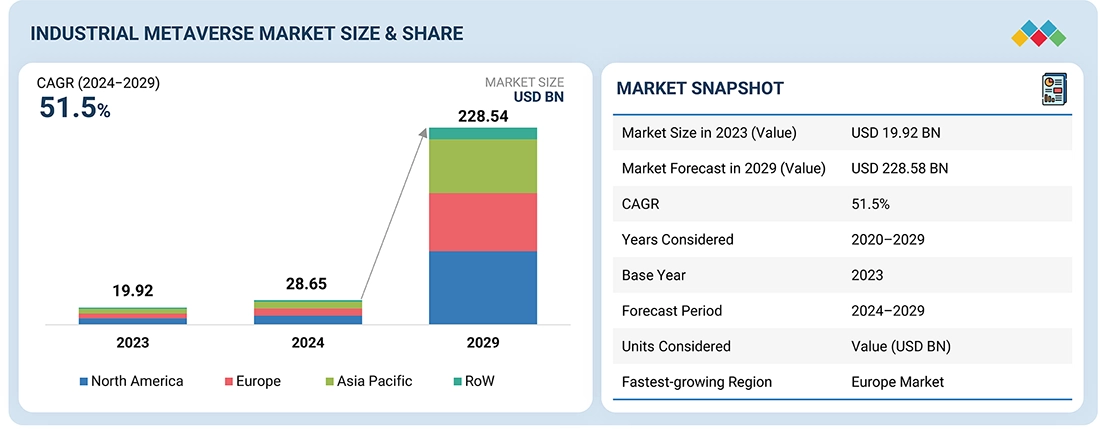
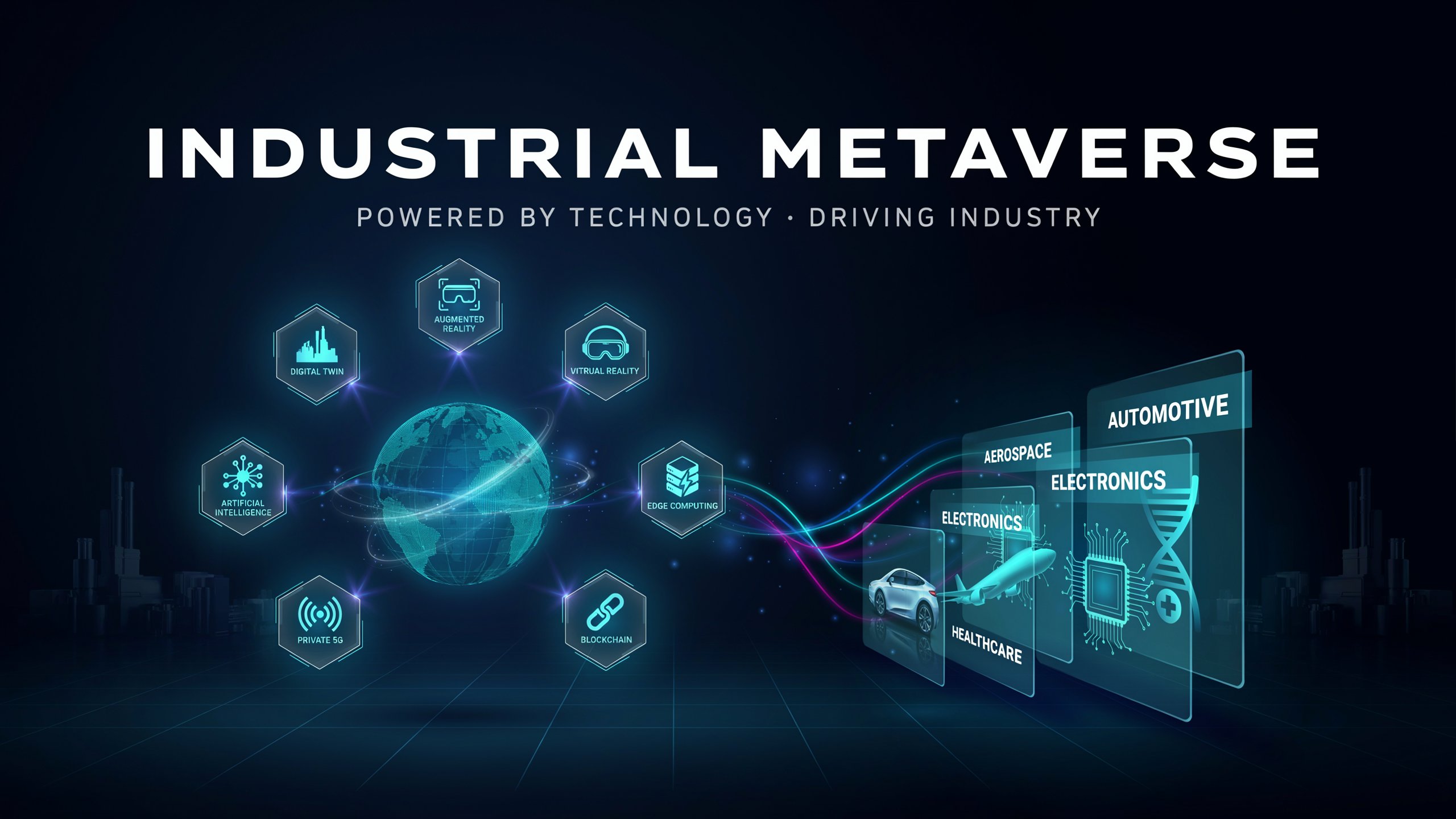
The Industrial Metaverse Market is experiencing significant growth through the integration of Industrial Internet of Things technologies, as connected sensors, machines, robotics, and industrial systems provide the real-time data required to build intelligent virtual environments. Industrial IoT enables physical assets to communicate continuously with digital platforms, while the Industrial Metaverse transforms this information into immersive, interactive, and simulation-based experiences. The convergence of these technologies is creating new opportunities across manufacturing, energy, automotive, aerospace, logistics, utilities, and other industrial sectors.
Industrial IoT as a Data Foundation
Industrial IoT provides the data infrastructure required for many industrial metaverse applications. Sensors installed on machines and production systems can continuously collect information related to temperature, vibration, pressure, energy consumption, equipment status, production output, and environmental conditions.
This information can be transmitted to digital platforms where it is analyzed and visualized through virtual representations of physical assets. The availability of real-time operational data allows digital environments to reflect actual industrial conditions more accurately, increasing the value of metaverse-based monitoring and simulation.
Digital Twins and Connected Assets
Digital twins are among the strongest beneficiaries of Industrial IoT integration. A digital twin can represent a machine, production line, factory, warehouse, or entire industrial facility.
Industrial IoT sensors continuously update the digital twin with real-world information. This allows engineers and operators to compare expected and actual equipment performance, identify deviations, and simulate potential operational changes.
As more industrial assets become connected, organizations can develop increasingly detailed digital representations. This is expected to create significant opportunities for Industrial Metaverse Market participants offering digital twin platforms and associated services.
Download PDF Brochure @ https://www.marketsandmarkets.com/pdfdownloadNew.asp?id=156427935
Real-time Equipment Monitoring
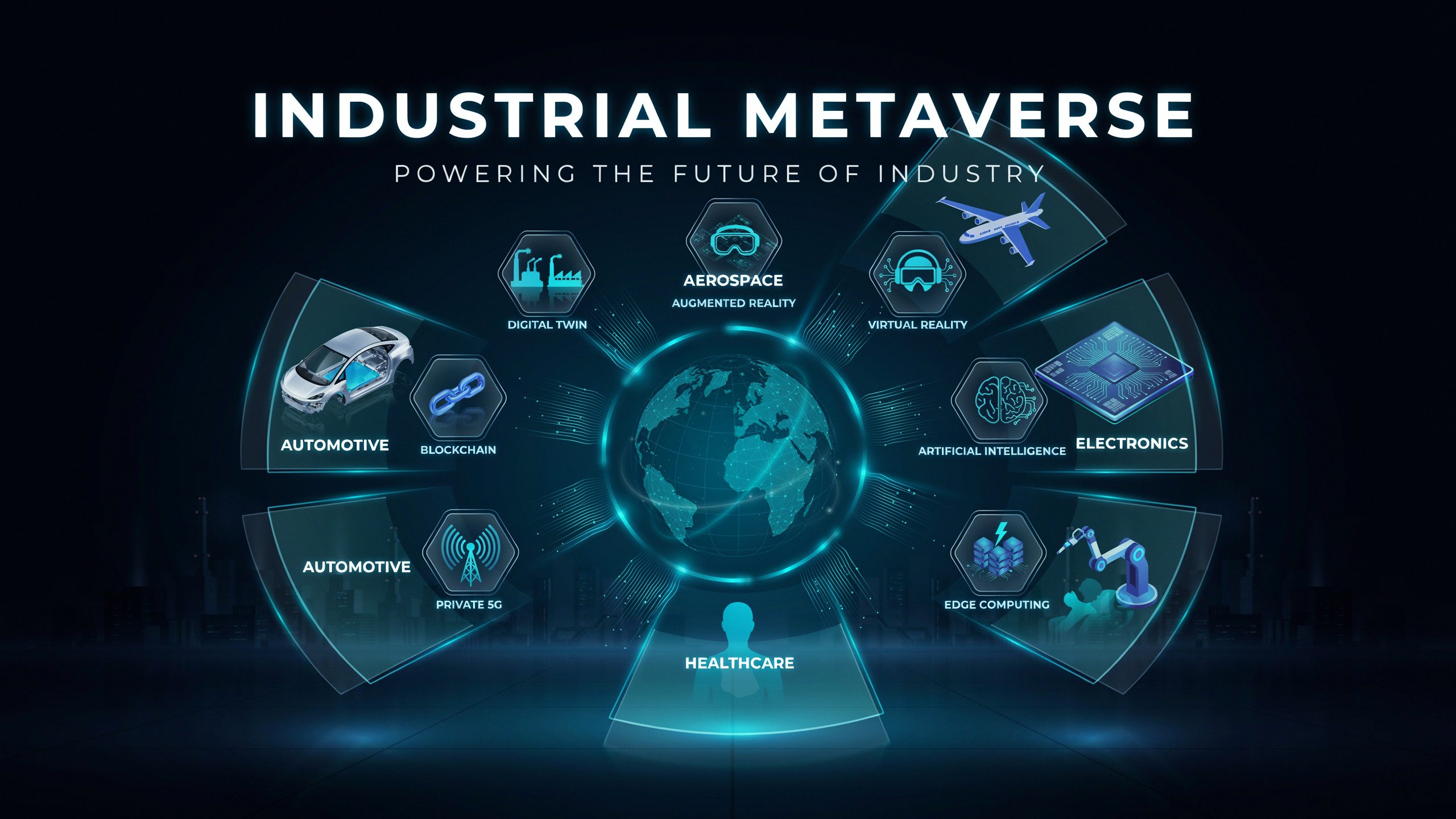
Industrial metaverse platforms can use Industrial IoT data to provide real-time visualization of equipment performance. Operators can monitor machines through digital dashboards or immersive environments without physically inspecting every asset.
Virtual representations can highlight equipment conditions and provide information about operational parameters. This can improve situational awareness and help identify abnormal conditions more quickly.
The combination of real-time data and immersive visualization can be particularly valuable in large industrial facilities where monitoring hundreds or thousands of connected assets manually is difficult.
AI-enabled Industrial IoT
Artificial intelligence is adding another layer of intelligence to Industrial IoT and metaverse platforms. AI algorithms can process large volumes of sensor data to identify patterns, detect anomalies, and predict equipment failures.
When AI is integrated with digital twins, companies can simulate potential failure scenarios and evaluate the consequences of different operational decisions. Predictive analytics can also help maintenance teams determine when equipment requires servicing.
This combination of Industrial IoT, AI, and digital twins can support the transition from reactive industrial management toward predictive and increasingly autonomous operations.
Predictive Maintenance Opportunities
Predictive maintenance is a major opportunity created by Industrial IoT integration. Sensors can continuously monitor equipment conditions and provide data that AI systems analyze for early warning signs of failure.
Industrial metaverse environments can display these insights through virtual equipment models, allowing maintenance personnel to identify assets requiring attention. Engineers can also simulate potential failures and determine the most effective maintenance strategy.
This can help reduce unplanned downtime, improve asset utilization, and extend equipment operating life.
Inquiry Before Buying @ https://www.marketsandmarkets.com/Enquiry_Before_BuyingNew.asp?id=156427935
Smart Manufacturing Integration
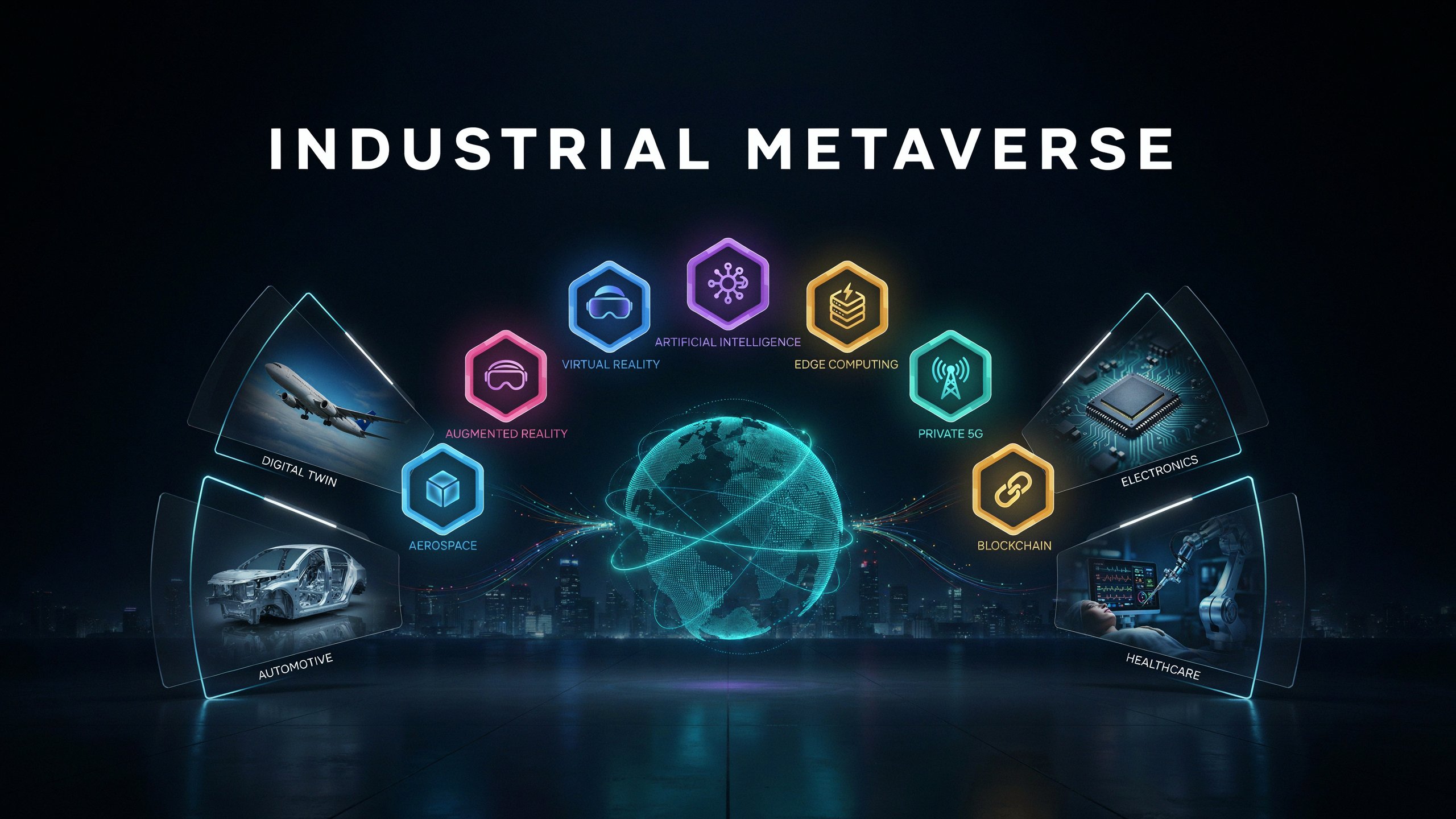
Smart manufacturing is one of the most important application areas for Industrial IoT-enabled metaverse solutions. Connected production lines can generate large volumes of data from machines, robots, cameras, sensors, and manufacturing execution systems.
Industrial metaverse platforms can consolidate this information into virtual factory environments. Managers can monitor production performance, engineers can evaluate process changes, and maintenance teams can inspect equipment conditions through digital models.
The resulting visibility can support faster decision-making and improve manufacturing productivity.
Robotics and Autonomous Systems
The growth of industrial robotics is further strengthening the relationship between Industrial IoT and the Industrial Metaverse. Robots and automated systems generate operational data that can be used to create virtual representations of robotic workflows.
Digital environments can simulate robot movements, production sequences, and interactions with workers. AI can analyze this information to identify opportunities for optimization.
Industrial IoT connectivity can therefore support the development of virtual environments where human and robotic activities can be evaluated together.
Immersive Workforce Applications
Industrial IoT integration can also improve workforce training and assistance. Real equipment data can be incorporated into VR simulations, allowing employees to train using scenarios based on actual industrial conditions.
AR systems can use live IoT information to provide workers with equipment status, operating parameters, and maintenance instructions. This can help employees make better decisions while performing physical tasks.
The integration of live operational data with immersive technologies can make workforce applications more realistic and relevant.
Remote Operations and Maintenance
Industrial IoT enables remote access to equipment information, while Industrial Metaverse technologies provide immersive interfaces for interacting with that information. Maintenance teams can examine digital representations of machines and communicate with onsite technicians from remote locations.
Remote experts can use real-time equipment data to diagnose problems and guide maintenance activities. This can reduce travel requirements and improve response times, especially for geographically distributed industrial assets.
View detailed Table of Content here – https://www.marketsandmarkets.com/Market-Reports/industrial-metaverse-market-156427935.html
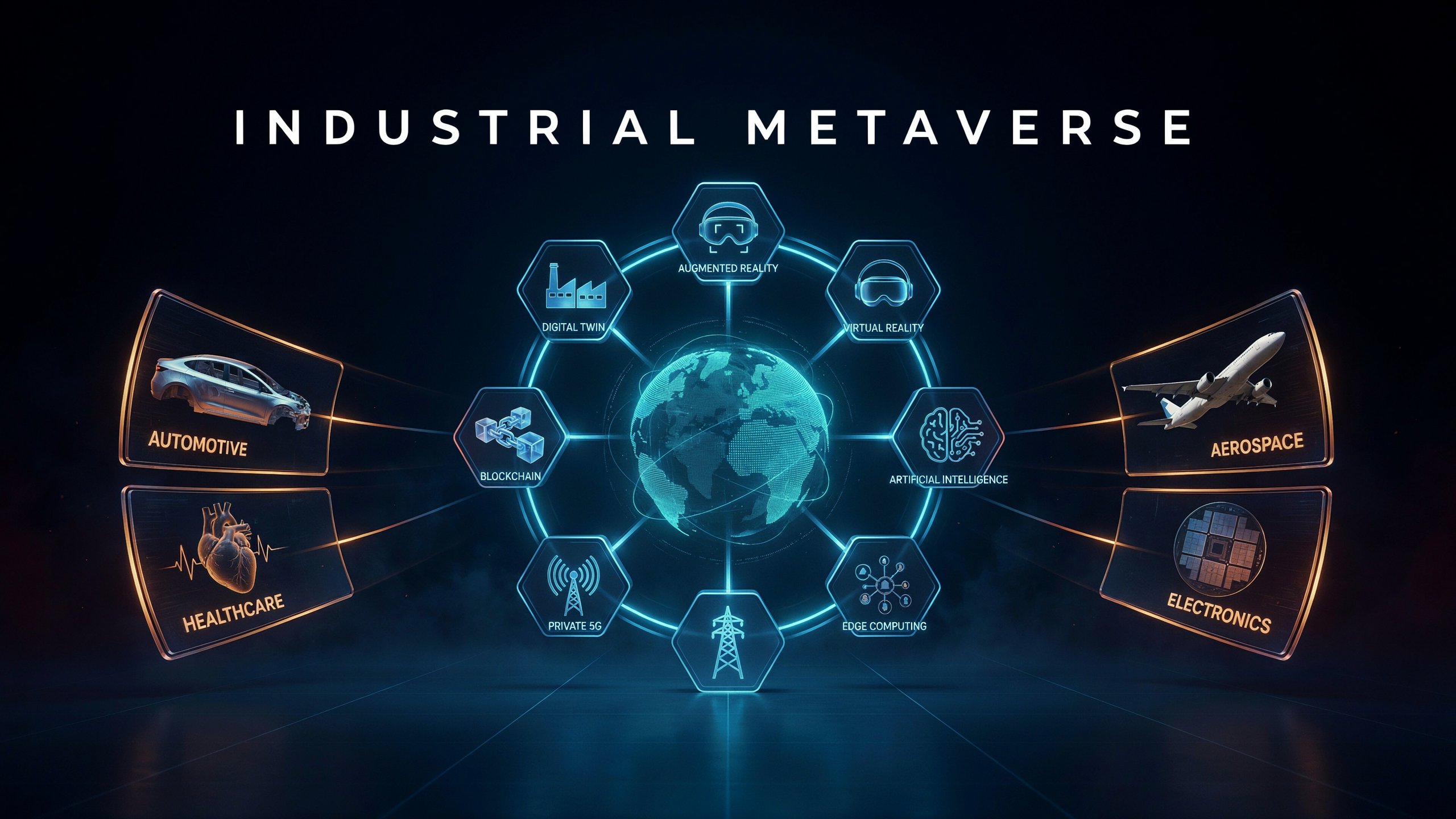
Edge Computing and Industrial Connectivity
Industrial IoT generates data at the edge of industrial operations, making edge computing an important supporting technology. Edge platforms can process time-sensitive information close to machines and sensors before transferring selected data to cloud environments.
Private 5G and other advanced connectivity technologies can further support low-latency communication between connected devices and Industrial Metaverse platforms. This infrastructure can improve the responsiveness of real-time digital twins, machine vision, robotics, and immersive applications.
Energy and Sustainability Management
Industrial IoT-enabled metaverse platforms can also support energy optimization. Sensors can monitor electricity consumption, equipment efficiency, temperature, and other operating parameters across industrial facilities.
Digital twins can visualize energy flows, while AI can identify inefficient operating conditions and simulate alternative strategies. Companies can use these insights to reduce energy consumption while maintaining production targets.
This capability can support both cost reduction and sustainability objectives.
Challenges in Industrial IoT Integration
Despite strong growth opportunities, integration of Industrial IoT with metaverse platforms presents challenges. Organizations must manage large volumes of data while ensuring accuracy, security, interoperability, and availability.
Legacy industrial systems may also use different communication protocols and data formats. Integrating these systems with modern digital platforms can require significant investment and technical expertise.
Cybersecurity is particularly important because greater connectivity can increase the number of potential access points within industrial environments.
Future Market Outlook
Industrial IoT integration is expected to remain a major growth driver for the Industrial Metaverse Industry as companies seek greater operational visibility, predictive intelligence, and digital control. Industrial IoT provides the continuous stream of physical-world data needed to make digital twins, immersive simulations, and AI-enabled industrial environments more accurate and useful.
As connected machines, robotics, sensors, edge computing, private 5G, AI, and cloud platforms become more integrated, the Industrial Metaverse is expected to evolve from a visualization concept into a practical operational technology. This convergence can support smarter factories, predictive maintenance, remote operations, workforce development, energy optimization, and more resilient industrial systems, strengthening the long-term growth potential of the Industrial Metaverse Market.