
The development of advanced exoskeletons is transforming the way humans interact with technology, enabling enhanced strength, endurance, and mobility across industries, healthcare, and defense. These wearable robotic systems are designed to support and augment human capabilities, providing a combination of physical assistance, injury prevention, and productivity enhancement.
What Are Advanced Exoskeletons?
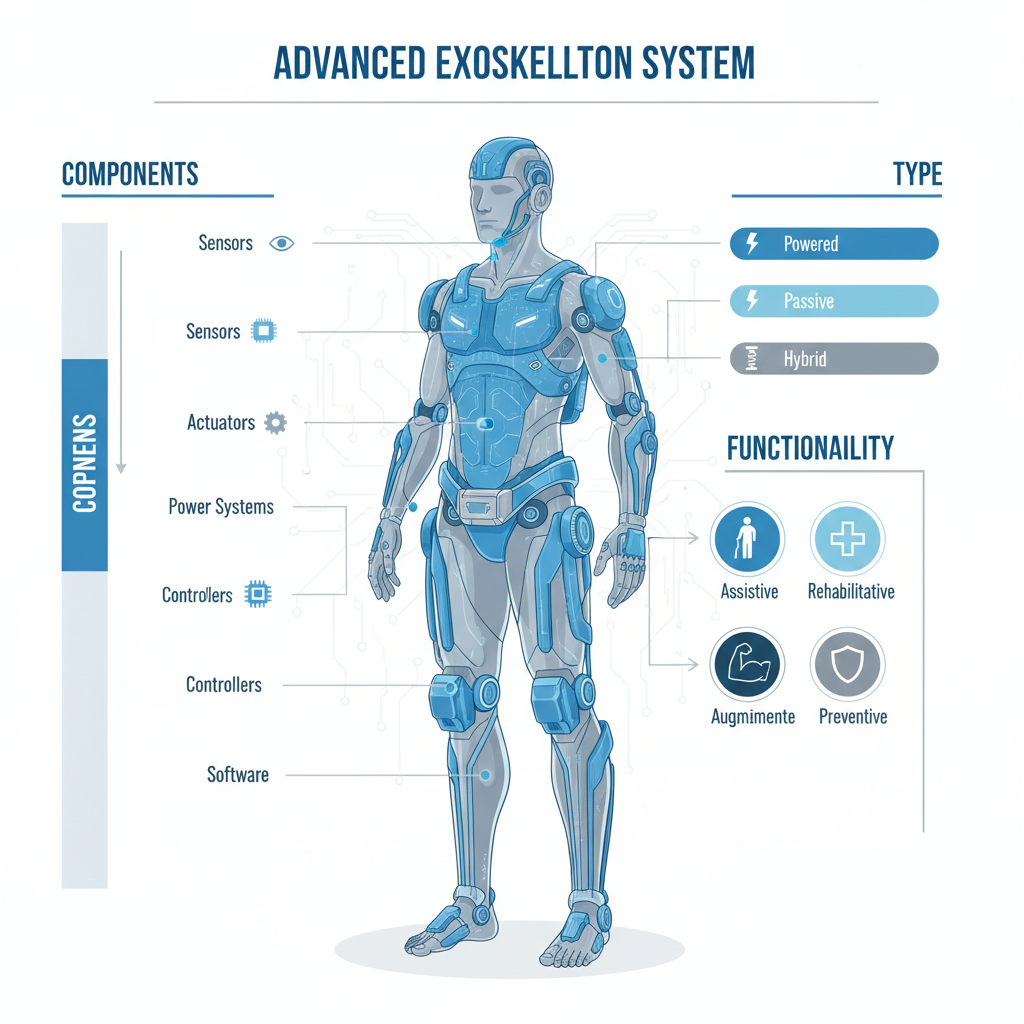
Exoskeletons are wearable devices that can be powered or passive, designed to enhance human motion and performance. Advanced exoskeletons integrate robotics, sensors, and AI-driven control systems to respond to user movements in real-time, allowing individuals to lift heavier loads, walk longer distances, or maintain posture with less fatigue. The global exoskeleton market is projected to grow from USD 0.56 billion in 2025 to USD 2.03 billion by 2030, at a CAGR of 29.4% during the forecast period
Applications Across Industries
The applications of advanced exoskeletons are broad, driving their adoption in multiple sectors:
-
Industrial and Manufacturing:
Workers in warehouses, factories, and construction sites can use exoskeletons to lift heavy materials safely and reduce the risk of musculoskeletal injuries. This enhances endurance and productivity, particularly in repetitive or physically demanding tasks. -
Healthcare and Rehabilitation:
Exoskeletons are increasingly used in physical therapy and rehabilitation. Patients recovering from strokes, spinal injuries, or mobility impairments benefit from assisted walking and movement, which improves strength, muscle memory, and independence. -
Military and Defense:
Soldiers equipped with powered exoskeletons can carry heavier gear, reduce fatigue during long marches, and improve endurance on the battlefield. These technologies provide both tactical advantages and injury prevention. -
Elderly and Assisted Living:
Exoskeletons help elderly individuals maintain mobility, reduce fall risks, and regain confidence in daily activities, improving overall quality of life.
Download PDF Brochure @ https://www.marketsandmarkets.com/pdfdownloadNew.asp?id=40697797
Technological Advancements Driving Performance
Several innovations are enhancing the capabilities of modern exoskeletons:
-
AI and Machine Learning: Real-time adaptation to user movements for smoother, more natural support.
-
Lightweight Materials: Carbon fiber and advanced alloys reduce weight while increasing strength.
-
Energy Efficiency: Battery improvements and hybrid power systems allow longer operational periods.
-
Sensor Integration: Force, motion, and position sensors enable precise control and feedback.
Benefits of Advanced Exoskeletons
-
Enhanced Strength: Users can lift heavier loads with less effort.
-
Improved Endurance: Reduced fatigue allows longer work periods and sustained performance.
-
Injury Prevention: Supports proper posture and distributes physical strain safely.
-
Productivity Boost: In industrial applications, exoskeletons can significantly increase efficiency.
Market Outlook
The global exoskeleton technology market is expected to grow rapidly, fueled by increasing adoption in industrial, medical, and military sectors. As technology advances and costs decrease, exoskeletons are likely to become a mainstream tool for enhancing human performance and safety.
Advanced exoskeletons are redefining human capabilities, offering unparalleled support in strength and endurance. From workplace productivity to medical rehabilitation, these wearable technologies are poised to play a pivotal role in the future of human augmentation, creating safer, more efficient, and empowered environments for users across multiple sectors.
FAQ
1. What are advanced exoskeletons?
Advanced exoskeletons are wearable robotic devices that augment human strength, endurance, and mobility. They use sensors, AI, and actuators to provide real-time support during movement, lifting, or repetitive tasks.
2. How do advanced exoskeletons enhance human strength and endurance?
By distributing weight, supporting joints, and assisting movement, exoskeletons reduce fatigue, prevent injuries, and allow users to perform physically demanding tasks for longer periods.
3. Which industries are adopting exoskeleton technology?
- Industrial & Manufacturing: Lifting and repetitive tasks in factories and warehouses
- Healthcare & Rehabilitation: Assisting patients in walking, therapy, and mobility recovery
- Military & Defense: Carrying heavy gear, long marches, and endurance tasks
- Elderly Care: Supporting mobility and fall prevention
4. What technological advancements are driving exoskeleton adoption?
- AI and machine learning for adaptive assistance
- Lightweight and durable materials
- Advanced battery and energy management systems
- Sensors for real-time motion and force feedback
5. What are the benefits for investors in the exoskeleton market?
The exoskeleton technology market is growing rapidly due to industrial automation, healthcare demand, and military adoption. Investors can benefit from early exposure to innovations in wearable robotics and human augmentation technologies.