
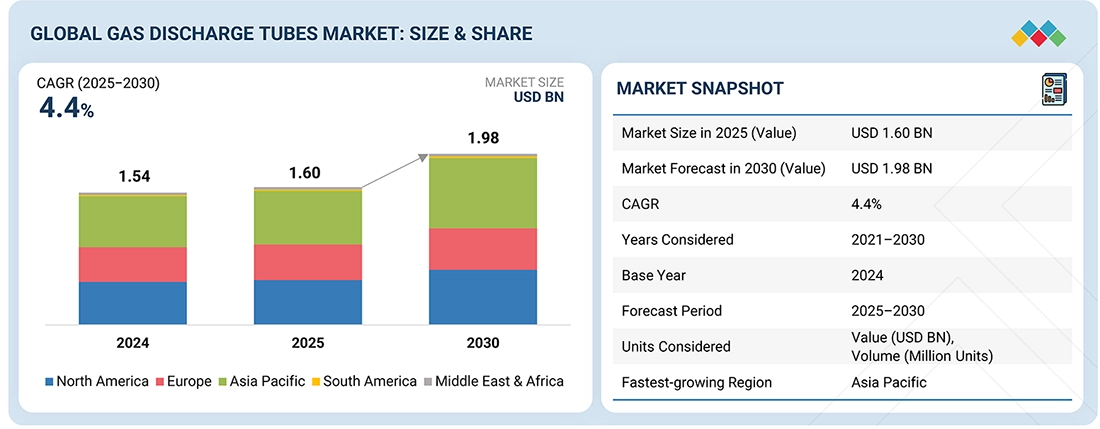
The Gas Discharge Tubes Market is evolving as telecommunications, industrial electronics, power infrastructure, and connected equipment increasingly require reliable protection against transient overvoltages. Gas discharge tubes (GDTs) are designed to remain highly resistive during normal operation and become conductive when the applied voltage reaches a specified breakdown threshold. This behavior enables them to divert surge currents away from protected circuits. Voltage ratings play an important role in determining GDT suitability, influencing component selection, circuit design, and application performance. Differences in operating voltage, impulse response, and surge-current requirements are shaping demand across low-voltage, medium-voltage, and high-voltage product categories.
Low-Voltage Segment Analysis
Low-voltage GDTs are commonly considered for electronic interfaces, communication lines, signal circuits, and connected devices that require protection against transient disturbances. These applications often contain sensitive semiconductor components that can be affected by voltage surges caused by lightning-induced events or electrical switching.
The growing deployment of broadband equipment, networking devices, industrial sensors, and Internet of Things systems is creating demand for compact protection components. Low-capacitance GDT designs are particularly relevant for selected high-speed communication interfaces because excessive parasitic capacitance can affect signal integrity. Manufacturers are focusing on consistent breakdown characteristics, compact packaging, and reliable surge performance to address these requirements.
Download PDF Brochure @ https://www.marketsandmarkets.com/pdfdownloadNew.asp?id=120991765
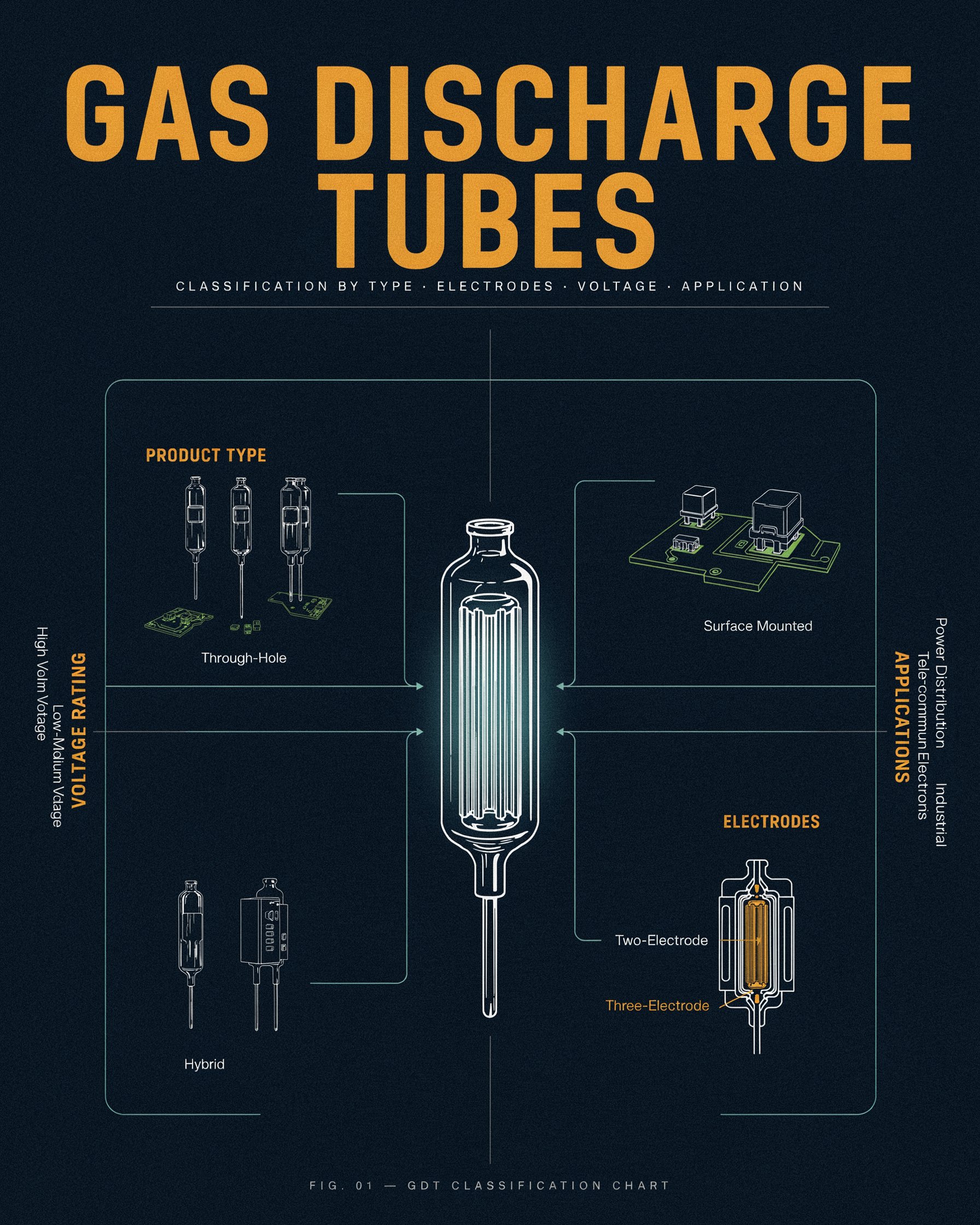
Medium-Voltage Segment Analysis
Medium-voltage GDT applications include selected industrial electronic systems, instrumentation interfaces, communication equipment, and specialized protection circuits operating under more demanding electrical conditions than many conventional signal interfaces.
Industrial automation is supporting demand in this segment as factories adopt connected controllers, sensors, monitoring platforms, and automated machinery. Electrical disturbances can affect these systems and contribute to maintenance costs or operational interruptions. GDTs can be incorporated into coordinated protection architectures where their electrical specifications match the circuit’s operating conditions and expected surge exposure.
The segment’s development is influenced by industrial modernization, infrastructure investment, and the increasing use of electronic control systems. Product selection requires careful evaluation of nominal operating voltage, breakdown voltage, impulse characteristics, and surge-current capacity.
High-Voltage Segment Analysis
High-voltage GDTs serve specialized applications requiring elevated breakdown-voltage characteristics and dependable transient protection. These components may be used in selected telecommunications interfaces, industrial systems, power-related electronic circuits, and other equipment exposed to demanding voltage conditions.
The expansion of digital substations, renewable energy infrastructure, and distributed power systems is increasing the number of electronic monitoring and communication interfaces associated with electrical infrastructure. High-voltage GDTs can help protect suitable interfaces against transient events when integrated into an appropriately engineered protection system.
Performance depends on multiple design factors, including electrode geometry, gas composition and pressure, ceramic insulation, internal spacing, and hermetic sealing. Manufacturers are investing in design optimization and production quality to improve electrical consistency and long-term reliability.
Inquiry Before Buying @ https://www.marketsandmarkets.com/Enquiry_Before_BuyingNew.asp?id=120991765
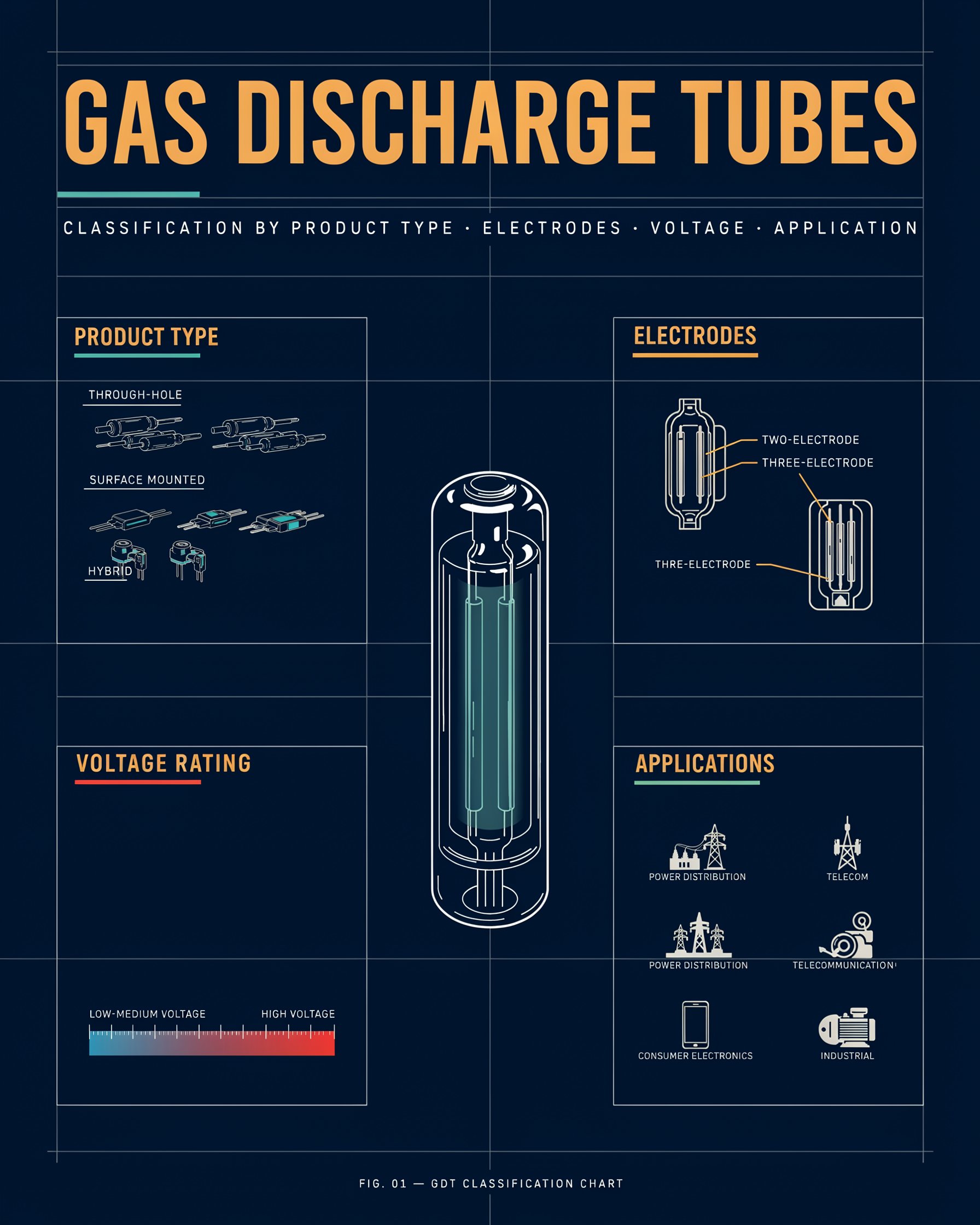
Telecommunications and Industrial Demand Across Voltage Categories
Telecommunications and industrial electronics contribute to demand across several voltage categories because protection requirements differ by circuit type. Communication interfaces may prioritize low capacitance and signal integrity, while selected industrial or infrastructure circuits may require higher breakdown thresholds or greater surge-current capability.
The expansion of 5G networks, broadband infrastructure, industrial IoT, and automated monitoring systems is creating opportunities for application-specific GDT solutions. Manufacturers that offer a broad range of electrical ratings and packaging options can address diverse customer requirements. However, voltage category alone does not determine suitability; impulse breakdown behavior, surge endurance, capacitance, and coordination with other protection devices must also be considered.
Technology Trends Influencing Voltage Segments
Advances in electrode materials, ceramic construction, gas control, and manufacturing precision are influencing GDT development across voltage segments. Improved dimensional consistency and quality-control processes can help manufacturers maintain repeatable breakdown characteristics and dependable surge performance.
Miniaturization is another important trend, particularly for electronic equipment with limited circuit-board space. Compact GDTs can support space-efficient designs, but manufacturers must balance package size with insulation requirements, surge-current capability, and thermal performance. Integration with transient voltage suppression devices, metal oxide varistors, and other protective components is also becoming increasingly relevant for coordinated protection architectures.
View detailed Table of Content here – https://www.marketsandmarkets.com/Market-Reports/gas-discharge-tubes-market-120991765.html
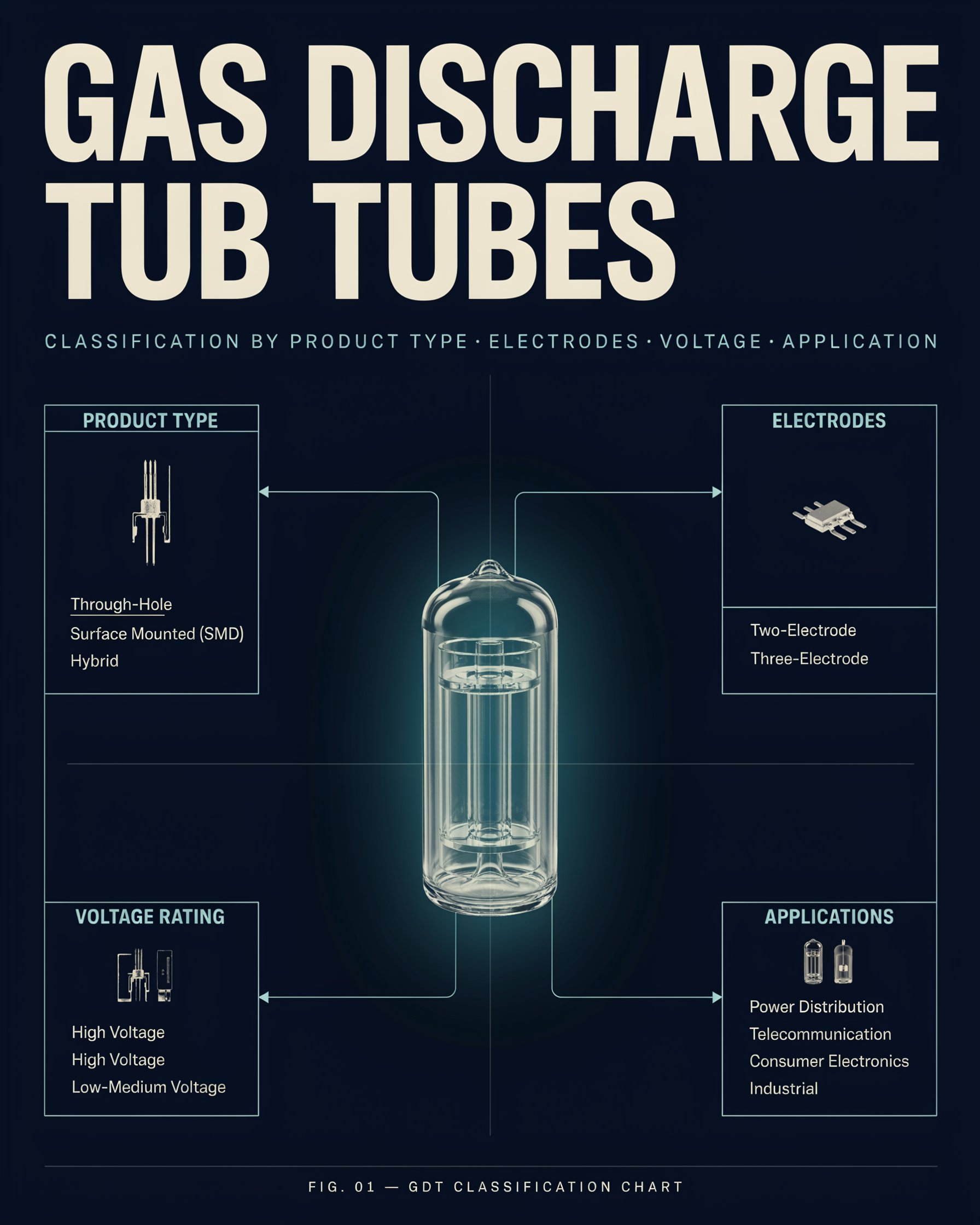
Regional and Competitive Outlook
Regional demand is influenced by telecommunications investment, industrial manufacturing, infrastructure modernization, and electronics production. Asia Pacific benefits from a substantial electronics manufacturing base and expanding communication infrastructure. North America is supported by investment in digital networks, industrial automation, and power infrastructure, while Europe presents opportunities through industrial digitalization and energy transition initiatives.
Competition includes manufacturers offering different GDT voltage ratings, surge-current capabilities, package configurations, and application-specific designs. Product reliability, manufacturing consistency, technical support, and qualification performance influence supplier selection.
Future Market Outlook
The Gas Discharge Tubes Industry is expected to benefit from growing demand for reliable circuit protection across low-voltage, medium-voltage, and high-voltage applications. Through 2030, market development will be influenced by connected infrastructure expansion, industrial automation, renewable energy integration, and technological improvements in surge protection components.
Low-voltage products are positioned to serve expanding electronic and communication interfaces, medium-voltage products can address selected industrial and instrumentation requirements, and high-voltage designs will remain relevant for specialized protection applications. Manufacturers that combine appropriate electrical specifications with compact designs, consistent quality, and reliable surge performance will be better positioned to address evolving industry needs.