
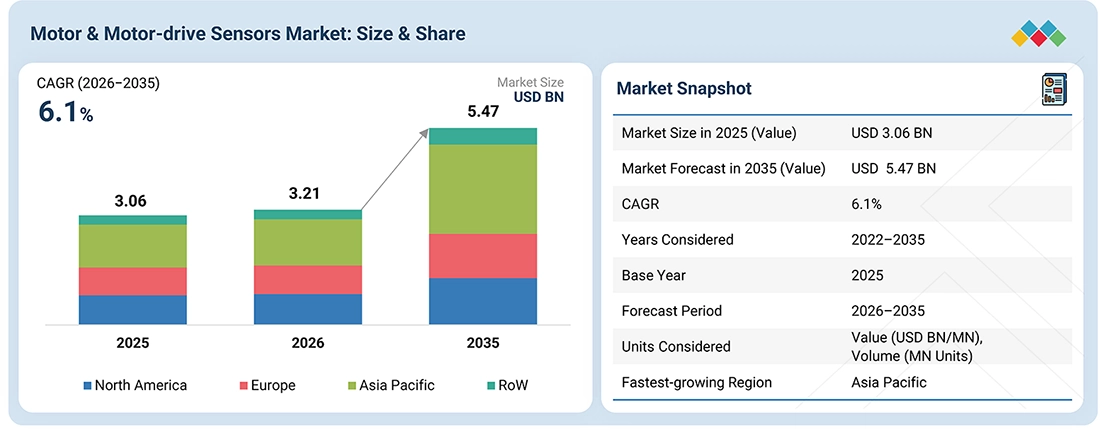
Market Transformation Driven by Industrial and Technological Advancements
The Motor and Motor-drive Sensors Market is expected to undergo significant technological transformation through 2035 as industries increasingly adopt electrification, industrial automation, and intelligent motion-control systems. Sensors are becoming essential components of modern motor architectures because they provide accurate information about operating parameters such as current, voltage, temperature, speed, position, torque, and vibration. These measurements help manufacturers improve motor efficiency, optimize performance, enhance equipment reliability, and support advanced control functions.
The growing integration of electric motors across automotive, manufacturing, energy, transportation, and consumer equipment industries is expanding the application scope for sensing technologies. At the same time, advancements in semiconductor manufacturing, magnetic sensing, wireless communication, and embedded processing are encouraging the development of compact and intelligent sensor solutions. Through 2035, the market is likely to be shaped by the convergence of physical sensing, digital intelligence, and connected motor systems.
Download PDF Brochure @ https://www.marketsandmarkets.com/pdfdownloadNew.asp?id=23549197
Industrial Automation Strengthens Demand for Advanced Motor Sensors
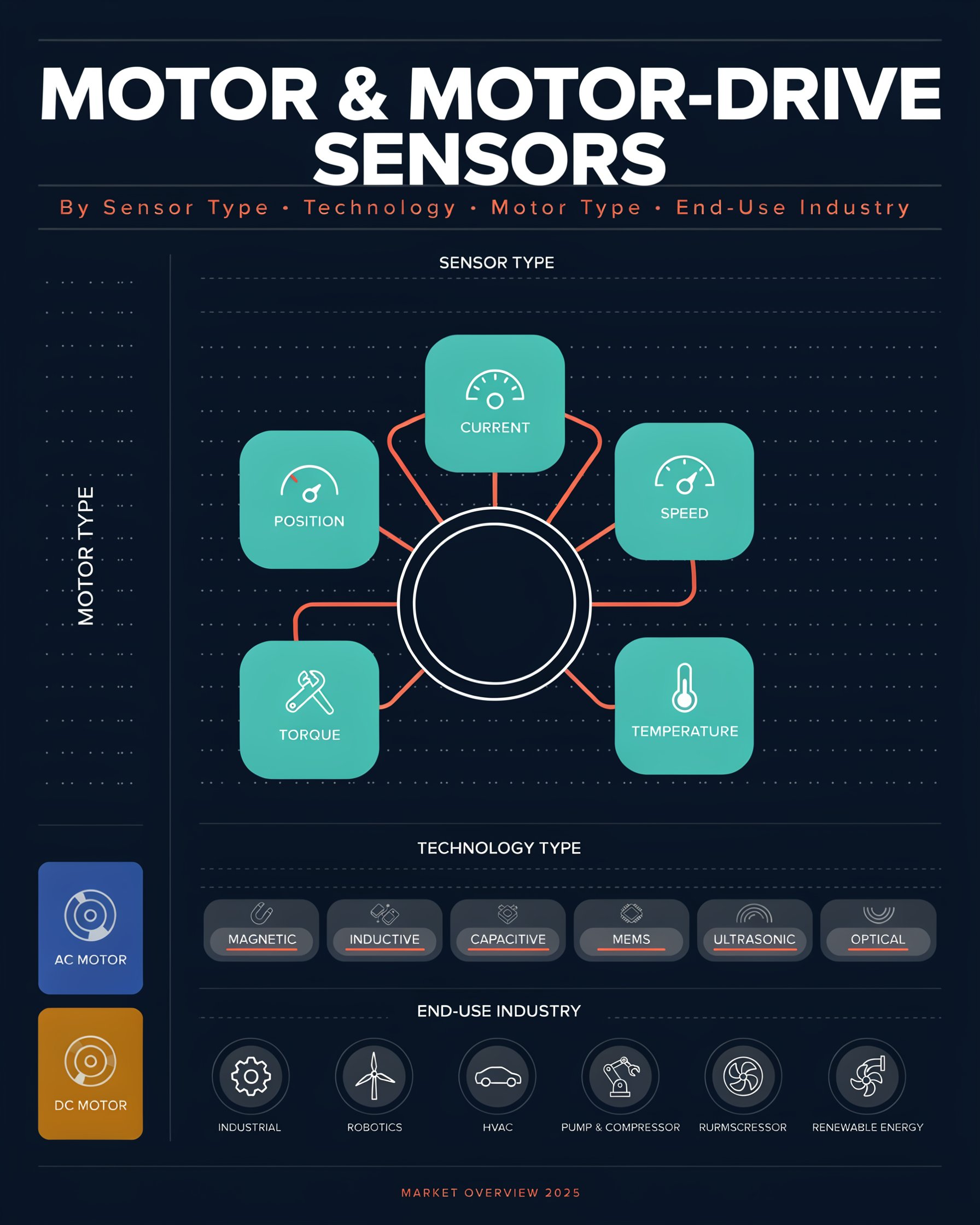
Industrial automation will remain a major driver of motor and motor-drive sensor adoption through 2035. Manufacturing facilities are increasingly deploying robotics, automated production lines, conveyors, machine tools, and digitally controlled equipment to improve productivity and operational consistency. These systems depend on accurate motor feedback to maintain speed, positioning, torque, and coordinated movement.
Advanced sensors will support increasingly precise motion-control applications. Position and speed sensors will help automated machinery maintain accurate movement, while current and temperature sensors will support motor protection and performance monitoring. Vibration sensors will also become more important as manufacturers expand predictive maintenance programs to identify mechanical abnormalities before they cause equipment failures.
The growing adoption of smart factories and Industrial Internet of Things technologies will further increase demand for connected motor sensing solutions. Real-time sensor information can be transmitted to centralized platforms, allowing operators to monitor equipment performance across production facilities. Artificial intelligence and machine learning will improve the analysis of this information, helping maintenance teams identify unusual operating patterns and optimize equipment utilization.
Electrification Expands Opportunities Across Automotive and Energy Applications
Electrification will be one of the most influential factors shaping the market through 2035. Electric and hybrid vehicles require multiple sensing technologies to manage motor operation, power conversion, thermal conditions, and vehicle safety. Current sensors, magnetic position sensors, temperature sensors, and speed measurement devices will remain important for electric powertrains and auxiliary motor systems.
The expansion of electric commercial vehicles, buses, two-wheelers, industrial electric vehicles, and specialized mobility platforms will create additional opportunities. Manufacturers will increasingly require sensors that combine high accuracy, compact dimensions, thermal stability, and resistance to electromagnetic interference. The development of integrated motor and drive architectures will also encourage sensor suppliers to create products that can be installed within compact electronic assemblies.
Beyond transportation, electrification across industrial equipment and building infrastructure will strengthen demand. Electric pumps, compressors, fans, heating and cooling systems, and automated machinery will require reliable monitoring and control technologies. Renewable energy installations and battery energy storage systems will also create opportunities for sensors used in motors, power electronics, and supporting equipment.
Inquiry Before Buying @ https://www.marketsandmarkets.com/Enquiry_Before_BuyingNew.asp?id=23549197
Intelligent Motion Control Drives Sensor Innovation
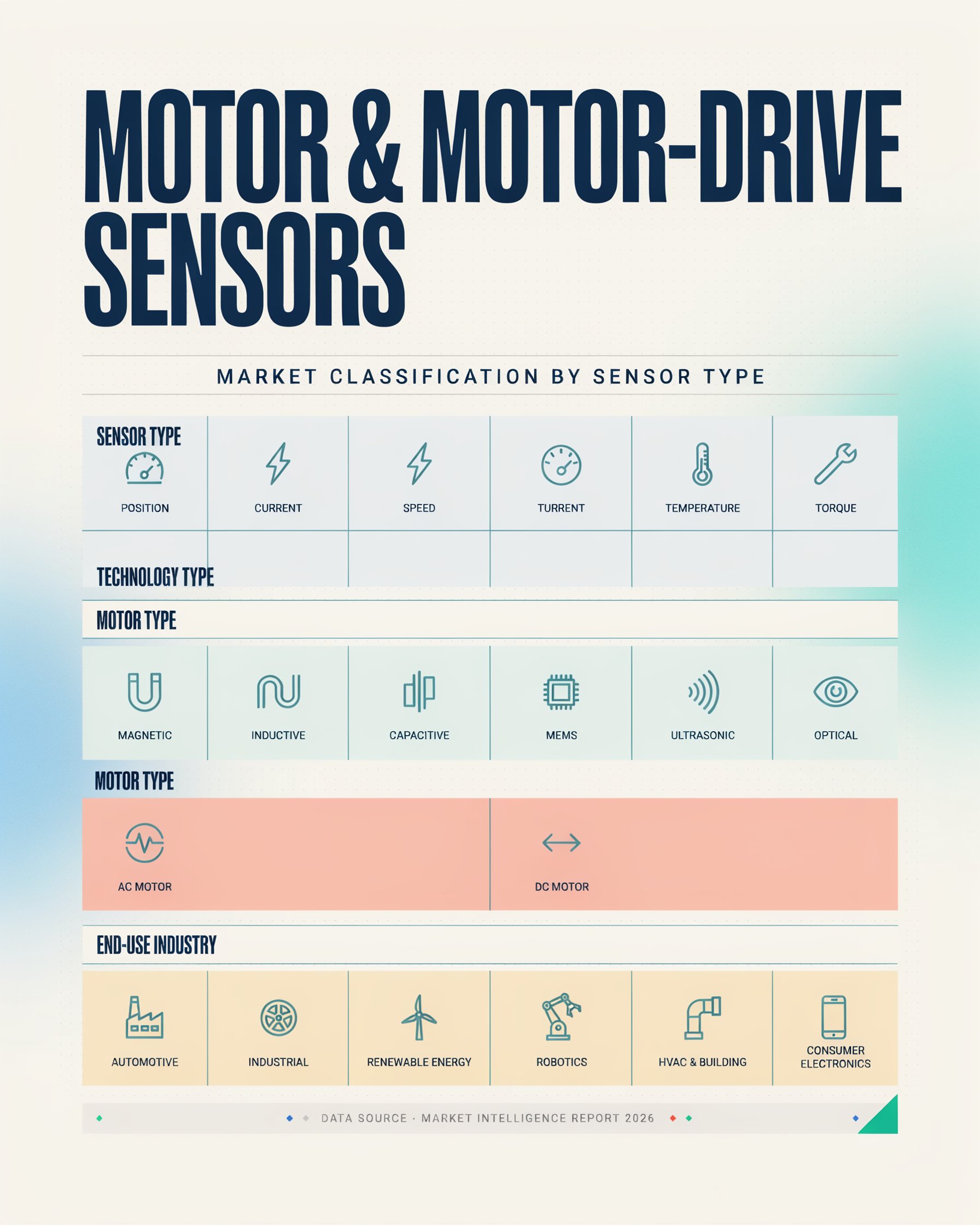
Intelligent motion control will become increasingly important as equipment manufacturers seek higher precision, responsiveness, and operational efficiency. Conventional motor-control systems are evolving toward digitally connected architectures that use continuous sensor feedback to adjust operating parameters. This transition will encourage the development of advanced position, speed, torque, and current sensing solutions.
Magnetic sensing technologies are expected to remain important because of their suitability for compact motor designs and electronic control applications. Hall-effect sensors and other magnetic sensing devices can support rotor position detection and current measurement. Improvements in sensor integration and signal processing will help enhance measurement accuracy while reducing system complexity.
Multi-parameter sensing platforms will also gain importance. Combining temperature, vibration, current, and other measurements within integrated devices can provide a more comprehensive understanding of motor performance. These solutions will support equipment diagnostics, predictive maintenance, and adaptive motor control across industrial and automotive applications.
Artificial Intelligence and Connected Systems Reshape Market Opportunities
Artificial intelligence will create new opportunities by improving the interpretation of motor sensor data. AI-enabled monitoring platforms can analyze operating patterns, identify potential faults, and support maintenance decisions. Edge computing will allow selected data processing functions to take place closer to the equipment, reducing response times for critical control applications.
Wireless communication and cloud-based monitoring will further support connected motor systems. These technologies can help organizations monitor distributed equipment across multiple facilities without depending entirely on manual inspections. However, cybersecurity, interoperability, and data management will remain important considerations as connected sensing deployments expand.
View detailed Table of Content here – https://www.marketsandmarkets.com/Market-Reports/motor-motor-drive-sensors-market-23549197.html
Challenges Influencing Market Development Through 2035
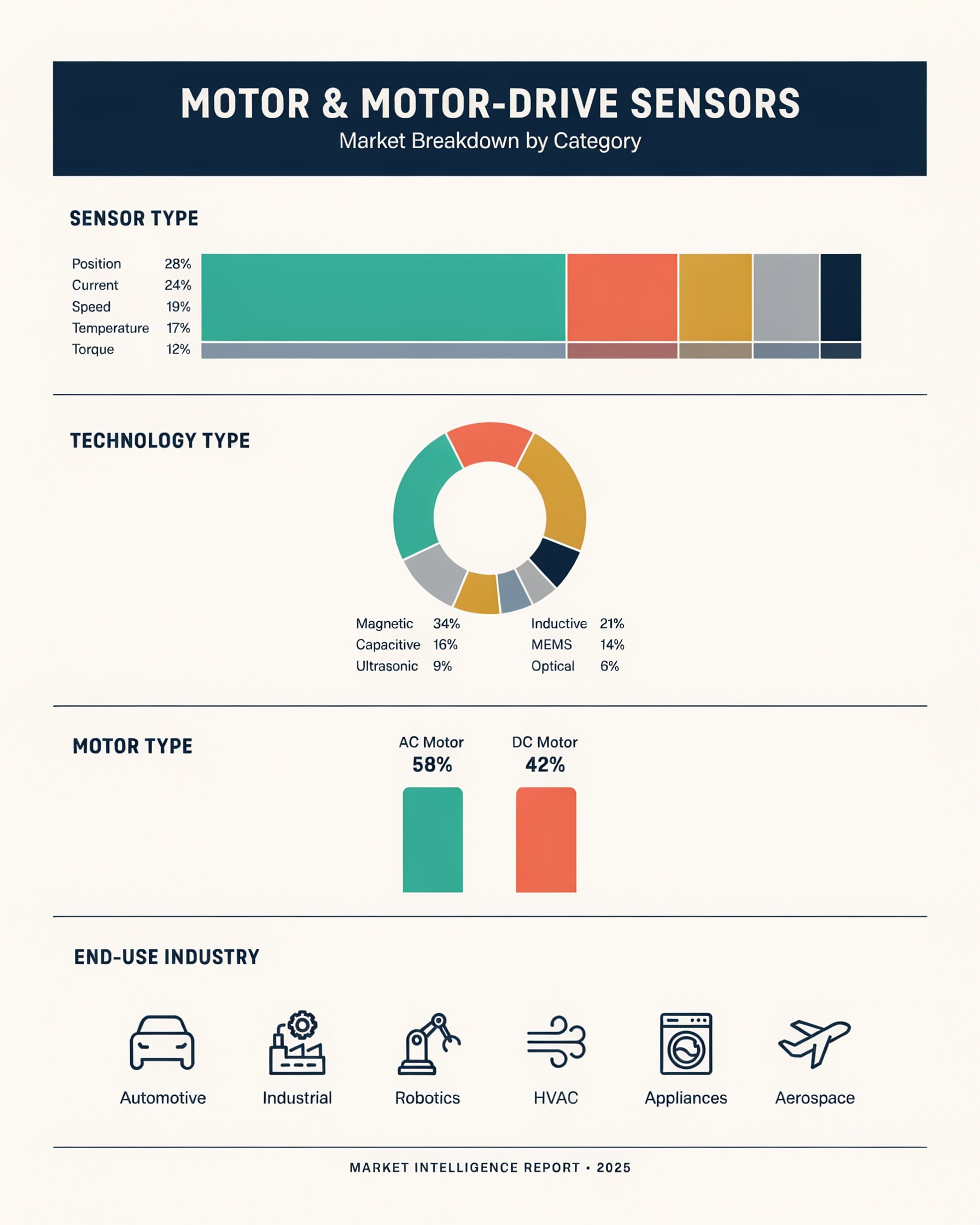
Despite strong growth opportunities, the market will face challenges related to component costs, electromagnetic interference, sensor calibration, environmental durability, and integration with legacy motor systems. High-volume applications will remain particularly price-sensitive, requiring manufacturers to balance advanced functionality with competitive pricing.
Sensor suppliers will also need to meet increasingly demanding requirements for accuracy, reliability, miniaturization, and long operating life. Continued investment in research and development, manufacturing automation, and standardized communication technologies will be essential for addressing these challenges.
Future Outlook for the Motor and Motor-Drive Sensors Market
Through 2035, industrial automation, electrification, and intelligent motion control are expected to reshape demand for motor and motor-drive sensors. Advances in magnetic sensing, semiconductor integration, multi-parameter monitoring, and artificial intelligence will expand the capabilities of next-generation solutions.
Manufacturers that deliver compact, accurate, connected, and cost-effective sensors will be well positioned to benefit from evolving application requirements. As motors become increasingly intelligent and integrated with digital control systems, sensing technologies will play a central role in improving energy efficiency, equipment reliability, and automation performance across global industries.