
Overview of Flow Batteries in Grid Scale Energy Storage
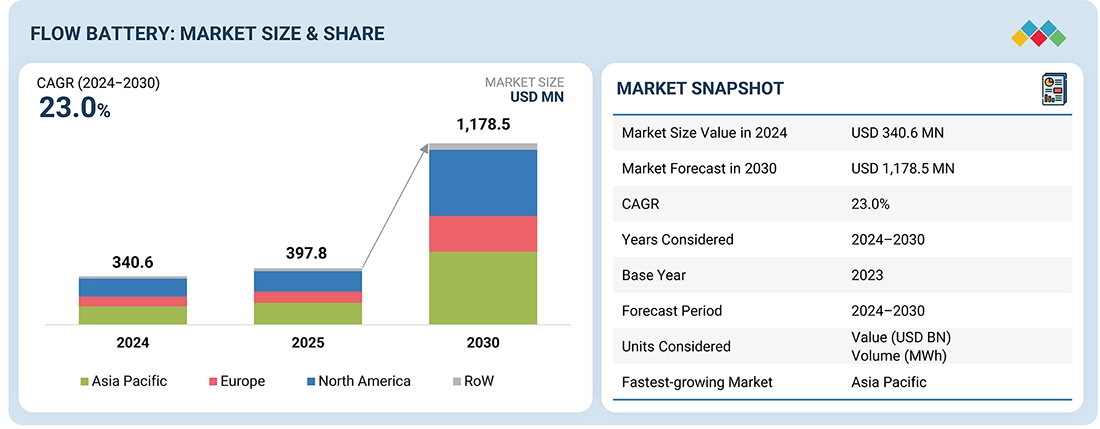
The Flow Battery Market Size is gaining importance as electricity utilities and grid operators seek reliable energy storage technologies to support modern power networks. Grid scale energy storage systems play an essential role in balancing electricity supply and demand, improving grid stability, and integrating renewable energy sources. As solar and wind power capacity expands, electricity networks require flexible storage solutions that can capture surplus generation and deliver electricity when production decreases or consumption increases.
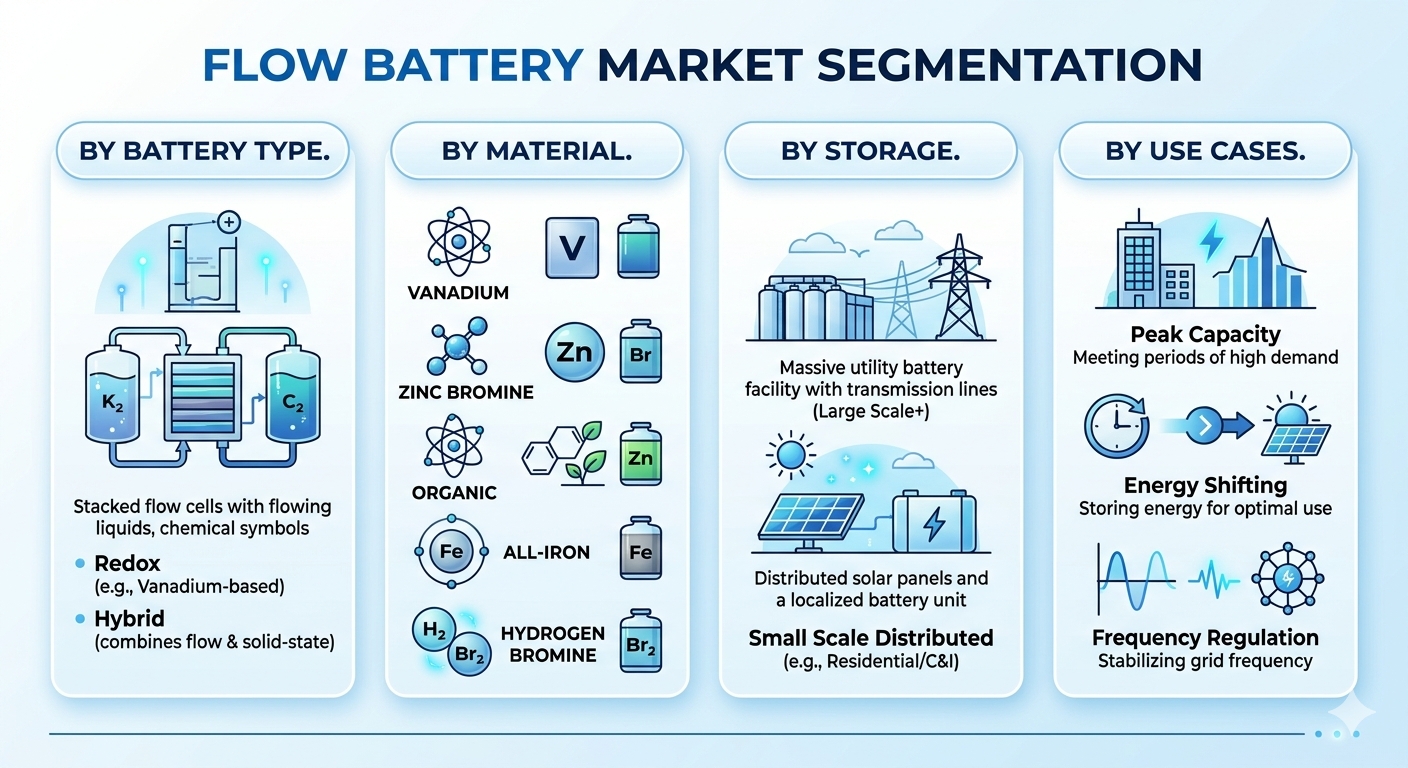
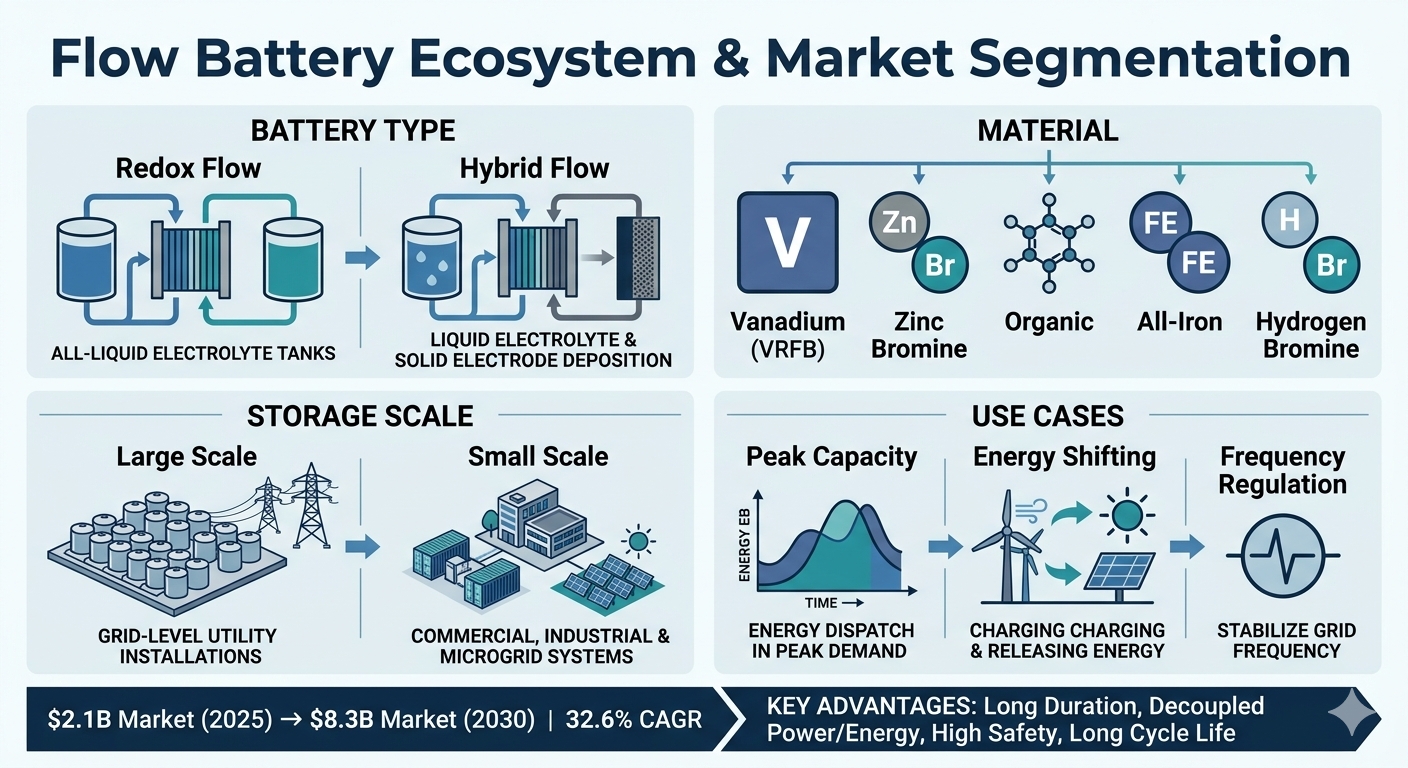
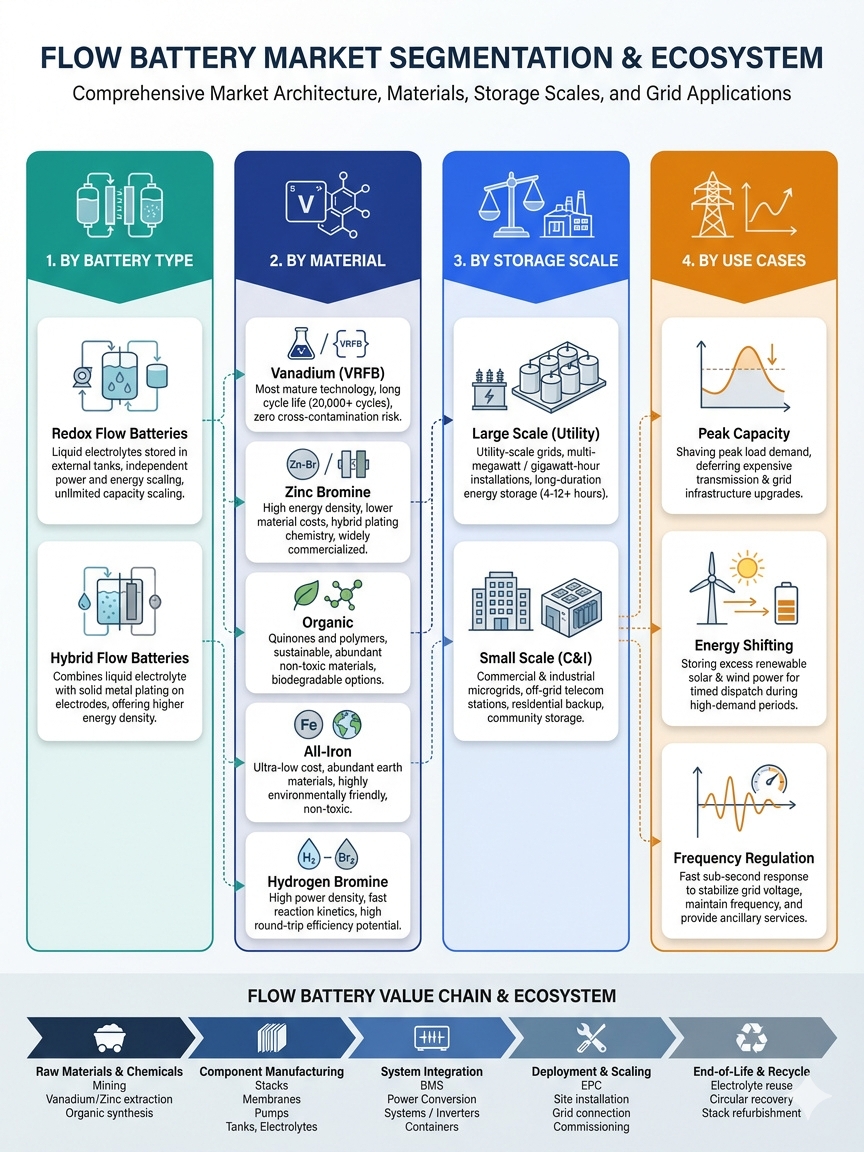
Flow batteries are electrochemical energy storage systems that use liquid electrolytes stored in external tanks. These electrolytes circulate through an electrochemical cell stack, where charging and discharging reactions take place. One of their key advantages is the ability to scale energy capacity independently from power output. Increasing the volume of electrolyte can extend storage duration, while the cell stack determines the system’s power capability. This design makes flow batteries suitable for selected grid scale applications that require extended discharge periods and frequent cycling.
Download PDF Brochure @ https://www.marketsandmarkets.com/pdfdownloadNew.asp?id=82953888
Supporting Grid Stability and Electricity Reliability
Grid stability is a major factor driving the adoption of energy storage technologies. Electricity networks must continuously maintain a balance between generation and consumption to operate reliably. Sudden changes in electricity demand, unexpected generation interruptions, and fluctuations in renewable power production can create operational challenges for grid operators.
Flow battery systems can provide grid services such as frequency regulation, voltage support, and operating reserves, depending on their configuration and connection to the electricity network. During periods of excess electricity generation, these systems can absorb and store energy. When demand increases or generation becomes insufficient, stored electricity can be supplied back to the grid. This capability helps improve operational flexibility and supports more consistent electricity delivery.
Flow batteries can also contribute to power system resilience by providing additional storage capacity during periods of high demand or supply disruption. Their potential for frequent cycling makes them relevant to grid applications that require regular charging and discharging.
Renewable Energy Integration and Power Management
The growing deployment of renewable energy is increasing the need for grid scale storage systems. Solar and wind power generation varies according to weather conditions, time of day, and seasonal patterns. These variations can create a mismatch between electricity production and consumption, particularly when renewable generation is high during periods of relatively low demand.
Flow batteries can help address this challenge by storing excess renewable electricity for later use. For example, a utility can store surplus solar power generated during daylight hours and discharge it during evening demand peaks. Wind energy projects can also integrate flow battery systems to manage fluctuations in electricity production and improve the availability of renewable power.
The technology can be deployed alongside large solar farms, wind power installations, and hybrid renewable energy projects. By improving the ability to shift electricity across different periods, flow batteries can help reduce renewable energy curtailment and support more effective utilization of clean energy resources.
Inquiry Before Buying @ https://www.marketsandmarkets.com/Enquiry_Before_BuyingNew.asp?id=82953888
Advantages of Flow Batteries for Large Scale Storage
Flow batteries offer several characteristics that are relevant to grid scale energy storage. Their independently scalable power and energy capacity allows project developers to configure systems according to specific storage duration and output requirements. This flexibility can be useful for utility projects that need to increase energy capacity without making an equivalent expansion of the battery stack.
Another important characteristic is their potential for long operational lifetimes and repeated charge and discharge cycles. Since energy is stored in liquid electrolytes, certain flow battery designs can avoid some degradation mechanisms associated with conventional solid electrode battery systems. However, actual performance and maintenance requirements vary according to chemistry, operating conditions, and system design.
Flow battery systems can also be designed for stationary installations where physical size and weight are less restrictive than in mobile applications. This makes them relevant to utility substations, renewable energy facilities, and dedicated grid storage locations.
Technological Developments Improving Grid Storage Performance
Technological innovation is improving the performance and commercial potential of flow battery systems. Manufacturers are developing advanced electrolyte formulations to improve energy concentration, chemical stability, and operating temperature ranges. Improvements in membranes can reduce electrolyte crossover and help maintain electrochemical performance over extended operating periods.
Electrode materials and cell stack designs are also receiving attention. Advanced carbon-based electrodes, optimized flow channels, and improved surface treatments can support better reaction efficiency and reduce internal resistance. Developments in pumps, power electronics, and thermal management are helping manufacturers improve overall system performance.
Digital monitoring and intelligent battery management systems are becoming increasingly important. Sensors can track electrolyte flow, temperature, pressure, voltage, and current. Artificial intelligence and predictive analytics can help operators identify abnormal operating conditions, schedule maintenance, and optimize charging and discharging based on electricity demand and grid requirements.
View detailed Table of Content here – https://www.marketsandmarkets.com/Market-Reports/flow-battery-market-82953888.html
Industry Developments and Competitive Landscape
The competitive landscape includes established battery developers and companies working on different flow battery chemistries. Sumitomo Electric Industries, Invinity Energy Systems, CellCube, and VRB Energy are associated with vanadium redox flow battery technologies, while ESS Tech focuses on iron-based flow battery systems. These companies participate in a broader ecosystem that includes electrolyte suppliers, engineering firms, power conversion equipment manufacturers, and energy storage project developers.
Industry developments are increasingly focused on utility demonstrations, commercial installations, manufacturing improvements, and partnerships with renewable energy companies. Standardized modular systems and improved project integration can help reduce deployment complexity and support wider adoption.
Future Outlook for Flow Batteries in Grid Scale Energy Storage
The role of flow batteries in grid scale energy storage systems is expected to become more significant as electricity networks incorporate higher levels of renewable generation and require greater operational flexibility. Their ability to support extended storage durations, independent capacity scaling, and repeated cycling creates opportunities across utility storage, renewable energy integration, and grid resilience applications.
However, market expansion will depend on reducing initial project costs, improving system efficiency, strengthening supply chains, and demonstrating reliable long-term performance. Competition from lithium-ion batteries and other long-duration storage technologies will also influence project selection.
Overall, flow batteries offer an important technology option for the evolving electricity grid. Continued advancements in materials, system architecture, digital controls, and manufacturing processes will determine their contribution to the future of large scale energy storage infrastructure.