
The global Exoskeleton Technology Market is experiencing rapid expansion as industries increasingly adopt AI-powered wearable robotics to improve mobility, worker safety, rehabilitation, and human performance. From healthcare and industrial manufacturing to defense and logistics, exoskeleton systems are transforming how humans interact with physically demanding environments.
The growing integration of artificial intelligence (AI), sensors, robotics, and machine learning into wearable devices is significantly accelerating the growth of the Exoskeleton Technology Market. These advanced systems are helping users reduce fatigue, prevent injuries, improve mobility, and enhance productivity across multiple sectors.
As companies continue investing in smart wearable robotics, the Exoskeleton Technology Market is expected to witness strong long-term growth worldwide.
Understanding the Exoskeleton Technology Market
The Exoskeleton Technology Market includes wearable robotic systems designed to augment, reinforce, or restore human movement. These systems are worn externally and work alongside the human body to provide physical assistance.
Exoskeletons are commonly categorized into:
- Powered exoskeletons
- Passive exoskeletons
- Upper-body exoskeletons
- Lower-body exoskeletons
- Full-body exoskeletons
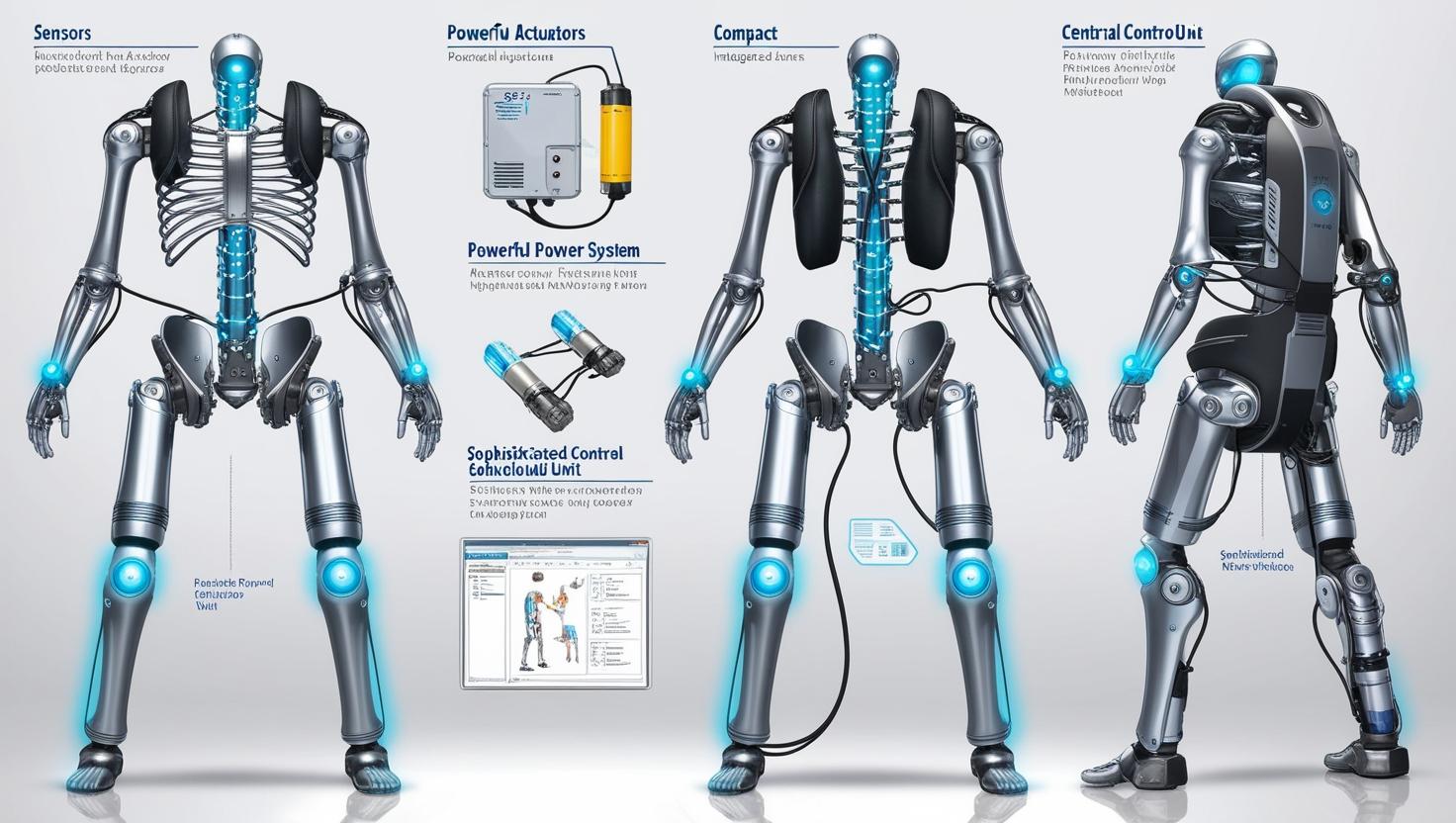
Modern exoskeleton systems use AI-powered algorithms, advanced sensors, actuators, and real-time motion analysis to support user movements efficiently.
The increasing demand for mobility assistance, workplace ergonomics, and rehabilitation technologies is fueling the growth of the Exoskeleton Technology Market globally.
AI-Powered Wearable Robotics Driving Market Expansion
Artificial intelligence is playing a transformative role in the Exoskeleton Technology Market. AI-powered wearable robotics can analyze user movements, predict motion patterns, and optimize support in real time.
Key AI capabilities include:
- Motion recognition
- Adaptive movement assistance
- Predictive posture correction
- Real-time gait analysis
- Personalized mobility support
These features improve the efficiency and responsiveness of exoskeleton systems, making them more comfortable and effective for users.
AI integration is enabling exoskeleton devices to become smarter, lighter, and more adaptable across industrial and medical applications.
Download PDF Brochure @ https://www.marketsandmarkets.com/pdfdownloadNew.asp?id=40697797
Rising Healthcare Applications Fueling the Exoskeleton Technology Market
Healthcare remains one of the largest sectors driving the Exoskeleton Technology Market. Exoskeletons are increasingly being used for:
- Rehabilitation therapy
- Mobility assistance for disabled individuals
- Stroke recovery treatment
- Spinal cord injury support
- Elderly mobility enhancement
AI-powered rehabilitation exoskeletons help patients regain movement through repetitive guided exercises and intelligent movement correction.
Hospitals and rehabilitation centers are adopting robotic wearable systems to improve patient recovery outcomes and reduce physical strain on healthcare professionals.
As the aging population continues to grow globally, demand for mobility-support technologies is expected to further accelerate the Exoskeleton Technology Market.
Industrial Automation and Worker Safety Boosting Demand
The industrial sector is another major contributor to the growth of the Exoskeleton Technology Market. Manufacturing, construction, warehousing, and logistics industries are adopting wearable robotics to improve worker safety and productivity.
Industrial exoskeletons help workers:
- Lift heavy objects safely
- Reduce muscle fatigue
- Prevent repetitive strain injuries
- Improve posture and ergonomics
- Increase operational efficiency
AI-enabled systems can monitor worker movements and adjust support levels dynamically based on workload conditions.
As industries face increasing labor shortages and workplace injury concerns, exoskeleton technology is becoming an important solution for workforce optimization.
Defense Sector Creating New Opportunities
Military applications are also contributing significantly to the Exoskeleton Technology Market. Defense organizations are investing in wearable robotic systems to improve soldier endurance, mobility, and load-carrying capabilities.
Military exoskeletons are designed to:
- Enhance physical strength
- Reduce fatigue during long missions
- Improve mobility in difficult terrains
- Support heavy equipment transportation
AI-powered wearable robotics can also assist with navigation, movement stabilization, and real-time situational awareness.
The increasing modernization of defense technologies is expected to create new opportunities for the Exoskeleton Technology Market in the coming years.
Technological Advancements Reshaping the Exoskeleton Technology Market
Rapid innovation is significantly improving the capabilities of wearable robotic systems.
Key technological advancements include:
- Lightweight materials such as carbon fiber
- Advanced battery technologies
- AI-driven motion sensors
- Machine learning algorithms
- Cloud-connected monitoring systems
- Real-time biometric tracking
These innovations are making exoskeleton devices more efficient, portable, and affordable.
The integration of IoT and AI analytics is also enabling remote monitoring and predictive maintenance of exoskeleton systems.
As technology continues evolving, the Exoskeleton Technology Market is expected to become more accessible across commercial and consumer applications.
Growing Investments and Startup Activity
The Exoskeleton Technology Market is attracting strong investment from technology companies, healthcare providers, defense contractors, and venture capital firms.
Startups and robotics companies are developing:
- Smart rehabilitation exoskeletons
- AI-assisted industrial wearables
- Consumer mobility solutions
- Ergonomic workplace support systems
Strategic partnerships between robotics firms and healthcare institutions are further accelerating product development and commercialization.
Increasing funding for wearable robotics research is expected to drive innovation and strengthen market growth globally.
Challenges in the Exoskeleton Technology Market
Despite strong growth potential, the Exoskeleton Technology Market still faces several challenges:
- High product costs
- Limited battery life
- Complex regulatory approvals
- User comfort and adaptability concerns
- Limited reimbursement policies in healthcare
However, ongoing advancements in AI, battery efficiency, and robotics engineering are gradually addressing these limitations.
As production scales increase and technology matures, exoskeleton systems are expected to become more affordable and widely adopted.
Regional Outlook of the Exoskeleton Technology Market
North America
North America dominates the Exoskeleton Technology Market due to strong healthcare infrastructure, military investments, and rapid adoption of industrial automation technologies.
Europe
Europe is witnessing steady growth driven by rehabilitation technologies, workplace safety regulations, and increasing healthcare investments.
Asia-Pacific
Asia-Pacific is emerging as a high-growth region due to rapid industrialization, robotics adoption, and expanding manufacturing industries in countries such as China, Japan, and South Korea.
Future Outlook
The future of the Exoskeleton Technology Market looks highly promising as AI-powered wearable robotics continue evolving.
Future trends may include:
- Fully autonomous adaptive exoskeletons
- Brain-computer interface integration
- Advanced human augmentation systems
- Consumer-focused wearable robotics
- AI-driven personalized rehabilitation solutions
As industries continue prioritizing automation, mobility support, and worker safety, the Exoskeleton Technology Market is expected to witness sustained global expansion.
The Exoskeleton Technology Market is witnessing strong growth with the rapid adoption of AI-powered wearable robotics across healthcare, industrial, and defense sectors. Technological advancements in artificial intelligence, robotics, sensors, and smart mobility systems are transforming exoskeleton devices into intelligent human-assistance solutions.
As the demand for mobility enhancement, workplace safety, and rehabilitation support continues to rise, the Exoskeleton Technology Market will remain a critical segment within the global robotics and automation industry.
Companies investing in AI-enabled wearable robotics are likely to lead the next generation of innovation in human augmentation technologies.
FAQs
1. What is the Exoskeleton Technology Market?
The Exoskeleton Technology Market includes wearable robotic systems designed to assist, support, or enhance human movement across healthcare, industrial, and military applications.
2. How is AI impacting the Exoskeleton Technology Market?
AI improves motion analysis, adaptive assistance, predictive movement support, and real-time performance optimization in wearable robotic systems.
3. Which industries use exoskeleton technology the most?
Major industries include healthcare, manufacturing, logistics, construction, automotive, and defense.
4. What are the benefits of industrial exoskeletons?
Industrial exoskeletons help reduce worker fatigue, prevent injuries, improve ergonomics, and enhance productivity.
5. What is the future outlook for the Exoskeleton Technology Market?
The market is expected to grow significantly due to advancements in AI-powered robotics, rehabilitation technologies, industrial automation, and smart wearable systems.