
The Entertainment Content and Goods Market Analysis highlights how streaming platforms, digital media, changing consumer preferences, and technology innovations are transforming the global entertainment industry. The growing popularity of online streaming, animated content, music merchandise, licensed products, and digital fan experiences is creating new opportunities for entertainment companies, content creators, and merchandise providers.
Digital transformation has significantly changed how consumers discover, access, and experience entertainment. Streaming platforms have expanded the availability of films, television programs, music, and animated content, enabling audiences to access entertainment across smartphones, smart TVs, tablets, and connected devices. At the same time, social media and digital communities are strengthening relationships between artists, entertainment brands, and fans.
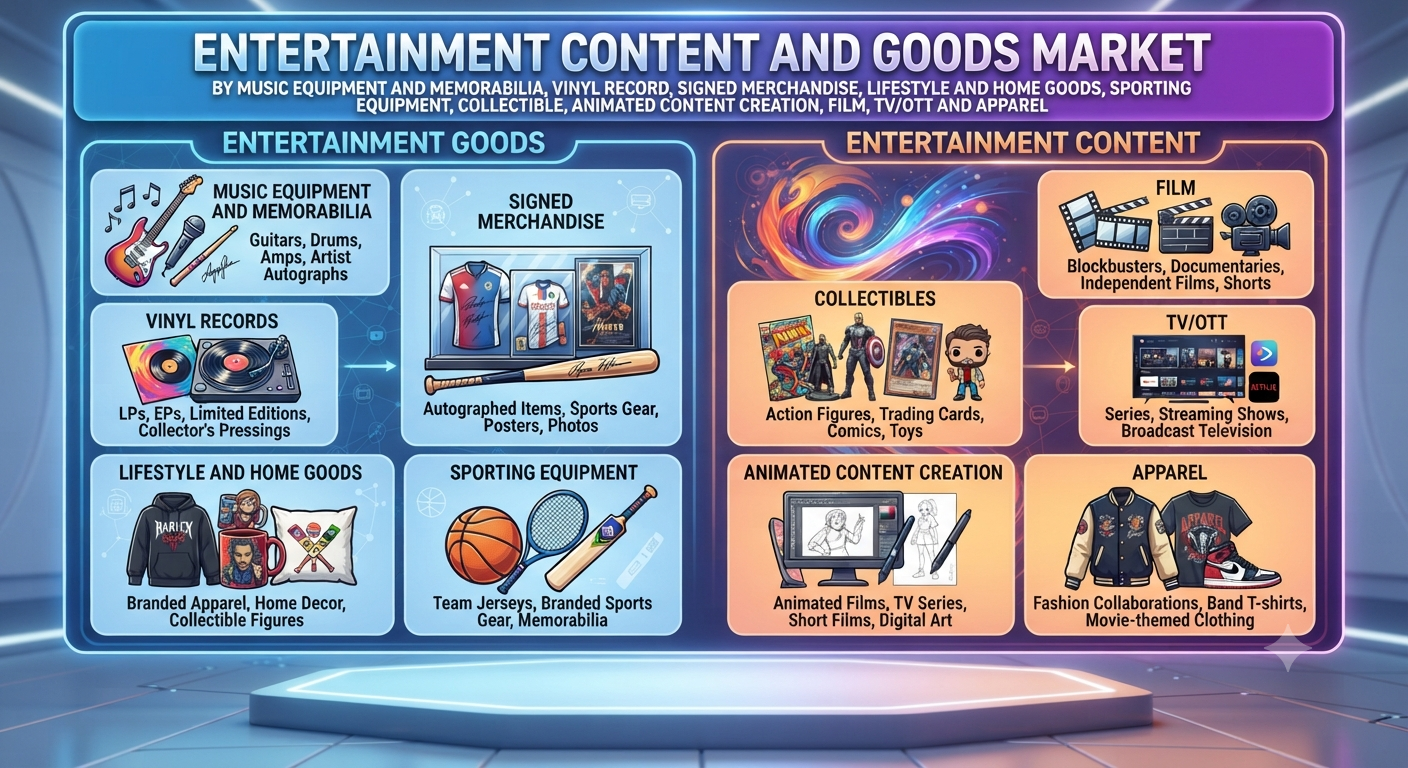
The market also includes a growing range of physical and digital goods, such as artist apparel, accessories, vinyl records, signed merchandise, licensed sportswear, collectibles, and lifestyle products. Entertainment companies are increasingly using popular intellectual properties (IPs), celebrity partnerships, and exclusive merchandise to build brand loyalty and generate additional revenue.
Artificial intelligence (AI), augmented reality (AR), virtual reality (VR), blockchain, and direct-to-consumer (D2C) platforms are further changing content creation, distribution, personalization, and monetization. These developments are strengthening the importance of the Entertainment Content and Goods Market Analysis for businesses seeking growth opportunities in the evolving global media and entertainment ecosystem.
The expansion of the market is supported by increasing consumer engagement with global entertainment franchises, rising demand for customized merchandise, and the growing influence of digital-first fan interactions. Streaming platforms are also creating opportunities for content owners to reach international audiences and monetize intellectual property through licensing and merchandise partnerships.
Furthermore, the increasing popularity of animated content, music artist merchandise, and licensed sportswear is diversifying revenue streams. Companies are adopting omnichannel retail strategies that combine e-commerce, physical stores, social commerce, and direct-to-fan platforms to improve consumer engagement.
Download PDF Brochure @ https://www.marketsandmarkets.com/pdfdownloadNew.asp?id=206501829
Key Factors Driving Entertainment Content and Goods Market Growth
1. Rising Popularity of Streaming Platforms and OTT Services
The growing adoption of streaming platforms is one of the major factors influencing the Entertainment Content and Goods Market Analysis. Consumers increasingly prefer on-demand entertainment experiences that provide flexibility, personalized recommendations, and access to international content.
Streaming services are investing in original films, television programs, documentaries, and animated series to attract subscribers and improve audience engagement. The increasing availability of smartphones, high-speed internet, and connected televisions is further supporting digital media consumption.
OTT platforms are also creating opportunities for entertainment franchises to expand beyond traditional content distribution. Popular films and television series can generate demand for character merchandise, apparel, collectibles, and other licensed products.
As streaming platforms continue to expand their content libraries and international reach, they are expected to remain important contributors to the entertainment ecosystem.
2. Increasing Demand for Personalized Entertainment Experiences
Changing consumer preferences are encouraging entertainment companies to offer customized content and merchandise. Gen Z and millennials increasingly value personalized experiences, exclusive products, and opportunities to interact with their favorite artists and entertainment franchises.
AI-powered recommendation systems help streaming platforms suggest content based on individual viewing preferences. Similarly, digital commerce platforms use customer data to recommend relevant merchandise, limited-edition collections, and personalized products.
Artist-led merchandise, customized apparel, exclusive collectibles, and fan membership programs are strengthening direct relationships between creators and consumers.
This shift toward personalization is helping companies improve customer loyalty, increase engagement, and develop additional revenue opportunities.
3. Growing Popularity of Music Artist Merchandise
Music artist merchandise is becoming an important component of the global entertainment goods industry. Fans increasingly purchase products associated with their favorite musicians, bands, and music events as a way to express their interests and strengthen their connection with artists.
Popular merchandise categories include apparel, accessories, lifestyle products, vinyl records, musical equipment, and signed memorabilia.
Social media platforms and online artist stores are making it easier for musicians to promote and distribute merchandise globally. Concert tours and exclusive product launches are also generating demand for limited-edition merchandise.
The increasing popularity of music festivals, international tours, and artist collaborations is expected to create additional opportunities for merchandise manufacturers and distribution platforms.
4. Expansion of Licensed Merchandise and Brand Collaborations
Licensed merchandise is another important growth driver in the entertainment industry. Entertainment companies are collaborating with fashion brands, sports organizations, gaming companies, and consumer product manufacturers to commercialize popular intellectual properties.
Licensed sportswear, fan accessories, sporting equipment, collectibles, and lifestyle products allow consumers to connect with their favorite teams, athletes, and entertainment franchises.
Limited-edition product launches and celebrity collaborations are also creating exclusive shopping experiences. These partnerships help brands expand their customer base while enabling entertainment companies to generate licensing revenue.
The growing influence of global sports leagues, animated characters, and entertainment franchises is strengthening demand for licensed goods across international markets.
Emerging Technology Trends Reshaping the Entertainment Industry
1. Artificial Intelligence Transforming Content Personalization
Artificial intelligence is becoming an important technology across the entertainment ecosystem. Streaming platforms use AI algorithms to analyze viewing behavior, recommend relevant content, and improve audience engagement.
AI is also supporting content production through automated editing, visual effects, animation workflows, and content discovery. Entertainment companies can use data analytics to understand consumer preferences and develop targeted marketing campaigns.
In merchandise businesses, AI-powered recommendation engines help identify popular products and deliver personalized shopping experiences. These capabilities are improving content monetization and helping companies build stronger relationships with audiences.
2. AR and VR Creating Immersive Entertainment Experiences
Augmented reality and virtual reality are introducing new ways for consumers to experience entertainment. These technologies enable interactive gaming, virtual concerts, immersive storytelling, and digital experiences connected to popular entertainment franchises.
AR-enabled applications can allow consumers to interact with digital characters, explore virtual merchandise, and participate in interactive promotional campaigns. VR environments provide opportunities for virtual events and immersive entertainment experiences.
The integration of AR, VR, and extended reality (XR) is encouraging entertainment companies to experiment with new formats and revenue models.
3. Blockchain and NFTs Supporting Digital Collectibles
Blockchain technology is creating opportunities for secure ownership and authentication of digital entertainment goods. Non-fungible tokens (NFTs) can represent digital collectibles, exclusive fan experiences, artwork, and virtual merchandise.
Artists and entertainment brands can use blockchain-enabled platforms to introduce limited-edition digital products and develop new monetization strategies.
Smart contracts can also support transparent royalty distribution and creator compensation. Although adoption depends on consumer interest, regulation, and platform development, blockchain presents opportunities for digital ownership and fan engagement.
4. Social Media and Direct-to-Consumer Platforms Expanding Fan Engagement
Social media platforms have become important channels for entertainment promotion, audience engagement, and merchandise discovery. Artists, actors, influencers, and entertainment companies use digital communities to promote content and interact directly with fans.
Direct-to-consumer platforms are also helping creators reduce dependence on traditional distribution channels. Through online stores, subscription services, and exclusive merchandise launches, artists can build direct relationships with consumers.
The combination of social commerce, influencer marketing, and e-commerce is creating new opportunities for entertainment brands to convert audience engagement into commercial growth.
5. Generative AI Accelerating Animated Content Creation
Generative AI is changing animation and digital content production by supporting character development, visual asset creation, storyboarding, and production workflows.
Animation studios can use AI-enabled tools to improve production efficiency and explore different creative formats. These technologies may also support personalized content experiences and faster development of digital entertainment assets.
As demand for animated films, television programs, and OTT content increases, the integration of AI-based production tools is expected to influence the future of entertainment content creation.
Entertainment Content and Goods Market Segmentation Analysis
The Entertainment Content and Goods Market Analysis covers several important segments, including music artist goods, licensed goods, animated content creation, and offerings such as hardware, software, and services.
1. By Music Artist Goods Type
The music artist goods segment includes apparel, accessories, lifestyle and home goods, and music equipment and memorabilia.
-
Apparel: Apparel accounted for the largest share of the music artist goods segment in 2024. Artist-branded T-shirts, hoodies, jackets, and headwear are popular among fans. Fashion collaborations and concert merchandise are further supporting demand.
-
Accessories: Bags, shoes, posters, and other artist-branded accessories provide additional merchandise opportunities through online stores and retail partnerships.
-
Lifestyle and Home Goods: Mugs, home decorations, and personalized lifestyle products are gaining popularity as fans seek products associated with their favorite artists.
-
Music Equipment and Memorabilia: This segment is expected to register the highest CAGR of 5.7%, supported by growing interest in vinyl records, signed merchandise, musical instruments, and collectible music products.
2. By Licensed Goods Type
Licensed goods include products developed using authorized entertainment, sports, celebrity, and franchise intellectual properties.
-
Licensed Sportswear: Licensed sportswear held the largest market share in 2024. Official jerseys, athletic apparel, caps, and branded outerwear are popular among sports fans.
-
Athletic and Fan Accessories: Accessories such as bags, caps, scarves, and other branded products help fans express their association with sports teams and entertainment franchises.
-
Sporting Equipment: Licensed sporting equipment benefits from collaborations involving sports organizations, athletes, and consumer brands.
-
Lifestyle, Fan Gear, and Memorabilia: This segment is projected to register the highest CAGR as personalization, exclusive merchandise, and omnichannel retail strategies increase consumer interest.
3. By Animated Content Creation
Animated content creation includes films, TV/OTT content, and different animation styles such as 2D, 3D, stop-motion, and mixed media.
-
TV/OTT: The TV/OTT segment dominated in 2024 and is expected to register the highest CAGR of 8.2%. Increasing demand for animated series, original digital programming, and international streaming content is supporting its growth.
-
Films: Animated films continue to attract audiences across age groups. Popular animated franchises also generate opportunities for licensed merchandise, collectibles, and brand collaborations.
-
2D Animation: This format remains important for television, digital entertainment, and creative storytelling.
-
3D Animation: Increasing demand for visually immersive films, television programs, and digital experiences is supporting 3D animation adoption.
-
Stop-Motion and Mixed Media: These formats provide distinctive creative styles and opportunities for specialized entertainment productions.
4. By Offering
The market is also categorized by hardware, software, and services.
-
Hardware: Includes equipment and technology infrastructure used in content creation, production, and delivery.
-
Software: Includes animation tools, editing platforms, content management systems, and digital distribution technologies.
-
Services: Includes content production, licensing, distribution, merchandising, marketing, and related entertainment services.
Regional Analysis of the Entertainment Content and Goods Market
Asia Pacific: Fastest-Growing Regional Market
Asia Pacific is expected to register the fastest growth in the global Entertainment Content and Goods Market. Rapid digitalization, increasing smartphone penetration, and expanding internet connectivity are changing entertainment consumption patterns across the region.
Countries such as China, India, Japan, and South Korea are experiencing growing demand for digital entertainment, animation, music merchandise, and licensed products.
The popularity of anime, K-pop, regional entertainment franchises, and celebrity-led merchandise is creating new commercial opportunities. Streaming platforms are also investing in regional content production to attract local audiences and expand their international presence.
Government initiatives supporting creative industries, combined with private investments in digital platforms and content production, are strengthening the regional entertainment ecosystem.
North America: Strong Entertainment and Merchandise Ecosystem
North America represents a significant market for entertainment content and goods. The region accounted for 37.3% of global market revenue in 2024, according to MarketsandMarkets.
The presence of major entertainment studios, streaming platforms, music companies, sports organizations, and merchandise manufacturers supports market development.
High consumer spending on licensed merchandise, collectibles, animated content, and digital entertainment is contributing to demand. The region also benefits from established e-commerce infrastructure and strong intellectual property commercialization capabilities.
Europe: Expanding Demand for Digital and Licensed Entertainment
Europe is witnessing increasing adoption of streaming services, digital content platforms, and licensed entertainment merchandise.
Consumers are showing interest in international music, sports merchandise, animated entertainment, and personalized products. Brand partnerships and artist collaborations are creating additional opportunities for merchandise manufacturers.
The growing focus on digital creative industries and cross-border content distribution is also supporting the regional entertainment market.
Rest of the World: Emerging Growth Opportunities
The Rest of the World region offers opportunities through expanding internet access, increasing digital media consumption, and growing interest in international entertainment franchises.
The Middle East, Latin America, and other emerging markets are investing in entertainment infrastructure, digital platforms, and creative industries. These developments are supporting new opportunities for streaming services, content producers, and licensed merchandise providers.
Key Challenges in the Entertainment Content and Goods Market
1. Increasing Content and Merchandise Piracy
Piracy remains a significant challenge for entertainment companies. Unauthorized streaming platforms, illegal downloads, and counterfeit merchandise can reduce revenues for content creators, distributors, and licensed product manufacturers.
Copyright infringement also affects artist royalties and brand reputation. Companies are increasingly investing in digital rights management, content protection technologies, and stronger intellectual property enforcement to address these challenges.
2. Subscription Fatigue and Economic Constraints
The growing number of streaming subscriptions is creating challenges for digital entertainment providers. Consumers may reduce the number of paid subscriptions due to increasing costs and overlapping content libraries.
Economic uncertainty can also influence discretionary spending on collectibles, premium merchandise, and entertainment products. Companies need competitive pricing, exclusive content, and flexible subscription models to maintain consumer interest.
3. High Production Costs and Competitive Pressure
Developing premium animated content, exclusive merchandise, and immersive entertainment experiences requires significant investment.
Entertainment companies also face intense competition from global streaming platforms, independent content creators, gaming companies, and digital media providers.
To remain competitive, businesses must focus on content differentiation, efficient production processes, innovative licensing strategies, and stronger customer engagement.
Competitive Landscape of the Entertainment Content and Goods Market
The competitive landscape includes global entertainment companies, music labels, streaming platforms, merchandise manufacturers, and intellectual property owners. Market participants are focusing on strategic partnerships, exclusive content, licensing agreements, digital distribution, and merchandise expansion.
Some of the major companies operating in the global market include:
1. The Walt Disney Company
2. Universal Music Group
3. Sony Music Entertainment
4. Warner Music Group
5. Netflix
6. Nike
7. Merchbar
Future Opportunities in the Entertainment Content and Goods Market
The future of the Entertainment Content and Goods Market Analysis is closely connected to technological innovation, changing consumer behavior, and the expansion of digital entertainment platforms.
Several opportunities are expected to influence the industry’s development:
-
AI-Powered Personalization: Artificial intelligence will help entertainment companies deliver customized content recommendations, merchandise suggestions, and interactive experiences.
-
Immersive Entertainment: AR, VR, and XR technologies will create new opportunities for virtual concerts, interactive storytelling, and digital fan experiences.
-
Digital Collectibles: Blockchain and NFT-based products may support new forms of digital merchandise, ownership, and fan engagement.
-
Artist-Led Commerce: Direct-to-consumer platforms will enable artists to monetize merchandise, exclusive content, and fan communities.
-
Global Licensing Partnerships: Collaborations between entertainment franchises, fashion brands, sports organizations, and consumer companies will expand licensed merchandise opportunities.
-
Animated Content Expansion: Growing demand for TV/OTT animation and international content will encourage investment in production technologies and creative capabilities.
The Entertainment Content and Goods Market Analysis demonstrates how streaming platforms, digital media, licensed merchandise, and emerging technologies are reshaping the global entertainment industry. Increasing demand for personalized entertainment, exclusive artist merchandise, animated content, and immersive digital experiences is creating new opportunities for market participants.
The market is projected to grow from USD 177.64 billion in 2025 to USD 239.52 billion by 2030, at a CAGR of 6.2%. Asia Pacific is expected to register the fastest regional growth, while animated content creation, particularly TV/OTT, is emerging as an important growth opportunity.
As artificial intelligence, blockchain, AR/VR, and direct-to-consumer platforms continue to evolve, entertainment companies will have new opportunities to improve content monetization and strengthen fan relationships. Businesses that combine innovative content strategies, personalized consumer experiences, and effective merchandise distribution will be better positioned to capitalize on the expanding global entertainment ecosystem.
FAQs
Q1. What is driving the growth of the Entertainment Content and Goods Market?
The market is driven by increasing adoption of streaming platforms, rising demand for digital entertainment, growing popularity of music artist merchandise, expansion of licensed products, and advancements in AI, AR, and VR technologies.
Q2. What is the projected size of the Entertainment Content and Goods Market by 2030?
According to MarketsandMarkets, the global Entertainment Content and Goods Market is projected to grow from USD 177.64 billion in 2025 to USD 239.52 billion by 2030, registering a CAGR of 6.2% during the forecast period.
Q3. Which region is expected to witness the fastest growth in the Entertainment Content and Goods Market?
Asia Pacific is expected to register the fastest growth, supported by increasing digital media consumption, smartphone penetration, streaming adoption, and growing demand for licensed merchandise and animated content.
Q4. What are the major segments of the Entertainment Content and Goods Market?
The market is segmented by music artist goods, including apparel, accessories, lifestyle and home goods, and music equipment and memorabilia; licensed goods, including sportswear, fan accessories, and sporting equipment; and animated content creation, including films and TV/OTT content.
Q5. Who are the key players in the Entertainment Content and Goods Market?
Major companies operating in the market include The Walt Disney Company, Universal Music Group, Sony Music Entertainment, Warner Music Group, Netflix, Nike, and Merchbar.