
The rapid advancement of robotics, artificial intelligence (AI), wearable technologies, and human-machine collaboration is transforming the future of mobility and physical assistance. Among these innovations, exoskeleton technology is gaining significant attention as organizations across healthcare, industrial, and defense sectors seek solutions to enhance human capabilities, improve safety, and support physical performance.
The Exoskeleton Market Trends landscape is evolving rapidly as demand increases for wearable robotic systems that assist individuals with mobility challenges, reduce workplace injuries, and enhance strength and endurance in demanding environments. Exoskeletons combine mechanical structures, sensors, actuators, control systems, and AI algorithms to provide physical support and improve human movement.
Growing adoption of rehabilitation robotics, increasing workplace safety concerns, rising investments in defense modernization, and advancements in lightweight materials are driving the expansion of the global exoskeleton industry. As technology becomes more affordable and accessible, exoskeleton solutions are moving from research environments into practical commercial applications.
Understanding Exoskeleton Technology
An exoskeleton is a wearable robotic device designed to support, enhance, or restore human physical capabilities. Unlike traditional robots that operate independently, exoskeletons work together with users by detecting body movements and providing assistance based on individual needs.
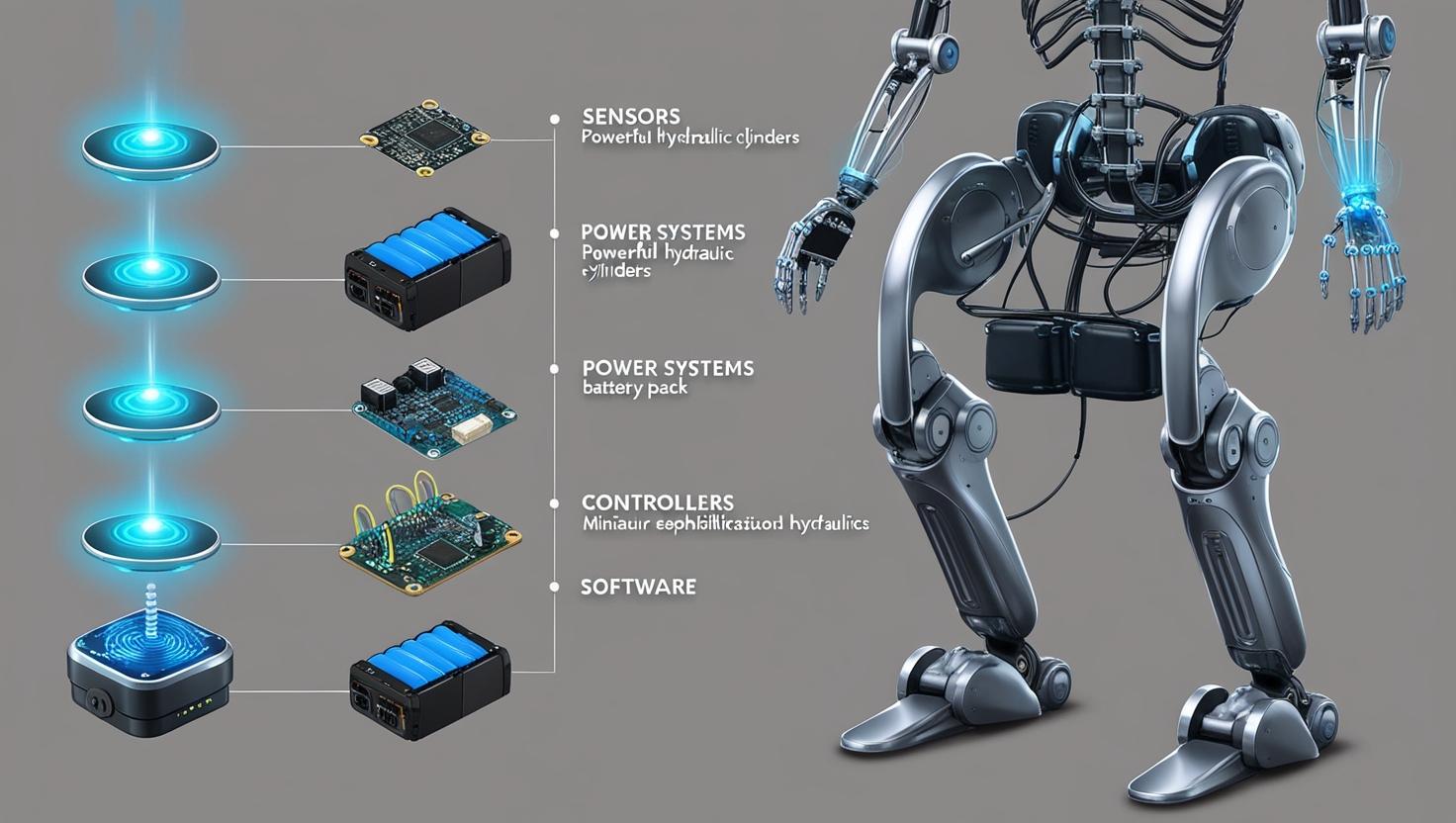
Modern exoskeleton systems typically include:
- Sensors for movement detection
- Actuators for mechanical assistance
- Batteries and power management systems
- AI-based control algorithms
- Lightweight structural materials
- User interfaces for customization
These technologies allow exoskeletons to assist with walking, lifting, carrying, rehabilitation exercises, and physically demanding tasks.
The ability to improve mobility and reduce physical strain is creating new opportunities across multiple industries.
Key Exoskeleton Market Trends Driving Growth
Increasing Adoption in Healthcare and Rehabilitation
Healthcare remains one of the most significant areas influencing Exoskeleton Market Trends. Aging populations, rising cases of mobility-related disorders, and increasing demand for advanced rehabilitation solutions are encouraging hospitals and rehabilitation centers to adopt robotic exoskeleton systems.
Medical exoskeletons are designed to assist patients recovering from:
- Spinal cord injuries
- Stroke-related mobility challenges
- Neurological disorders
- Lower-limb disabilities
- Physical impairments
Rehabilitation exoskeletons help patients perform repetitive movement exercises while providing controlled assistance. These systems can improve therapy outcomes by enabling intensive training sessions that may be difficult to achieve through conventional methods.
The integration of AI and advanced sensors is further improving patient monitoring, movement analysis, and personalized rehabilitation programs.
Download PDF Brochure @ https://www.marketsandmarkets.com/pdfdownloadNew.asp?id=40697797
Rising Demand for Industrial Exoskeletons
One of the fastest-growing Exoskeleton Market Trends is the adoption of industrial exoskeletons to improve workplace safety and productivity.
Manufacturing, logistics, construction, and automotive industries often involve physically demanding tasks such as:
- Heavy lifting
- Overhead work
- Repetitive motion
- Extended standing
- Manual material handling
Industrial exoskeletons help reduce physical fatigue by transferring loads away from workers’ muscles and joints.
Benefits include:
- Reduced workplace injuries
- Improved employee endurance
- Increased productivity
- Enhanced worker comfort
- Lower physical strain
As companies focus on occupational safety and ergonomic improvements, industrial exoskeleton adoption is expected to increase significantly.
Defense Sector Driving Advanced Exoskeleton Development
Defense applications represent another important area shaping Exoskeleton Market Trends.
Military organizations are exploring powered exoskeletons to enhance soldier capabilities in challenging environments.
Defense exoskeleton applications include:
- Carrying heavy equipment
- Improving endurance
- Supporting long-duration missions
- Reducing physical fatigue
- Enhancing operational performance
Soldiers often operate under extreme conditions while carrying heavy equipment. Exoskeleton systems can provide additional strength and mobility support, helping improve mission effectiveness.
Increasing defense modernization programs and investments in advanced military technologies are expected to support future market growth.
Role of Artificial Intelligence in Exoskeleton Innovation
Artificial intelligence is playing a major role in advancing exoskeleton capabilities.
AI-powered exoskeletons can analyze:
- User movement patterns
- Walking behavior
- Muscle activity
- Environmental conditions
- Physical workload
This allows systems to automatically adjust assistance levels based on user requirements.
AI integration enables:
- Improved movement accuracy
- Personalized support
- Faster adaptation
- Better energy efficiency
- Enhanced user experience
As AI technologies continue improving, exoskeleton systems are becoming more intelligent, responsive, and practical for everyday use.
Lightweight Materials Enhancing Exoskeleton Adoption
Traditional exoskeleton systems were often heavy and expensive, limiting widespread adoption. However, advancements in materials science are changing this scenario.
Manufacturers are increasingly using:
- Carbon fiber composites
- Lightweight alloys
- Advanced polymers
- Flexible materials
These materials reduce device weight while improving durability and comfort.
Lightweight designs are especially important for healthcare and industrial applications where users may need to wear exoskeleton systems for extended periods.
Battery and Power Technology Advancements
Power management remains a critical factor influencing Exoskeleton Market Trends.
Modern exoskeletons require efficient energy systems to provide extended operating times without increasing weight.
Advancements in:
- Battery technology
- Energy-efficient motors
- Power management systems
- Energy harvesting solutions
are helping manufacturers develop longer-lasting and more practical devices.
Improved battery performance will be essential for expanding exoskeleton adoption in industrial and defense environments.
Increasing Use of Wearable Robotics in Aging Populations
Aging demographics worldwide are increasing demand for assistive technologies.
Exoskeletons can support elderly individuals by improving:
- Walking ability
- Balance
- Physical independence
- Daily activity performance
Healthcare providers are increasingly exploring wearable robotics as a way to improve quality of life and reduce dependence on caregivers.
This demographic shift is expected to create long-term opportunities for exoskeleton manufacturers.
Integration With IoT and Connected Systems
The combination of exoskeletons with Internet of Things (IoT) technologies is another emerging trend.
Connected exoskeleton systems can collect and analyze data related to:
- User performance
- Device operation
- Health metrics
- Maintenance requirements
IoT connectivity enables:
- Remote monitoring
- Predictive maintenance
- Performance optimization
- Data-driven improvements
Smart connectivity is expected to increase the value proposition of exoskeleton solutions across industries.
Challenges Affecting Exoskeleton Market Growth
Despite strong potential, several challenges may impact widespread adoption.
High Development and Manufacturing Costs
Advanced robotics components, sensors, and control systems increase production costs. This can make exoskeleton systems expensive for some organizations and individual users.
Limited Battery Performance
Battery life remains a challenge, particularly for powered exoskeletons requiring continuous operation.
User Comfort and Adaptability
Exoskeletons must provide comfortable, natural movement while adapting to different body types and physical conditions.
Regulatory and Safety Requirements
Healthcare and industrial exoskeletons must meet strict safety and performance standards before widespread deployment.
Addressing these challenges through innovation and economies of scale will be critical for future market expansion.
Future Outlook of Exoskeleton Market Trends
The future of the exoskeleton industry is expected to be shaped by continued advancements in robotics, AI, materials, and human-machine interaction.
Future developments may include:
- More lightweight and flexible designs
- AI-powered adaptive assistance
- Improved battery technologies
- Affordable commercial systems
- Greater integration with healthcare platforms
- Advanced industrial automation solutions
As organizations increasingly focus on improving human performance, safety, and accessibility, exoskeletons are expected to become an important technology across multiple sectors.
Emerging Exoskeleton Market Trends are reshaping healthcare, industrial, and defense applications by enabling improved mobility, enhanced physical capabilities, and safer work environments. Advances in AI, robotics, lightweight materials, and connected technologies are accelerating the transition of exoskeletons from experimental solutions to practical real-world applications.
Healthcare providers are leveraging exoskeletons for rehabilitation, industries are adopting them to reduce workplace injuries, and defense organizations are exploring their potential to enhance human performance.
With continued technological innovation and increasing demand for human augmentation solutions, the exoskeleton market is positioned for significant growth, creating new opportunities across global industries.