
Digital Substation Technology is transforming the way electricity is generated, transmitted, monitored, and distributed across modern power networks. As electricity demand increases and renewable energy installations expand, traditional substations face growing pressure to deliver reliable, efficient, and flexible power management. Digital solutions integrate intelligent electronic devices, advanced sensors, communication networks, and automated control systems to improve the visibility and performance of electrical infrastructure. Smart transformers complement these systems by providing enhanced monitoring and operational information about critical grid assets. Together, these technologies help utilities respond more effectively to changing load conditions, equipment faults, and evolving electricity consumption patterns.
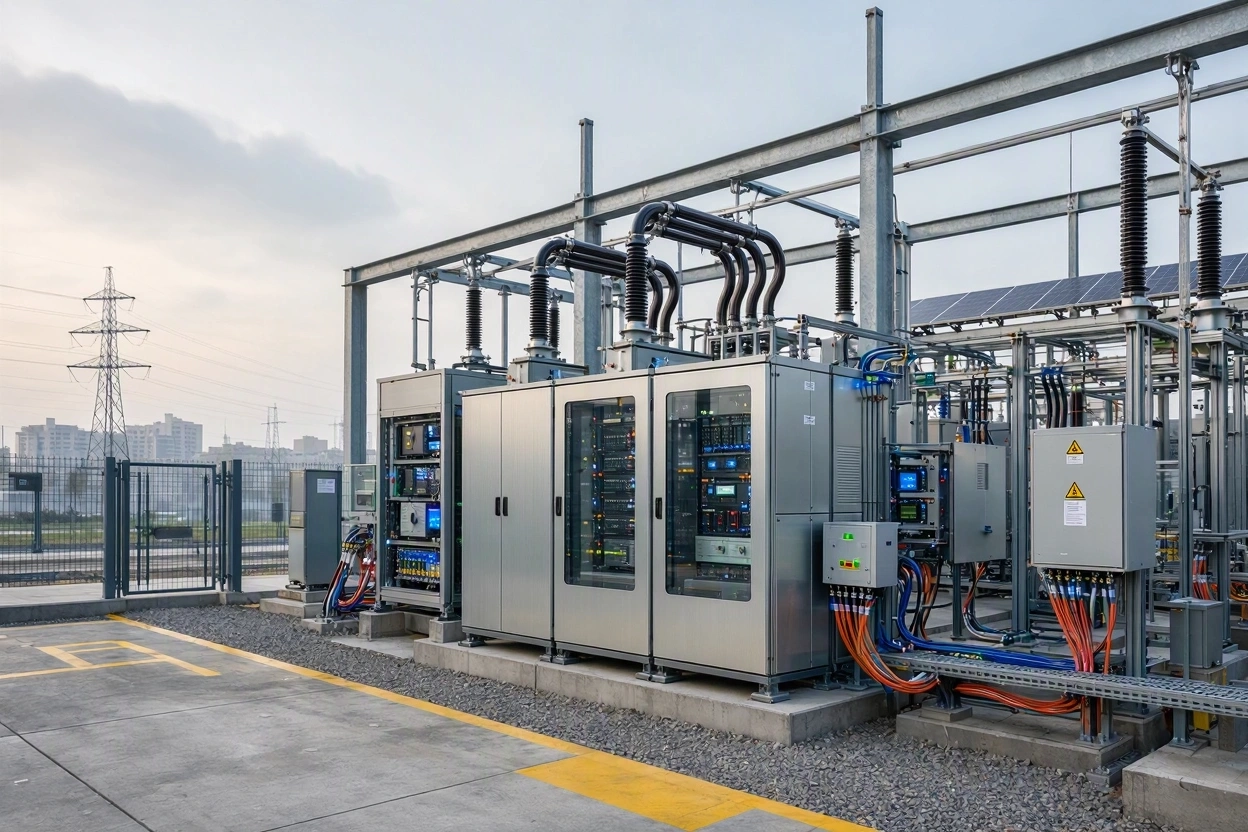
The modernization of power infrastructure has become increasingly important as industries, commercial buildings, transportation systems, and residential communities depend on uninterrupted electricity. Conventional substations often rely on periodic inspections and separate monitoring systems, which can limit the speed at which operators identify emerging problems. Digital Substation Technology enables more integrated data collection and faster communication between field equipment and control centers. Smart transformers add valuable information about temperature, loading, insulation conditions, and other operating parameters. This combination supports better decision making, improves maintenance planning, and helps utilities build a more resilient electricity network capable of supporting future energy requirements.
According to Marketsandmarkets, the global digital substation market size is projected to grow from USD 15.62 billion in 2026 to USD 23.39 billion by 2032, growing at a CAGR of 7.0 from 2026 to 2032.
Download PDF Brochure @ https://www.marketsandmarkets.com/pdfdownloadNew.asp?id=43227003
Understanding Digital Substation Technology
Digital Substation Technology refers to the integration of digital communication, intelligent monitoring, automation, and protection systems within electrical substations. These systems collect and exchange information between equipment such as transformers, circuit breakers, protection relays, current sensors, voltage sensors, and supervisory control platforms. Digital substations can use standardized communication protocols, including IEC 61850, to support interoperability between compatible devices. By reducing dependence on traditional point to point copper wiring in suitable applications, digital architectures can simplify signal exchange and improve system flexibility. The result is a more connected substation environment where operators can monitor equipment conditions and coordinate protection functions more efficiently.
A digital substation generally combines process level equipment, bay level control devices, and station level monitoring applications. Process level systems capture electrical measurements and equipment status, while bay level devices manage protection, control, and switching functions. Station level systems provide operators with a consolidated view of substation performance and operational events. Digital Substation Technology allows these layers to exchange information through structured communication networks rather than relying exclusively on conventional hardwired arrangements. Depending on the design, the architecture may include merging units, intelligent electronic devices, time synchronization, cybersecurity controls, and redundant network components to support dependable operation.
How Smart Transformers Support Modern Power Grids
Smart transformers are conventional power transformers enhanced with sensors, monitoring systems, communication capabilities, and, in some applications, advanced control functions. They provide information about operating conditions that may not be visible through basic electrical measurements alone. Monitoring capabilities can include winding and oil temperatures, load current, voltage, dissolved gases in transformer oil, moisture levels, and cooling system performance. The availability of this information helps engineers assess transformer health and identify unusual operating patterns. When integrated with Digital Substation Technology, smart transformers can share relevant data with supervisory platforms, asset management systems, and operational control centers.
Smart transformers should not be confused with every type of solid state transformer or power electronic transformer. Many smart transformer deployments involve conventional electromagnetic transformers equipped with digital monitoring and communication features. These systems do not automatically regulate every aspect of the power network, but they provide better information for operational decisions and maintenance planning. Advanced transformer designs may also incorporate additional voltage management or power conversion capabilities, depending on the application. The precise functionality depends on the equipment specification, installed sensors, communication architecture, and integration with the wider grid management system.
Key Components of Digital Substation Infrastructure
Digital Substation Technology relies on several interconnected components that work together to support monitoring, protection, automation, and secure data exchange. Intelligent electronic devices process measurements and execute protection logic, while sensors provide information about electrical and physical operating conditions. Communication networks transport information between field equipment, control systems, and utility applications. Supervisory control and data acquisition systems help operators observe network conditions, acknowledge alarms, and manage authorized switching operations. Data historians and asset management platforms can preserve operating records for maintenance analysis, performance reporting, and long term planning.
The main components commonly found in digital substation infrastructure include:
• Intelligent electronic devices: Digital relays and controllers provide protection, automation, measurement, and control functions.
• Smart sensors and merging units: These devices capture electrical measurements and convert suitable signals into information that digital systems can process.
• Communication networks: Fiber optic links, Ethernet networks, and compatible communication protocols facilitate reliable information exchange.
• Smart transformer monitoring: Sensors and diagnostic equipment provide visibility into loading, temperature, insulation condition, and other important parameters.
• Supervisory control systems: These platforms present equipment status, alarms, and measurements to authorized operators.
• Cybersecurity and time synchronization: Security controls and synchronized timestamps support trustworthy communication and accurate event analysis.
The effectiveness of these components depends on proper engineering, configuration, testing, and maintenance. Utilities must ensure that devices from different manufacturers can exchange information correctly and that protection functions remain dependable under normal and abnormal operating conditions. Redundant communication paths, suitable backup power, and carefully designed fail safe arrangements can improve operational resilience. Digital Substation Technology therefore involves more than installing connected equipment. It requires a coordinated infrastructure strategy that combines electrical engineering, communications, software, cybersecurity, and operational expertise.
Major Benefits of Digital Substation Technology
One of the most important benefits of Digital Substation Technology is improved visibility into grid conditions. Operators can access equipment measurements, alarms, and event records through integrated monitoring platforms, helping them understand how substations respond to changing electricity demand. Faster access to operational information can support fault investigation and more informed switching decisions. Digital records can also help engineering teams identify recurring problems and assess the performance of protection systems. Although digitalization cannot eliminate all power interruptions, it can strengthen the tools utilities use to detect, investigate, and manage operational disturbances.
Another significant advantage is the potential to improve asset utilization and maintenance efficiency. Smart transformer monitoring helps utilities identify abnormal temperature changes, excessive loading, unusual gas concentrations, or other warning signs that may require investigation. Instead of relying exclusively on fixed inspection schedules, maintenance teams can combine periodic inspections with condition based assessments. This approach can help prioritize equipment that requires attention and reduce unnecessary maintenance activities. Actual benefits depend on sensor quality, diagnostic accuracy, operating conditions, and the ability of utility teams to interpret and act on the available data.
Predictive Maintenance and Transformer Health Monitoring
Transformer failures can result in expensive repairs, service interruptions, equipment replacement, and safety risks. Digital Substation Technology supports predictive maintenance by providing a more continuous view of equipment performance and operating history. Monitoring systems can identify deviations from established baselines, while diagnostic tools help engineers evaluate whether an observed change indicates a developing fault. For example, increasing temperatures combined with unusual loading or changes in dissolved gas measurements may justify a detailed transformer assessment. These indicators do not independently confirm every failure mechanism, so expert interpretation and appropriate testing remain essential.
Predictive maintenance becomes more effective when monitoring data is combined with asset age, maintenance history, loading patterns, environmental conditions, and manufacturer guidance. Analytical platforms can help identify assets that deserve closer inspection and allow maintenance teams to plan work before a problem becomes a major disruption. Digital Substation Technology also supports better documentation by preserving alarms, equipment events, and operational trends. Utilities can use these records to refine maintenance intervals, compare similar assets, and improve long term investment decisions. However, predictive models must be validated against actual equipment behavior to avoid false alarms and missed warning signs.
Integration of Renewable Energy and Distributed Resources
The expansion of solar and wind power is changing electricity flow across transmission and distribution networks. Unlike conventional generation, renewable energy output can fluctuate with weather conditions and time of day. Distributed energy resources, battery storage, electric vehicle charging, and flexible industrial loads introduce additional operational complexity. Digital Substation Technology improves access to measurements and switching information that can help operators understand these changing conditions. When connected to suitable grid management applications, digital substations can support more informed coordination of voltage control, protection settings, and power flow management.
Smart transformers can contribute by providing information about loading, temperature, and voltage conditions as energy demand and supply change. This information can help utilities evaluate whether existing transformer capacity is sufficient for new renewable installations or increased electrification. Advanced monitoring and control systems can also support more responsive network planning when combined with distribution management systems and other grid technologies. Nevertheless, renewable integration requires coordinated planning across generation, transmission, distribution, protection, and storage infrastructure. Digital monitoring alone cannot resolve every constraint, but it gives utilities better information for managing an increasingly dynamic electricity system.
Role of Artificial Intelligence and Data Analytics
Artificial intelligence and data analytics are extending the capabilities of digital substations by helping utilities interpret large volumes of operational information. Algorithms can examine temperature trends, load profiles, alarms, equipment events, and historical maintenance records to identify patterns that may be difficult to detect through manual analysis. Digital Substation Technology provides the connected data environment required for many of these applications. Analytics platforms can help classify alarms, identify unusual operating conditions, estimate asset deterioration, and support maintenance prioritization. Their effectiveness depends on reliable data, appropriate model design, and validation against real operating conditions.
Artificial intelligence should complement rather than replace established protection and safety systems. Critical protection functions generally require deterministic performance, rigorous testing, and compliance with applicable engineering standards. Analytical recommendations should therefore be evaluated within established operational procedures, especially when they could influence switching, maintenance, or equipment isolation. Utilities also need to consider data quality, model transparency, cybersecurity, and the consequences of incorrect predictions. When these safeguards are incorporated, analytics can help engineering teams make better use of digital information while maintaining the reliability requirements of power infrastructure.
Cybersecurity and Interoperability Challenges
The growing connectivity of substations introduces cybersecurity risks that must be addressed throughout system design and operation. Digital Substation Technology connects previously isolated equipment with communication networks, monitoring platforms, and enterprise applications. Poorly configured access controls, outdated software, insecure remote connections, or inadequate network segmentation can expose operational systems to unauthorized access. Utilities should adopt defense in depth strategies that include strong authentication, controlled remote access, network monitoring, secure configuration management, and tested incident response procedures. Cybersecurity responsibilities should be clearly defined across equipment suppliers, system integrators, utility operators, and maintenance contractors.
Interoperability is another important consideration because substations may contain equipment from several manufacturers and generations of technology. Standardized protocols such as IEC 61850 can simplify communication, but successful integration still requires careful engineering, conformance testing, configuration management, and verification of system behavior. Utilities must also plan for equipment lifecycle support, software updates, backup and recovery, and the availability of skilled personnel. Digital Substation Technology projects can become difficult to manage when legacy systems are integrated without a clear migration strategy. A phased implementation plan helps organizations modernize critical assets while managing technical complexity and operational risk.
Applications Across Transmission and Distribution Networks
Digital substations serve a broad range of applications across electricity transmission, distribution, renewable energy facilities, industrial plants, and large commercial infrastructure. Transmission utilities can use digital monitoring and protection to improve visibility across high voltage networks and coordinate responses to equipment disturbances. Distribution operators can apply digital systems to monitor substations serving residential communities, commercial districts, and industrial customers. Smart transformer monitoring is particularly valuable where equipment loading is changing rapidly or where a failure could affect a large number of customers. The appropriate configuration depends on voltage levels, network design, operating requirements, and the criticality of each installation.
Industrial facilities such as manufacturing plants, data centers, mining operations, and processing sites also require dependable electrical infrastructure. Digital Substation Technology can help facility operators monitor electrical assets, investigate disturbances, and coordinate maintenance with production requirements. Renewable energy projects may use digital substations to connect generation assets with the wider electricity network, while battery storage installations can benefit from integrated monitoring and control. In each case, the system should be designed around specific operational needs rather than adopting a one size fits all architecture. Proper commissioning, staff training, and lifecycle support are essential to realizing the full value of digital infrastructure.
Future Outlook for Digital Power Grid Infrastructure
The development of digital power infrastructure is expected to remain important as electricity systems accommodate electrification, renewable generation, distributed energy resources, and increasing reliability requirements. Utilities are exploring more integrated monitoring, automated diagnostics, secure communication, and advanced asset management capabilities. Digital Substation Technology provides a foundation for connecting these functions and improving the flow of operational information across the grid. As sensor technologies and analytical methods improve, utilities may gain more detailed insight into equipment condition and network behavior. The pace of adoption will vary according to investment priorities, regulatory requirements, existing infrastructure, and local grid needs.
Future deployments will likely place greater emphasis on interoperability, cybersecurity, resilient communications, and integration with broader energy management systems. Smart transformers may provide increasingly sophisticated monitoring and diagnostic capabilities, while digital substations can support more coordinated grid operations. Successful modernization will depend on balancing innovation with proven protection principles and practical maintenance requirements. Utilities that establish clear business objectives, measurable performance indicators, and strong technical governance will be better positioned to evaluate project outcomes. Ultimately, Digital Substation Technology can help create a more observable, adaptable, and reliable power infrastructure when implemented as part of a comprehensive grid modernization strategy.
Conclusion
Digital Substation Technology is reshaping power grid infrastructure by connecting electrical equipment, monitoring systems, protection devices, and operational platforms into a more integrated environment. Smart transformers strengthen this approach by providing information about equipment loading, temperature, insulation condition, and other important operating parameters. Together, these capabilities can improve fault investigation, support condition based maintenance, and help utilities respond to changing electricity demand. They also provide valuable data for managing renewable energy integration and planning future infrastructure investments.
Realizing these benefits requires more than deploying digital equipment. Utilities must invest in reliable communication networks, interoperable systems, cybersecurity, staff training, and disciplined maintenance practices. Smart monitoring should complement established protection systems and engineering judgment rather than replace them. With a carefully planned implementation strategy, Digital Substation Technology can support a more resilient and efficient electricity network that meets the evolving needs of industries, communities, and modern energy systems.
Frequently Asked Questions
1. What is Digital Substation Technology?
Digital Substation Technology uses digital sensors, intelligent electronic devices, communication networks, automation, and monitoring software to improve substation operation. It helps operators access equipment data, manage protection functions, investigate faults, and make better informed maintenance decisions.
2. How do smart transformers improve power grid reliability?
Smart transformers provide information about temperature, electrical loading, cooling performance, and insulation condition. When this information is analyzed correctly, utilities can identify abnormal operating patterns, investigate potential problems, and schedule maintenance before certain issues lead to major equipment failures.
3. What are the main components of a digital substation?
Key components include intelligent electronic devices, digital protection relays, smart sensors, merging units, communication networks, supervisory control systems, time synchronization, and cybersecurity controls. The exact configuration depends on the substation design and its operational requirements.
4. How does Digital Substation Technology support predictive maintenance?
Digital systems collect equipment measurements and operational events that engineers can compare with historical trends and expected operating conditions. Diagnostic tools can identify warning signs and help prioritize inspections, although predictions require validation and should be supported by engineering assessments.
5. What is the role of IEC 61850 in digital substations?
IEC 61850 is a family of international standards for communication and system integration in power utility automation. It supports structured data exchange between compatible devices and can improve interoperability when equipment is correctly configured and tested.
6. Can digital substations support renewable energy integration?
Yes. Digital substations provide monitoring and operational information that can help utilities manage changing power flows associated with solar, wind, battery storage, and distributed energy resources. They work most effectively as part of a coordinated grid management and protection strategy.
7. What are the main benefits of smart transformer monitoring?
Smart transformer monitoring can improve equipment visibility, support condition based maintenance, identify unusual operating trends, and help prioritize asset replacement or inspection. Benefits depend on monitoring quality, data interpretation, equipment design, and the actions taken by maintenance teams.
8. What cybersecurity challenges affect digital substations?
Major challenges include unauthorized access, insecure remote connections, outdated software, insufficient network segmentation, and vulnerabilities in connected devices. Utilities can reduce these risks through access controls, continuous monitoring, secure updates, incident response planning, and defense in depth security measures.
9. Where is Digital Substation Technology used?
It is used in transmission and distribution substations, renewable energy installations, industrial power systems, data centers, and other facilities requiring dependable electricity. Implementation depends on voltage levels, network complexity, reliability requirements, and the benefits expected from digital monitoring.
10. What is the future of Digital Substation Technology?
Future developments are likely to emphasize advanced diagnostics, artificial intelligence, stronger cybersecurity, improved interoperability, and integration with intelligent grid management systems. These developments can help utilities improve operational visibility and manage increasingly complex electricity networks, subject to investment and implementation requirements.