
The global power grid is undergoing a fundamental transformation. As the world shifts toward renewable energy sources, decentralizes power generation, and demands greater reliability from aging infrastructure, the traditional analog substation is rapidly becoming obsolete. At the heart of this transition lies the Digital Substation Market Trends, a dynamic sector characterized by the replacement of copper wiring with fiber-optic communication, the integration of intelligent electronic devices (IEDs), and the deployment of advanced software analytics.
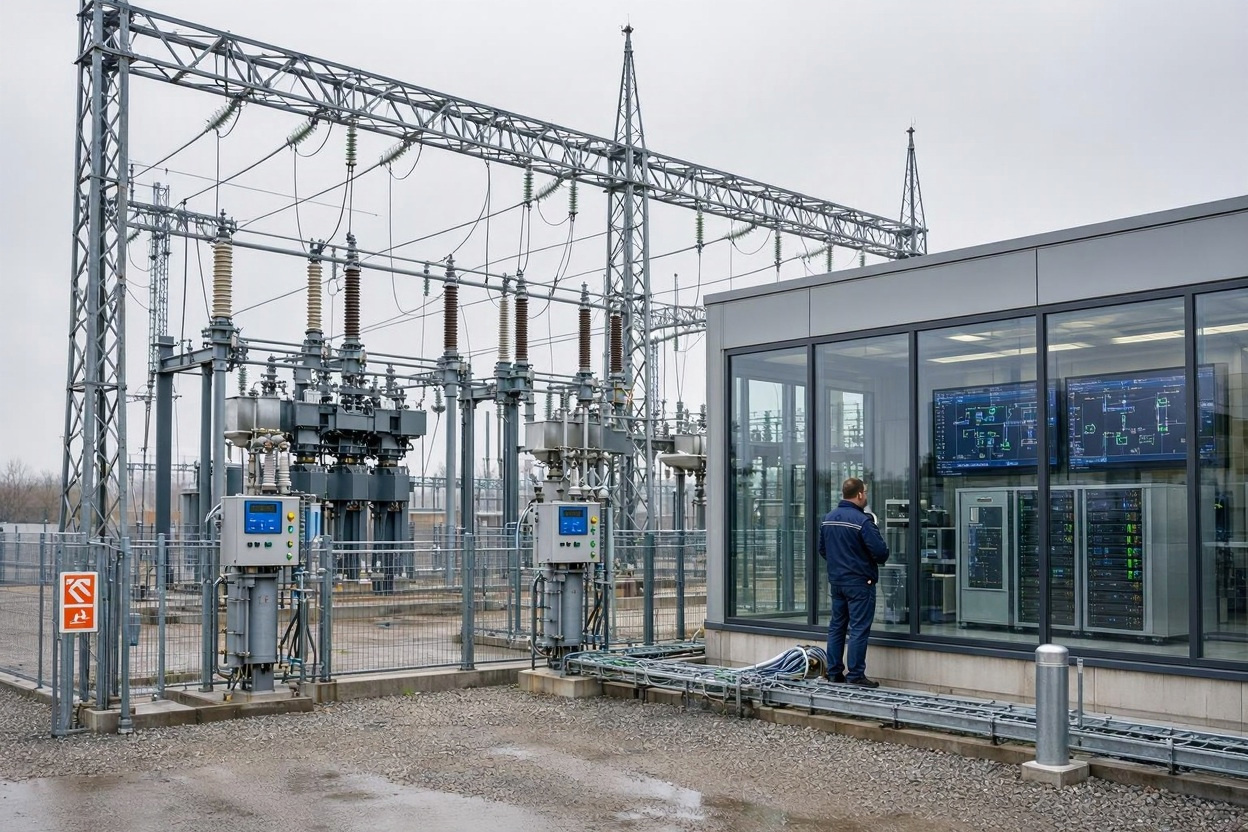
The digital substation represents more than just a hardware upgrade; it is an architectural revolution. By converting analog signals from primary equipment—such as transformers and circuit breakers into digital data at the process level, utilities can achieve unprecedented levels of control, monitoring, and efficiency.
According to Marketsandmarkets, the global digital substation market size is projected to grow from USD 15.62 billion in 2026 to USD 23.39 billion by 2032, growing at a CAGR of 7.0 from 2026 to 2032.
Download PDF Brochure @ https://www.marketsandmarkets.com/pdfdownloadNew.asp?id=43227003
This comprehensive article explores the multifaceted Digital Substation Market Trends, dissecting the technological drivers, segment-specific growth patterns, regional hotspots, and the strategic maneuvers of key industry players. By understanding these trends, stakeholders can navigate the complexities of grid modernization and capitalize on the opportunities presented by the digital energy transition.
Market Size and Growth Trajectory: Analyzing the Digital Substation Market Trends
The financial trajectory of the Digital Substation Market Trends indicates a robust and sustained period of growth, driven by global mandates for grid resilience and the integration of intermittent renewable energy sources. The market’s expansion is not merely a reflection of new installations but also a significant wave of brownfield retrofits where utilities are modernizing legacy infrastructure to extend asset life and improve operational visibility.
The growth is fueled by a confluence of factors. Primarily, the urgent need to replace aging transmission and distribution networks—particularly in mature markets like North America and Europe where significant portions of the grid were built over 40 years ago—is a major catalyst .
Key Market Metrics and Forecasts:
The market is characterized by a shift from pilot projects to large-scale deployments. Utilities are increasingly moving beyond isolated digital trials to fleet-wide standardization, particularly in regions with supportive regulatory frameworks. This transition is unlocking economies of scale in manufacturing and engineering, gradually reducing the per-unit cost of digital components like merging units and optical current transformers, thereby further accelerating adoption.
Key Technological Drivers Shaping Digital Substation Market Trends
The evolution of the Digital Substation Market Trends is intrinsically linked to the maturation of several core technologies that enable the seamless convergence of operational technology (OT) and information technology (IT). These technological pillars are not only enhancing the functionality of substations but are also redefining the economic and operational models of power utilities.
The Ubiquitous Adoption of IEC 61850 Standards
At the foundation of the digital substation revolution is the IEC 61850 standard. This protocol is the universal language that allows devices from different manufacturers to communicate and interoperate seamlessly. The transition from earlier protocols to IEC 61850 is a primary driver of the Digital Substation Market Trends, as it enables the implementation of the process bus—a critical innovation that replaces thousands of copper wires with a few fiber-optic cables. This shift significantly reduces installation complexity, eliminates electromagnetic interference issues, and lowers long-term maintenance costs associated with copper wiring .
The adoption of IEC 61850 also facilitates the concept of “digital twins.” By standardizing data formats, utilities can create virtual replicas of their physical substations, allowing for advanced simulation, training, and predictive maintenance. As utilities demand greater interoperability and vendor-agnostic solutions, the adherence to this standard has become a key competitive differentiator for equipment manufacturers.
Integration of AI and Predictive Analytics
Beyond connectivity, the true value of digital substations lies in the data they generate. The latest Digital Substation Market Trends reveal a surge in the integration of artificial intelligence (AI) and machine learning for predictive maintenance and asset health management . Modern substations are equipped with sensors that continuously monitor parameters like temperature, partial discharge, and gas composition in transformers. AI algorithms process this data to detect anomalies and predict potential failures before they occur, shifting the maintenance paradigm from reactive or schedule-based to condition-based.
This capability is particularly valuable in high-voltage transmission networks, where unplanned outages can cost millions of dollars and disrupt vast geographic areas. As noted by industry experts, future substations will leverage AI-enabled diagnostics to prioritize maintenance, detecting abnormal switching patterns and thermal stress before they escalate into outages, thereby optimizing workforce deployment and extending the lifespan of critical assets .
The Shift Toward Virtualization and Centralized Protection
A nascent but rapidly growing trend within the Digital Substation Market Trends is the move toward virtualized protection and centralized automation platforms. Instead of deploying dedicated, hardware-based relays for every individual protection function, utilities are beginning to consolidate protection and control logic into software-defined platforms supported by robust merging units . This approach reduces panel space, simplifies upgrades, and ensures configuration consistency across entire fleets of substations.
While widespread adoption will depend on utility confidence in redundancy and fail-safe operation, vendors are increasingly offering simulation and digital twin support to accelerate commissioning and reduce risks. This virtualization aligns with the broader industry push toward software-defined grids, where flexibility and agility are paramount.
Segment Analysis: Voltage, Architecture, and Application Trends
To fully grasp the nuances of the Digital Substation Market Trends, it is essential to analyze the market through its key segments: voltage level, architecture, and application. Each segment presents distinct growth drivers and operational characteristics.
Voltage Level Dynamics: Medium Voltage Dominance and High Voltage Growth
In terms of voltage, the market is segmented into low, medium, and high voltage categories. The medium voltage segment (often defined as 220–550 kV or 1–33 kV depending on the source) currently holds a dominant share. This dominance is attributed to its widespread application in distribution networks and grid interconnections that support long-distance power transmission and stability .
However, the high-voltage segment (above 550 kV) is gaining significant traction. High-voltage digital substations are essential for ultra-high-voltage (UHV) transmission lines and interregional power transfer projects, particularly in countries like China and India. The demand for advanced monitoring and control in these massive grid nodes is driving investment. Furthermore, the gas-insulated substation (GIS) segment is forecast to record the highest growth rate by architecture type, reflecting the need for compact, space-saving solutions in dense urban environments and high-voltage applications .
Architecture: The Rise of Process Bus and Bay-Level Automation
Architecturally, the market is segmented into process, bay, and station levels. The process level is the foundation of the digital substation, where primary equipment interacts with IEDs via merging units. This segment is witnessing rapid growth as utilities replace copper wiring with fiber-optic process buses to enable real-time data acquisition and reduce installation costs .
The bay level, which hosts protection and control IEDs for specific feeders or transformers, remains a practical modernization route. Many utilities are adopting a phased approach, upgrading individual bays with digital protection relays before committing to a full station-wide process bus architecture. This allows for localized decision-making and rapid fault clearance while minimizing disruption to the broader grid .
The station level serves as the supervisory layer, integrating data from multiple bays and providing a centralized interface for operators. This level is critical for cybersecurity coordination and SCADA integration. Even as investment shifts toward process-level designs, the station level remains essential for overall coordination and compliance with grid codes, particularly for load management and renewable integration .
Application: Transmission vs. Distribution
In terms of application, the transmission segment has historically dominated the market, accounting for a significant majority of revenue. This is due to the criticality and high cost of equipment used in transmission networks, where fast protection coordination and remote switching are vital for grid stability at high voltage levels .
However, the distribution segment is expected to witness a higher CAGR during the forecast period. This growth is driven by the proliferation of distributed generation (like rooftop solar), the electrification of transportation (EV charging), and the need for more efficient power delivery closer to end-users. Digital substations in distribution networks enable better voltage regulation, load management, and integration of renewable energy sources, thereby enhancing local grid resilience .
Regional Insights: Asia Pacific Leads the Digital Substation Market Trends
The geographic landscape of the Digital Substation Market Trends reveals distinct regional dynamics, with Asia Pacific emerging as the epicenter of growth. While mature markets in North America and Europe focus on modernization and resilience, emerging economies in Asia are driving demand through massive infrastructure expansion.
Asia Pacific: The Growth Engine
Asia Pacific is projected to be the fastest-growing region, supported by rapid urbanization, industrialization, and government initiatives aimed at modernizing power infrastructure. China dominates the regional market, driven by large-scale investments in ultra-high-voltage transmission networks and smart grid modernization . India is also emerging as a significant market, fueled by rural electrification programs, smart city projects, and renewable energy expansion. The country’s power consumption crossed 1,500 billion units, prompting utilities to invest heavily in IEC 61850-based automation to ensure reliability .
Emerging Regions: Latin America, Middle East, and Africa
Latin America and the Middle East & Africa are also witnessing increasing adoption, albeit from a smaller base. These regions are driven by energy security concerns, the need to modernize outdated infrastructure, and the integration of new renewable projects. The commissioning of the first fully digital high-voltage substation in Senegal in 2021 serves as a notable milestone, signaling the growing acceptance of digital technology in emerging markets .
Challenges and Opportunities in the Digital Substation Market Trends
Despite the optimistic growth trajectory, the Digital Substation Market Trends face significant hurdles that stakeholders must navigate. Understanding these challenges is crucial for developing effective strategies and mitigating risks.
The Cybersecurity Imperative
The most pressing challenge facing the digital substation market is cybersecurity. As substations become increasingly connected and reliant on IP-based communication networks, they become potential targets for cyberattacks. The convergence of IT and OT networks introduces vulnerabilities that can have catastrophic consequences, including physical damage to equipment and widespread power outages .
Consequently, the market is seeing a shift from mere security performance to comprehensive security governance. Utilities are demanding greater transparency from vendors regarding their development processes, patching protocols, and compliance with standards like IEC 62351. Vendors are responding by embedding secure boot features, encrypted communication, and advanced access control mechanisms into their devices . Cybersecurity is no longer an afterthought but a fundamental design criterion that influences procurement decisions.
High Initial Capital Investment and Legacy Migration
Another significant restraint is the high upfront capital expenditure required for digital substation deployment. The cost of replacing or retrofitting analog equipment, deploying modern sensors, and establishing reliable communication networks can range from millions to tens of millions of dollars depending on the scale and complexity . For regulated utilities, securing approval for such large capital outlays can be challenging, particularly when the return on investment is realized over a long period.
However, this challenge is also an opportunity. The market is seeing a rise in retrofit programs and phased modernization approaches. Vendors are offering modular deployment models and pre-engineered templates that allow utilities to upgrade specific bays or functions without rebuilding entire sites. These strategies lower the initial barrier to entry and demonstrate value through reduced maintenance visits, lower copper costs, and improved reliability . Furthermore, the global electrification trend—including the rise of electric vehicles and the electrification of public transport—is creating new demand for reliable grid infrastructure, which is expected to offset the cost concerns over time .
Opportunities in Transportation Electrification and Industrial Decarbonization
Beyond the utility sector, significant opportunities exist in transportation electrification. Railways, metro systems, airports, and EV charging corridors require substations that support high availability, fast fault isolation, and centralized supervision. Digital substation suppliers can tailor their offerings to these applications, providing compact designs, predictive diagnostics, and secure remote control specifically for public infrastructure .
Additionally, the industrial segment is emerging as a lucrative market. Energy-intensive facilities in manufacturing, oil and gas, and mining are adopting digital substation capabilities to improve power quality, ensure continuity of supply, and integrate with plant-level energy-management systems. The industrial segment is projected to grow at a robust CAGR of 7.5%, as these facilities recognize the direct impact of reliable power on production and operating costs .
Competitive Landscape and Strategic Developments
The Digital Substation Market Trends are shaped by the strategies of key global players who are constantly innovating to maintain their market positions. The market is moderately consolidated, with established grid technology providers, automation companies, and digital infrastructure vendors competing fiercely.
Market Share and Key Players
Siemens Energy AG leads the market with a significant share, followed closely by ABB Ltd., GE Vernova, Hitachi Energy, and Schneider Electric SE . These companies leverage their extensive portfolios in grid automation, protection, and digital software to offer end-to-end solutions. Mid-tier and niche players, including Schweitzer Engineering Laboratories (SEL), Eaton, NR Electric, Cisco Systems, and Toshiba, continue to strengthen competition through specialized automation and communication technologies .
Recent Strategic Developments and Partnerships
To stay ahead, companies are engaging in strategic partnerships and product launches that align with the Digital Substation Market Trends. For instance, Hitachi Energy has been actively deploying pilot projects, such as partnering with the Turkish Electricity Transmission Corporation (TEİAŞ) to deploy Türkiye’s first digital substation pilot, aimed at enhancing safety and operational efficiency .
Siemens Energy has also advanced its SIPROTEC 5 platform, enhancing process bus compatibility and modular I/O configurations to support more efficient commissioning . Furthermore, collaborations like the one between Hitachi and Cisco aim to transform substation control by switching from conventional copper cables to fiber-optic Ethernet, drastically reducing installation and maintenance costs . These developments underscore a trend toward greater interoperability, software-defined functionality, and integrated cybersecurity.
Future Outlook and Conclusion
The future of the Digital Substation Market Trends is unequivocally positive, driven by the irreversible megatrends of decarbonization, decentralization, and digitalization. As the global community strives to meet ambitious climate goals and manage increasingly complex energy ecosystems, the digital substation will serve as a critical node in the smart grid.
Looking ahead, the market is expected to witness a continued shift toward virtualized protection, AI-driven asset management, and the seamless integration of distributed energy resources. The adoption of 5G and edge computing may further enhance the capabilities of remote monitoring and control, enabling faster response times and more autonomous grid operations. While challenges related to cybersecurity and capital costs remain, the long-term operational benefits—including reduced downtime, lower maintenance costs, and enhanced grid resilience—will continue to drive investment.
In conclusion, the Digital Substation Market Trends reflect a sector in robust health, characterized by technological innovation and expanding global demand. Stakeholders who prioritize interoperability, cybersecurity, and phased modernization will be best positioned to capitalize on the opportunities presented by this transformative shift in the power industry.
Frequently Asked Questions (FAQs)
1. What is driving the growth of the Digital Substation Market Trends?
The primary drivers include the global need to modernize aging grid infrastructure, the urgent requirement to integrate renewable energy sources like solar and wind, and the push for greater grid reliability and operational efficiency.
2. Which region is expected to lead the Digital Substation Market?
Asia Pacific is projected to be the fastest-growing region, dominated by China due to its massive investments in ultra-high-voltage transmission and smart grid initiatives. India is also a key growth market, driven by electrification and renewable expansion .
3. What are the main challenges facing the market?
The two most significant challenges are cybersecurity risks associated with increased connectivity and IP-based communication, and the high initial capital investment required for retrofitting or building new digital substations. Integrating legacy systems with new digital architectures also poses technical challenges .
4. How does IEC 61850 impact the market?
IEC 61850 is the foundational communication standard for digital substations. It enables interoperability between devices from different manufacturers, facilitates the use of process buses (replacing copper wiring with fiber optics), and supports advanced functions like digital twins and centralized protection. Its adoption is a key enabler of market growth .
5. What are the key application areas for digital substations?
Digital substations are primarily used in transmission (high-voltage networks for long-distance power transfer and grid stability) and distribution (lower-voltage networks for delivering power to end-users and integrating distributed generation). Other applications include industrial facilities, transportation infrastructure (railways, EV charging), and commercial buildings .