
Digital substations are transforming electrical power transmission and distribution through intelligent electronic devices, automated protection systems, and real time data communication. These facilities use digital technologies to monitor electrical parameters, control switching operations, and identify equipment faults with greater speed and accuracy. However, increased connectivity also exposes critical power infrastructure to sophisticated cyber threats. Digital Substation Cybersecurity has therefore become essential for maintaining operational reliability, protecting sensitive information, and preventing unauthorized access to power grid systems.
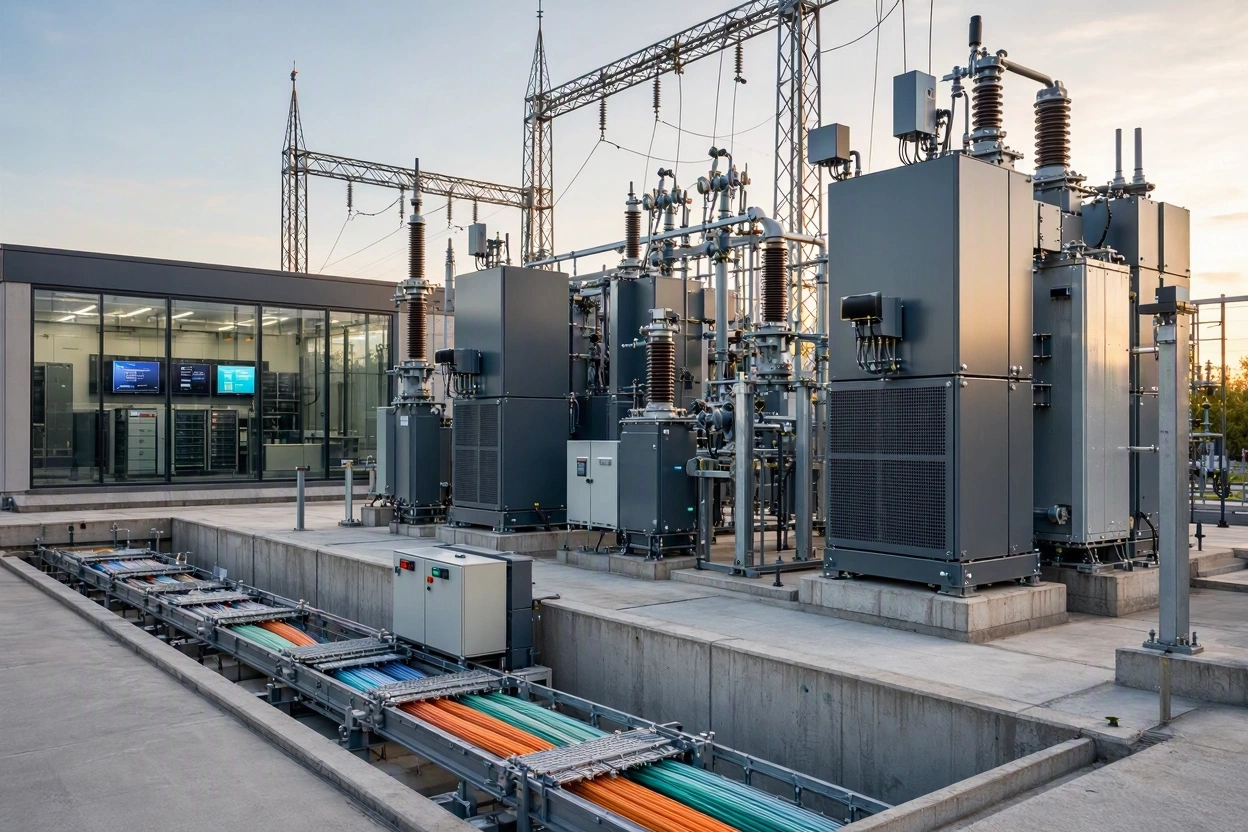
As utilities modernize their electrical infrastructure, intelligent relays, digital switchgears, merging units, and supervisory control systems increasingly exchange information across interconnected networks. A security weakness in any of these components can affect protection coordination, operational visibility, and power delivery. Digital Substation Cybersecurity combines network protection, device authentication, continuous monitoring, and incident response to reduce these risks. By implementing comprehensive security measures, utilities can strengthen resilience, support regulatory compliance, and maintain the dependable operation of modern electricity networks.
Understanding Digital Substation Cybersecurity
Digital Substation Cybersecurity refers to the technologies, policies, and operational practices used to protect digital substation equipment, communication networks, control systems, and associated data from cyberattacks. Unlike traditional substations that depend heavily on isolated electrical and electromechanical equipment, digital substations rely on connected devices that communicate through standardized digital protocols. This connectivity improves automation and visibility but introduces additional entry points for malicious activity.
The cybersecurity approach must address information technology and operational technology environments together. Information technology systems support business applications and data management, while operational technology systems directly monitor or control physical electrical processes. A compromise affecting operational technology can have consequences beyond data loss because unauthorized commands or disrupted communications may interfere with protection and switching operations. Digital Substation Cybersecurity therefore prioritizes system availability, integrity, and controlled access while ensuring that essential protection functions remain dependable.
According to Marketsandmarkets, the global digital substation market size is projected to grow from USD 15.62 billion in 2026 to USD 23.39 billion by 2032, growing at a CAGR of 7.0 from 2026 to 2032.
Download PDF Brochure @ https://www.marketsandmarkets.com/pdfdownloadNew.asp?id=43227003
Why Digital Substations Face Growing Cyber Risks
Modern power infrastructure increasingly integrates remote monitoring, centralized control, cloud connected applications, and automated maintenance tools. These capabilities help utilities improve efficiency and reduce operational costs, but they can also introduce vulnerabilities when security controls are inadequate. Legacy equipment, inconsistent software updates, insecure remote connections, and insufficient network segmentation can create opportunities for attackers to access critical systems.
Threat actors may attempt to disrupt electricity services, steal operational information, manipulate device configurations, or interfere with engineering workstations. Ransomware, phishing, compromised credentials, malicious software, and supply chain attacks can affect the wider utility environment and potentially create pathways toward operational networks. Digital Substation Cybersecurity helps reduce exposure by identifying vulnerabilities, restricting unnecessary connectivity, and monitoring suspicious activity. Utilities must also account for accidental configuration errors and insider threats because operational mistakes can create security weaknesses similar to deliberate attacks.
Protecting Intelligent Electronic Devices and Protection Relays
Intelligent electronic devices, commonly known as IEDs, perform essential functions in digital substations. Protection relays monitor electrical conditions and initiate protective actions when they detect faults such as short circuits or abnormal current levels. These devices may communicate with other equipment through Ethernet networks and standardized substation protocols, making their configuration and communication security particularly important.
Digital Substation Cybersecurity protects intelligent relays through access restrictions, secure engineering practices, configuration management, and appropriate network controls. Utilities should maintain an inventory of relay models, firmware versions, communication settings, and authorized engineering access. Changes to protection settings must follow documented approval procedures, with validated backups available to support recovery. Security controls must never interfere with essential relay functions, and any modifications should be tested under appropriate engineering conditions before deployment in operational environments.
Securing Digital Switchgears and Intelligent Control Systems
Digital switchgears combine switching equipment, measurement technologies, control interfaces, and protection functions to manage electrical circuits safely. Modern installations may incorporate intelligent monitoring capabilities that report equipment conditions and communicate with substation automation platforms. Unauthorized access to these systems could expose sensitive operational settings or interfere with legitimate switching commands.
Digital Substation Cybersecurity strengthens switchgear protection by securing control interfaces, limiting access to authorized personnel, and monitoring communication between controllers and connected devices. Engineering workstations should use controlled administrative privileges, while unnecessary services and communication ports should be disabled where technically appropriate. Utilities should also establish procedures for verifying switching commands, reviewing configuration changes, and investigating unexpected equipment behavior. These measures help preserve operational safety while supporting reliable monitoring and control across the electrical network.
Securing Substation Communication Protocols and Networks
Communication protocols enable digital substations to exchange measurements, status information, protection signals, and control commands. IEC 61850 supports interoperability among substation automation devices, while protocols such as IEC 60870 5 104 and DNP3 are used in various utility communication environments. These technologies support faster information exchange, but security depends on the protocol implementation, network architecture, and available protective mechanisms.
Digital Substation Cybersecurity requires utilities to understand which devices communicate, what information they exchange, and which connections are operationally necessary. Network segmentation can separate protection systems, station control networks, engineering workstations, and enterprise applications into appropriately controlled security zones. Firewalls, monitored gateways, secure remote access, and carefully managed communication rules help reduce unauthorized traffic. Where supported, authenticated and encrypted communication mechanisms should be implemented following compatibility assessments and operational testing.
Implementing Zero Trust and Strong Access Controls
Traditional security models often assume that devices inside a trusted network can communicate with limited restrictions. This assumption becomes increasingly risky as substations connect with remote operations centers, maintenance providers, and enterprise systems. A zero trust approach requires users, devices, and access requests to be verified rather than automatically trusted because of their network location.
Digital Substation Cybersecurity can incorporate multifactor authentication, role based permissions, privileged access management, and controlled administrative sessions. Operators should receive only the permissions necessary for their responsibilities, while engineering changes require appropriate authorization and accountability. Remote maintenance connections should be enabled only when required, protected by secure access mechanisms, and monitored throughout the session. Where legacy devices cannot support modern authentication directly, compensating controls such as secured gateways, restricted network paths, and supervised access can help reduce exposure.
Continuous Monitoring and Cyber Threat Detection
Preventing every cyber incident is difficult, especially in complex infrastructure containing equipment from multiple manufacturers and generations. Continuous monitoring helps utilities identify suspicious activities before they develop into larger operational incidents. Relevant indicators include unusual communication patterns, unexpected configuration changes, repeated authentication failures, unauthorized device discovery, and abnormal traffic between security zones.
Digital Substation Cybersecurity monitoring solutions should be designed for operational technology environments rather than copied directly from conventional office networks. Passive network monitoring can provide visibility into industrial protocols while reducing the risk of disrupting sensitive equipment. Security information and event management platforms can correlate relevant alerts from network devices, engineering systems, and access management tools. Monitoring teams should establish clear escalation procedures so that suspected threats receive timely investigation without triggering unnecessary interventions that could compromise electrical system stability.
Managing Vulnerabilities and Software Updates
Digital substations may contain equipment with long service lives, specialized firmware, and limited opportunities for maintenance. Some devices cannot be updated frequently because of vendor restrictions, operational requirements, or the need for extensive testing. As a result, vulnerability management must balance cybersecurity improvements with electrical reliability and equipment safety.
Digital Substation Cybersecurity programs should maintain accurate asset inventories and evaluate vulnerabilities according to exploitability, exposure, operational impact, and available mitigations. Before applying firmware updates or security patches, utilities should assess vendor guidance, verify compatibility, and test changes in suitable environments. When immediate patching is impractical, compensating measures may include network isolation, restricted administrative access, enhanced monitoring, and removal of unnecessary services. Documented maintenance schedules and recovery plans help ensure that security improvements do not introduce unexpected operational problems.
Strengthening Supply Chain and Third Party Security
Substation equipment frequently comes from multiple manufacturers, engineering contractors, software providers, and maintenance organizations. Each participant may require access to technical documentation, configuration tools, or remote support systems. Weaknesses in any part of this supply chain can introduce security risks that extend beyond the original organization.
Digital Substation Cybersecurity should therefore include supplier assessments, secure procurement requirements, software integrity checks, and clear maintenance agreements. Utilities can request information about product security updates, vulnerability disclosure processes, firmware authenticity, and supported security features. Third party access should be limited to approved systems and defined time periods, with activities logged for subsequent review. Organizations should also maintain procedures for evaluating compromised components, responding to supplier security advisories, and restoring trusted configurations when necessary.
Developing Incident Response and Recovery Plans
Even well protected substations may experience cyber incidents, making preparedness an essential part of infrastructure security. An effective response plan defines how utilities identify threats, assess operational consequences, isolate affected systems where safe, communicate with relevant stakeholders, and restore trusted services. These actions must account for the physical behavior of electrical equipment and the possibility that aggressive containment could interrupt legitimate protection or control functions.
Digital Substation Cybersecurity incident response plans should involve control room operators, cybersecurity teams, protection engineers, equipment vendors, and emergency management personnel. Regular exercises can test scenarios such as compromised engineering workstations, unavailable monitoring systems, suspicious relay configuration changes, and loss of communication with remote control centers. Recovery procedures should include validated configuration backups, documented restoration sequences, and criteria for returning equipment to service. Lessons learned from exercises and actual incidents should inform future improvements.
Standards and Regulatory Considerations
Cybersecurity standards provide structured guidance for protecting industrial automation and critical infrastructure. IEC 62443 addresses security for industrial automation and control systems, including organizational responsibilities, system architecture, and technical safeguards. The NIST Cybersecurity Framework provides a broader approach to managing cybersecurity risk through governance, identification, protection, detection, response, and recovery activities.
Digital Substation Cybersecurity initiatives can also draw on applicable power sector requirements, national critical infrastructure policies, and relevant electrical utility standards. IEC 62351 addresses security for power system information exchange and related communications, supporting security considerations for applicable protocols and systems. Requirements vary by jurisdiction, system classification, and deployment, so utilities should confirm which obligations apply to their installations. Aligning security programs with recognized standards helps create consistent procedures, measurable controls, and clearer accountability across engineering and operational teams.
Key Benefits of Digital Substation Cybersecurity
Effective cybersecurity supports more than the prevention of unauthorized access. It helps utilities protect essential electrical operations, maintain confidence in automation technologies, and improve their ability to respond to emerging threats. Integrating security into substation modernization projects can also reduce the long term cost of correcting weaknesses after equipment has been deployed.
The major benefits include:
• Improved operational resilience: Security controls reduce opportunities for attackers to disrupt monitoring, protection, and control functions.
• Greater equipment integrity: Configuration management and access restrictions help prevent unauthorized changes to intelligent relays and switchgear controllers.
• Enhanced threat visibility: Continuous monitoring supports earlier identification and investigation of suspicious activity.
• Stronger regulatory readiness: Documented security practices help utilities demonstrate alignment with applicable standards and requirements.
• More reliable recovery: Tested backups and incident response procedures support the restoration of trusted system configurations.
• Reduced third party exposure: Supplier assessments and controlled remote access help address risks introduced by external service providers.
Best Practices for Implementing Cybersecurity in Digital Substations
Successful implementation requires coordination between cybersecurity specialists, protection engineers, network administrators, and substation operators. Security measures should reflect the operational importance of each asset, the potential consequences of compromise, and the technical capabilities of installed equipment. A phased implementation allows utilities to prioritize the most significant risks while preserving essential services.
Recommended practices include:
• Create a complete asset inventory: Document IEDs, relays, switchgears, communication equipment, firmware versions, and network connections.
• Segment critical networks: Separate operational technology from enterprise systems and restrict communication to approved pathways.
• Enforce controlled access: Apply multifactor authentication where supported, role based permissions, and monitored remote maintenance.
• Monitor configuration changes: Record approved settings, maintain secure backups, and investigate unexpected modifications.
• Assess vulnerabilities regularly: Review vendor advisories, prioritize exposed assets, and validate patches before deployment.
• Test response procedures: Conduct exercises that include engineering teams, control room personnel, vendors, and cybersecurity responders.
• Train employees and contractors: Build awareness of phishing, credential protection, removable media, and secure maintenance practices.
Future Trends in Digital Substation Cybersecurity
The evolution of digital substations will increase the importance of integrated security architecture, automated threat detection, and stronger device identity management. Artificial intelligence may help security teams analyze large volumes of network events, identify deviations from normal behavior, and prioritize alerts for investigation. However, automated recommendations must be validated carefully because false positives or inappropriate responses can affect operational decision making.
Digital Substation Cybersecurity will also become more closely connected with secure remote operations, supply chain assurance, and lifecycle management for industrial equipment. Utilities may increasingly adopt security by design principles during procurement and engineering instead of adding protective controls only after deployment. Greater coordination between equipment manufacturers, system integrators, regulators, and electricity providers will be important as power grids become more interconnected. The long term objective is to maintain reliable electricity delivery while enabling secure digital transformation.
Conclusion
Digital substations are essential to the modernization of electricity transmission and distribution, but their growing connectivity creates cybersecurity responsibilities that utilities cannot ignore. Intelligent relays, digital switchgears, automation platforms, and communication networks must be protected through coordinated technical and operational controls. Digital Substation Cybersecurity provides a structured approach to reducing unauthorized access, identifying emerging threats, maintaining configuration integrity, and improving incident recovery.
Utilities can strengthen critical power infrastructure by combining network segmentation, secure access management, continuous monitoring, vulnerability assessment, supplier oversight, and tested recovery procedures. These measures should be tailored to the operating conditions and safety requirements of each installation. As electrical networks become increasingly digital, integrating cybersecurity throughout the substation lifecycle will be essential for protecting operational continuity, supporting reliable power delivery, and building resilient energy infrastructure.
Frequently Asked Questions
1. What is Digital Substation Cybersecurity?
Digital Substation Cybersecurity refers to the technologies, policies, and practices used to protect substation automation systems, intelligent electronic devices, protection relays, switchgears, and communication networks from cyber threats. It aims to preserve the confidentiality, integrity, and availability of critical power infrastructure while maintaining safe electrical operations.
2. Why is cybersecurity important for digital substations?
Cybersecurity is important because digital substations depend on interconnected devices and communication networks to monitor and control electrical equipment. A cyber incident could compromise sensitive configurations, disrupt operational visibility, or interfere with legitimate control activities. Appropriate safeguards help reduce these risks and support reliable electricity delivery.
3. How are intelligent relays protected against cyberattacks?
Intelligent relays can be protected through restricted engineering access, secure configuration management, network segmentation, firmware vulnerability assessments, and continuous monitoring. Utilities should maintain verified configuration backups and test authorized changes before deployment. Security measures must preserve the relays’ essential protection functions.
4. What are the main cybersecurity threats to digital substations?
Common threats include ransomware, phishing, stolen credentials, unauthorized remote access, malicious software, supply chain compromises, and exploitation of unpatched vulnerabilities. Misconfigured devices and accidental changes can also create serious weaknesses. The potential impact depends on system architecture, exposure, and operational safeguards.
5. What role does IEC 61850 play in digital substation security?
IEC 61850 provides communication and interoperability frameworks for substation automation systems. Its security depends on the specific implementation and supporting architecture. Utilities should apply appropriate access controls, network protections, monitoring, and applicable security mechanisms to protect communications and connected devices.
6. How does network segmentation improve substation cybersecurity?
Network segmentation separates systems according to their functions and security requirements. It limits unnecessary communication between enterprise networks, engineering systems, and critical operational equipment. When properly designed, segmentation can reduce the pathways attackers might use to reach sensitive substation assets.
7. Can artificial intelligence improve digital substation cybersecurity?
Artificial intelligence can assist with analyzing network traffic, identifying unusual communication patterns, correlating security events, and prioritizing potential threats. However, its findings require appropriate validation and human oversight. AI based monitoring should be implemented without introducing unacceptable latency or interfering with essential protection operations.
8. Which standards are relevant to digital substation cybersecurity?
Relevant standards and frameworks include IEC 62443 for industrial automation and control system security, IEC 62351 for power system information exchange security, and the NIST Cybersecurity Framework for cybersecurity risk management. Utilities should determine the applicable requirements based on their jurisdiction, systems, and operational responsibilities.
9. How can utilities manage vulnerabilities in legacy substation equipment?
Utilities should inventory legacy equipment, assess vulnerabilities according to risk, review vendor guidance, and apply tested updates where feasible. If patching is not possible, compensating controls such as restricted network access, isolation, enhanced monitoring, and controlled maintenance can help reduce exposure.
10. What are the best practices for securing digital substations?
Best practices include maintaining an accurate asset inventory, segmenting networks, enforcing least privilege, securing remote access, monitoring device configurations, reviewing vulnerabilities, assessing suppliers, training personnel, and testing incident response plans. These controls should be integrated into equipment procurement, commissioning, operation, and maintenance.