
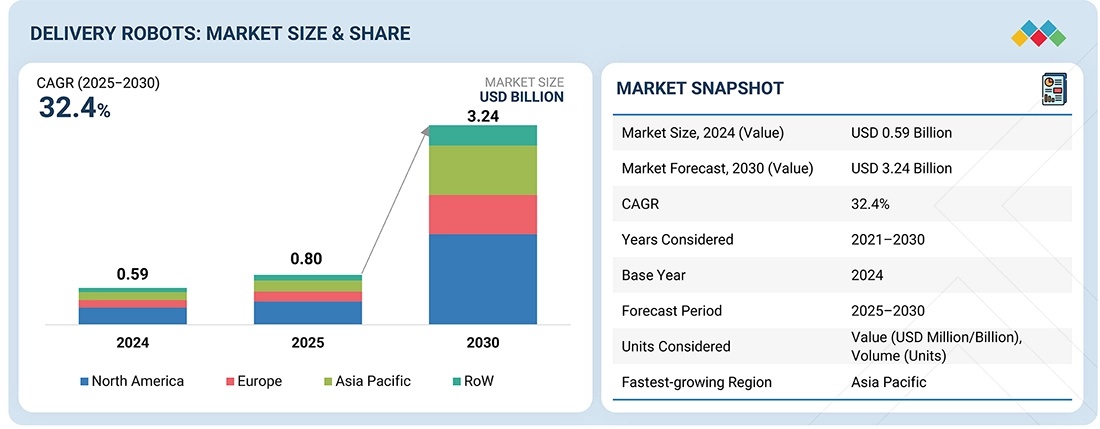
The Delivery Robots Market is creating new opportunities for three-wheeled delivery robots as businesses seek compact, maneuverable, and cost-efficient autonomous platforms for last-mile transportation. Three-wheeled configurations can offer a balance between stability and maneuverability, making them suitable for applications in urban neighborhoods, campuses, commercial facilities, warehouses, hospitality environments, and controlled industrial locations. As autonomous delivery models expand, three-wheeled robots can address applications where compact dimensions and efficient navigation are important.
Growing Demand for Compact Delivery Platforms
The expansion of urban delivery services is increasing demand for compact autonomous robots capable of operating in space-constrained environments. Three-wheeled platforms can offer a smaller footprint than larger robotic configurations, allowing them to navigate narrow pathways, pedestrian areas, facility corridors, and designated delivery zones.
Their compact architecture can be beneficial for businesses operating in dense urban environments where conventional delivery vehicles may face parking, congestion, and access limitations. Retailers, restaurants, pharmacies, and local logistics providers can use three-wheeled robots for short-distance transportation of lightweight goods.
Download PDF Brochure @ https://www.marketsandmarkets.com/pdfdownloadNew.asp?id=263997316
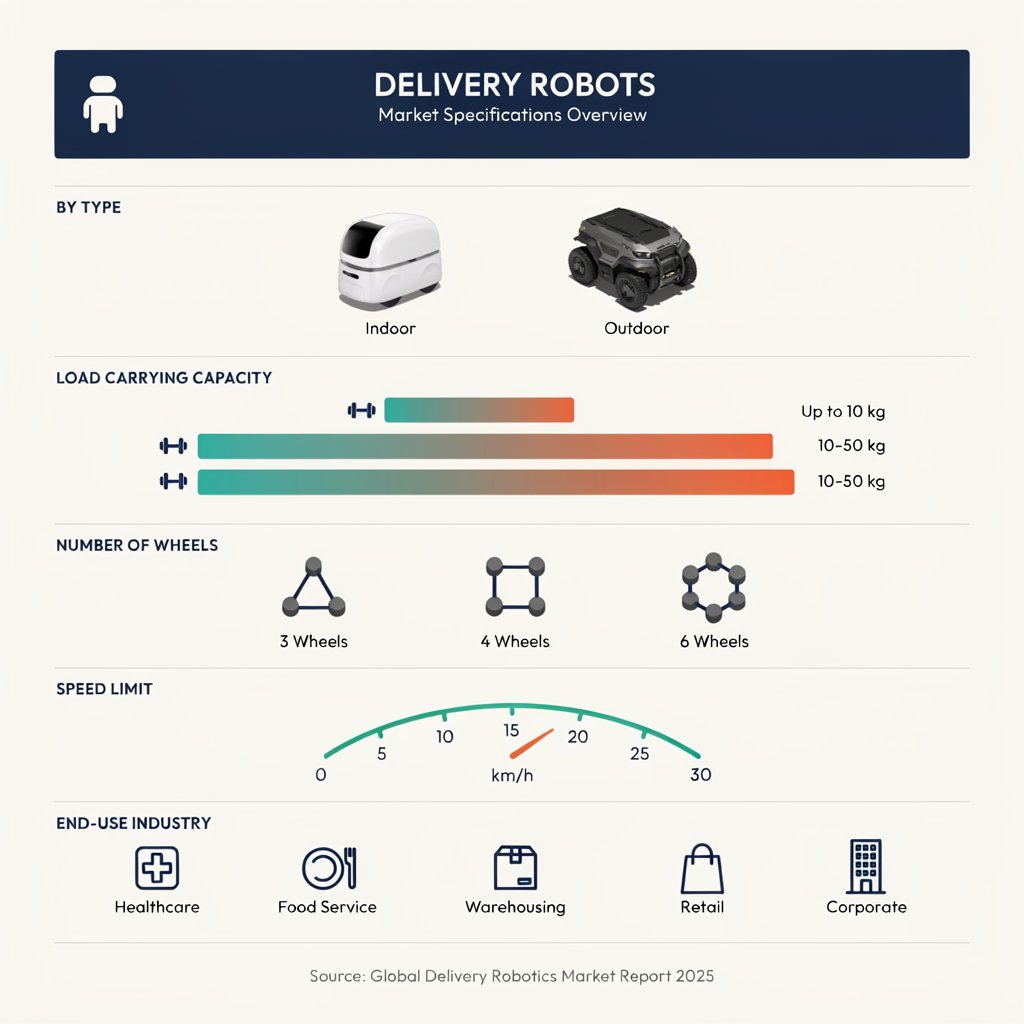
Urban Last-Mile Delivery Opportunities
Last-mile delivery remains a significant application opportunity for autonomous robots. Three-wheeled delivery platforms can be deployed for food, grocery, parcel, and convenience-item transportation across residential communities and commercial districts.
The ability to operate over short distances can help businesses automate repetitive delivery routes. Robots can travel between local stores, micro-fulfillment locations, and customers while reducing dependence on manual delivery operations.
Three-wheeled robots may be particularly suitable for delivery networks where payload requirements are moderate and maneuverability is prioritized.
High Maneuverability in Confined Areas
Maneuverability is an important advantage for three-wheeled robotic platforms. Their configuration can enable tighter turning characteristics and easier navigation through confined areas compared with larger autonomous vehicles.
This capability can support applications in hotels, hospitals, office complexes, university campuses, and shopping facilities. Robots can move through narrow corridors or designated pathways while navigating around pedestrians and other objects.
Improved maneuverability can also support warehouse applications where autonomous platforms need to operate between storage racks, workstations, and loading areas.
Food and Restaurant Delivery
Food delivery represents a promising opportunity for three-wheeled robots. Restaurants and food-service operators are increasingly exploring autonomous delivery solutions to address rising demand for convenient and rapid service.
Three-wheeled robots can be equipped with insulated or temperature-controlled compartments designed to transport meals while maintaining product quality. Their compact size can also support deliveries within residential communities, business parks, campuses, and hospitality properties.
As restaurants seek alternative fulfillment models, compact autonomous robots can complement existing delivery networks.
Inquiry Before Buying @ https://www.marketsandmarkets.com/Enquiry_Before_BuyingNew.asp?id=263997316
Healthcare and Pharmaceutical Applications
Healthcare facilities can create additional opportunities for three-wheeled delivery robots. Hospitals and clinics frequently require the movement of medicines, documents, laboratory samples, meals, and other lightweight supplies between departments.
Three-wheeled robots can support these repetitive transportation tasks while reducing the workload associated with manual internal logistics. Equipped with secure compartments, navigation sensors, and access-control systems, robots can be configured for sensitive healthcare environments.
Pharmacies and medical campuses can also explore autonomous delivery for small medical packages and prescription-related logistics.
Smart Sensors and Autonomous Navigation
The integration of advanced sensors is improving the capabilities of three-wheeled delivery robots. Cameras, LiDAR, ultrasonic sensors, GPS, and inertial measurement units can help robots understand their surroundings and maintain accurate positioning.
Artificial intelligence and machine learning can further improve object recognition, route planning, obstacle avoidance, and pedestrian detection. These technologies allow compact robotic platforms to operate more safely and efficiently in dynamic environments.
The combination of compact mechanical design and intelligent navigation can expand the addressable market for three-wheeled delivery robots.
Cost-Efficient Fleet Deployment
Three-wheeled platforms can create opportunities for cost-conscious fleet operators. Their compact design may require fewer materials and lower energy consumption than larger robotic platforms, depending on payload requirements and application conditions.
Lower operating requirements can make these robots attractive for businesses testing autonomous delivery programs. Operators can gradually expand fleets as delivery demand increases, reducing the need for large initial infrastructure investments.
Cloud-based fleet management can further improve utilization by coordinating multiple three-wheeled robots across delivery zones.
View detailed Table of Content here – https://www.marketsandmarkets.com/Market-Reports/delivery-robot-market-263997316.html
Sustainable Urban Logistics
Sustainability is becoming an increasingly important consideration in urban logistics. Electric delivery robots can support lower-emission transportation for short-distance deliveries when powered by low-carbon electricity.
Three-wheeled robots can contribute to this trend through compact designs, efficient electric propulsion, and optimized routing. By automating localized deliveries, businesses can potentially reduce the number of short-distance trips performed by conventional vehicles.
Future Market Outlook
The Delivery Robots Industry is expected to see continued opportunities for three-wheeled delivery robots as businesses seek compact, maneuverable, and scalable autonomous transportation platforms. Food delivery, healthcare logistics, hospitality, retail, campuses, residential communities, and selected warehouse applications can provide growth opportunities.
Future development will increasingly focus on AI-based navigation, sensor fusion, battery efficiency, secure cargo systems, cloud-based fleet management, and real-time obstacle detection. As autonomous delivery ecosystems mature, three-wheeled robots can become an important platform option for applications where maneuverability, compact dimensions, operating efficiency, and flexible deployment are key requirements.