
The semiconductor industry is undergoing a major transformation as demand for high-performance, energy-efficient, and scalable computing solutions continues to increase. Traditional monolithic chip designs are facing challenges related to manufacturing costs, power consumption, performance limitations, and scalability. To address these challenges, chiplet technology is emerging as an important innovation in semiconductor design and manufacturing.
The Chiplet Market is gaining momentum as semiconductor manufacturers adopt advanced packaging technologies, heterogeneous integration, and modular chip architectures. Chiplets enable multiple smaller semiconductor components to be integrated into a single package, allowing manufacturers to improve processing performance, optimize power efficiency, and reduce development costs.
With increasing demand from artificial intelligence (AI), high-performance computing (HPC), data centers, automotive electronics, and consumer devices, chiplet technology is becoming a key part of next-generation semiconductor development. Several technological trends are reshaping the industry and creating new opportunities for semiconductor manufacturers, equipment providers, and packaging technology developers.
1. Growing Adoption of Heterogeneous Integration
Heterogeneous integration is one of the most significant trends influencing the chiplet industry. This approach combines different semiconductor components, such as processors, memory, graphics units, and input/output (I/O) components, within a single package.
Unlike traditional monolithic chip designs, heterogeneous integration allows manufacturers to use different process technologies for individual chiplets. For example, high-performance computing components can be manufactured using advanced process nodes, while other components can use more mature and cost-effective technologies.
This approach provides several advantages, including improved design flexibility, better manufacturing efficiency, and optimized system performance. As demand for specialized computing architectures increases, heterogeneous integration is expected to play a critical role in advancing chiplet adoption.
2. Advanced Packaging Technologies Driving Innovation
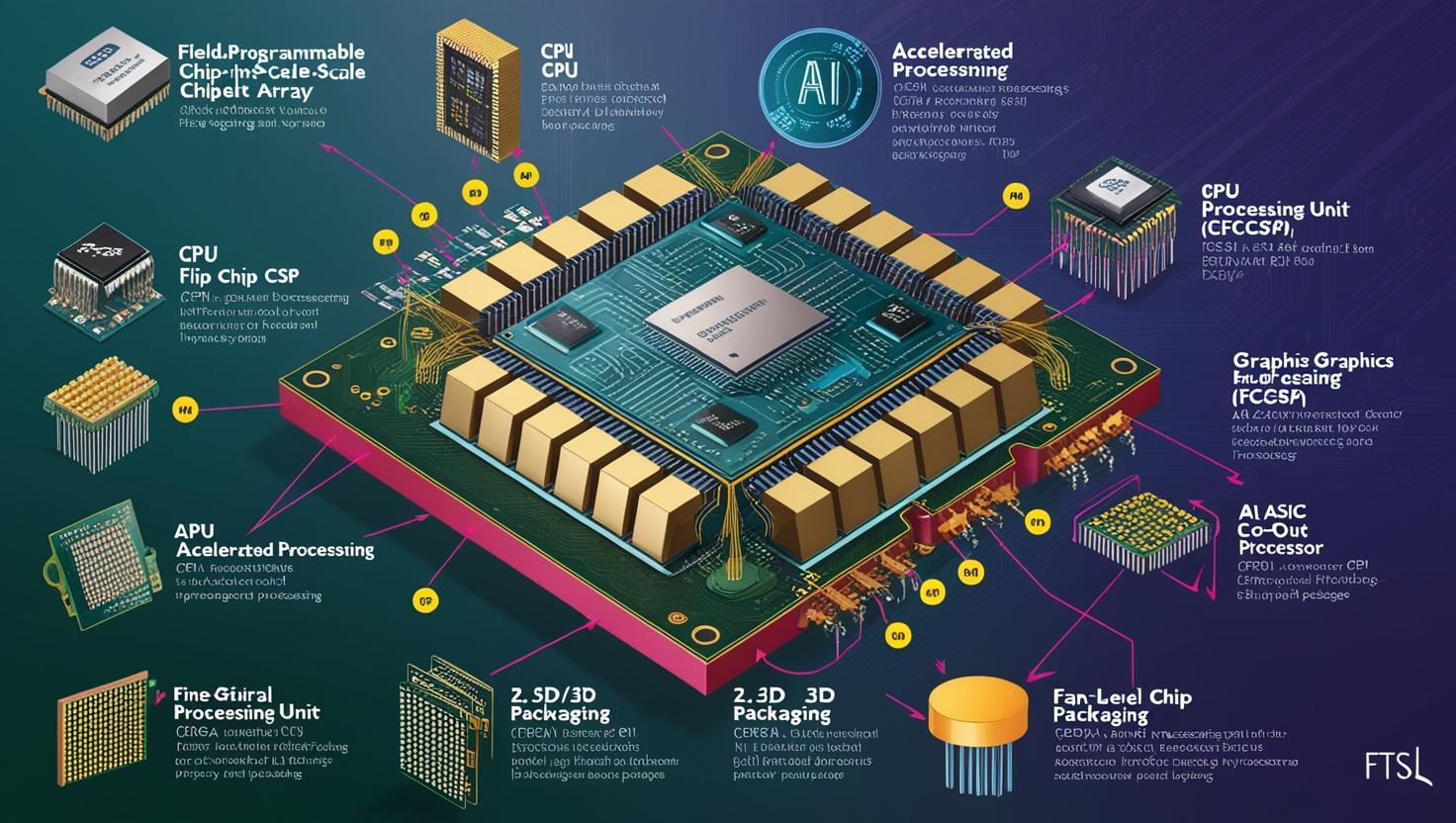
Advanced packaging technologies are becoming essential for improving chiplet performance and enabling high-density semiconductor integration. Technologies such as 2.5D packaging, 3D packaging, silicon interposers, and advanced substrate-based integration allow multiple chiplets to communicate efficiently within a compact package.
2.5D packaging uses an interposer to connect multiple chiplets, supporting high-bandwidth communication between components. Meanwhile, 3D packaging stacks semiconductor dies vertically to reduce interconnect distances and improve integration density.
These technologies help address limitations associated with traditional semiconductor packaging, particularly in terms of bandwidth, power efficiency, and physical space. Continuous advancements in packaging processes are supporting the development of more powerful and compact semiconductor solutions.
Download PDF Brochure @ https://www.marketsandmarkets.com/pdfdownloadNew.asp?id=131809383
3. Artificial Intelligence Accelerating Chiplet Adoption
Artificial intelligence is creating significant demand for advanced semiconductor architectures. AI workloads require high computational performance, faster memory access, and efficient communication between processing components.
Chiplet-based architectures allow semiconductor manufacturers to combine specialized processors, high-bandwidth memory, and networking components within a single package. This modular approach supports the development of AI accelerators and processors designed for complex machine learning and deep learning applications.
As generative AI, large language models, and advanced neural networks become more widely adopted, semiconductor companies are increasingly exploring chiplet architectures to overcome performance and scalability limitations.
4. Universal Chiplet Interconnect Express (UCIe) Standardization
The development of open interconnect standards is another important trend reshaping the chiplet industry. The Universal Chiplet Interconnect Express (UCIe) standard is designed to establish a common communication interface between chiplets developed by different manufacturers.
Interoperability is essential for creating a flexible chiplet ecosystem. Standardized communication interfaces can help semiconductor companies integrate components from multiple suppliers without depending entirely on proprietary technologies.
UCIe supports the development of modular semiconductor architectures by simplifying die-to-die communication. It can also encourage collaboration between chip designers, foundries, packaging companies, and semiconductor equipment providers.
As the industry moves toward more open semiconductor ecosystems, standardization will become increasingly important for improving compatibility, reducing integration complexity, and accelerating product development.
5. 2.5D and 3D Packaging Transforming Semiconductor Design
The growing adoption of 2.5D and 3D packaging is creating new opportunities for chiplet manufacturers. These technologies allow multiple semiconductor dies to operate together while improving data transfer efficiency and reducing package size.
In 2.5D packaging, multiple chiplets are positioned side by side and connected through an interposer or advanced interconnect structure. This enables high-bandwidth communication between processing and memory components.
In comparison, 3D packaging involves stacking semiconductor dies vertically to achieve higher integration density and shorter communication paths. This approach is particularly beneficial for applications requiring high processing performance and efficient memory access.
The increasing complexity of AI processors, GPUs, and high-performance computing systems is encouraging semiconductor companies to invest in advanced packaging capabilities. These technologies are expected to remain important for next-generation chiplet architectures.
6. High-Performance Computing and Data Center Expansion
The expansion of cloud computing, hyperscale data centers, and high-performance computing infrastructure is creating substantial demand for chiplet-based processors.
Modern data centers require advanced CPUs, GPUs, memory components, and networking processors to manage complex workloads. Chiplet architectures allow manufacturers to integrate specialized computing components into a single package, supporting improved scalability and performance.
In addition, growing adoption of cloud-based applications, enterprise analytics, scientific simulations, and AI computing is increasing the need for energy-efficient semiconductor solutions.
Chiplet technology also allows manufacturers to develop processors with different configurations for specific data center requirements. This modularity supports product customization and helps semiconductor companies respond to changing computing demands.
7. Chiplets Supporting Next-Generation Automotive Electronics
The automotive industry is becoming an important application area for advanced semiconductor technologies. Modern vehicles increasingly depend on electronic control systems, advanced driver-assistance systems (ADAS), autonomous driving technologies, infotainment platforms, and vehicle connectivity.
These applications require high-performance processors capable of managing multiple computing functions simultaneously. Chiplet architectures provide opportunities to combine computing, memory, connectivity, and sensor-processing components within integrated semiconductor packages.
Automotive manufacturers and semiconductor suppliers are also focusing on improving system reliability, power efficiency, and computing performance. Chiplet-based designs can support customized semiconductor platforms for electric vehicles and software-defined vehicles.
As vehicle architectures become more software-driven, demand for advanced semiconductor integration is expected to create additional growth opportunities for the chiplet industry.
8. Rising Demand for Energy-Efficient Semiconductor Solutions
Power efficiency is becoming a major consideration in semiconductor design. AI computing, cloud infrastructure, and high-performance processors require substantial electrical power, increasing the importance of efficient chip architectures.
Chiplets offer manufacturers the flexibility to select suitable manufacturing processes for individual components. This allows companies to optimize performance, power consumption, and production costs according to specific application requirements.
Smaller dies can also improve manufacturing yields compared with producing certain very large monolithic chips. Additionally, specialized chiplets can be designed to perform particular computing functions efficiently.
However, overall power efficiency depends on packaging design, interconnect architecture, thermal management, and communication requirements. Manufacturers must optimize these elements together to achieve the full benefits of chiplet technology.
9. Growing Role of AI ASIC Co-Processors and Specialized Processors
The semiconductor industry is increasingly moving toward application-specific computing architectures. General-purpose processors remain important, but specialized processors are gaining attention because they can be optimized for particular workloads.
AI ASIC co-processors are designed to accelerate artificial intelligence and machine learning operations. By integrating specialized computing units with other chiplets, manufacturers can develop processors that support demanding AI applications.
The MarketsandMarkets report identifies the AI ASIC co-processor segment as the fastest-growing processor segment during the forecast period. Increasing demand for AI infrastructure, autonomous systems, and edge computing is supporting this growth.
10. Asia Pacific Strengthening Its Position in the Chiplet Industry
Asia Pacific is an important region in the global chiplet ecosystem because of its established semiconductor manufacturing infrastructure and strong electronics production capabilities.
Countries such as Taiwan, South Korea, China, and Japan have significant semiconductor manufacturing and packaging ecosystems. Major industry participants, including foundries and outsourced semiconductor assembly and test (OSAT) providers, are investing in advanced packaging and semiconductor integration technologies.
The region is also benefiting from increasing demand for AI processors, consumer electronics, 5G infrastructure, and data center equipment.
Government initiatives supporting semiconductor manufacturing, research and development, and domestic technology capabilities are further strengthening the regional ecosystem.
Key Challenges Facing the Chiplet Industry
Despite strong growth potential, the chiplet industry faces several technical and commercial challenges. Integrating multiple dies into one package increases design and testing complexity. Manufacturers must ensure that individual chiplets communicate efficiently while maintaining system reliability.
Thermal management is another important concern, particularly for high-performance computing and AI applications. High-density packaging can create heat dissipation challenges that require advanced cooling solutions.
Intellectual property protection, licensing arrangements, supply chain dependencies, and limited advanced packaging capacity can also affect commercialization.
Chiplet technology is reshaping the semiconductor industry by introducing a more flexible, scalable, and cost-effective approach to processor design. The growing adoption of heterogeneous integration, advanced packaging, 2.5D/3D architectures, and standardized interconnect technologies is accelerating the development of next-generation semiconductor solutions.
Increasing demand for AI computing, high-performance servers, cloud infrastructure, and automotive electronics is creating new opportunities for chiplet manufacturers. At the same time, advancements in packaging, thermal management, and interoperability will play an important role in overcoming existing technical challenges.
With the global chiplet market projected to reach USD 157.23 billion by 2030, companies investing in innovative semiconductor architectures and advanced packaging capabilities are positioned to benefit from the industry’s ongoing transformation.
Frequently Asked Questions (FAQs)
1. What is the projected size of the Chiplet Market by 2030?
The global Chiplet Market is projected to grow from USD 51.94 billion in 2025 to USD 157.23 billion by 2030, at a CAGR of 24.8%.
2. What are the major technology trends shaping the Chiplet Market?
Major trends include heterogeneous integration, 2.5D and 3D packaging, UCIe standardization, AI-driven chiplet architectures, and high-performance computing.
3. Which processor segment is expected to dominate the Chiplet Market?
The CPU segment is expected to hold the largest market share, supported by increasing adoption across enterprise computing, servers, and data center applications.
4. Which region is expected to hold the largest share of the Chiplet Market?
Asia Pacific is expected to hold the largest market share, supported by strong semiconductor manufacturing capabilities in Taiwan, South Korea, China, and Japan.
5. Who are the key players in the Chiplet Market?
Major players include Intel Corporation, AMD, Apple, IBM, Marvell Technology, MediaTek, NVIDIA, Achronix Semiconductor, Ranovus, and ASE Technology Holding.