
The global Chiplet Market is witnessing significant expansion as industries increasingly adopt modular semiconductor architectures to meet rising performance, scalability, and efficiency demands. From high-performance data centers to advanced consumer electronics and next-generation automotive systems, chiplet-based designs are redefining how modern processors are built and deployed.
As traditional monolithic chip designs approach physical and economic limits, chiplets offer a flexible, cost-effective, and high-yield alternative—unlocking new opportunities across multiple high-growth sectors.
Understanding Chiplet Technology
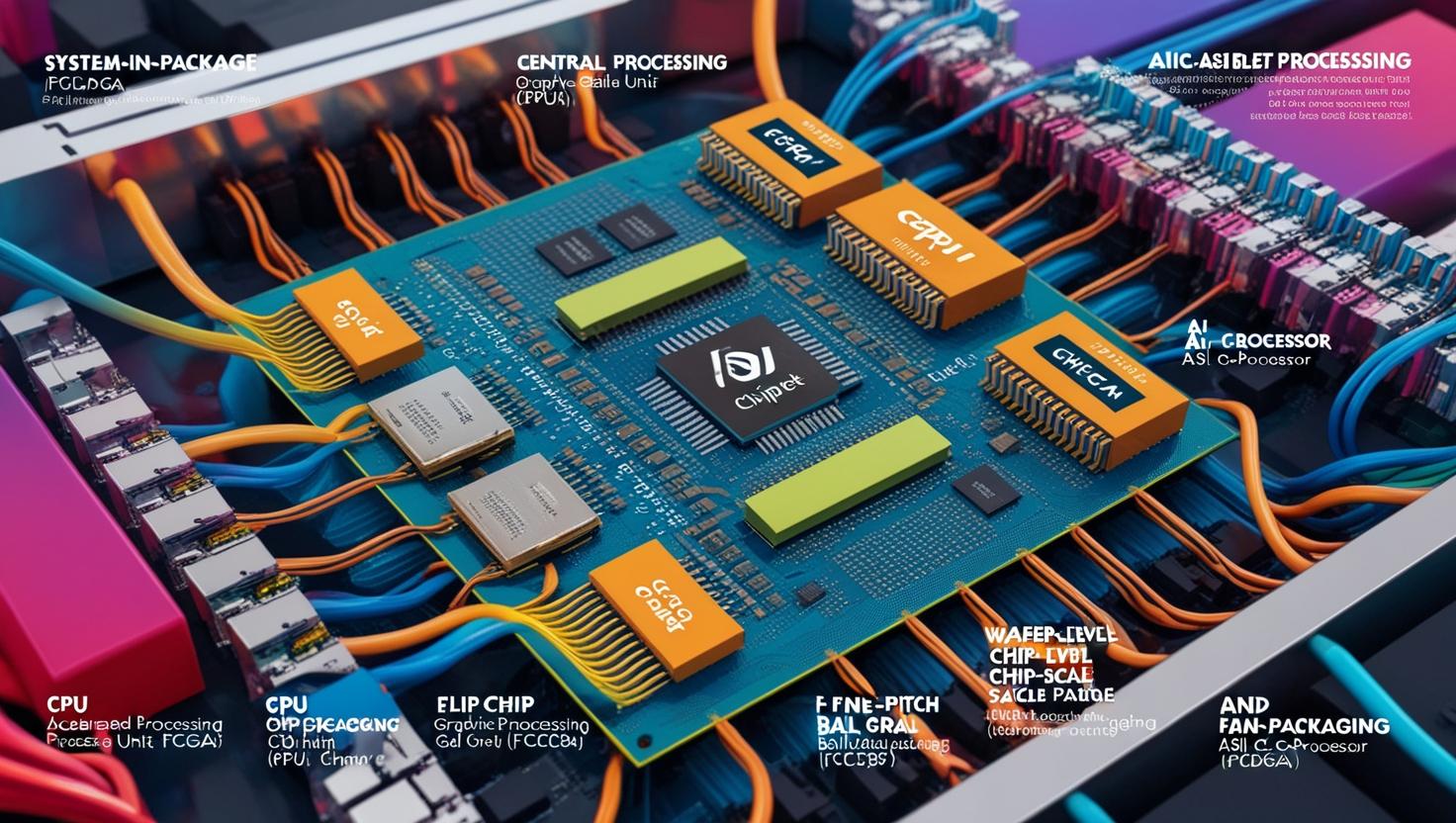
Chiplets are small, modular integrated circuit (IC) components that are combined within a single package to function as a unified system. Instead of fabricating a large, complex system-on-chip (SoC), manufacturers develop smaller functional dies—such as CPU cores, GPUs, I/O controllers, or memory units—and integrate them using advanced packaging technologies like 2.5D and 3D stacking.
This approach offers several advantages:
-
Improved manufacturing yield
-
Reduced development costs
-
Greater design flexibility
-
Faster time-to-market
-
Enhanced scalability and customization
By enabling heterogeneous integration, chiplets allow designers to mix and match components built on different process nodes, optimizing both performance and cost.
Key Growth Drivers
1. Rising Demand from Data Centers
Data centers are one of the largest adopters of chiplet-based architectures. With increasing workloads from artificial intelligence (AI), machine learning, cloud computing, and high-performance computing (HPC), operators require processors that deliver higher core counts, improved bandwidth, and better energy efficiency.
Chiplet designs enable scalable server processors with optimized compute, memory, and I/O functions—making them ideal for hyperscale environments. Additionally, chiplets help manage thermal performance and power consumption, critical factors in modern data centers.
Download PDF Brochure @ https://www.marketsandmarkets.com/pdfdownloadNew.asp?id=131809383
2. Advancements in Consumer Electronics
The consumer electronics industry is rapidly integrating chiplet-based solutions into smartphones, laptops, gaming consoles, and wearable devices. As consumers demand higher processing power, improved graphics, and longer battery life, chiplets provide a balanced solution between performance and efficiency.
Modular architectures also allow manufacturers to quickly upgrade specific functions—such as AI accelerators or graphics modules—without redesigning the entire chip, accelerating product innovation cycles.
3. Growing Adoption in Automotive Applications
The automotive sector is undergoing a major transformation driven by electrification, advanced driver-assistance systems (ADAS), and autonomous vehicle technologies. These applications require high computational performance combined with strict safety and reliability standards.
Chiplet-based designs enable automakers to integrate multiple functionalities—including sensor processing, AI inference, and connectivity—within compact and power-efficient packages. This modularity supports rapid innovation while meeting automotive-grade reliability requirements.
Technological Advancements Supporting Market Expansion
The chiplet market is benefiting from progress in:
-
Advanced Packaging Technologies – 2.5D interposers, 3D stacking, and silicon bridges improve interconnect density and performance.
-
High-Speed Interconnect Standards – Open standards enable seamless communication between chiplets.
-
Heterogeneous Integration – Combining logic, memory, and specialized accelerators within a single package.
-
AI and HPC Optimization – Custom accelerators designed as chiplets enhance processing efficiency for specific workloads.
These innovations are making chiplet architectures increasingly viable for mainstream semiconductor manufacturing.
Market Segmentation Overview
By Application:
-
Data Centers & Cloud Computing
-
Consumer Electronics
-
Automotive
-
Telecommunications
-
Industrial Systems
By Packaging Technology:
-
2.5D Packaging
-
3D Packaging
-
Fan-Out Wafer-Level Packaging
By End-User Industry:
-
IT & Telecom
-
Automotive
-
Healthcare
-
Industrial Automation
Regional Insights
-
North America leads in chiplet innovation, supported by strong semiconductor R&D and data center investments.
-
Asia-Pacific dominates semiconductor manufacturing and is witnessing rapid growth in consumer electronics and automotive production.
-
Europe is expanding chiplet adoption, particularly in automotive and industrial applications.
Challenges and Opportunities
Despite strong growth potential, the chiplet market faces challenges such as:
-
Complex design and integration processes
-
Thermal management issues in multi-die systems
-
Standardization and interoperability concerns
However, industry collaboration on open interconnect standards and advancements in packaging technologies are addressing these challenges. As ecosystems mature, adoption barriers are expected to decline significantly.
Future Outlook
The chiplet market is poised for sustained growth as industries prioritize scalable, high-performance, and energy-efficient semiconductor solutions. With increasing AI workloads, automotive digitalization, and consumer demand for smarter devices, modular chip architectures will become central to next-generation computing systems.
By enabling flexibility, cost efficiency, and innovation, chiplets are not just enhancing semiconductor performance—they are reshaping the future of chip design across data centers, consumer electronics, and automotive sectors worldwide.