
The China Humanoid Robot Market is emerging as one of the fastest-growing segments in the global robotics industry, fueled by rapid advancements in artificial intelligence (AI), machine learning, and automation technologies. Humanoid robots—designed to replicate human movement, behavior, and interaction—are increasingly being deployed across healthcare, education, public services, manufacturing, and caregiving applications.
The China Humanoid Robot Market is projected to grow from USD 0.40 billion in 2025 to USD 2.80 billion by 2030, registering a remarkable CAGR of 47.6% during the forecast period.
This explosive growth highlights China’s strategic focus on robotics innovation, industrial automation, and AI-driven physical intelligence systems.
China Humanoid Robot Market Overview
The China Humanoid Robot Market is characterized by rapid technological evolution and strong government support for robotics development. Humanoid robots integrate advanced components such as sensors, actuators, AI algorithms, and machine learning systems to perform complex tasks in human-centric environments.
These robots are increasingly used in:
- Elderly care and healthcare assistance
- Industrial automation and manufacturing
- Education and training environments
- Public service and customer interaction
- Research and defense applications
The expansion of the China Humanoid Robot Market is closely linked to the country’s transition from traditional manufacturing to high-tech innovation-led industries.
Key Drivers of China Humanoid Robot Market Growth
1. Advancements in Artificial Intelligence and Machine Learning
One of the strongest drivers of the China Humanoid Robot Market is the rapid development of AI and machine learning technologies. These advancements enable robots to understand environments, recognize human behavior, and perform tasks autonomously.
AI integration allows humanoid robots to:
- Learn from real-world interactions
- Improve decision-making capabilities
- Adapt to dynamic environments
As a result, AI is significantly enhancing the intelligence and usability of humanoid robots.
2. Rising Demand for Elderly Care and Assistance
China’s aging population is a major factor influencing the China Humanoid Robot Market. The growing number of elderly individuals has increased demand for caregiving and assistance solutions.
Humanoid robots are being developed to:
- Assist with daily activities
- Provide companionship
- Monitor health conditions
- Support mobility and rehabilitation
This demographic shift is creating strong long-term demand for robotic caregiving systems.
3. Government Support and Strategic Investments
Government initiatives are playing a crucial role in accelerating the China Humanoid Robot Market. China has positioned robotics and AI as key strategic industries under national development plans.
Support includes:
- Funding for robotics R&D
- Incentives for manufacturing companies
- Development of smart industrial zones
- Promotion of AI-driven innovation ecosystems
This policy-driven environment is fostering rapid commercialization of humanoid robots.
4. Expansion of Industrial Automation
The increasing adoption of automation in manufacturing is another key driver of the China Humanoid Robot Market. Humanoid robots are being used in factories to perform repetitive and precision-based tasks.
Benefits include:
- Higher productivity
- Reduced labor costs
- Improved operational efficiency
- Enhanced workplace safety
China’s strong manufacturing base provides a large-scale testing and deployment environment for robotics.
Download PDF Brochure @ https://www.marketsandmarkets.com/pdfdownloadNew.asp?id=203952382
5. Growth of AI and Robotics Ecosystem
China has developed a robust ecosystem for robotics innovation, including manufacturers, AI developers, sensor suppliers, and research institutions. This interconnected ecosystem is strengthening the China Humanoid Robot Market by accelerating product development and commercialization.
Recent developments also highlight China’s rapid progress in humanoid robotics, with companies increasingly moving from prototypes to real-world deployment and production-scale applications.
Emerging Trends in China Humanoid Robot Market
1. Shift from Research to Commercial Deployment
The China Humanoid Robot Market is transitioning from experimental prototypes to commercial-scale applications in industries such as logistics, retail, and healthcare.
2. Integration of Embodied AI
Embodied AI—where robots combine physical movement with intelligent decision-making—is becoming a core trend shaping the China Humanoid Robot Market.
3. Increasing Autonomy in Humanoid Robots
Modern humanoid robots are increasingly capable of autonomous navigation, reducing dependency on human control.
4. Expansion into Household Applications
Robotics companies are exploring household and personal assistant applications, including cleaning, organization, and daily support tasks.
5. Rising Popularity of Robotics Demonstrations and Public Events
Public showcases, competitions, and robotics marathons are highlighting technological progress and increasing awareness of humanoid robots.
Market Segmentation Overview
By Type
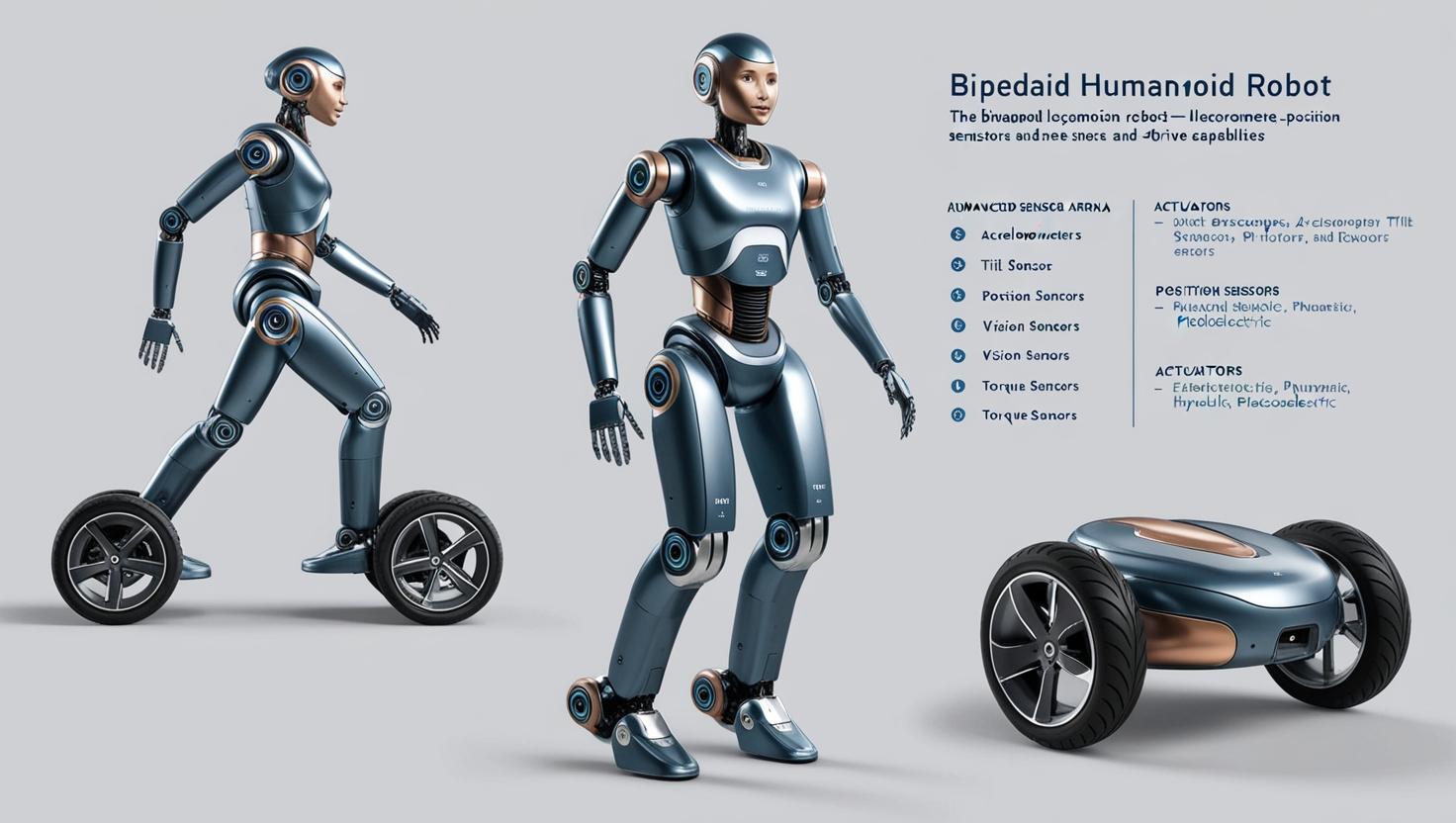
- Biped humanoid robots (dominant segment)
- Wheel-driven humanoid robots
Biped robots lead due to their ability to operate in human-designed environments.
By Component
- Sensors (vision, torque, position, gyroscopes)
- Actuators (electrical, hydraulic, pneumatic, piezoelectric)
- AI and control systems
- Power systems
By Application
- Healthcare and caregiving
- Industrial automation
- Education and training
- Public services
- Research and defense
Challenges in China Humanoid Robot Market
Despite strong growth, the China Humanoid Robot Market faces several challenges:
- High cost of development and deployment
- Limited dexterity in complex real-world tasks
- Dependence on advanced AI training data
- Energy efficiency and battery limitations
- Ethical and regulatory concerns
These challenges need to be addressed for large-scale commercialization.
Future Outlook
The future of the China Humanoid Robot Market is highly promising, supported by strong government backing, rapid AI advancements, and increasing industrial adoption.
Key future developments include:
- Large-scale deployment in factories and service industries
- Integration with next-generation AI systems
- Expansion into household robotics
- Improved human-robot collaboration
- Growth in export opportunities
China is expected to remain a global leader in humanoid robotics innovation over the coming decade.
The China Humanoid Robot Market is undergoing a transformative phase driven by AI innovation, demographic changes, and strong industrial demand. With rapid advancements in autonomy, perception, and robotics engineering, humanoid robots are moving closer to real-world integration across multiple sectors.
As technology continues to mature, the China Humanoid Robot Market will play a pivotal role in shaping the future of intelligent automation and human-machine collaboration globally.
FAQs
1. What is driving the China humanoid robot market growth?
Growth is driven by AI advancements, aging population needs, industrial automation, and government support.
2. What is the expected market size of China humanoid robots?
The market is projected to reach USD 2.80 billion by 2030.
3. Where are humanoid robots used in China?
They are used in healthcare, education, manufacturing, public services, and research sectors.
4. What are the main types of humanoid robots?
Biped and wheel-driven humanoid robots are the primary types.
5. What are the challenges in this market?
High costs, limited dexterity, and AI complexity are major challenges.