
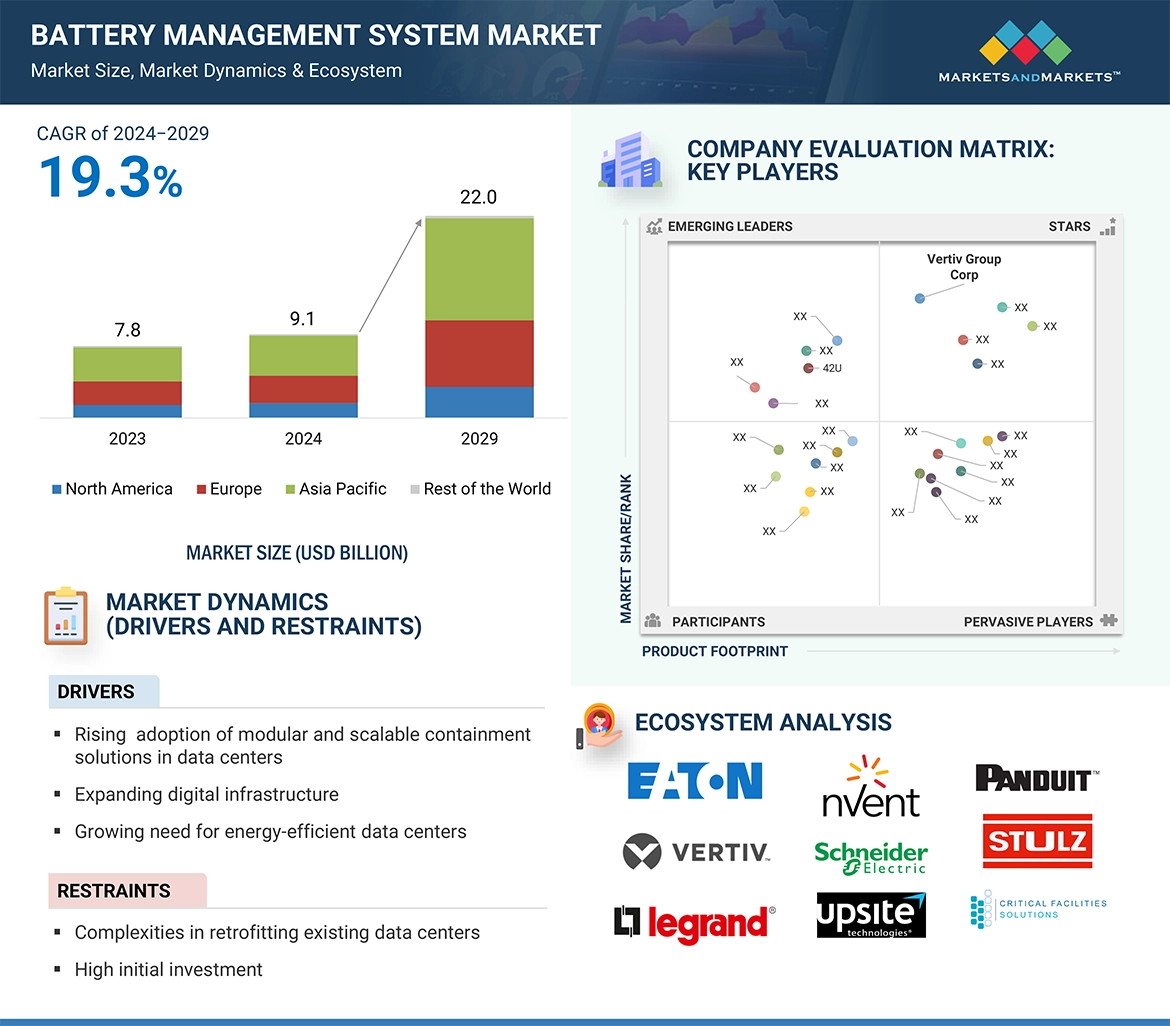
The Battery Management System Market is gaining significant opportunities from the growing adoption of battery systems across industrial applications. Manufacturing facilities, warehouses, logistics centers, telecommunications networks, backup power installations, and automated production environments increasingly depend on batteries for reliable power and electrified equipment. As industrial battery systems become more energy intensive and digitally connected, battery management systems are becoming essential for monitoring performance, improving safety, extending battery life, and optimizing energy utilization.
Growing Industrial Electrification
Industrial facilities are increasingly adopting electrically powered equipment to improve efficiency, reduce emissions, and support automation. Automated guided vehicles, autonomous mobile robots, forklifts, industrial machinery, portable equipment, and backup systems are contributing to higher demand for rechargeable batteries.
BMS technology provides critical monitoring and control functions for these battery systems. By tracking voltage, current, temperature, and state of charge, BMS platforms help ensure that industrial batteries operate within safe and efficient limits. The continued electrification of industrial operations is therefore creating a strong opportunity for BMS suppliers.
Download PDF Brochure @ https://www.marketsandmarkets.com/pdfdownloadNew.asp?id=234498189
Battery-powered Material Handling Equipment
Warehouses and manufacturing facilities are increasingly using electric forklifts, automated guided vehicles, and autonomous mobile robots. These systems require reliable battery performance because unexpected power loss can interrupt material movement and production processes.
Advanced BMS platforms can monitor battery health and optimize charging cycles for industrial vehicles. Accurate state-of-charge information can help operators determine when batteries require charging, while health monitoring can support maintenance planning. These capabilities can improve equipment availability and reduce operational interruptions.
Industrial Energy Storage Systems
Battery energy storage is becoming increasingly important for industrial facilities seeking energy resilience and cost optimization. Manufacturing plants can use batteries to manage peak demand, store renewable energy, provide backup power, and support microgrid operations.
BMS platforms help monitor large numbers of cells and modules within industrial energy storage systems. Advanced systems can coordinate battery operation with power conversion equipment and energy management platforms. This integration can improve system efficiency while supporting safe and reliable operation.
Predictive Maintenance and Battery Health
Predictive maintenance is becoming a major trend in industrial battery applications. Industrial batteries can experience degradation due to frequent cycling, high temperatures, heavy loads, and improper charging.
BMS systems can collect operating data and analyze battery performance over time. Advanced algorithms can estimate state of health, identify degradation patterns, and detect abnormal behavior. Predictive battery management can allow industrial operators to schedule maintenance before failures occur, reducing downtime and improving asset utilization.
Inquiry Before Buying @ https://www.marketsandmarkets.com/Enquiry_Before_BuyingNew.asp?id=234498189
Thermal Management and Safety
Industrial battery systems can operate under demanding environmental and electrical conditions. High charging and discharging currents can generate heat, while extreme temperatures can affect battery performance and accelerate degradation.
Advanced BMS technologies monitor temperature at the cell and module levels and can coordinate with thermal management systems. If temperatures exceed predefined limits, the BMS can adjust charging or discharging conditions and activate protective measures. Improved thermal monitoring is particularly important for high-capacity lithium-ion batteries used in industrial energy storage and electric equipment.
Artificial Intelligence and Intelligent Battery Analytics
Artificial intelligence is creating new opportunities for industrial BMS development. Machine learning models can analyze battery operating data to improve state estimation, fault detection, and performance optimization.
AI-enabled BMS platforms can identify subtle changes in voltage, temperature, and charging behavior that may indicate emerging battery problems. These systems can also support optimized charging schedules based on equipment usage and battery condition. As industrial operations become more data-driven, intelligent battery analytics are expected to become an important differentiator.
Industrial IoT and Connected BMS
The growth of Industrial IoT is increasing demand for connected battery management systems. Industrial equipment can transmit battery information to centralized monitoring platforms, allowing operators to track performance across multiple machines or facilities.
Cloud and edge computing can support real-time battery analytics while reducing dependence on manual inspections. Connected BMS solutions can provide information about battery health, energy consumption, charging behavior, and maintenance requirements. This connectivity can improve operational visibility and support data-driven industrial energy management.
View detailed Table of Content here – https://www.marketsandmarkets.com/Market-Reports/battery-management-bms-market-234498189.html
Renewable Energy Integration
Industrial facilities are increasingly adopting solar photovoltaic systems and other renewable energy resources. Battery storage enables these facilities to capture excess renewable electricity and use it when generation is lower.
BMS technology can coordinate battery charging and discharging while maintaining battery health and safety. Integration with industrial energy management systems can optimize renewable energy utilization, reduce grid dependence, and improve energy resilience.
Future Market Outlook
The Battery Management System Industry is expected to benefit from continued growth in industrial battery applications across material handling, automated equipment, energy storage, backup power, and renewable energy systems. Predictive maintenance, AI-based analytics, thermal management, Industrial IoT connectivity, and intelligent charging will remain important areas of technology development.
As industrial facilities become increasingly automated and electrified, BMS platforms will evolve from basic battery protection systems into intelligent energy and asset management solutions. Continued advances in sensing, connectivity, machine learning, and battery analytics are expected to strengthen the role of BMS technology in improving industrial productivity, safety, energy efficiency, and battery lifecycle performance.