
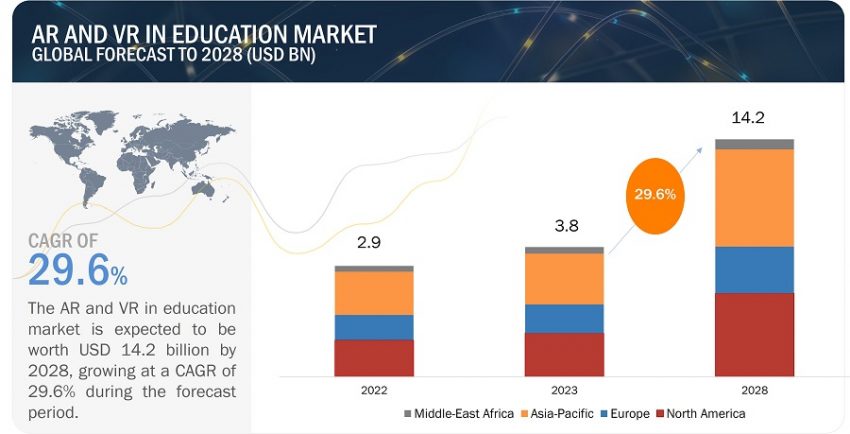
The Augmented Reality (AR) and Virtual Reality (VR) in Education Market is witnessing remarkable expansion as interactive educational content becomes a major catalyst for digital learning transformation. Educational institutions across the world are moving away from static teaching materials toward immersive, engaging, and learner-centered experiences that improve participation and academic outcomes. AR and VR technologies allow educational content to evolve from traditional text and images into dynamic simulations, three-dimensional models, interactive scenarios, and collaborative virtual environments. As schools, universities, vocational institutes, and corporate learning organizations increasingly prioritize student engagement and experiential learning, interactive educational content has emerged as one of the strongest drivers supporting the growth of the AR and VR education market.
Interactive educational content fundamentally changes how students engage with information. Rather than reading textbook descriptions or watching passive presentations, learners actively interact with digital objects, manipulate virtual environments, and participate in simulations that mirror real-world situations. This hands-on approach strengthens conceptual understanding while encouraging curiosity, creativity, and critical thinking. By actively participating in the learning process, students retain information more effectively and develop practical skills that are difficult to achieve through conventional instructional methods.
One of the most significant advantages of immersive educational content is its ability to visualize complex concepts. Subjects such as biology, chemistry, engineering, mathematics, astronomy, and physics often involve abstract principles that are difficult to explain through two-dimensional diagrams alone. AR enables students to project three-dimensional digital models into their physical surroundings, while VR allows complete immersion within virtual scientific or technical environments. Learners can examine molecular structures, observe planetary motion, analyze engineering systems, or explore anatomical models through direct interaction, making difficult subjects easier to comprehend.
Science education has become one of the leading application areas for interactive immersive content. Students perform virtual chemistry experiments, investigate biological systems, explore ecosystems, and observe physical phenomena using realistic simulations that respond dynamically to user actions. Instead of simply memorizing scientific theories, learners actively test hypotheses, adjust experimental variables, and observe outcomes in real time. These experiences improve scientific reasoning and strengthen understanding of cause-and-effect relationships while encouraging inquiry-based learning.
Download PDF Brochure @ https://www.marketsandmarkets.com/pdfdownloadNew.asp?id=203811025
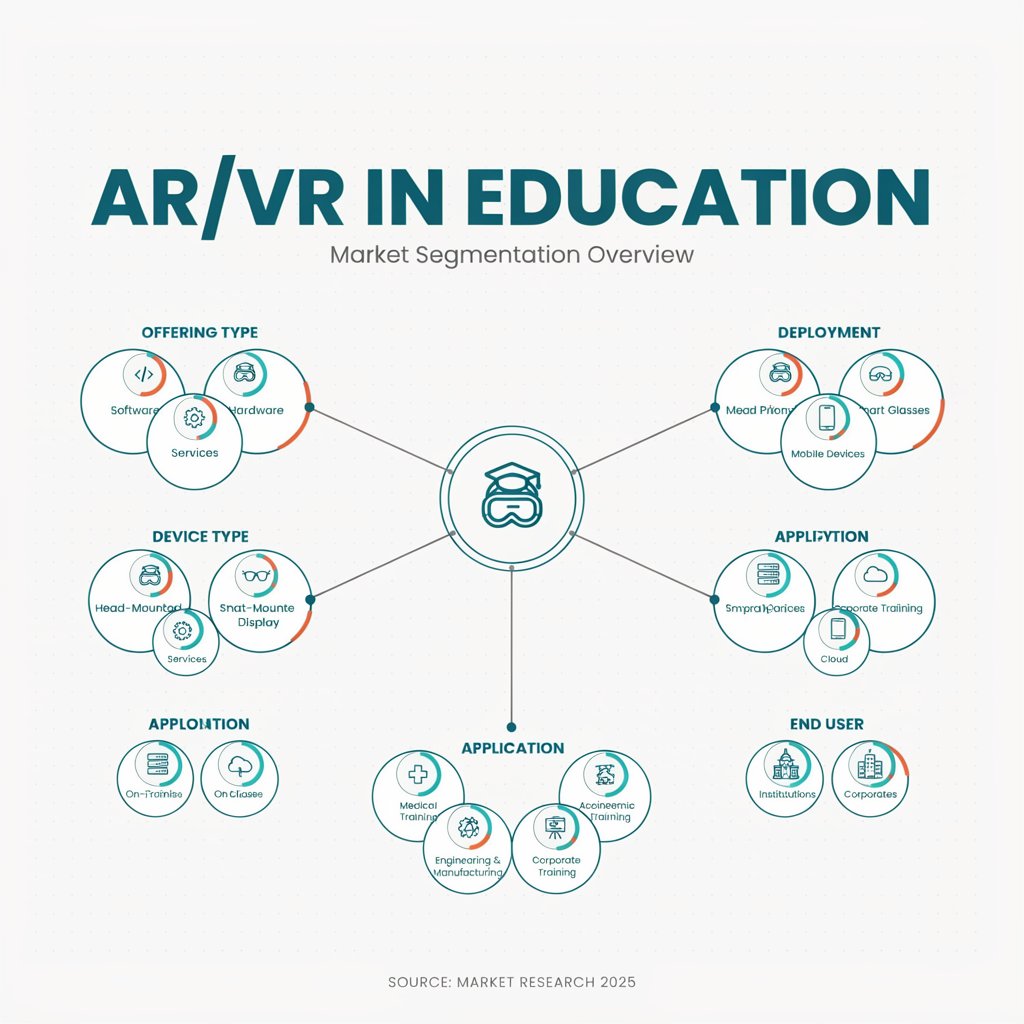
Engineering and technical education have also benefited from increasingly sophisticated interactive content. Students studying mechanical, civil, aerospace, industrial, and electrical engineering use immersive simulations to assemble machinery, analyze structural performance, explore manufacturing processes, and operate digital equipment. Interactive engineering models allow learners to modify designs, observe system behavior, and identify potential problems before constructing physical prototypes. These capabilities improve technical understanding while reducing educational costs associated with laboratory equipment and experimental materials.
Medical education represents another important growth area for interactive immersive content. Medical students utilize virtual anatomy models, patient simulations, surgical procedures, and diagnostic exercises to develop practical skills in realistic digital environments. Interactive educational content enables learners to repeatedly practice procedures, receive immediate feedback, and explore complex physiological systems without exposing patients to unnecessary risks. Nursing schools, dental programs, and allied healthcare education similarly rely on immersive learning resources to improve clinical competence before students enter real healthcare environments.
Artificial intelligence is playing an increasingly important role in the development of interactive educational content. AI-powered learning platforms analyze student interactions, learning speed, assessment performance, and engagement patterns to personalize educational experiences. Interactive lessons automatically adapt to individual learner needs by adjusting difficulty levels, recommending additional learning resources, and providing customized explanations when students encounter challenges. This adaptive approach enhances educational effectiveness while ensuring learners remain motivated throughout the learning process.
Gamification continues shaping the evolution of immersive educational content. Educational developers increasingly incorporate game mechanics such as achievements, rewards, progress tracking, interactive missions, and collaborative challenges into AR and VR learning experiences. Students complete educational objectives while exploring immersive digital worlds, solving scientific problems, or participating in realistic workplace scenarios. Gamified content increases motivation, encourages continuous participation, and transforms learning into an enjoyable experience without compromising academic quality.
Inquiry Before Buying @ https://www.marketsandmarkets.com/Enquiry_Before_BuyingNew.asp?id=203811025
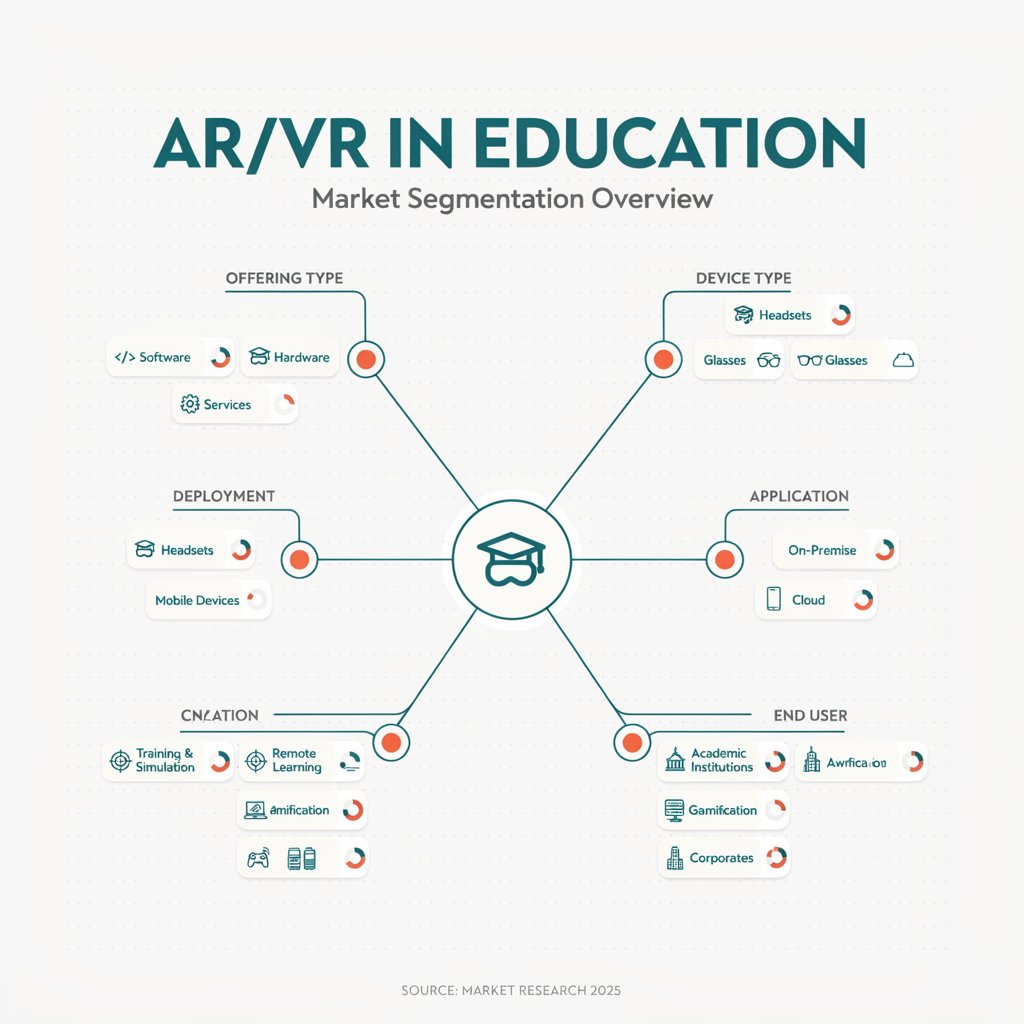
Cloud computing has significantly expanded the availability of interactive educational content. Cloud-based platforms allow educational institutions to access extensive libraries of immersive learning materials without maintaining complex local infrastructure. Teachers can easily integrate updated AR and VR content into classroom instruction while students access learning experiences from multiple devices and locations. Centralized cloud platforms also simplify content management, collaboration, and continuous software updates, making immersive education more scalable and cost-effective.
Collaboration has become another defining characteristic of modern interactive educational content. Students increasingly participate in shared virtual environments where they conduct laboratory experiments, solve engineering challenges, explore historical events, or complete research projects together. These collaborative experiences strengthen teamwork, communication, and leadership skills while reflecting real-world professional environments where interdisciplinary collaboration is essential. Virtual collaboration also supports remote learning by enabling geographically distributed students to participate in the same educational activities.
The expansion of mobile AR applications has further accelerated market growth. Smartphones and tablets now support sophisticated interactive educational experiences that require minimal additional hardware investment. Students use mobile devices to scan educational materials, visualize three-dimensional content, complete interactive assignments, and participate in augmented learning activities both inside and outside classrooms. Mobile accessibility broadens educational reach while making immersive learning practical for institutions with varying technology budgets.
Content developers are increasingly collaborating with educational institutions to produce curriculum-aligned immersive learning materials. Universities, schools, publishers, software companies, and educational technology providers work together to ensure interactive content supports national educational standards and learning objectives. These partnerships produce specialized simulations for STEM education, healthcare training, vocational instruction, language learning, history, geography, business education, and numerous other academic disciplines.
The increasing use of extended reality technologies is further enriching interactive educational experiences. Mixed reality environments combine digital content with physical surroundings, allowing learners to interact naturally with both virtual and real-world objects. These hybrid experiences are particularly valuable for technical training, industrial maintenance, engineering education, and healthcare instruction, where students benefit from combining physical equipment with digital guidance and visualization.
View detailed Table of Content here – https://www.marketsandmarkets.com/Market-Reports/virtual-classroom-market-203811025.html
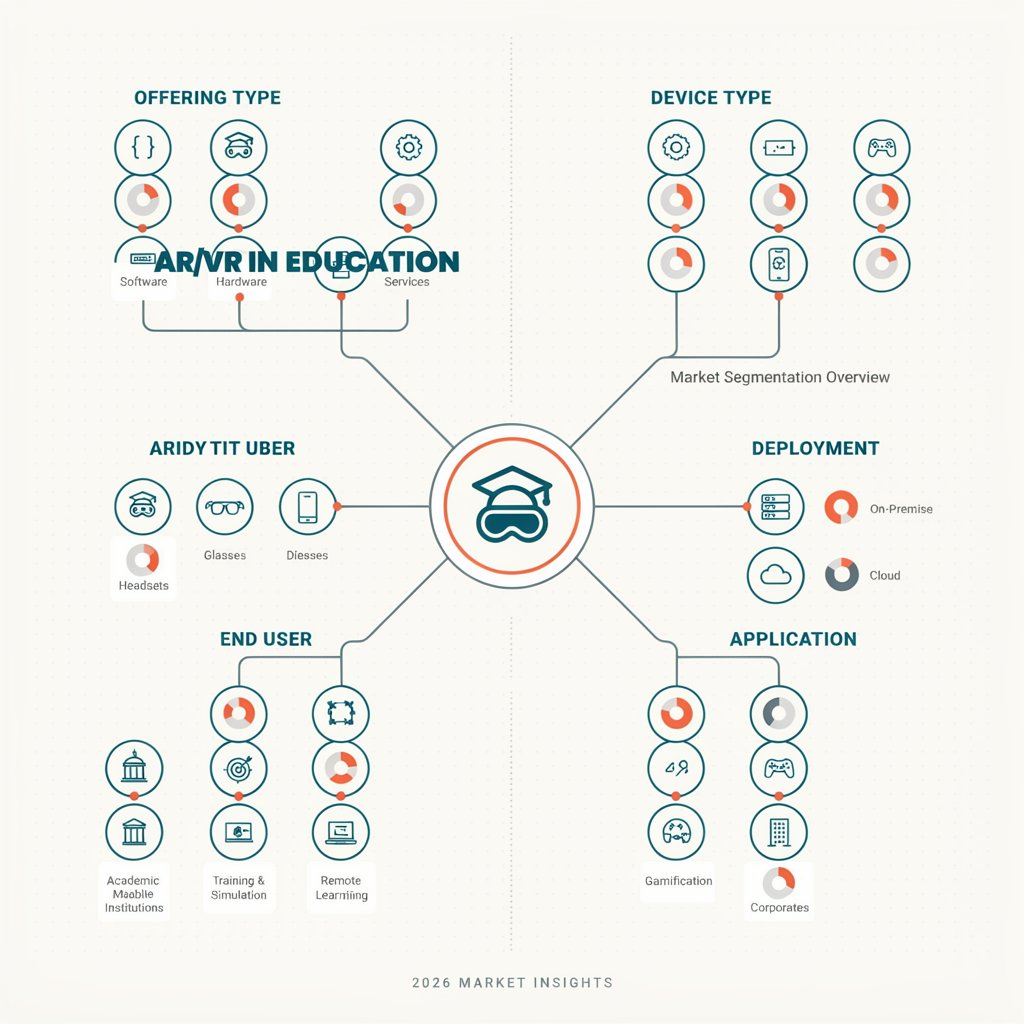
Government investment in digital education continues encouraging the development of immersive educational content. Many countries are implementing smart classroom initiatives, digital literacy programs, and technology modernization projects that emphasize interactive learning resources. Funding for educational innovation often includes support for AR and VR platforms designed to improve engagement, strengthen STEM education, and prepare students for technology-driven careers. These initiatives create favorable conditions for sustained market growth.
Corporate learning and workforce development are also driving demand for interactive immersive content. Organizations increasingly rely on AR and VR training programs that simulate workplace environments and operational scenarios. Employees participate in realistic learning experiences that improve technical skills, equipment operation, safety procedures, customer service, and leadership capabilities. Interactive corporate learning content accelerates skill acquisition while reducing training costs and operational disruptions.
Regional adoption trends indicate broad global market expansion. North America continues leading innovation through strong investments in educational technology and digital content development. Europe emphasizes curriculum modernization and immersive vocational education. Asia Pacific is experiencing rapid growth due to educational digitalization, expanding student populations, and government support for advanced learning technologies. Emerging markets are also increasing adoption as internet connectivity, mobile technology, and educational infrastructure continue improving.
Looking ahead, interactive educational content will remain one of the most influential growth drivers within the Augmented and Virtual Reality in Education Market. Advances in artificial intelligence, cloud computing, extended reality, mobile technologies, gamification, and immersive content development will continue transforming how educational materials are created and delivered. As institutions increasingly focus on learner engagement, practical skill development, and personalized education, interactive AR and VR content will become an essential component of future educational ecosystems, supporting more engaging, accessible, and effective learning experiences across academic and professional environments.