
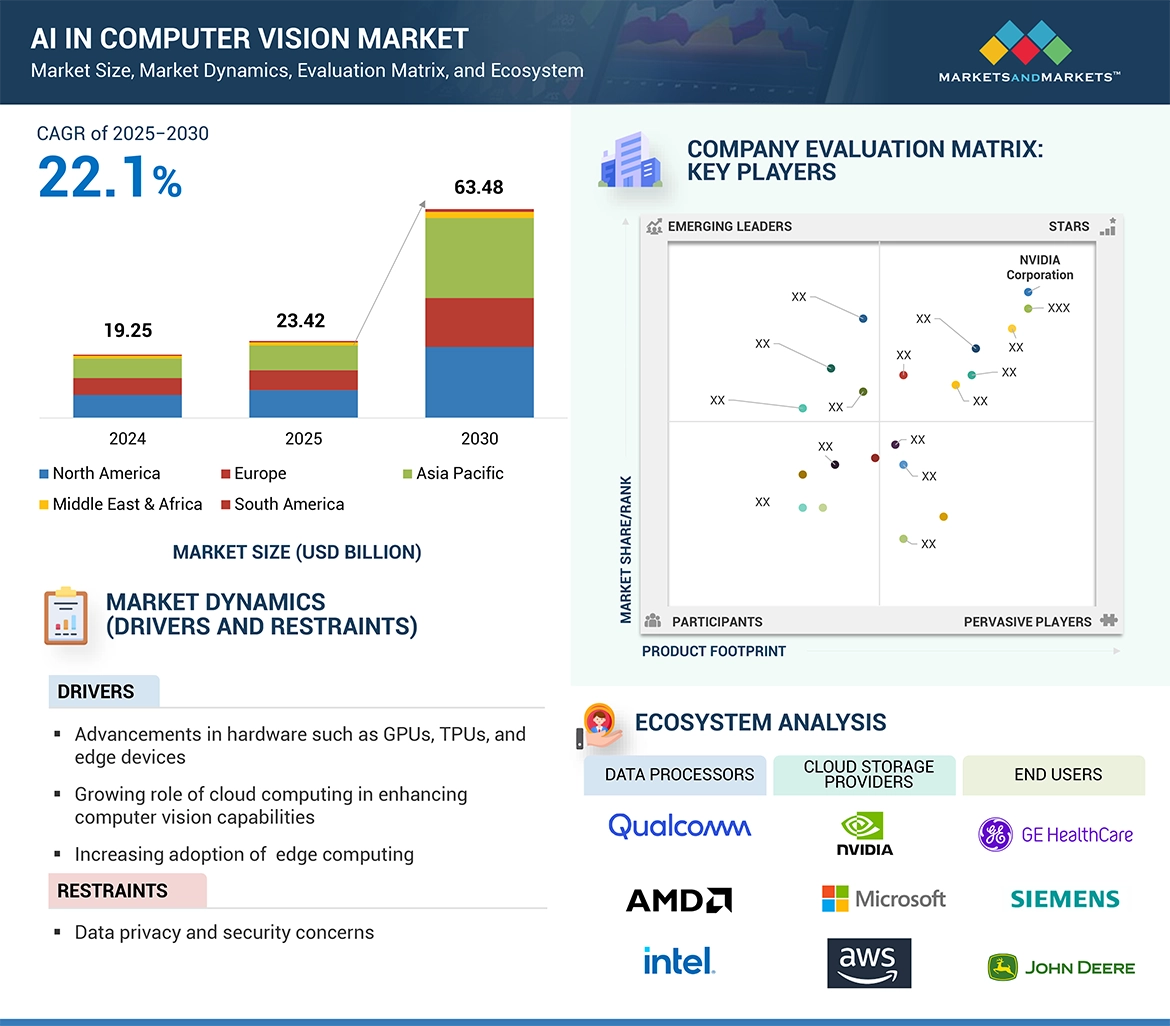
Overview of Demand for Intelligent Image Processing Solutions
The AI in Computer Vision Market Size is witnessing increasing demand for intelligent image processing solutions as organizations seek advanced technologies to analyze visual information, automate workflows, and improve operational efficiency. Intelligent image processing combines artificial intelligence, machine learning, deep learning, and computer vision algorithms to extract meaningful information from images and video streams. These solutions enable machines to recognize objects, identify patterns, classify visual content, detect abnormalities, and support real-time decision-making.
The growing volume of digital images generated by cameras, smartphones, industrial sensors, medical equipment, and connected devices is creating demand for automated visual analysis. Traditional image processing methods often depend on predefined rules and manual intervention, whereas AI-powered systems can learn from large datasets and adapt to different visual conditions. This capability is encouraging businesses to integrate intelligent image processing into manufacturing, healthcare, automotive, retail, security, and other industries.
Increasing Adoption of AI-Based Image Recognition
Image recognition is a major application driving demand in the AI in Computer Vision Market. AI-powered image recognition systems can identify objects, products, people, vehicles, and other visual elements with improved speed and accuracy. Deep learning algorithms analyze image features and classify visual information, allowing organizations to automate tasks that previously required manual inspection.
Retailers use image recognition to identify products, improve visual search, and monitor shelf availability. Manufacturing companies apply these technologies to recognize components, verify product configurations, and detect quality issues. In security applications, image recognition supports object identification, access monitoring, and intelligent video analysis. As organizations generate larger volumes of visual data, demand for scalable recognition platforms is expected to increase.
Download PDF Brochure @ https://www.marketsandmarkets.com/pdfdownloadNew.asp?id=141658064
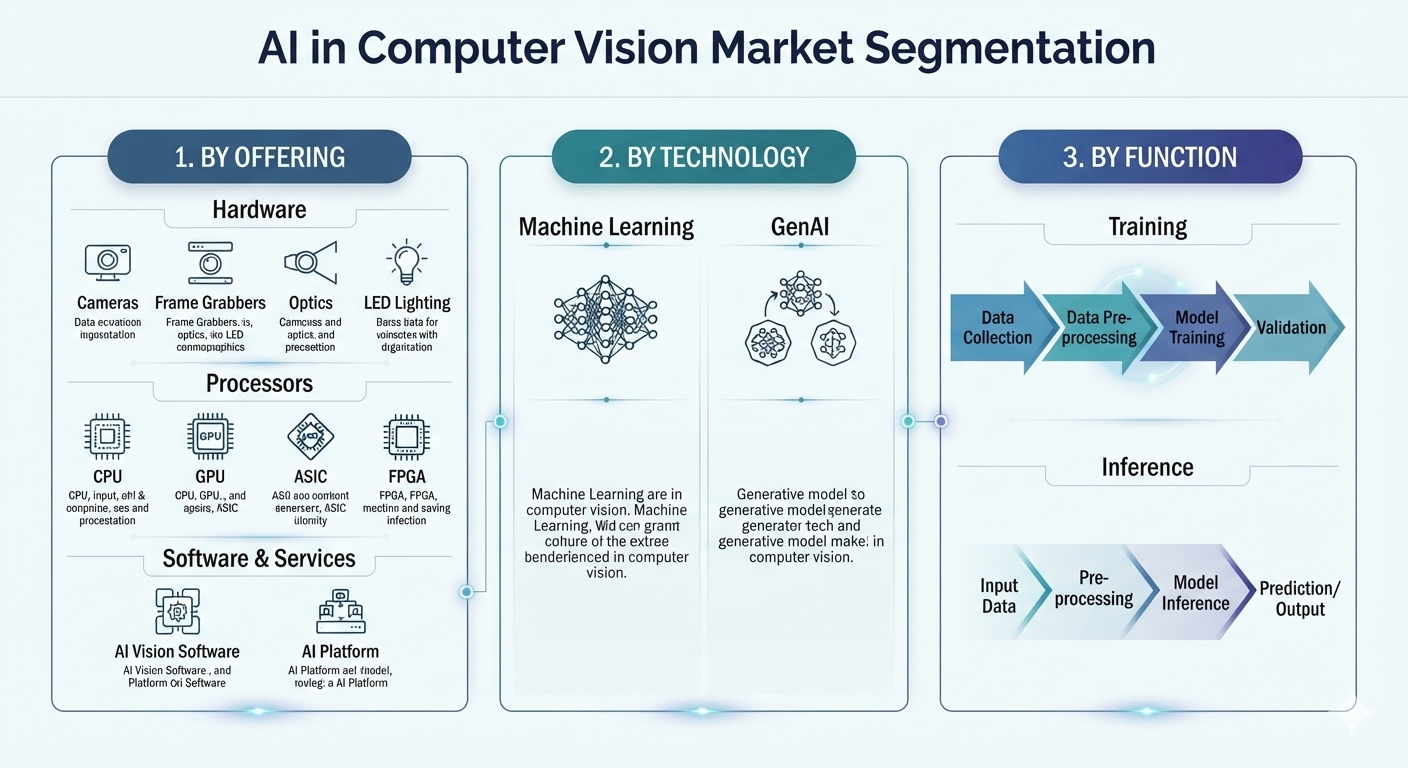
Demand for Automated Image Processing in Manufacturing
Manufacturing is an important source of demand for intelligent image processing solutions. Industrial companies are adopting AI-based vision systems to inspect products, identify surface defects, verify dimensions, and monitor assembly operations. Automated visual inspection helps manufacturers improve quality control while reducing dependence on manual inspection processes.
AI-powered image processing can detect irregularities such as cracks, scratches, incorrect component placement, and inconsistencies in product appearance. These capabilities are particularly useful in automotive, electronics, semiconductor, pharmaceutical, and consumer goods manufacturing. Integration with industrial robots and production management platforms also enables automated sorting, robotic guidance, and process monitoring. The growing adoption of smart factories and Industry 4.0 technologies is strengthening demand for intelligent industrial vision solutions.
Healthcare Applications and Medical Image Analysis
Healthcare is creating significant opportunities for intelligent image processing through the increasing use of AI-assisted medical imaging. Hospitals and diagnostic centers generate large volumes of X-rays, CT scans, MRI images, ultrasound images, and pathology slides. AI-powered image processing systems can analyze these datasets to identify visual patterns, highlight potential abnormalities, and support diagnostic workflows.
These solutions can assist healthcare professionals in reviewing medical images and prioritizing cases that require additional attention. Intelligent image processing is also being explored in surgical planning, disease monitoring, and digital pathology. Growing demand for efficient diagnostic services and advanced medical technologies is encouraging healthcare providers to evaluate AI-based imaging platforms. However, clinical validation, patient data privacy, regulatory compliance, and integration with existing hospital systems remain important adoption considerations.
Inquiry Before Buying @ https://www.marketsandmarkets.com/Enquiry_Before_BuyingNew.asp?id=141658064
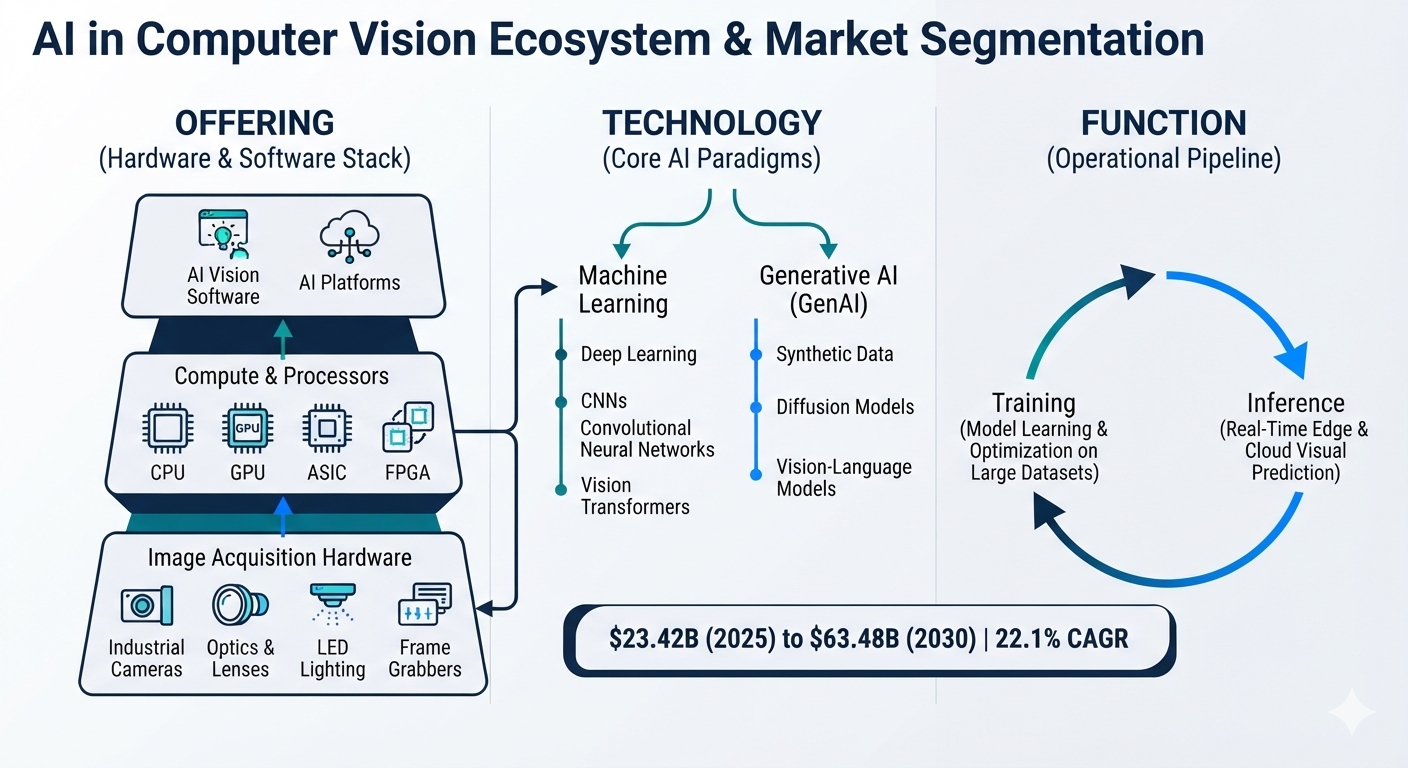
Automotive and Transportation Demand
The automotive sector is increasing its adoption of intelligent image processing as vehicle manufacturers develop advanced driver assistance systems and autonomous driving technologies. AI-powered cameras and visual processing systems analyze road conditions, identify pedestrians, recognize traffic signs, detect surrounding vehicles, and monitor lane markings. These capabilities support safer driving and improve vehicle awareness.
Intelligent image processing is also used in driver monitoring systems to identify fatigue and distraction. In transportation infrastructure, AI-based visual analytics supports traffic flow monitoring, vehicle classification, congestion detection, and incident identification. The expansion of connected vehicles, smart mobility, and intelligent transportation infrastructure is expected to create additional demand for advanced computer vision solutions.
Edge Computing and Real-Time Image Processing
The need for low-latency visual analysis is increasing demand for edge-based image processing technologies. Conventional cloud-based systems may require images and video streams to be transmitted to centralized servers for analysis. Edge AI enables processing closer to cameras, sensors, and connected devices, reducing transmission requirements and supporting faster responses.
Edge-based intelligent image processing is useful in industrial automation, autonomous vehicles, smart surveillance, robotics, and retail analytics. Improvements in AI processors, neural processing units, and compact computing devices are making it possible to deploy sophisticated vision algorithms in smaller systems. Organizations are also adopting hybrid cloud and edge architectures to combine real-time processing with centralized data storage and model management.
View detailed Table of Content here – https://www.marketsandmarkets.com/Market-Reports/ai-in-computer-vision-market-141658064.html
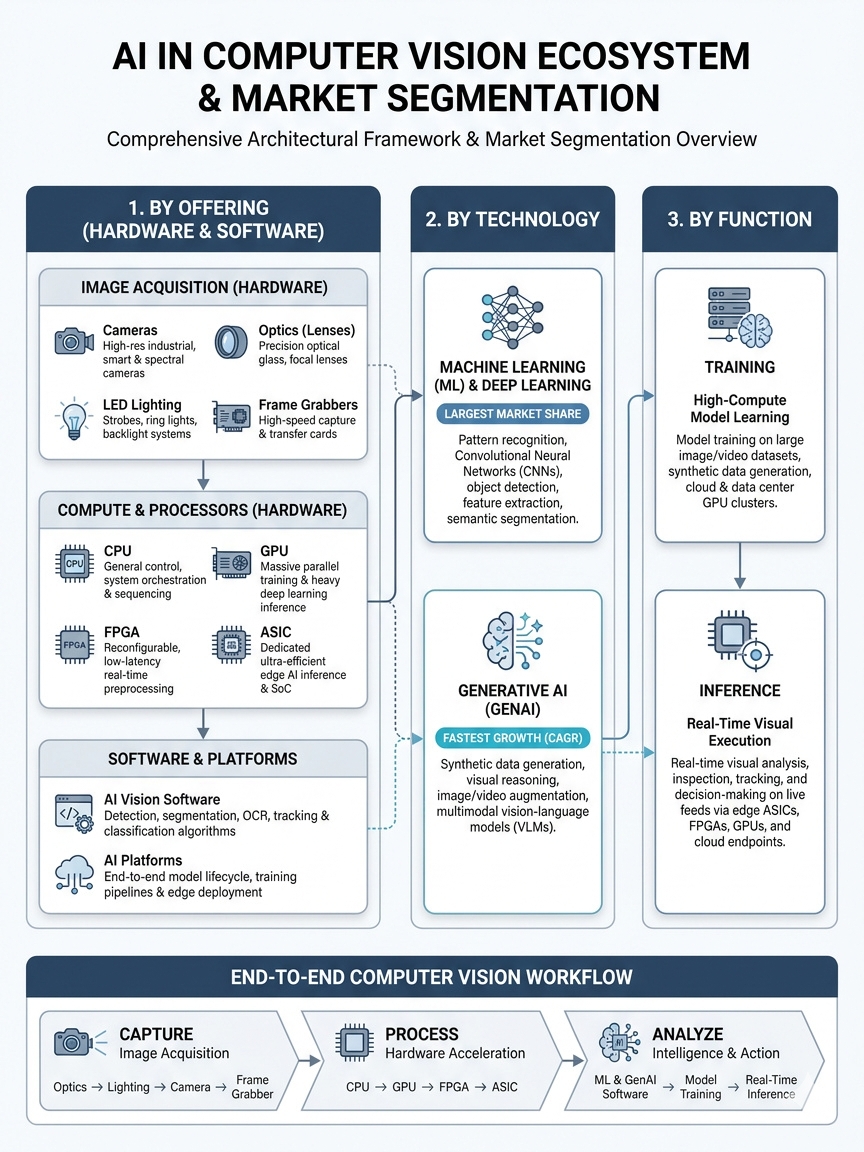
Competitive Landscape and Technology Innovation
Technology providers are investing in advanced image processing algorithms, AI accelerators, software platforms, and integrated vision solutions to address growing market demand. Companies such as NVIDIA, Intel, Qualcomm, Microsoft, Google, Amazon Web Services, IBM, and Siemens participate in different areas of the broader ecosystem, including AI computing, processors, cloud infrastructure, and industrial automation.
Competition is increasingly focused on image recognition accuracy, processing speed, scalability, energy efficiency, and system integration. Partnerships between camera manufacturers, semiconductor suppliers, software developers, and system integrators are helping organizations deploy customized computer vision applications. Providers are also improving cybersecurity, data management, and model performance to support enterprise adoption.
Future Outlook for Intelligent Image Processing Solutions
Demand for intelligent image processing solutions is expected to increase as businesses prioritize automation, visual analytics, and real-time operational intelligence. Advances in deep learning, generative AI, vision-language models, three-dimensional imaging, and edge computing will expand the capabilities of computer vision systems. Manufacturing, healthcare, automotive, retail, logistics, and security will continue to offer important growth opportunities. Companies that deliver accurate, reliable, secure, and cost-effective image processing solutions will be well positioned to benefit from the evolving AI in Computer Vision Industry.