
The 3D Printing Market is evolving from a prototyping focused technology into an important manufacturing approach for customized, complex, and low volume components. Adoption is increasing as manufacturers seek greater design flexibility, shorter development cycles, reduced tooling requirements, and more efficient production workflows. Additive manufacturing is being applied across automotive, aerospace and defense, healthcare, industrial manufacturing, consumer products, construction, and energy. The technology landscape includes material extrusion, stereolithography, selective laser sintering, powder bed fusion, binder jetting, material jetting, and other processes.
The competitive environment is also changing as equipment manufacturers, material suppliers, software developers, service providers, and industrial technology companies expand their additive manufacturing capabilities. Competition increasingly extends beyond printer hardware toward materials, workflow software, process monitoring, automation, post processing, and application engineering. Recent industry activity indicates that consolidation is becoming an important feature of the sector, with companies acquiring specialized technologies and assets to strengthen their portfolios and reach targeted applications.
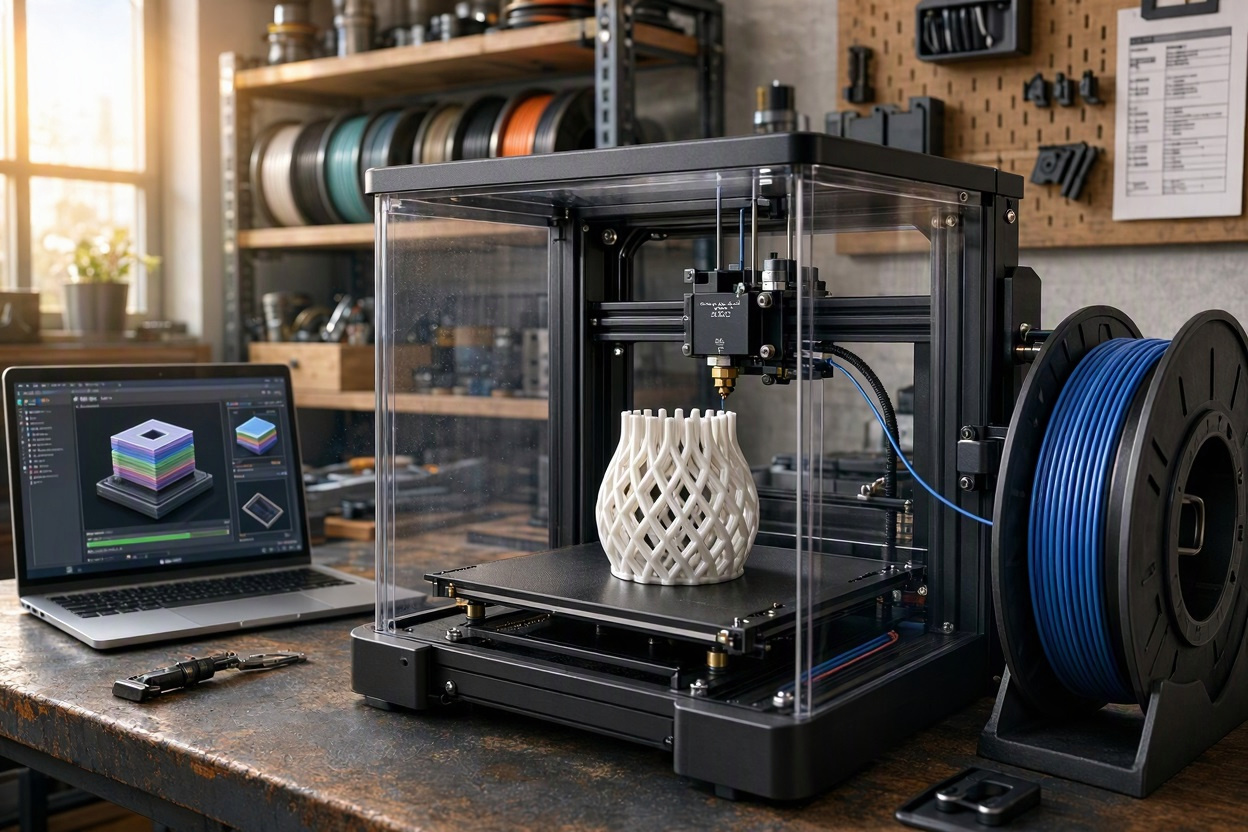
According to Marketsandmarkets, the global 3D printing market size is projected to grow from USD 16.43 billion in 2026 to USD 31.77 billion by 2032, growing at a CAGR of 11.6% from 2026 to 2032
Download PDF Brochure @ https://www.marketsandmarkets.com/pdfdownloadNew.asp?id=1276
Companies Shaping the Competitive Landscape
The 3D Printing Market includes established technology providers as well as specialized companies serving particular materials, processes, applications, and geographic markets. Major participants identified across industry coverage include Stratasys, 3D Systems, EOS, HP, GE Aerospace, Materialise, Renishaw, TRUMPF, and other technology providers. Their competitive strategies differ according to their focus on polymer printing, metal additive manufacturing, software, production services, industrial applications, or integrated manufacturing solutions.
Competition among these companies is increasingly based on the ability to provide complete production ecosystems rather than individual machines. Hardware performance remains important, but customers also evaluate material compatibility, software capabilities, process repeatability, automation, technical support, certification, and post processing. This shift creates opportunities for companies that can connect digital design with production and quality management while addressing the technical requirements of industrial customers.
Hardware Innovation Drives Competition
Printer technology remains a central competitive factor in the 3D Printing Market, particularly as customers move from prototype development toward functional component production. Manufacturers are focusing on larger build volumes, faster printing speeds, improved resolution, multi material capabilities, automated workflows, and greater process stability. Metal additive manufacturing is also receiving attention because it can produce complex geometries and lightweight structures that can be difficult to manufacture through conventional methods.
Industrial users increasingly expect printers to integrate with existing production environments rather than operate as isolated machines. Connectivity, production monitoring, automated calibration, data collection, and workflow management are therefore becoming important differentiators. Companies that combine equipment with software and application support can address a wider portion of the manufacturing workflow, making technology selection increasingly dependent on total production requirements rather than printer specifications alone.
Materials Become a Strategic Differentiator
Materials represent another major competitive area within the 3D Printing Market. Polymers, engineering plastics, photopolymers, metals, ceramics, composites, and specialty materials support different application requirements. Material development directly affects strength, durability, thermal performance, chemical resistance, surface quality, weight, and production economics. As industrial adoption increases, customers require materials with predictable properties and repeatable performance across production cycles.
Material innovation is also connected with sustainability objectives. Recycled materials, bio based feedstocks, and approaches designed to reduce material waste are gaining attention. The industry is exploring ways to improve material utilization while maintaining the performance required for demanding applications. However, material qualification and consistency remain important challenges because variations in feedstock characteristics can influence final part quality and production repeatability.
Software Strengthens the Digital Manufacturing Ecosystem
Software is becoming increasingly important because additive manufacturing depends on digital design and process control. Design optimization software can help engineers create lightweight structures, lattice geometries, internal channels, and complex shapes that may not be practical through traditional production methods. Simulation tools can also help identify potential manufacturing problems before physical production begins.
The growing integration of artificial intelligence, machine learning, cloud connectivity, and automated process monitoring is creating additional opportunities. Software can support production planning, machine management, quality monitoring, and workflow optimization. As organizations operate multiple printers across production locations, centralized software platforms can help coordinate machines, materials, production data, and quality information.
Mergers and Acquisitions Reshape the Industry
Mergers and acquisitions are playing a significant role in the changing 3D Printing Market competitive environment. Companies are using acquisitions to obtain technology, intellectual property, customer relationships, specialized engineering expertise, materials capabilities, or access to specific application segments. Rather than building every capability internally, organizations can accelerate portfolio expansion by acquiring businesses with established technologies and specialized expertise.
Recent industry activity illustrates this consolidation trend. Industry reporting in 2026 highlighted acquisitions and restructuring involving companies and assets across binder jetting, metal additive manufacturing, dental applications, ceramics, and industrial additive manufacturing. The activity suggests that consolidation is not limited to large corporate combinations but also includes targeted purchases of technology assets and specialized businesses.
Strategic Acquisitions Focus on Specialized Technologies
A notable characteristic of recent M&A activity is the increasing focus on complementary capabilities. Buyers can use acquisitions to strengthen a particular technology, enter an application area, or expand their portfolio without developing a new platform from the beginning. This approach can be especially relevant in specialized additive manufacturing segments where technical expertise, qualified materials, intellectual property, and customer relationships can represent substantial barriers to entry.
Industry developments reported during 2026 show examples of businesses and technology assets changing ownership across the additive manufacturing ecosystem. These transactions include activity involving metal printing, binder jetting, dental technologies, ceramics, and industrial equipment. Such transactions demonstrate how companies are reassessing which technologies and applications fit their long term strategies.
Consolidation Extends Beyond Traditional Mergers
Consolidation in the 3D Printing Market does not always take the form of conventional mergers between two operating companies. Asset purchases, portfolio restructuring, business closures, relaunches, and transfers of specialized divisions are also influencing the competitive structure. Recent industry reporting has described consolidation as a combination of acquisitions and strategic exits, reflecting changing business priorities within additive manufacturing.
This type of restructuring can influence customers, suppliers, employees, technology roadmaps, and distribution networks. For industrial customers, continuity of materials, software support, spare parts, maintenance, and technical expertise can be important considerations when ownership changes. Consequently, competitive evaluation increasingly requires businesses to examine the broader ecosystem surrounding a technology rather than focusing only on the equipment itself.
Competitive Strategies in the 3D Printing Market
Companies are using several strategies to strengthen their position in the 3D Printing Market. Product innovation remains important, but competitive differentiation increasingly involves application expertise, material development, software integration, automation, and customer support. Industrial customers often require solutions customized for specific production environments, creating opportunities for companies with strong engineering and application development capabilities.
Key competitive strategies include:
Expanding printer portfolios across polymer, metal, ceramic, and composite applications.
Developing specialized materials for demanding industrial and healthcare applications.
Integrating software, automation, monitoring, and data management into production workflows.
Building partnerships with manufacturers, research institutions, designers, and technology providers.
Acquiring specialized businesses and intellectual property to accelerate portfolio development.
These strategies demonstrate that competition is moving toward broader additive manufacturing ecosystems. Companies that can address several stages of the production process can potentially establish deeper relationships with industrial customers. At the same time, specialized providers can remain competitive by developing expertise in high value applications where technical performance and qualification are more important than broad product coverage.
Application Areas Expand Beyond Prototyping
Prototyping remains an important application, but the 3D Printing Market is increasingly associated with tooling and functional part manufacturing. Manufacturers can use additive manufacturing to produce complex components without requiring conventional molds or specialized tooling. This can be particularly useful for customized components, replacement parts, low volume production, and designs requiring internal structures or complex geometries.
Functional part manufacturing creates a different competitive environment because customers demand consistent quality, repeatability, material performance, dimensional accuracy, and process validation. As additive manufacturing becomes more integrated into production, equipment providers must demonstrate reliability under repeated operating conditions. This is encouraging greater investment in monitoring systems, automated workflows, material qualification, and process control.
Automotive Adoption Creates New Opportunities
Automotive manufacturing is an important application area because vehicle manufacturers need lightweight components, customized tooling, prototypes, replacement parts, and increasingly complex designs. Additive manufacturing allows engineers to modify designs quickly and manufacture geometries that may be difficult to produce through conventional methods. The technology can therefore support both development and selected production applications.
The automotive sector is also moving toward electrification and advanced vehicle architectures. These developments create demand for lightweight structures, thermal management components, customized production tools, and components with integrated functionality. The ability to consolidate multiple components into a single printed structure can reduce assembly requirements and create new design possibilities.
Aerospace and Defense Applications Require Precision
Aerospace and defense organizations are adopting additive manufacturing for applications where weight reduction, geometric complexity, customization, and component performance are important. Metal additive manufacturing can produce components with internal channels, lattice structures, and other geometries that can be challenging to manufacture through conventional processes.
However, aerospace applications require stringent qualification and quality controls. Production consistency, material properties, traceability, inspection, and certification are essential when printed components are used in demanding environments. As qualification processes become more established, additive manufacturing can support broader use of production components alongside its traditional role in prototyping and tooling.
Healthcare Supports Customization
Healthcare is another important application area because patient specific requirements can benefit from additive manufacturing. The technology can support customized medical devices, anatomical models, dental applications, surgical planning models, and selected implant related applications. Customization is particularly valuable where conventional mass production cannot easily address individual patient requirements.
The healthcare segment also encourages innovation in biocompatible materials, precision manufacturing, and digital workflows. Design files can be modified according to individual requirements before production, creating a connection between digital medical data and physical manufacturing. Regulatory requirements remain important, meaning technology providers must combine printing capabilities with validated materials, reliable processes, and appropriate quality systems.
Sustainability Influences Competitive Positioning
Sustainability is increasingly influencing manufacturing decisions and the 3D Printing Market is part of this transition. Additive manufacturing can reduce certain forms of material waste because components are produced layer by layer rather than machined from larger blocks of material. Lightweight designs can also reduce material consumption in selected applications.
At the same time, sustainability benefits depend on material selection, energy consumption, machine utilization, production scale, and post processing requirements. Companies are therefore investigating recycled and bio based materials while improving process efficiency. The development of more sustainable feedstocks could create new differentiation opportunities for material suppliers and printer manufacturers.
Challenges Affect Competitive Development
Despite strong technology adoption, the 3D Printing Market continues to face technical and operational challenges. Material costs, inconsistent material specifications, limited standardization, skilled workforce shortages, and difficulties in achieving repeatable production can restrict broader industrial adoption. These challenges are particularly relevant when companies move from prototypes to certified production parts.
Quality consistency is another important consideration. Industrial customers need predictable results across machines, materials, production batches, and operating conditions. Differences in machine calibration, environmental conditions, material handling, software parameters, and post processing can influence the final component. As a result, competitive advantage increasingly depends on the ability to provide repeatable end to end manufacturing processes.
Regional Competition Continues to Evolve
Competition is distributed across major manufacturing regions, with North America, Europe, Asia Pacific, and other regions contributing to technology development and adoption. Different regions have developed strengths across industrial manufacturing, aerospace, automotive, healthcare, electronics, research, and consumer applications. Local manufacturing capabilities, technology ecosystems, skilled labor, investment levels, and industrial demand influence regional competition.
Asia Pacific is becoming increasingly important because of its extensive manufacturing base and growing interest in advanced production technologies. Europe has established expertise in industrial machinery, engineering, automotive manufacturing, and additive manufacturing. North America continues to support innovation through established technology companies, industrial users, research organizations, and specialized startups.
The Role of Startups and Specialized Providers
Startups and specialized companies continue to contribute to innovation in the 3D Printing Market. Smaller businesses can focus on specific technologies, materials, software solutions, or application niches without maintaining the broad product portfolios required by large manufacturers. This specialization can allow them to address emerging customer requirements quickly.
Established companies can subsequently use partnerships, investments, or acquisitions to gain access to these specialized capabilities. The relationship between large organizations and smaller technology providers therefore remains important to the industry’s competitive development. Recent consolidation activity shows that specialized intellectual property and application expertise can become attractive acquisition targets as larger organizations refine their technology portfolios.
Future Competitive Landscape
The competitive landscape of the 3D Printing Market is expected to remain dynamic as companies move toward integrated manufacturing solutions. Printer performance will remain important, but customers are increasingly considering materials, software, automation, monitoring, post processing, and technical support as part of the overall purchasing decision. This creates opportunities for both integrated providers and highly specialized technology companies.
Artificial intelligence, automated production, advanced materials, cloud based workflows, and improved process monitoring are likely to influence product development. Companies that successfully connect these technologies with practical industrial applications can address the growing demand for reliable digital manufacturing. At the same time, consolidation through acquisitions and asset transactions may continue to reshape ownership of specialized technologies and applications.
Key Competitive Factors to Monitor
The competitive environment can be assessed through several factors that influence technology adoption and supplier selection. These factors include machine productivity, material availability, process repeatability, software capabilities, application expertise, service infrastructure, qualification support, and total production economics.
Technology breadth across polymer, metal, ceramic, and composite applications.
Ability to integrate hardware, materials, software, automation, and post processing.
Strength of intellectual property and specialized application capabilities.
Ability to support customers through qualification, production, and maintenance.
Strategic partnerships, acquisitions, asset purchases, and portfolio expansion.
These factors highlight why competition in the 3D Printing Market is becoming more sophisticated. Customers are increasingly evaluating the complete manufacturing ecosystem rather than simply comparing printer specifications. This evolution is encouraging suppliers to strengthen relationships with industrial customers and expand their capabilities across the additive manufacturing workflow.
Conclusion
The 3D Printing Market is entering a more mature stage in which competition is increasingly defined by production capability, application expertise, materials, software, automation, and service support. Companies are expanding beyond prototype printing to address tooling, functional components, customized products, and industrial production. This transition is creating new opportunities while also increasing expectations around reliability, repeatability, certification, and cost efficiency.
Mergers, acquisitions, asset purchases, and strategic restructuring are contributing to changes in the competitive environment. Recent industry activity demonstrates that companies are seeking specialized technologies and application capabilities while reassessing their portfolios. As additive manufacturing becomes more integrated into digital production systems, competition is likely to remain focused on technological differentiation, ecosystem development, materials innovation, software integration, and the ability to solve specific manufacturing challenges.
FAQs
What is driving competition in the 3D Printing Market?
Competition is being driven by advances in printer performance, materials, software, automation, process monitoring, and application specific manufacturing. Customers increasingly seek complete solutions rather than standalone printing equipment.
Which technologies are important in the 3D Printing Market?
Important technologies include fused deposition modeling, stereolithography, selective laser sintering, powder bed fusion, binder jetting, material jetting, digital light processing, and other additive manufacturing processes.
Why are mergers and acquisitions important in 3D printing?
Mergers and acquisitions allow companies to obtain specialized technology, intellectual property, materials expertise, application capabilities, and customer relationships. Recent industry activity has included both company acquisitions and targeted technology asset transactions.
Which industries are adopting 3D printing?
Major application areas include automotive, aerospace and defense, healthcare, industrial manufacturing, consumer products, architecture and construction, energy, education, and other specialized industries.
How are materials influencing the competitive landscape?
Materials influence mechanical performance, thermal characteristics, chemical resistance, durability, surface quality, production economics, and sustainability. Companies are therefore investing in advanced, recycled, bio based, and application specific materials.
What role does software play in 3D printing?
Software supports digital design, simulation, slicing, production planning, machine management, process monitoring, quality control, and workflow optimization. Integration with automation and artificial intelligence is further expanding its role.
What are the major challenges facing 3D printing adoption?
Important challenges include material costs, limited standardization, process consistency, quality control, qualification requirements, and shortages of skilled additive manufacturing professionals.
How is sustainability affecting 3D printing?
Sustainability is encouraging the development of material efficient designs, recycled materials, bio based feedstocks, and more efficient manufacturing processes. The environmental impact still depends on material, energy, machine utilization, and production conditions.
Why is industrial 3D printing becoming more important?
Industrial users can apply additive manufacturing to customized components, complex geometries, low volume production, tooling, prototypes, and selected functional parts. This expands the technology beyond traditional prototyping applications.
What will shape the competitive landscape?
Technology innovation, advanced materials, software integration, automation, artificial intelligence, production reliability, application engineering, strategic partnerships, and M&A activity are likely to remain important competitive factors.