
The 3D printing in healthcare market has emerged as one of the most transformative forces in modern medicine, fundamentally reshaping how medical devices, implants, and even human tissues are designed and produced. This revolutionary technology, also known as additive manufacturing, enables the creation of three-dimensional objects from digital models by layering materials with exceptional precision. The 3D printing in healthcare market encompasses a vast spectrum of applications, ranging from customized prosthetics and surgical guides to complex bioprinted tissues and personalized pharmaceutical formulations. As healthcare systems worldwide grapple with the growing demand for personalized treatment options, the 3D printing in healthcare market offers unprecedented solutions that align perfectly with the principles of precision medicine. The integration of advanced imaging technologies, artificial intelligence, and innovative biomaterials has further accelerated the adoption of 3D printing across hospitals, research institutions, and pharmaceutical companies.
According to Marketsandmarkets, the global 3D printing market size is projected to grow from USD 16.43 billion in 2026 to USD 31.77 billion by 2032, growing at a CAGR of 11.6% from 2026 to 2032.
Download PDF Brochure @ https://www.marketsandmarkets.com/pdfdownloadNew.asp?id=1276
The significance of the 3D printing in healthcare market extends far beyond mere manufacturing efficiency; it represents a paradigm shift in how medical solutions are conceptualized and delivered to patients. Traditional manufacturing methods often impose limitations on design complexity and customization, whereas 3D printing liberates healthcare professionals to create patient-specific solutions that were previously impossible to produce. The 3D printing in healthcare market has witnessed remarkable growth driven by technological advancements, increasing investments in research and development, and a growing recognition of the technology’s potential to improve clinical outcomes. From reducing surgical risks through precise preoperative planning to enabling faster recovery times with custom-fit implants, the impact of 3D printing on healthcare delivery is profound and far-reaching. This article explores the multifaceted dimensions of the 3D printing in healthcare market, examining its driving forces, core applications, technological innovations, and the challenges that lie ahead.
Key Drivers Fueling the 3D Printing in Healthcare Market Expansion
The rapid expansion of the 3D printing in healthcare market is propelled by several interconnected factors that collectively create a fertile environment for innovation and adoption. One of the most significant drivers is the increasing prevalence of chronic diseases worldwide, which has created an urgent need for customized medical devices and implants that can effectively manage long-term health conditions. The rising burden of chronic illnesses such as diabetes, cardiovascular diseases, and orthopedic disorders has intensified the demand for personalized healthcare solutions that the 3D printing in healthcare market is uniquely positioned to address. Additionally, the growing aging population globally has contributed substantially to market growth, as elderly patients often require specialized implants, prosthetics, and assistive devices that can be optimally designed using 3D printing technologies.
Advancements in additive manufacturing technologies have significantly enhanced the capabilities and accessibility of 3D printing in healthcare settings. The development of multi-material printing systems, high-speed production platforms, and biocompatible materials has expanded the range of medical applications that can be effectively served by the 3D printing in healthcare market. Electron-beam systems now densify titanium lattices in remarkably short build cycles, enabling same-week delivery of patient-specific implants, while multi-laser configurations have doubled throughput without sacrificing dimensional tolerances. These technological improvements have made 3D printing more cost-effective and practical for routine clinical use, driving broader adoption across medical specialties. Furthermore, the increasing integration of digital imaging technologies with 3D printing has enhanced the precision and effectiveness of medical applications, allowing for seamless translation of patient anatomical data into physical models and devices.
Rising investments in research and development activities have created a positive outlook for the 3D printing in healthcare market, with substantial funding directed toward exploring new applications and improving existing technologies. Research institutions, healthcare organizations, and technology developers are collaborating extensively to advance bioprinting, develop novel biomaterials, and create innovative drug delivery systems. The growing acceptance of patient-specific implants and prosthetics has also been a major catalyst, as both healthcare providers and patients recognize the superior outcomes associated with customized medical solutions. Additionally, the expansion of hospital-based point-of-care 3D printing labs has significantly reduced surgical lead times, enabling on-demand production of anatomical models, surgical guides, and custom implants directly within clinical settings.
Core Applications Driving the 3D Printing in Healthcare Market
The 3D printing in healthcare market encompasses a diverse array of applications that collectively demonstrate the technology’s versatility and transformative potential across the medical field. Perhaps the most prominent application area is the production of personalized prosthetics and implants, where 3D printing enables the creation of custom-fit devices that dramatically improve patient comfort, functionality, and aesthetic outcomes. Traditional prosthetics often require lengthy adjustment periods and may never achieve optimal fit, whereas 3D-printed prosthetics can be precisely tailored to an individual’s unique anatomy, significantly reducing recovery time and minimizing complications. In orthopedic surgery, 3D-printed implants have revolutionized treatment approaches, with custom titanium vertebral bodies being used to reconstruct extensive bone loss in spine surgery. The ability to create patient-specific implants that match the exact contours of a patient’s anatomy has substantially improved surgical outcomes and patient satisfaction.
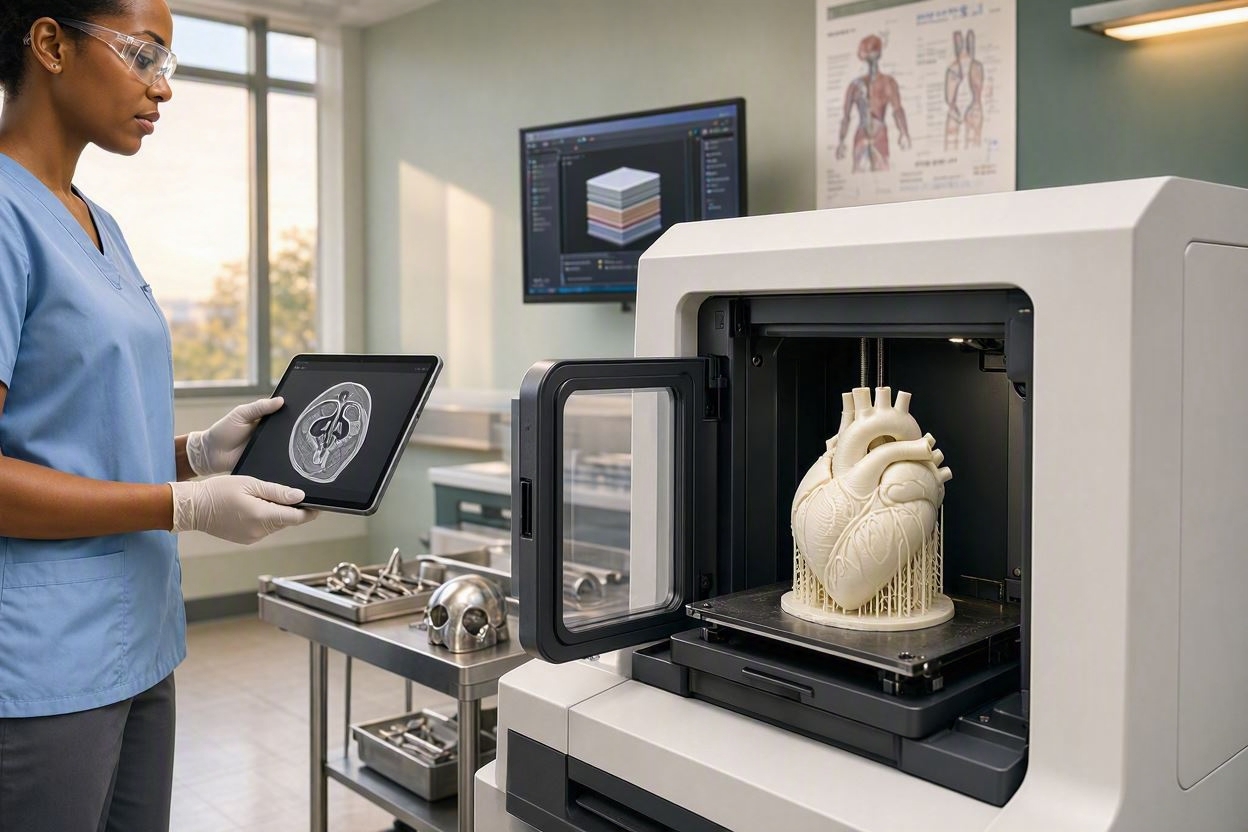
Surgical planning and simulation represent another critical application driving the 3D printing in healthcare market, with 3D-printed anatomical models providing surgeons with tangible, patient-specific representations of complex anatomical structures. These models enable meticulous preoperative planning, allowing surgical teams to rehearse procedures, identify potential challenges, and optimize surgical approaches before entering the operating room. The use of 3D-printed models has been shown to enhance surgical precision, reduce operating times, and minimize complications across multiple specialties including craniomaxillofacial surgery, neurosurgery, and cardiovascular interventions. Furthermore, patient-specific surgical guides produced through 3D printing ensure accurate implant placement and bone resections, significantly reducing the risk of surgical errors and improving functional and aesthetic outcomes. These guides serve as invaluable tools that translate digital surgical plans into precise physical execution.
The 3D printing in healthcare market has also made significant inroads in pharmaceutical applications, where the technology enables the creation of personalized drug delivery systems and customized dosage forms. 3D printing offers precise control over drug release profiles through geometric design, enabling the fabrication of medications with tunable release characteristics tailored to individual patient needs. This capability is particularly valuable for patients requiring specific dosing regimens, combination therapies, or modified release profiles that are difficult to achieve with conventional manufacturing methods. The technology supports on-demand production and small-batch customization in hospitals, pharmacies, and community settings, bringing personalized medicine closer to clinical reality. Additionally, 3D printing facilitates the rapid prototyping of novel drug formulations, accelerating pharmaceutical development and enabling faster innovation in drug delivery technologies.
Bioprinting and Tissue Engineering in the 3D Printing in Healthcare Market
Bioprinting represents one of the most exciting and rapidly evolving frontiers within the 3D printing in healthcare market, offering the potential to create functional living tissues and organs for transplantation and research applications. This specialized form of 3D printing involves the precise layer-by-layer deposition of living cells, biomaterials, and growth factors to construct three-dimensional tissue constructs that mimic native biological structures. The 3D printing in healthcare market has witnessed substantial advancements in bioprinting technologies, enabling the fabrication of complex tissue models with multifunctional capabilities ranging from patient-specific implant fabrication to full-scale organ development. Bioprinted vascularized constructs now remain viable for multi-week toxicology tests, meeting pharmaceutical screening thresholds and providing more physiologically relevant models for drug testing. The development of organ-specific bioinks capable of recapitulating native microenvironments has been a key focus of research, addressing the critical challenge of supporting cell viability and functionality within printed constructs.
The convergence of bioprinting with regenerative medicine has created unprecedented opportunities for the 3D printing in healthcare market to address the growing demand for organ transplants and tissue replacement therapies. Researchers are actively developing methods to use a patient’s own cells to fabricate personalized hearts, kidneys, livers, and other organs on demand, potentially eliminating the need for donor organs and the associated risk of rejection. While full-scale organ fabrication remains a long-term goal, significant progress has been made in creating vascularized tissue constructs, multilayered skin, bone, and bladder tissues that demonstrate the feasibility of bioprinting for clinical applications. The integration of artificial intelligence with bioprinting technologies is further accelerating progress by enabling more sophisticated design and control of tissue architecture, potentially supporting safer and more personalized therapeutic approaches.
The 3D printing in healthcare market is also benefiting from increasing regulatory clarity regarding bioprinted tissues, with agencies beginning to provide guidance on sterility and potency requirements that reduce filing uncertainty for developers. The development of sustainable biomaterials and advanced bioprinting techniques has greatly improved the precision of cell and biomaterial placement, enabling accurate reproduction of tissue models with sustainable potential. These advancements are expanding the applications of bioprinting beyond transplantation to include disease modeling, drug screening, and personalized cancer therapeutics, where 3D-printed tumor models help mimic tumor environments and aid in the development of more effective and tailored cancer treatments. As research progresses and regulatory frameworks evolve, bioprinting is poised to become an increasingly important segment of the 3D printing in healthcare market.
Technological Innovations Shaping the 3D Printing in Healthcare Market
The technological landscape of the 3D printing in healthcare market is characterized by continuous innovation across multiple fronts, including printing technologies, materials science, and software solutions. Stereolithography has emerged as a dominant technology within the healthcare 3D printing market, offering ultra-fine layers below 25 microns that provide the smooth surfaces required for clear aligners and craniofacial models. The availability of biocompatible photopolymers has simplified regulatory submissions, making stereolithography an attractive option for dental and medical applications requiring high precision and excellent surface finish. Meanwhile, electron beam melting has gained traction for load-bearing applications such as hip stems, as it can fuse high-melting-point titanium without residual porosity, ensuring the mechanical integrity required for long-term implants. Fused deposition modeling retains appeal for budget-sensitive applications such as anatomical models, while selective laser sintering serves dental and hearing-aid niches with nylon powders that can withstand autoclave sterilization.
The 3D printing in healthcare market has witnessed significant advancements in multi-material printing capabilities, enabling the production of complex, patient-specific medical and dental solutions with enhanced precision, efficiency, and aesthetic quality. Multi-material 3D printing allows the simultaneous use of two or more materials within a single print, supporting the creation of highly functional and customized components in one build cycle. This capability is particularly valuable for creating devices that require different material properties in different regions, such as implants with varying stiffness gradients or drug delivery systems with multiple release compartments. The development of new biocompatible materials continues to expand the possibilities for 3D printing in healthcare, with researchers exploring everything from advanced polymers and ceramics to decellularized extracellular matrix-based bioinks that can support cell growth and tissue regeneration.
Digital design and software innovations are playing an increasingly important role in the 3D printing in healthcare market, enabling more sophisticated and automated workflows that streamline the translation of medical imaging data into printable models. The integration of artificial intelligence and machine learning is driving innovation by enabling more efficient design optimization, defect detection, and process control. Automated software solutions are reducing labor requirements and operational costs while improving accuracy, throughput, and safety in high-volume production environments. The adoption of digital design tools is also facilitating the creation of more complex geometries and lattice structures that can mimic the mechanical properties of natural bone and tissue, improving the performance of implants and prosthetics. As software capabilities continue to evolve, the 3D printing in healthcare market will benefit from increased automation, reduced production times, and enhanced customization capabilities.
Regional Analysis of the 3D Printing in Healthcare Market
The 3D printing in healthcare market exhibits distinct regional characteristics, with North America currently holding the largest market share driven by advanced healthcare infrastructure, substantial research investments, and early technology adoption. The region’s dominance is supported by a robust ecosystem of medical device manufacturers, research institutions, and technology developers that collaborate to advance additive manufacturing applications in healthcare. The presence of favorable regulatory frameworks and reimbursement policies has further accelerated adoption, enabling hospitals and clinics to integrate 3D printing into routine clinical practice. North America’s leadership in the 3D printing in healthcare market is also attributed to the high prevalence of chronic diseases and the growing demand for personalized medical solutions among an aging population. The region continues to invest heavily in bioprinting research and point-of-care manufacturing initiatives that promise to expand the technology’s clinical applications.
Europe represents another significant market for 3D printing in healthcare, benefiting from strong research traditions, supportive regulatory environments, and widespread adoption of advanced medical technologies. The region’s emphasis on personalized medicine and patient-centered care aligns well with the capabilities of 3D printing, driving demand for custom implants, prosthetics, and surgical planning tools. European healthcare systems have been early adopters of hospital-based 3D printing labs, recognizing the value of on-site manufacturing for reducing surgical lead times and improving patient outcomes. The 3D printing in healthcare market in Europe is also supported by collaborative research initiatives and public-private partnerships that advance the development of new materials, technologies, and clinical applications. Regulatory frameworks such as the Medical Device Regulation are evolving to accommodate the unique characteristics of 3D-printed medical devices, providing clearer pathways for market entry.
The Asia-Pacific region is emerging as the fastest-growing market for 3D printing in healthcare, driven by improving healthcare infrastructure, rising medical tourism, and increasing awareness of advanced medical technologies. Countries such as China, Japan, and India are investing heavily in healthcare modernization and research capabilities, creating significant opportunities for the 3D printing in healthcare market. The region’s large and diverse patient populations, combined with growing chronic disease burdens, are driving demand for cost-effective, personalized medical solutions that 3D printing can provide. Emerging economies are showing increasing interest in 3D printing as a means to improve healthcare access and affordability, with the technology offering a pathway to produce high-quality medical devices without the need for expensive traditional manufacturing infrastructure. As regulatory frameworks mature and technical expertise develops, the Asia-Pacific region is expected to play an increasingly important role in the global 3D printing in healthcare market.
Challenges and Regulatory Considerations in the 3D Printing in Healthcare Market
Despite its tremendous potential, the 3D printing in healthcare market faces several significant challenges that must be addressed to realize its full impact on patient care. Regulatory approval pathways for 3D-printed medical devices remain complex and often unclear, creating uncertainty for manufacturers and healthcare providers. The lack of a harmonized regulatory framework tailored to 3D-printed pharmaceutical products presents a major barrier to widespread adoption, as manufacturers must navigate fragmented regional rules that may not adequately accommodate the unique characteristics of additive manufacturing. Process variability complicates validation, extending regulatory review timelines and necessitating costly characterization tests. Under Europe’s Medical Device Regulation, manufacturers must prove equivalence with traditionally manufactured predicates that lack the porous architectures and complex geometries enabled by 3D printing, inflating evidence requirements and increasing submission costs. These regulatory hurdles disproportionately affect startups and smaller companies, potentially limiting innovation and competition in the 3D printing in healthcare market.
Quality assurance and standardization represent additional challenges for the 3D printing in healthcare market, as the layer-by-layer nature of additive manufacturing introduces process-dependent variables that are not present in conventional manufacturing. The widespread adoption of 3D printing in pharmaceutical manufacturing remains constrained by fragmented regulatory guidance, limited pharmacopoeial standards, and insufficiently adapted quality assurance strategies. Unlike conventional tableting, additive manufacturing introduces geometry-dependent critical quality attributes such as porosity, which require new approaches to quality control and product testing. The absence of harmonized pharmacopeial standards for 3D-printed materials and processes creates uncertainty for manufacturers and regulators alike, slowing the translation of innovative technologies into clinical practice. Addressing these quality assurance challenges will require collaboration between industry, regulators, and standards organizations to develop appropriate testing methods and acceptance criteria.
The 3D printing in healthcare market also faces challenges related to workforce development and technical expertise, as the successful implementation of 3D printing in clinical settings requires specialized skills that are currently in short supply. Healthcare professionals must be trained in digital design, printer operation, material selection, and quality assurance, adding complexity to the adoption process. The shortage of skilled additive manufacturing workforce in healthcare settings can limit the ability of hospitals and clinics to fully leverage the technology’s capabilities. Additionally, the cost of 3D printing systems, materials, and maintenance can be prohibitive for smaller healthcare facilities, particularly in developing regions. While the cost-effectiveness of 3D printing for low-volume and customized products is well-established, the initial investment required for system acquisition and infrastructure development remains a barrier to broader adoption. Addressing these workforce and cost challenges will be essential for ensuring equitable access to the benefits of the 3D printing in healthcare market.
Future Outlook for the 3D Printing in Healthcare Market
The future of the 3D printing in healthcare market appears exceptionally promising, with continued technological advancements and expanding clinical applications expected to drive sustained growth in the coming years. The increasing adoption of patient-specific medical devices, rising use of bioprinting technologies, and growing demand for customized surgical models are major trends that will shape the market’s evolution. The expansion of 3D-printed implants and prosthetics will continue to improve patient outcomes across multiple specialties, while enhanced integration of digital design and manufacturing will streamline workflows and reduce production times. The development of new biocompatible materials and the integration of artificial intelligence and machine learning will drive further innovation, enabling more sophisticated designs and more efficient manufacturing processes. As regulatory frameworks evolve to accommodate the unique characteristics of additive manufacturing, the 3D printing in healthcare market will benefit from clearer pathways to commercialization and broader clinical adoption.
Point-of-care 3D printing represents a particularly promising direction for the 3D printing in healthcare market, with increasing numbers of hospitals and clinics establishing in-house printing capabilities for on-demand production of medical devices and personalized treatment solutions. The ability to manufacture patient-specific anatomical models, surgical guides, and implants directly within clinical settings significantly reduces lead times, improves surgical planning, and enhances patient care. The growing adoption of point-of-care manufacturing is supported by advancements in desktop 3D printers, user-friendly software, and validated additive processes that make 3D printing more accessible to healthcare professionals. As the technology becomes more affordable and easier to use, point-of-care 3D printing is expected to expand from tertiary centers to community hospitals and even outpatient settings, democratizing access to personalized medical solutions.
Bioprinting and regenerative medicine applications will continue to push the boundaries of what is possible within the 3D printing in healthcare market, with ongoing research focused on developing functional tissues and organs for transplantation. The convergence of 3D printing with stem cell biology, tissue engineering, and materials science is creating new possibilities for treating previously untreatable conditions. The development of patient-specific constructs with biocompatible materials aligns perfectly with regenerative medicine’s goals, offering hope for those in need of tissue replacement or regeneration. As evidence accrues and reimbursement codes broaden, adoption will spread from specialized research centers to mainstream clinical practice. The 3D printing in healthcare market is poised to play an increasingly central role in the future of medicine, transforming how healthcare is delivered and improving outcomes for patients worldwide.
Conclusion
The 3D printing in healthcare market stands at the intersection of technological innovation and clinical transformation, offering unprecedented opportunities to personalize medical care and improve patient outcomes. From customized implants and prosthetics to bioprinted tissues and personalized pharmaceuticals, the applications of 3D printing in healthcare are vast and expanding rapidly. The market’s growth is driven by technological advancements, rising chronic disease burdens, increasing investments in research and development, and growing recognition of the value of personalized medical solutions. While challenges related to regulation, quality assurance, and workforce development remain, the trajectory of the 3D printing in healthcare market is clearly upward, with continued innovation expected to overcome these obstacles. As healthcare systems worldwide embrace the principles of precision medicine, 3D printing will become an increasingly indispensable tool for delivering personalized, effective, and efficient patient care.
Frequently Asked Questions
1. What is the 3D printing in healthcare market?
The 3D printing in healthcare market encompasses the development, production, and application of additive manufacturing technologies for medical purposes. This includes the creation of personalized prosthetics, implants, surgical guides, anatomical models, bioprinted tissues, and customized pharmaceutical formulations. The market involves a wide range of stakeholders including medical device manufacturers, healthcare providers, research institutions, and technology developers.
2. What are the main applications of 3D printing in healthcare?
The main applications include personalized prosthetics and implants, surgical planning and simulation using anatomical models, patient-specific surgical guides, bioprinting of tissues and organs, personalized drug delivery systems, and dental applications such as crowns and aligners. These applications span multiple medical specialties including orthopedics, dentistry, cardiology, neurosurgery, and regenerative medicine.
3. How is 3D printing used in pharmaceutical applications?
3D printing in pharmaceuticals enables the creation of personalized drug dosages with precise control over release profiles. The technology allows for the fabrication of medications with tunable release characteristics, fixed-dose combinations, and dosage forms designed for patients with swallowing difficulties. It supports on-demand production and small-batch customization in hospitals, pharmacies, and community settings.
4. What are the regulatory challenges for 3D printing in healthcare?
Regulatory challenges include the lack of harmonized frameworks tailored to 3D-printed medical devices and pharmaceuticals, complex approval pathways, fragmented regional rules, and difficulties in proving equivalence with traditionally manufactured predicates. Process variability complicates validation and extends review timelines, while limited pharmacopoeial standards create uncertainty for manufacturers and regulators.
5. Which regions are leading the 3D printing in healthcare market?
North America currently holds the largest market share, driven by advanced healthcare infrastructure and substantial research investments. Europe represents another significant market with strong research traditions and supportive regulatory environments. The Asia-Pacific region is emerging as the fastest-growing market, driven by improving healthcare infrastructure and increasing awareness of advanced medical technologies.
6. What is bioprinting and how does it relate to healthcare?
Bioprinting is a specialized form of 3D printing that involves the precise layer-by-layer deposition of living cells, biomaterials, and growth factors to construct three-dimensional tissue constructs. It relates to healthcare through applications in tissue engineering, regenerative medicine, drug testing, disease modeling, and the potential development of transplantable organs.
7. How does 3D printing improve surgical outcomes?
3D printing improves surgical outcomes by enabling the creation of patient-specific anatomical models for preoperative planning, custom surgical guides for precise implant placement, and personalized implants that match individual anatomy. These tools enhance surgical precision, reduce operating times, minimize complications, and improve functional and aesthetic outcomes.
8. What technological advancements are shaping the 3D printing in healthcare market?
Key technological advancements include multi-material printing capabilities, high-speed production systems, improved surface finish technologies, the development of biocompatible materials, integration of artificial intelligence and machine learning, advanced software solutions for design automation, and innovations in bioprinting techniques and bioink development.