
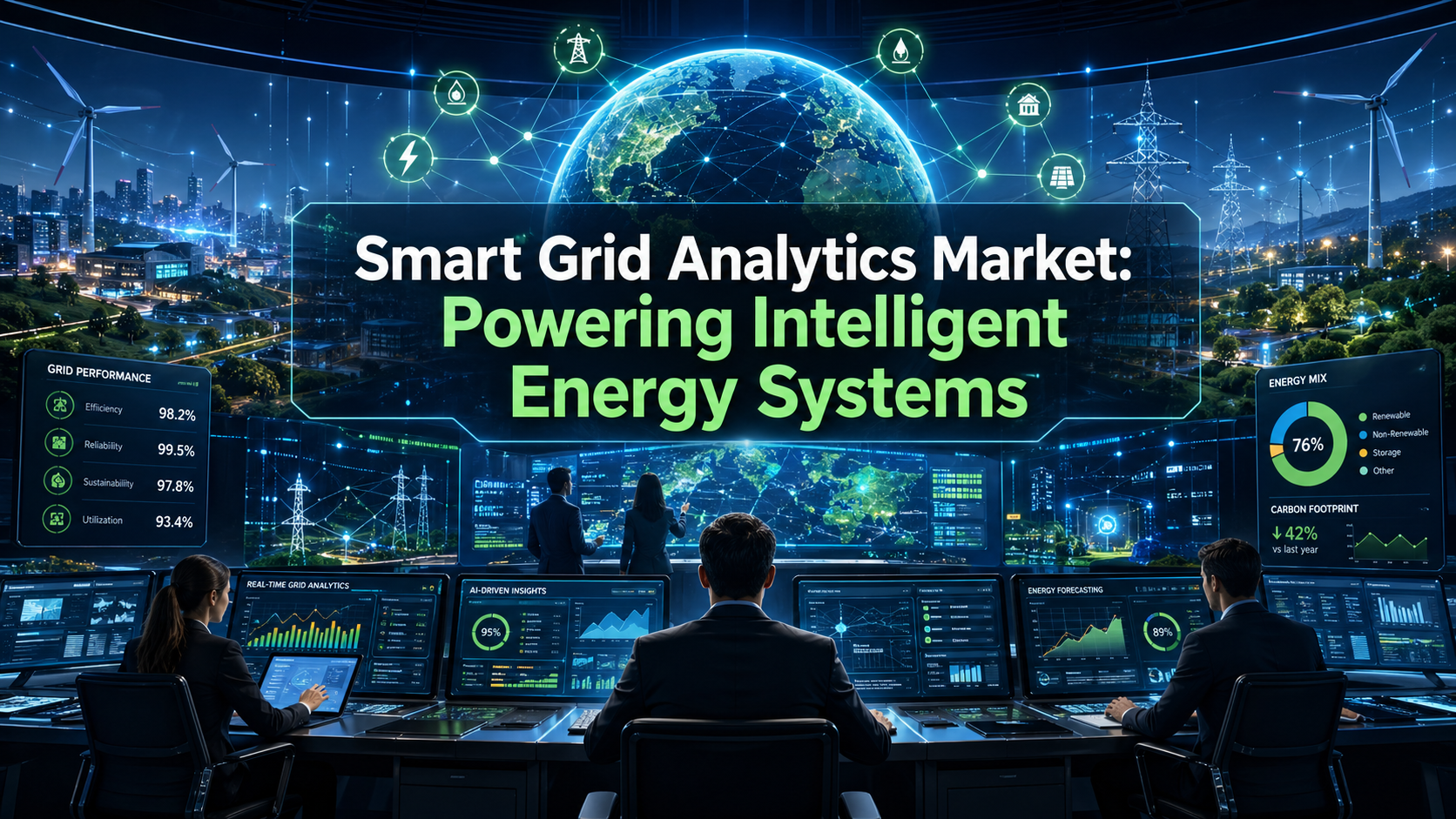
The Convergence of Energy & Intelligence
The transformation of global energy ecosystems is no longer an incremental progression—it represents a strategic reinvention powered by data intelligence. At the center of this evolution is the Smart Grid Analytics Market, which is redefining how enterprises monitor, optimize, and forecast energy consumption. As Energy Management Systems (EMS) integrate advanced analytics, artificial intelligence, and IoT capabilities, organizations are shifting from reactive energy usage toward predictive and autonomous optimization.
Market Pulse: Why Energy Management Systems Are Accelerating
Energy Management Systems have become essential to achieving enterprise sustainability and operational excellence. Escalating energy costs, stringent regulatory requirements, and decarbonization objectives are driving organizations to adopt intelligent solutions that deliver real-time visibility and control. The Smart Grid Analytics Market growth is propelled by rising demand for digital transformation across utilities and industrial sectors. Enterprises are increasingly leveraging analytics platforms to minimize energy waste, enhance grid reliability, and ensure uninterrupted operations.
According to market research, you can Download the PDF to explore detailed business opportunities.
The Role of Smart Grid Analytics Market in Modern Infrastructure
The Smart Grid Analytics Market analysis underscores a decisive shift toward decentralized, data-driven energy ecosystems. Smart grids facilitate bidirectional communication between energy providers and consumers, while analytics platforms process vast datasets to generate actionable insights.
This integration enables:
- Real-time energy monitoring
- Demand-response optimization
- Predictive maintenance of grid infrastructure
- Enhanced outage management
Core Technologies Powering Intelligent Energy Systems
Energy Management Systems are driven by a convergence of advanced technologies:
- Artificial Intelligence & Machine Learning: Enable accurate prediction of consumption patterns
- Internet of Things (IoT): Connect sensors and smart meters for continuous data flow
- Cloud Computing: Support scalable and flexible data processing
- Big Data Analytics: Convert raw energy data into meaningful insights
These technologies are fundamental to Smart Grid Analytics Market trends, empowering enterprises to transition toward autonomous energy ecosystems.
Discover what’s fuelling successful companies download the Sample Report for your business growth.
Enterprise Applications: Where Smart Grid Analytics Delivers ROI
Organizations across industries are leveraging Smart Grid Analytics to generate measurable business value:
- Energy Cost Optimization
Enterprises identify inefficiencies and reduce operational expenses. - Predictive Maintenance
Advanced analytics detect anomalies in grid components, preventing failures. - Load Forecasting
Businesses anticipate energy demand and optimize resource allocation. - Sustainability Compliance
Smart Grid Analytics ensures alignment with environmental regulations. - Real-Time Monitoring
Enterprises achieve comprehensive visibility into energy consumption across facilities.
These applications directly contribute to the expanding Smart Grid Analytics size on a global scale.
Industry Use Cases Across Global Sectors
- Utilities: Enhance grid stability and manage peak demand effectively
- Manufacturing: Optimize energy usage and minimize operational downtime
- Commercial Real Estate: Enable energy-efficient building management through EMS
- Healthcare: Ensure reliable power supply for mission-critical operations
- IT & Data Centers: Improve efficiency and control costs in energy-intensive environments
Data-Driven Decision Making in Energy Ecosystems
The evolution from traditional energy systems to intelligent platforms is fundamentally driven by enhanced decision-making capabilities. Through real-time analytics, enterprises can:
- Identify consumption anomalies
- Optimize energy procurement strategies
- Strengthen operational resilience
The Smart Grid Analytics report landscape highlights that data has evolved into a strategic asset rather than merely an operational metric.
Smart Grid Analytics Market Share, Size, and Growth Outlook
The Smart Grid Analytics Market share is expanding significantly as both developed and emerging economies invest in smart infrastructure. The increasing integration of renewable energy sources is further accelerating market growth.
Key highlights include:
- Strong CAGR driven by digital transformation initiatives
- Increased investments in smart grid infrastructure
- Expansion across industrial and commercial sectors
The Smart Grid Analytics outlook remains highly positive, with sustained global demand.
Emerging Trends Shaping the Future Landscape
Several transformative trends are redefining the energy management ecosystem:
- Integration with renewable energy sources
- Emergence of decentralized energy systems
- AI-driven grid automation
- Adoption of edge computing for real-time processing
- Enhanced cybersecurity frameworks for smart grids
These developments are central to the Smart Grid Analytics forecast, signaling a future dominated by intelligent and autonomous energy systems.
Strategic Advantages for Enterprises and Organizations
Organizations adopting Smart Grid Analytics gain a competitive advantage through:
- Improved operational efficiency
- Reduced energy expenditure
- Enhanced sustainability performance
- Data-driven strategic planning
- Greater resilience against disruptions
The ability to convert energy data into actionable insights positions enterprises at the forefront of digital transformation.
Challenges, Risks, and Mitigation Strategies
Despite its benefits, Smart Grid Analytics adoption presents several challenges:
- Data privacy and cybersecurity concerns
- High initial investment requirements
- Integration complexities with legacy infrastructure
These challenges can be mitigated through:
- Implementation of robust cybersecurity frameworks
- Adoption of scalable, cloud-based solutions
- Strategic partnerships with technology providers
Future Forecast: Smart Grid Analytics Market Evolution
The Smart Grid Analytics forecast points toward a future where energy systems become fully autonomous, self-optimizing, and deeply integrated with enterprise operations. As AI capabilities continue to advance, analytics platforms will evolve from decision-support tools into autonomous decision-making engines.
Organizations that invest early will not only optimize energy consumption but also unlock new revenue streams through advanced energy intelligence.
From Energy Efficiency to Strategic Intelligence
Energy Management Systems have evolved beyond operational tools to become strategic enablers of enterprise growth. The Smart Grid Analytics Market growth reflects a broader transition toward intelligent infrastructure, where data, automation, and sustainability converge.
Organizations that embrace this transformation will lead the next wave of innovation—positioning energy management as a strategic advantage rather than a cost center.