

The global textured vegetable protein market is gaining momentum as consumers, food manufacturers, and foodservice companies increasingly seek nutritious, versatile, and sustainable protein ingredients. Textured vegetable protein (TVP), produced primarily from plant-based sources such as soy, pea, and wheat, has become an important ingredient in meat alternatives, convenience foods, snacks, bakery products, and other protein-enriched food applications.
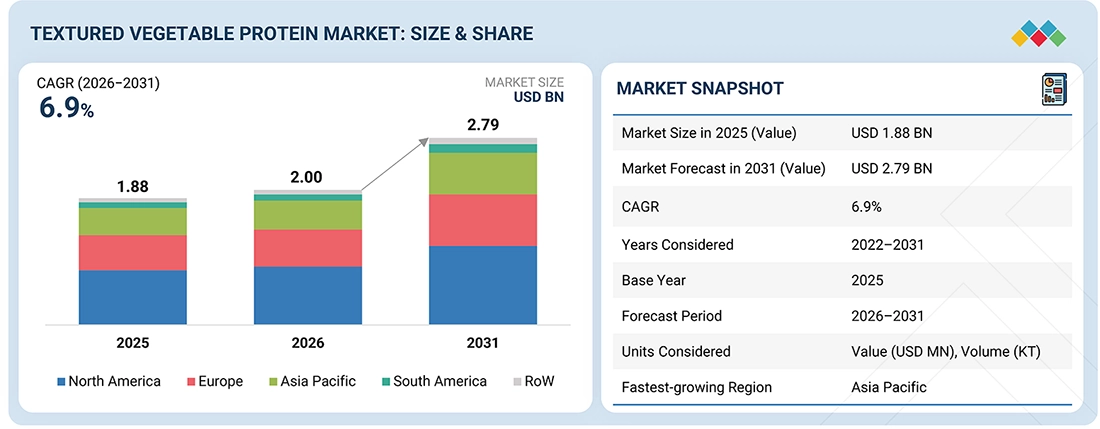
According to MarketsandMarkets, the global textured vegetable protein market is projected to grow from USD 2.00 billion in 2026 to USD 2.79 billion by 2031, registering a CAGR of 6.9% during the forecast period. The market’s expansion is supported by increasing consumer interest in plant-based diets, technological advances in protein texturization, and the growing commercialization of meat alternatives and protein-fortified foods.
What is Textured Vegetable Protein?
Textured vegetable protein is a plant-derived protein ingredient manufactured through processing techniques such as extrusion. Soy, pea, wheat, and other vegetable protein sources can be processed to create products with fibrous or meat-like textures.
TVP is available in different forms, including granules, chunks, cubes, flakes, and crumbles. Its ability to absorb water, flavors, and seasonings while providing desirable texture makes it suitable for a wide variety of food formulations.
Food manufacturers use TVP in applications such as plant-based burgers, sausages, nuggets, ready meals, sauces, soups, snacks, and meat-extender products. Its functional properties also allow manufacturers to improve protein content, texture, product yield, and formulation flexibility.
Textured Vegetable Protein Market Size and Forecast
The textured vegetable protein market is expected to demonstrate steady growth throughout the forecast period. MarketsandMarkets estimates that the market will increase from USD 2.00 billion in 2026 to USD 2.79 billion by 2031, representing a CAGR of 6.9% from 2026 to 2031.
This growth reflects the broader transformation of the food industry toward plant-based and protein-rich products. Consumers are increasingly looking for alternatives to conventional animal proteins, while food manufacturers are developing products that deliver improved taste, texture, nutrition, and affordability.
Key Factors Driving the Textured Vegetable Protein Market
- Rising Demand for Plant-Based Protein: The growing adoption of vegetarian, vegan, and flexitarian diets is one of the major factors supporting demand for TVP. Consumers are increasingly incorporating plant-based protein into their diets because of nutritional, environmental, ethical, and lifestyle considerations.
- Expansion of Meat Alternatives: The commercialization of plant-based burgers, sausages, nuggets, meatballs, and other meat alternatives is creating new opportunities for TVP suppliers. Manufacturers are investing in formulations that offer improved texture, juiciness, flavor retention, and cooking performance. The ability of textured vegetable protein to provide structure and protein content makes it particularly valuable in plant-based meat formulations.
- Advances in Extrusion and Texturization Technologies: Technological advancements are improving the functionality and performance of textured proteins. Modern extrusion and protein-texturization processes enable manufacturers to develop ingredients with specific levels of texture, hydration, structure, and cooking characteristics.
- These developments are increasing the application potential of TVP beyond traditional meat substitutes and into snacks, bakery products, convenience foods, and hybrid food products.
- Growing Demand for Protein-Enriched Foods: Protein has become an increasingly important attribute in food product development. Consumers are seeking convenient foods that provide nutritional benefits while fitting into busy lifestyles.
TVP can help manufacturers increase protein content in prepared foods, snacks, meat alternatives, and other formulations while maintaining desirable product characteristics.
Download PDF Brochure: https://www.marketsandmarkets.com/pdfdownloadNew.asp?id=264440297
Food Applications Dominate the Market
According to MarketsandMarkets, the food applications segment accounts for the largest share of the textured vegetable protein market. Increasing commercialization of plant-based foods and the use of TVP as a functional ingredient are key factors supporting this segment.
TVP is increasingly being used in meat alternatives, hybrid meat products, convenience foods, snacks, and prepared foods. Its ability to improve texture, increase protein content, optimize formulation costs, and support product yield makes it attractive to food manufacturers.
The compatibility of textured vegetable protein with existing food-processing systems is also supporting adoption across retail and foodservice channels.
Organic TVP Segment Poised for Strong Growth
The organic segment is expected to register the fastest growth during the forecast period. Increasing consumer preference for organic, clean-label, and non-GMO foods is encouraging manufacturers to develop organic textured protein ingredients.
Organic TVP derived from organically cultivated soy, pea, wheat, and other plant sources is increasingly being incorporated into premium plant-based foods, ready meals, snacks, and other processed products.
Growing interest in traceability, sustainable sourcing, and organic certification is expected to further support opportunities for suppliers operating in this segment.
Soy Remains an Important Protein Source
Soy is one of the most established sources used in textured vegetable protein production. Its availability, protein profile, functionality, and established processing infrastructure have made it an important raw material for TVP manufacturers.
MarketsandMarkets expects the soy protein segment to register a 7.4% CAGR during the forecast period.
At the same time, pea and wheat proteins are gaining attention as manufacturers diversify their ingredient portfolios and respond to changing consumer preferences. The development of new protein sources is expected to create additional opportunities for innovation in textured protein products.
Request Sample Pages: https://www.marketsandmarkets.com/requestsampleNew.asp?id=264440297
North America Leads the Textured Vegetable Protein Market
North America is expected to hold the largest share of the global textured vegetable protein market throughout the forecast period. The region benefits from a mature plant-based food industry, established protein ingredient supply chains, advanced food-processing capabilities, and strong consumer awareness of plant-based nutrition.
The availability of soy and pea proteins, combined with advanced extrusion technologies, enables manufacturers to produce textured proteins with consistent quality and improved functionality.
The region also has extensive distribution networks spanning supermarkets, specialty retailers, online platforms, and foodservice channels. These factors are contributing to continued adoption of TVP-based products.
Asia Pacific Presents Significant Growth Opportunities
Asia Pacific is expected to record the highest CAGR in the textured vegetable protein market during the forecast period.
The region represents an attractive market because of its large consumer base, increasing urbanization, evolving dietary preferences, and growing interest in plant-based and protein-rich foods.
As food manufacturers in countries across Asia Pacific expand their plant-based product portfolios, demand for textured protein ingredients is expected to increase. Local production capabilities and innovations in plant-based food processing could further support regional market development.
Competitive Landscape
The textured vegetable protein market includes established ingredient manufacturers and emerging suppliers competing through product innovation, manufacturing capacity, application development, geographic expansion, and customized protein solutions.
Key companies profiled by MarketsandMarkets include ADM, Cargill, Roquette Frères, International Flavors & Fragrances (IFF), Ingredion, PURIS, BENEO, Axiom Foods, The Scoular Company, and Dacsa Group, among others.
Companies are increasingly focusing on expanding their textured protein portfolios, developing new plant-based protein sources, improving processing technologies, and addressing application-specific requirements.
Make an Inquiry: https://www.marketsandmarkets.com/Enquiry_Before_BuyingNew.asp?id=264440297
Future Opportunities in the Textured Vegetable Protein Market
The future of the TVP market is closely connected to innovation in plant-based food formulation. Opportunities are emerging in areas such as clean-label products, organic proteins, hybrid meat products, high-protein snacks, ready-to-eat meals, and next-generation meat alternatives.
Improved extrusion technology and protein texturization can help manufacturers address consumer expectations for better texture, flavor absorption, hydration, and cooking performance. At the same time, diversification beyond soy toward pea, wheat, and other protein sources can enable suppliers to serve a wider range of formulations and consumer preferences.